
Chef Jeong-sun
Agwi-jjim (Braised Monkfish with Bean Sprouts)
Firm monkfish buried under crisp soybean sprouts, minari, and a red gochugaru sauce thickened at the end; Masan's market dish asks for heat, timing, and a steady hand.
A cooking platform built around craft, culture, and the stories behind what we eat.

Created by
Butterflied eel grilled over strong heat, flesh first and skin last, then brushed near the end with a soy and rice-malt glaze that shines without burying the fish.
Jang-eo-gui belongs to the hottest days, when people say the body needs feeding before the heat empties it. Around sambok, the three dog-day markers of summer, eel houses fill with office workers, fathers with loosened collars, families who have decided strength can be eaten from a grill. I don't argue with that. I only say the eel still has to taste like eel.
The dish lives or dies by timing. Grill the flesh side first so the surface firms and takes color, then turn it skin side down so the fat renders and the skin tightens. Brush the sauce only near the end. If you paint sugar onto raw eel and leave it over flame, you'll get bitterness before doneness, and my teacher would have looked at that pan, then at me, and said nothing. The silence was worse than scolding.
This version uses ganjang (soy sauce), cheongju (rice wine), and jocheong (rice-malt syrup) for a glaze that is glossy, salty-sweet, and restrained. No heavy gochujang blanket tonight. Let it taste like itself: rich fish, browned edges, ginger clean enough to cut the fat, and perilla leaves on the table for wrapping. 손맛 is real. I still measure it, so it can be handed on.
Eel has long been treated in Korea as boyang-sik, restorative food eaten when the body is worn down, especially during the humid heat of sambok. Freshwater eel, called minmul jangeo or chamjangeo, became especially associated with summer grilling houses, while sea eel appears in coastal regions such as Busan and Tongyeong in different grilled and soup preparations. Modern jang-eo-gui is usually served either as sogeum-gui, seasoned simply with salt, or yangnyeom-gui, brushed with a soy-based or chili-based glaze near the end of grilling.
Quantity
800g
skin on, pin bones removed
Quantity
1 teaspoon
Quantity
1 tablespoon
Quantity
1 teaspoon
for the grill
Quantity
4 tablespoons
Quantity
3 tablespoons
Quantity
2 tablespoons
Quantity
2 tablespoons
Quantity
1 tablespoon
grated
Quantity
2 teaspoons
grated
Quantity
2 cloves
finely grated
Quantity
1 teaspoon
Quantity
1/4 teaspoon
freshly ground
Quantity
1 teaspoon
Quantity
2
thinly sliced
Quantity
16
washed and dried
Quantity
to serve
Quantity
to serve
| Ingredient | Quantity |
|---|---|
| butterflied freshwater eel filletsskin on, pin bones removed | 800g |
| coarse salt | 1 teaspoon |
| cheongju (rice wine) or dry sake | 1 tablespoon |
| neutral oilfor the grill | 1 teaspoon |
| soy sauce | 4 tablespoons |
| jocheong (Korean rice-malt syrup) or rice syrup | 3 tablespoons |
| cheongju or mirin | 2 tablespoons |
| water | 2 tablespoons |
| oniongrated | 1 tablespoon |
| gingergrated | 2 teaspoons |
| garlicfinely grated | 2 cloves |
| toasted sesame oil | 1 teaspoon |
| black pepperfreshly ground | 1/4 teaspoon |
| toasted sesame seeds | 1 teaspoon |
| scallionsthinly sliced | 2 |
| perilla leaveswashed and dried | 16 |
| cooked white rice (optional) | to serve |
| ssamjang (optional) | to serve |
Ask the fishmonger to kill, clean, butterfly, and bone the eel. At home, run your fingertips down the flesh and pull any pin bones with tweezers. Pat the fillets very dry, then rub the flesh with 1 teaspoon coarse salt and 1 tablespoon cheongju. Let them stand 10 minutes, then pat dry again. This tightens the surface and calms the muddy edge eel can have.
In a small pan, combine soy sauce, jocheong, cheongju, water, grated onion, ginger, garlic, sesame oil, and black pepper. Simmer over medium heat for 5 to 6 minutes, until glossy and lightly thickened, about 1/2 cup. Strain if you want a smooth lacquer. Do not reduce it to candy; it still has to brush on in thin layers.
Heat a charcoal grill, gas grill, or ridged grill pan to medium-high. Oil the grate lightly. The heat should be strong enough to brown the eel in minutes, but not so fierce that the glaze burns the moment it touches. If using a pan, open a window and work in batches.
Lay the eel flesh side down and grill 3 to 4 minutes, until the surface firms and takes light browning. Do not sauce it yet. Flesh first matters because the tender side needs to set before the skin begins rendering its fat.
Turn the eel skin side down and grill 4 to 5 minutes more. Press gently with tongs if the fillet curls. The skin should tighten, the edges should brown, and the thickest part should be cooked through. Eel is fatty, but it is still fish; cook it fully and keep the surface clean.
Brush a thin layer of glaze over the flesh side, turn briefly, and cook 30 to 45 seconds. Brush again, turn back skin side down, and cook another minute. Repeat once more if you want a deeper shine. Sauce near the end only, because jocheong burns before eel finishes cooking.
Move the eel to a board and cut into 5cm pieces with a sharp knife or kitchen scissors. Scatter sesame seeds and sliced scallions over the top. Serve at once with rice, perilla leaves, and a little ssamjang if you like, but don't bury the fish. Wrap one piece with rice and perilla, and let the table go quiet for a moment.
1 serving (about 390g)
Culinary guides, cultural storytelling, and the editorial depth that makes cooking meaningful.
Discover Culinary ExplorerChef Jeong-sun
Firm monkfish buried under crisp soybean sprouts, minari, and a red gochugaru sauce thickened at the end; Masan's market dish asks for heat, timing, and a steady hand.

Chef Jeong-sun
A quick Korean rice bowl built on contrast: warm rice, cold popping flying-fish roe, chopped vegetables, gim, sesame oil, and the crisp rice bottom a hot stone bowl gives you.
Chef Jeong-sun
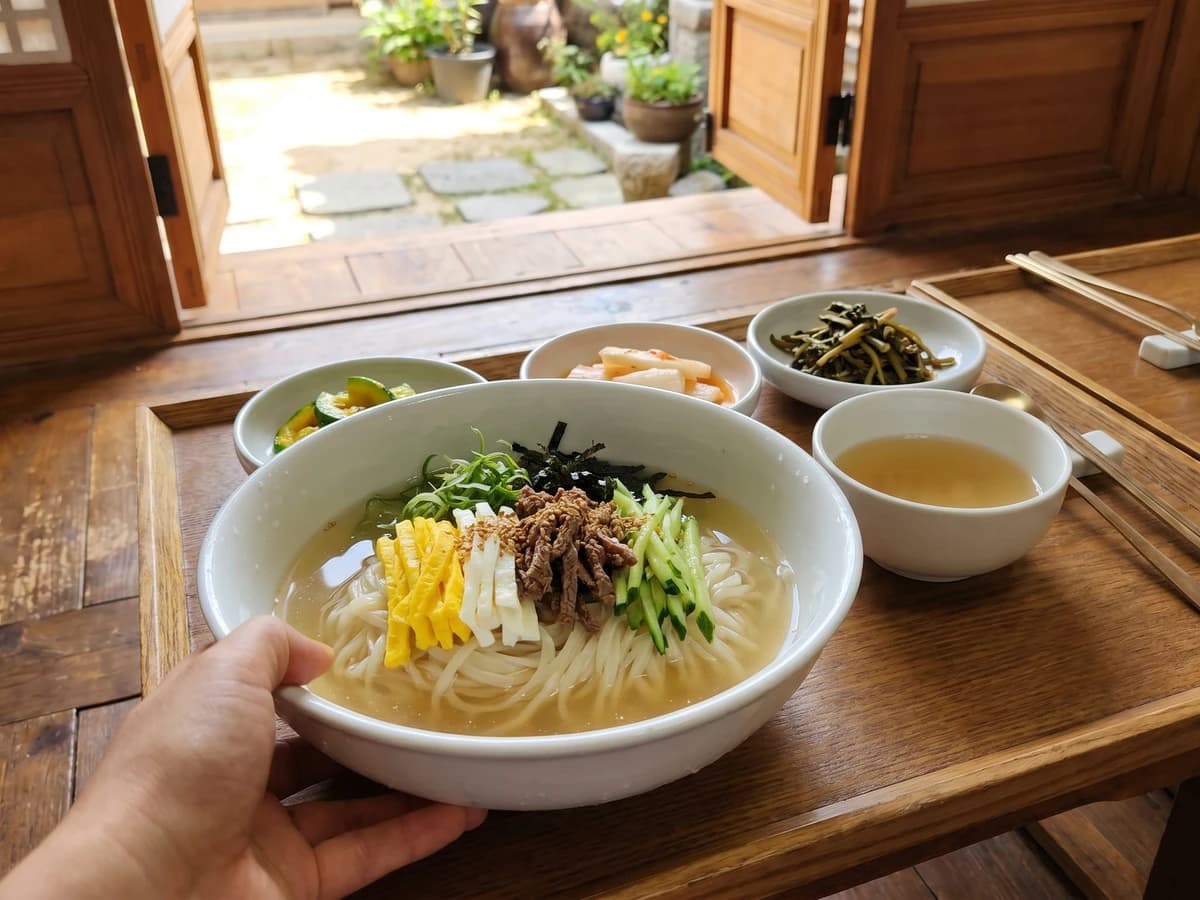
Andong's guest noodles, wheat and roasted soybean flour rolled thin, boiled and rinsed cold, then set in a clear chilled anchovy broth with careful strips of beef, egg, and cucumber.

Chef Jeong-sun
Andong's ritual-table rice served on an ordinary day: separate soy-sesame namul, warm rice, and clear radish soup, mixed without gochujang so every vegetable keeps its own voice.