
Chef Jeong-sun
Agwi-jjim (Braised Monkfish with Bean Sprouts)
Firm monkfish buried under crisp soybean sprouts, minari, and a red gochugaru sauce thickened at the end; Masan's market dish asks for heat, timing, and a steady hand.
A cooking platform built around craft, culture, and the stories behind what we eat.
Created by
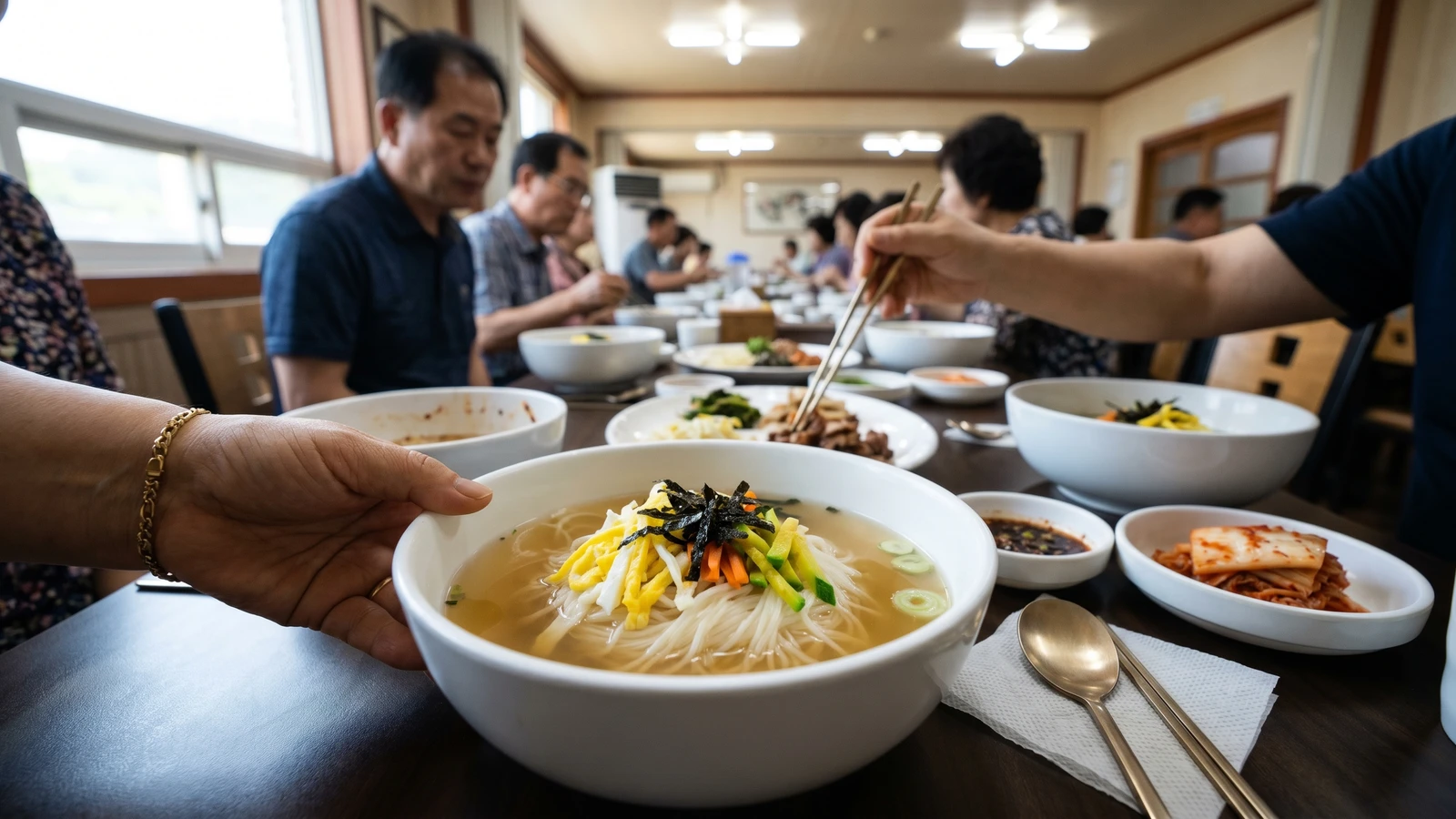
Thin wheat noodles in a clear anchovy-kelp broth, dressed with egg threads, zucchini, gim, and soy seasoning; the banquet bowl Koreans serve to wish long life without making the soup heavy.
Janchi-guksu walks in quietly for a dish with banquet in its name. At weddings, first birthdays, sixtieth birthdays, and village days when there are too many relatives to count, the bowl comes out because long noodles wish long years. My mother said it without ceremony: don't cut the noodles unless someone at the table needs help, and don't make the broth muddy. A wish should be clear.
The dish lives or dies by restraint: somyeon (thin wheat noodles), a clean anchovy-kelp broth, and toppings cut fine enough to sit lightly on the surface. Pull the dasima (dried kelp) as soon as the water trembles or it turns the broth slick; rinse the cooked noodles with your hands until the starch is gone; season the broth a little shy because the yangnyeomjang (seasoning sauce) will finish each bowl. Those three things matter more than a tall pile of garnish.
Notebook 22 says eight cups water, twenty large anchovies, one square of dasima, and 360 grams noodles for four generous bowls. 손맛 is real; I measure it anyway, so it can be handed on. Tonight this asks for calm knife work and attention at the pot, not hard labor. Serve it with kimchi and let the table lean in. Food for celebration can still be simple.
Janchi-guksu literally means banquet noodles, and the bowl belongs to weddings, birthdays, sixtieth-birthday feasts (hwangap), and village gatherings because uncut long noodles wish long life and a lasting marriage. Wheat noodles were once special in Korea, where rice, barley, millet, and other grains carried the ordinary table more often than wheat; after the Korean War, imported flour and dried somyeon made the dish inexpensive enough for markets and home kitchens. The name kept its celebration memory even after the soup became a quick lunch.
Quantity
8 cups
Quantity
20
heads and guts removed
Quantity
1 piece, about 4 inches square
Quantity
120g
cut into thick chunks
Quantity
1/2 medium
cut into large wedges
Quantity
2
Quantity
1 tablespoon
Quantity
3/4 teaspoon, plus up to 1/4 teaspoon more if needed
Quantity
360g
Quantity
1 medium, about 250g
julienned
Quantity
1/2 teaspoon
Quantity
1 small, about 80g
julienned
Quantity
2 teaspoons
divided
Quantity
2 large
yolks and whites separated
Quantity
1 pinch
Quantity
1 sheet
cut into thin strips
Quantity
2
thinly sliced, divided
Quantity
4 tablespoons
Quantity
2 tablespoons
Quantity
1 small clove
minced
Quantity
1 teaspoon
Quantity
1 teaspoon
Quantity
1 teaspoon
lightly crushed
Quantity
1/2 teaspoon
Quantity
1 small
minced
Quantity
to serve
| Ingredient | Quantity |
|---|---|
| water | 8 cups |
| large dried anchovies (myeolchi)heads and guts removed | 20 |
| dried kelp (dasima) | 1 piece, about 4 inches square |
| Korean radish (mu)cut into thick chunks | 120g |
| yellow onioncut into large wedges | 1/2 medium |
| dried shiitake mushrooms (optional) | 2 |
| soup soy sauce (guk-ganjang) | 1 tablespoon |
| fine sea salt, for broth | 3/4 teaspoon, plus up to 1/4 teaspoon more if needed |
| dried somyeon (thin wheat noodles) | 360g |
| Korean zucchini (aehobak)julienned | 1 medium, about 250g |
| fine sea salt, for zucchini | 1/2 teaspoon |
| carrotjulienned | 1 small, about 80g |
| neutral oildivided | 2 teaspoons |
| eggsyolks and whites separated | 2 large |
| fine sea salt, for eggs | 1 pinch |
| roasted gimcut into thin strips | 1 sheet |
| scallionsthinly sliced, divided | 2 |
| soy sauce, for yangnyeomjang | 4 tablespoons |
| broth or water, for yangnyeomjang | 2 tablespoons |
| garlicminced | 1 small clove |
| gochugaru (Korean chili flakes) | 1 teaspoon |
| toasted sesame oil | 1 teaspoon |
| toasted sesame seedslightly crushed | 1 teaspoon |
| sugar (optional) | 1/2 teaspoon |
| green chili (optional)minced | 1 small |
| baechu-kimchi (optional) | to serve |
Put the water, anchovies, kelp, radish, onion, and dried shiitake if using in a 5-quart pot. Let it stand 10 minutes if you have the time; cold water wakes the dried fish and kelp gently. Set the pot over medium heat. When small bubbles collect at the edge, lift out the kelp. Leave it too long and it gives the broth a slick bitterness that does not belong in this bowl.
Bring the broth to a quiet simmer, not a hard boil, and cook 15 minutes. Strain through a fine sieve and discard the solids. You should have about 6 1/2 cups broth. Stir in the soup soy sauce and 3/4 teaspoon fine sea salt. Taste one spoonful. It should be clean and savory, a little shy of fully salty because the yangnyeomjang will finish the bowl. If it tastes watery, add the remaining 1/4 teaspoon salt. If it tastes balanced, stop.
Stir together the soy sauce, 2 tablespoons broth or water, 1 tablespoon of the sliced scallions, garlic, gochugaru, sesame oil, sesame seeds, sugar if using, and green chili if using. Let it sit at least 10 minutes so the garlic settles into the soy. This is yangnyeomjang (seasoning sauce), not soup base. Start with 1 teaspoon per bowl at the table, then add more only if the broth asks for it.
Toss the julienned zucchini with 1/2 teaspoon fine sea salt and set it aside for 10 minutes, then squeeze it gently until it no longer drips. Beat the egg yolks with a few grains of salt in one bowl and the whites with a few grains of salt in another. Keep the carrot, zucchini, yolks, and whites separate. Janchi-guksu looks simple because each small thing is handled cleanly.
Heat 1 teaspoon oil in a wide skillet over medium heat. Cook the squeezed zucchini for 1 to 2 minutes, just until glossy and flexible, then move it to a small bowl. Add the carrot and cook 1 minute with no more than a pinch of salt, then move it to its own bowl. Wipe the pan, lower the heat, and film it with the remaining oil. Cook the egg whites in a thin sheet, then the yolks in a thin sheet, without browning them. Cool, roll, and slice into fine jidan (egg garnish) threads. For a weeknight, one whole-egg sheet is an honest shortcut, but keep the heat low.
Bring 4 quarts of water to a rolling boil in a large pot. Do not salt the water; somyeon already carries salt from the noodle dough. Add the noodles and stir right away so they do not clump. When the foam climbs, add 1/2 cup cold water. Let it rise again and add another 1/2 cup cold water. Cook 3 to 4 minutes total, until a noodle has no hard white core when you bite it.
Drain the noodles and rinse them under cold running water, rubbing them between your hands for 60 to 90 seconds until the surface starch is gone and the water runs clear. Drain hard. This rinse is why the noodles stay clean and springy instead of clouding the broth. For a hotter bowl, dip the rinsed noodles in boiling water for 10 seconds and drain again. Do not cook somyeon ahead; it waits badly.
Twirl the noodles into four deep bowls, keeping the strands long. Ladle 1 1/2 to 1 3/4 cups hot broth into each bowl. Arrange the yellow jidan, white jidan, zucchini, carrot, gim, and remaining scallions across the center in small bands rather than a tall pile. Serve the yangnyeomjang on the side, or place 1 teaspoon in the middle of each bowl. Add kimchi beside it. The noodles wish long years, so do not cut them unless someone at the table needs help eating.
1 serving (about 700g)
Culinary guides, cultural storytelling, and the editorial depth that makes cooking meaningful.
Discover Culinary ExplorerChef Jeong-sun
Firm monkfish buried under crisp soybean sprouts, minari, and a red gochugaru sauce thickened at the end; Masan's market dish asks for heat, timing, and a steady hand.

Chef Jeong-sun
A quick Korean rice bowl built on contrast: warm rice, cold popping flying-fish roe, chopped vegetables, gim, sesame oil, and the crisp rice bottom a hot stone bowl gives you.
Chef Jeong-sun
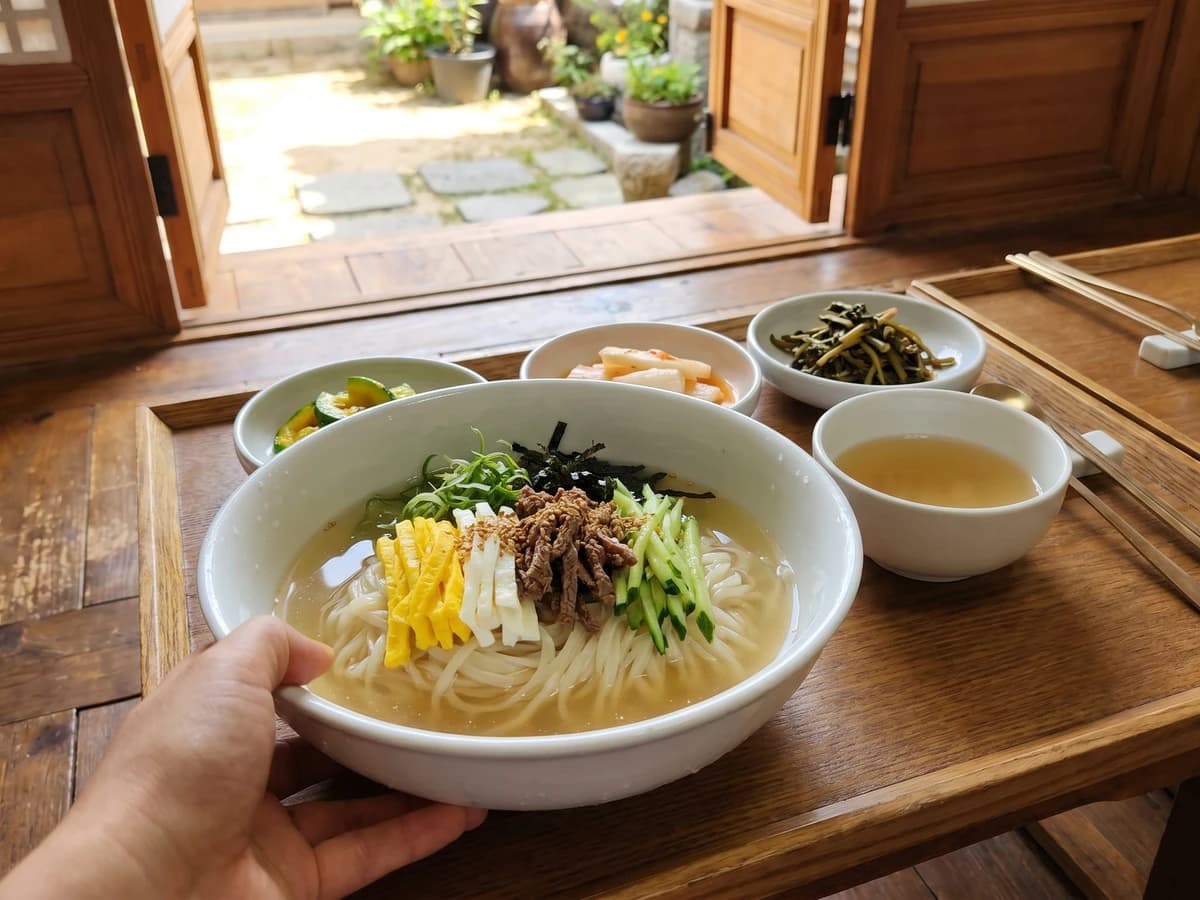
Andong's guest noodles, wheat and roasted soybean flour rolled thin, boiled and rinsed cold, then set in a clear chilled anchovy broth with careful strips of beef, egg, and cucumber.

Chef Jeong-sun
Andong's ritual-table rice served on an ordinary day: separate soy-sesame namul, warm rice, and clear radish soup, mixed without gochujang so every vegetable keeps its own voice.