Culinary Explorer

A cooking platform built around craft, culture, and the stories behind what we eat.
Discover Culinary Explorer
Jamoncillo Veracruzano de Trapiche del Rosario

Jamoncillo Veracruzano de Trapiche del Rosario

Created by

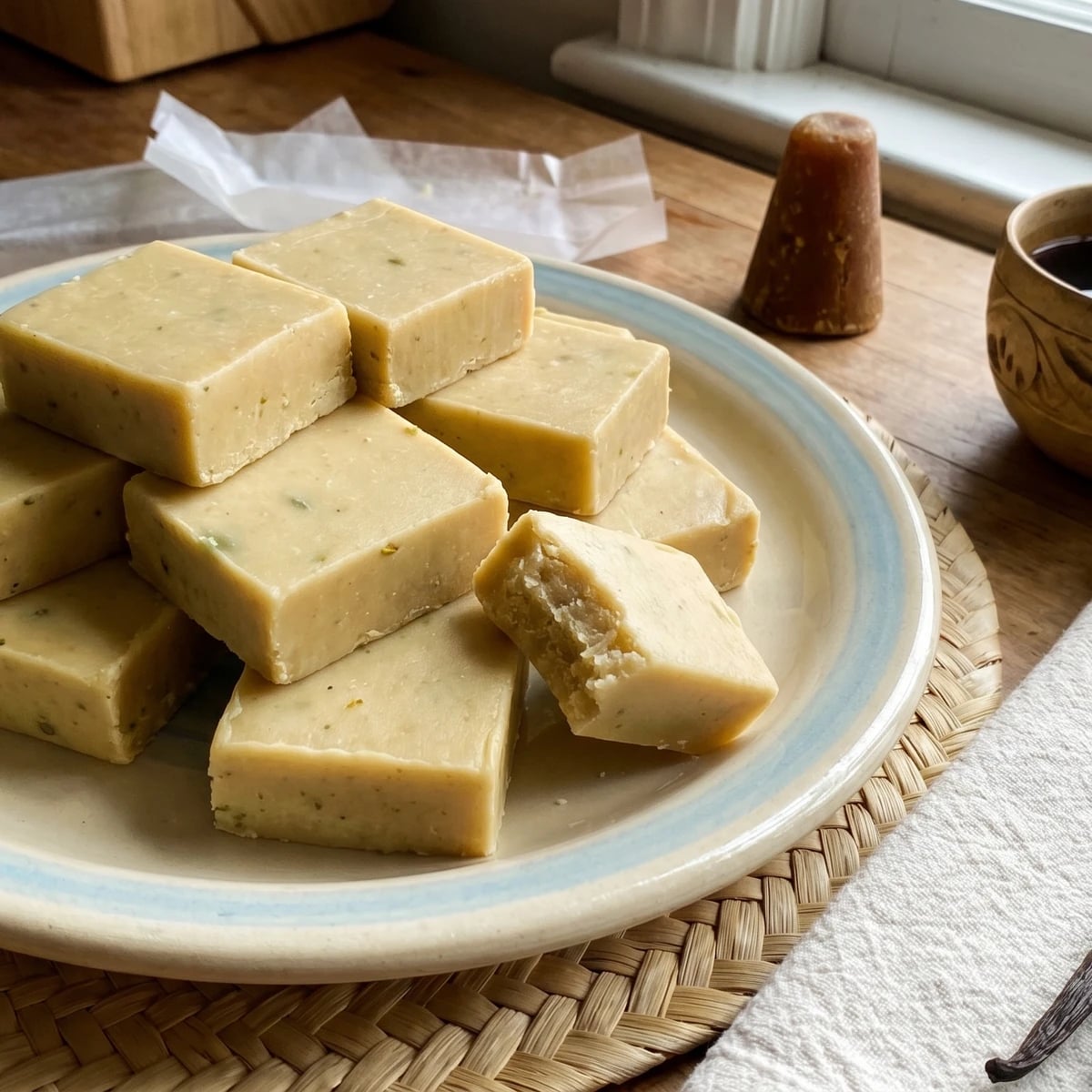
Veracruz's milk fudge from Trapiche del Rosario, cooked slowly with whole milk, sugar, ground pepita, and vainilla de Papantla until it sets into tender bars.

Desserts
Mexican
Make Ahead
Holiday
20 min
Active Time
1 hr 10 min cook1 hr 30 min total
Yield24 small bars

Veracruz, the central Gulf country near Trapiche del Rosario, keeps this sweet in the hands of home cooks who know how to stand at the stove and watch a pot. This is not a candy for people who wander away. Milk, sugar, pepita, and vainilla de Papantla look harmless until they decide to scorch. Then you learn respect.

Trapiche means sugar mill, and that tells you where the sweet lives. The cane fields of Veracruz gave the sugar. The dairies around the central valleys gave the milk. The pepita, hulled pumpkin seed, gives the body and the faint green-gold richness that makes this version different from the plain milk jamoncillos sold farther north.

Use a whole vanilla pod from Papantla. Not extract. Veracruz gave vanilla to the world, and in this candy the pod is not perfume, it is geography. You scrape the seeds into the milk, drop in the pod, and let it season the pot while the sugar thickens. Recetas probadas y garantizadas, but only if you stir like someone taught you properly.

I learned this style from a señora who wrapped her bars in waxed paper and sold them from a basket lined with a cotton servilleta. She did not own a candy thermometer. She owned patience. That is the real equipment here. Saber cocinar es saber vivir.

Jamoncillo belongs to the broad family of Mexican milk sweets that grew out of colonial convent kitchens, where Spanish dairy techniques met New Spain's sugar economy. Veracruz's sugar mills, including communities named for trapiches, made cane sugar common enough for household sweets, while Papantla's vanilla gave Gulf Coast desserts a local signature. The addition of ground pepita connects the candy to older Mesoamerican seed pastes used for thickening and enriching foods long before milk entered the kitchen.

The technique, the tradition, and the story behind every dish.

Discover Culinary Explorer

Ingredients

hulled unsalted pepita pumpkin seeds

Quantity

2 cups

lightly toasted and ground

whole milk

Quantity

4 cups

granulated cane sugar

Quantity

2 cups

piloncillo

Quantity

1/2 cup

finely grated

vainilla de Papantla pod

Quantity

1 whole

split lengthwise

fine sea salt

Quantity

1/4 teaspoon

unsalted butter

Quantity

1 tablespoon

for greasing the pan

Equipment Needed

  • Dry comal or heavy skillet
  • Food processor or spice mill
  • Heavy 3-quart saucepan
  • Wooden spoon
  • 8-inch square pan
  • Candy thermometer, optional but useful

Instructions

  1. 1

    Prepare the mold

    Grease an 8-inch square pan with the butter and line it with parchment, leaving two sides long enough to lift the candy out later. Set it near the stove. Once jamoncillo is ready, it waits for nobody.

  2. 2

    Toast the pepita

    Heat a dry comal or heavy skillet over medium-low heat. Toast the pepitas for 4 to 6 minutes, moving them constantly, until they smell nutty and a few turn pale gold. Do not brown them hard. Burned pepita tastes bitter, and bitterness has no place in this sweet.

  3. 3

    Grind the seed

    Let the pepitas cool for 5 minutes, then grind them in a food processor or clean spice mill until fine and sandy, stopping before they turn into paste. You want powder that will melt into the milk, not pepita butter. Pregúntale a las señoras del mercado: texture decides the candy.

  4. 4

    Infuse the milk

    Pour the whole milk into a heavy saucepan. Scrape the seeds from the vainilla de Papantla pod into the milk, then add the pod itself. Add the cane sugar, grated piloncillo, and salt. Stir over medium heat until the sugars dissolve and the milk smells deeply of vanilla.

  5. 5

    Cook the candy

    Bring the mixture to a steady simmer, then lower the heat to medium-low. Cook, stirring often with a wooden spoon, for 35 to 45 minutes. The milk will thicken, turn ivory-gold, and leave a clean trail on the bottom of the pot when you drag the spoon through it. Keep the spoon moving along the corners. That is where milk burns first.

  6. 6

    Add the pepita

    Remove the vanilla pod. Stir in the ground pepita in a slow rain so it does not clump. Cook 10 to 15 minutes more, stirring constantly now, until the mixture pulls away from the sides in a thick mass and looks matte instead of glossy. If using a candy thermometer, aim for 238F to 240F. If not, drop a little into cold water. It should form a soft ball you can pinch.

  7. 7

    Pour and set

    Scrape the hot candy into the prepared pan and press it evenly with a buttered spatula. Work quickly but do not fuss over it. Jamoncillo should look handmade, not factory-smooth. Let it cool at room temperature for at least 2 hours, until firm.

  8. 8

    Cut the bars

    Lift the slab from the pan and cut it into small rectangles or diamonds with a lightly buttered knife. Wrap pieces in waxed paper or set them on a Tlacotalpan-style plate. Serve with black coffee or a small cup of warm milk. Así se hace y punto.

Chef Tips

  • Use whole milk. Skim milk makes a thin, grainy candy. This is milk fudge, not punishment.
  • Vainilla de Papantla is the right vanilla here. If you cannot find a pod, look for Mexican vanilla paste from Veracruz. Extract is a compromise, not an upgrade.
  • The piloncillo deepens the sugar without taking over. Too much piloncillo makes the candy taste like a different sweet. Trapiche jamoncillo should still taste of milk and pepita.
  • Do not leave the pot. Milk catches at the bottom before you smell it. By the time you smell scorching, you have already lost the batch.

Advance Preparation

  • Jamoncillo keeps for 1 week at room temperature in an airtight container, with parchment or waxed paper between layers.
  • For holiday trays, make it 2 days ahead. The texture firms and the vanilla settles into the milk flavor.
  • Do not refrigerate unless your kitchen is very hot and humid. Cold air makes the surface sweat when the candy returns to room temperature.

Frequently Asked Questions

Nutrition Information

1 serving (about 40g)

Calories
170 calories
Total Fat
7 g
Saturated Fat
2 g
Trans Fat
0 g
Unsaturated Fat
5 g
Cholesterol
5 mg
Sodium
45 mg
Total Carbohydrates
24 g
Dietary Fiber
1 g
Sugars
23 g
Protein
5 g

Note: Chef personas and recipes are created with AI assistance. Cook with care: follow safe food-handling practices, check doneness with a thermometer when needed, and adapt for allergies and your kitchen.

Where cooking meets culture.

Culinary guides, cultural storytelling, and the editorial depth that makes cooking meaningful.

Discover Culinary Explorer

More from Veracruz Desserts

Browse the full collection