Culinary Explorer
A cooking platform built around craft, culture, and the stories behind what we eat.
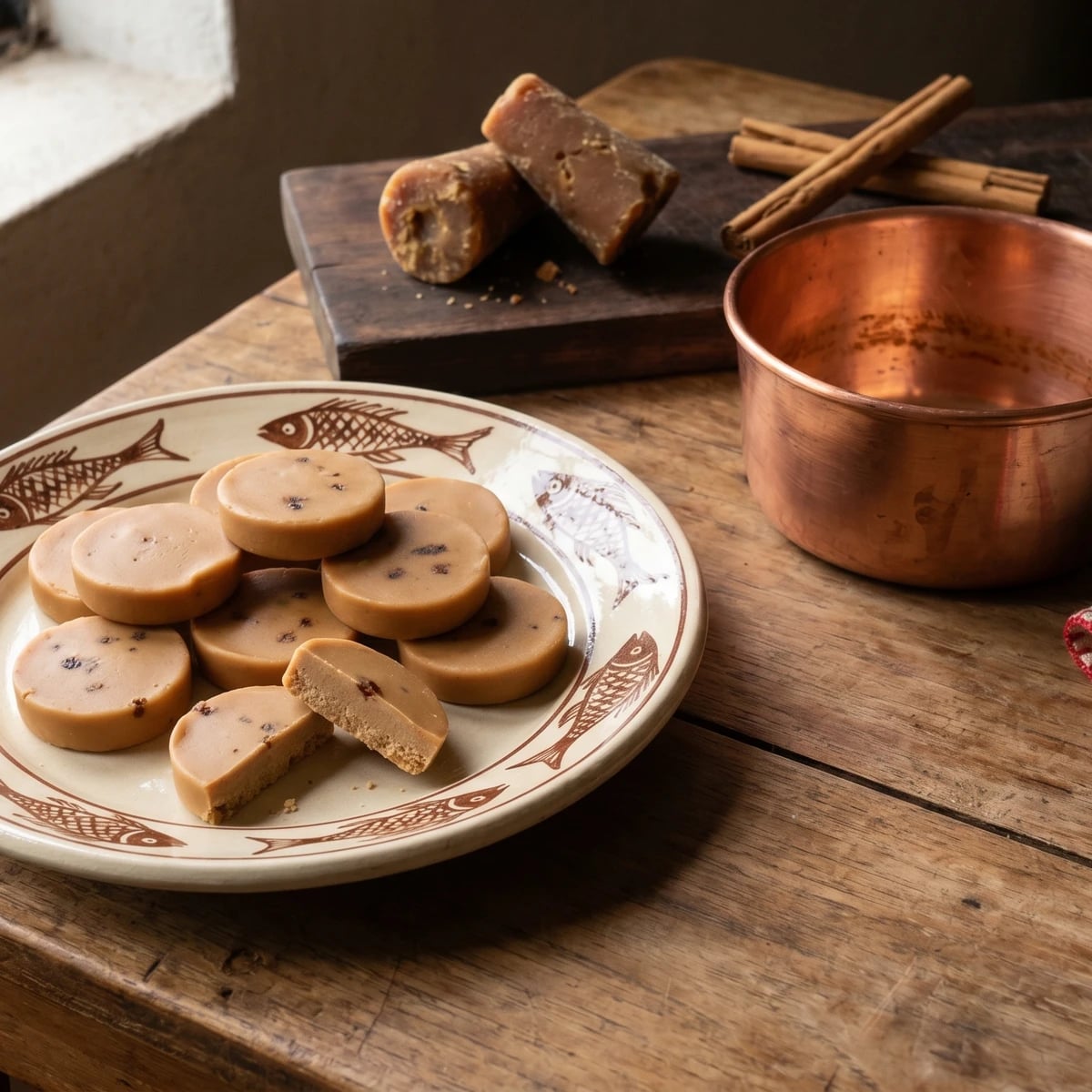
Jamoncillo de Leche P'urhépecha
Created by Chef Lupita
Michoacán's P'urhépecha milk fudge, cooked slowly in a Santa Clara copper cazo with whole milk, piloncillo, and canela until it turns tawny, thick, and firm enough to cut.
Michoacán, the P'urhépecha country around Lake Pátzcuaro, Tzintzuntzan, Santa Clara del Cobre, and the Meseta, is where this jamoncillo belongs. It is not the Poblano jamoncillo de pepita, that pressed pumpkin seed mazapán people confuse with it. This one is milk, piloncillo, and canela, cooked until the milk gives up its water and becomes candy.
The cazo de cobre is not decoration. Santa Clara del Cobre made the vessel, and P'urhépecha women made the patience around it. A wide copper cazo lets the milk reduce fast enough to brown properly without tasting scorched. An enameled pot can do the job, but it will not give you the same deep caramel stripes on the sides of the pan. A substitution is a compromise, not an upgrade.
There are no chiles here. Not every Mexican dish needs heat to prove where it is from. The flavor is piloncillo, whole milk, and Mexican canela, plain enough that every mistake shows. If the milk scorches, you taste it. If the piloncillo is dusty and old, you taste it. Si no conoces el mercado, no conoces la cocina.
I first watched this made in Pátzcuaro from a woman who stirred without looking tired, because her hands knew the moment before the candy would catch. She told me the paddle tells you before the thermometer does. She was right. Saber cocinar es saber vivir.
Ingredients
whole milk
Quantity
8 cups
preferably non-UHT
piloncillo
Quantity
1 1/2 pounds
finely chopped or grated
Mexican canela
Quantity
1 (3-inch) stick
| Ingredient | Quantity |
|---|---|
| whole milkpreferably non-UHT | 8 cups |
| piloncillofinely chopped or grated | 1 1/2 pounds |
| Mexican canela | 1 (3-inch) stick |
Where cooking meets culture.
Culinary guides, cultural storytelling, and the editorial depth that makes cooking meaningful.
Discover Culinary Explorer