
Chef Lupita
Arroz a la Oaxaqueña
Oaxaca's red rice, stained with tomato and fried in lard, steamed with carrots, ejotes, black beans, and epazote. The side that anchors a Oaxacan family meal and earns its place beside the main.
A cooking platform built around craft, culture, and the stories behind what we eat.

Created by
Jalisco's Christmas stuffing, built with toasted birote salado, pork, fruit, almonds, chile ancho, and tequila, the generous dressing that sits beside the holiday turkey in Guadalajara homes.
Jalisco, especially Guadalajara and the towns around Los Altos, knows how to put bread, pork, fruit, and a little tequila to work at Christmas. This relleno de pavo is not the bread stuffing from the north and it is not a sweet casserole pretending to be dinner. It is a Jalisciense holiday dressing, made with birote salado if you can get it, because that bread has the tough crust and firm crumb to survive broth, fat, and the oven.
The chile here is ancho, not because the dish needs to be hot, but because Jalisco cooking understands depth. Chile ancho brings dried fruit, tobacco, and color. The pork gives body. Apple, pear, raisins, almonds, and a small splash of tequila point you back to the markets of Guadalajara in December, where the fruit piles are high and every family is negotiating what goes into the Christmas turkey.
My mother had this in her notebook under 'relleno para pavo, Navidad.' She wrote: 'pan duro, no pan blando.' Stale bread, not soft bread. She was right. Soft bread collapses into paste. Toasted birote drinks the broth and keeps its edges. La cocina no es decoracion, es trabajo.
Serve it from a warm cazuela de barro from Tonala or Tlaquepaque, not packed inside the bird until it turns heavy and wet. The turkey can stand beside it. This is a 32-state cuisine. Cada estado, su propia cocina.
Turkey, or guajolote, was domesticated in Mesoamerica long before the Spanish arrived, and it remained an important festive bird in central and western Mexico after the conquest. Bread-based holiday rellenos developed during the colonial period, when wheat breads entered urban kitchens and were folded into older Mexican techniques of frying aromatics in lard, seasoning with dried chiles, and balancing meat with fruit. In Jalisco, the use of birote salado, tequila, pork, and winter fruits ties the dish specifically to Guadalajara's Christmas table rather than to a generic roast turkey tradition.
Quantity
1 pound
preferably 1 day old, cut into 3/4-inch cubes
Quantity
3 tablespoons, plus more for greasing the cazuela
Quantity
12 ounces
Quantity
1 medium
finely chopped
Quantity
3
finely chopped
Quantity
2
finely chopped
Quantity
2
stemmed and seeded
Quantity
1 large
roasted and chopped
Quantity
1 large
peeled, cored, and diced
Quantity
1
peeled, cored, and diced
Quantity
1/2 cup
Quantity
1/2 cup
toasted and roughly chopped
Quantity
1/4 cup
chopped
Quantity
2 tablespoons
rinsed
Quantity
1/4 cup
Quantity
2 cups, plus more as needed
warm
Quantity
2
beaten
Quantity
1 teaspoon
crumbled
Quantity
1/2 teaspoon
Quantity
1/4 teaspoon
Quantity
1 1/2 teaspoons, plus more to taste
Quantity
1/2 teaspoon
Quantity
2 tablespoons
chopped
| Ingredient | Quantity |
|---|---|
| birote salado or bolillopreferably 1 day old, cut into 3/4-inch cubes | 1 pound |
| pork lard (manteca de cerdo) | 3 tablespoons, plus more for greasing the cazuela |
| ground pork | 12 ounces |
| white onionfinely chopped | 1 medium |
| garlic clovesfinely chopped | 3 |
| celery ribsfinely chopped | 2 |
| dried chile anchostemmed and seeded | 2 |
| Roma tomatoroasted and chopped | 1 large |
| tart applepeeled, cored, and diced | 1 large |
| firm pearpeeled, cored, and diced | 1 |
| raisins | 1/2 cup |
| blanched almondstoasted and roughly chopped | 1/2 cup |
| pitted green oliveschopped | 1/4 cup |
| capersrinsed | 2 tablespoons |
| tequila blanco | 1/4 cup |
| turkey broth or chicken brothwarm | 2 cups, plus more as needed |
| large eggsbeaten | 2 |
| dried Mexican oreganocrumbled | 1 teaspoon |
| ground canela | 1/2 teaspoon |
| ground clove | 1/4 teaspoon |
| kosher salt | 1 1/2 teaspoons, plus more to taste |
| freshly ground black pepper | 1/2 teaspoon |
| fresh flat-leaf parsleychopped | 2 tablespoons |
Heat the oven to 325F. Spread the birote cubes on two sheet pans and toast for 18 to 22 minutes, turning once, until dry at the edges and lightly golden. Do not brown them hard. You want bread that can drink broth without collapsing. Soft sandwich bread will turn to paste. No me vengas con atajos.
Heat a dry comal or heavy skillet over medium. Toast the chile ancho pieces for 20 to 30 seconds per side, just until they darken slightly and smell sweet. Do not let them blacken. Burned chile makes bitter stuffing, and no amount of fruit will fix it.
Place the toasted ancho in a small bowl and cover with hot water for 15 minutes. Drain well and chop it finely. Do not use boiling water. Boiling roughens the skin and brings out bitterness. Hot water softens the flesh cleanly.
Melt the lard in a wide skillet over medium heat. Add the ground pork and cook for 7 to 9 minutes, breaking it into small pieces, until the meat loses its raw color and the fat begins to shine in the pan. La manteca es el sabor. Vegetable oil gives you grease. Lard gives you flavor.
Add the onion, garlic, and celery to the pork. Cook for 6 to 8 minutes, stirring often, until the onion is translucent and the celery softens. Add the chopped ancho and roasted tomato. Cook for 3 minutes more, until the tomato tightens and the chile stains the fat a deep brick red.
Stir in the apple, pear, raisins, almonds, olives, capers, tequila, Mexican oregano, canela, clove, salt, and black pepper. Cook for 5 minutes. The tequila should lose its sharp smell and leave the fruit brighter. This is Jalisco speaking, not a bottle being poured for decoration.
Put the toasted bread cubes in a large bowl. Scrape the pork and fruit mixture over them. Add 1 1/2 cups warm broth and fold gently with a wooden spoon. Let it sit 5 minutes, then taste the bread. It should be moist through the center but still hold its shape. Add the remaining broth only if the cubes are still dry.
Fold in the beaten eggs and parsley. Mix only until the bread is evenly coated. Do not mash it. The eggs set the dressing so it can be spooned from the cazuela in soft pieces, not shoveled out like wet cement. Taste for salt now. Broth varies, and a holiday dish should not be shy.
Raise the oven to 375F. Grease a 3-quart cazuela de barro or heavy baking dish with lard. Spoon in the relleno without packing it down. Cover with foil and bake for 25 minutes. Uncover and bake 15 to 20 minutes more, until the top is crisp in places and the edges are browned from the pork fat.
Let the relleno rest for 10 minutes before serving. The bread finishes absorbing the juices and the fruit settles into the pork. Set the cazuela on the table beside the turkey, with a spoon big enough for people to serve themselves properly. Recetas probadas y garantizadas.
1 serving (about 245g)
Culinary guides, cultural storytelling, and the editorial depth that makes cooking meaningful.
Discover Culinary ExplorerChef Lupita
Oaxaca's red rice, stained with tomato and fried in lard, steamed with carrots, ejotes, black beans, and epazote. The side that anchors a Oaxacan family meal and earns its place beside the main.
Chef Lupita
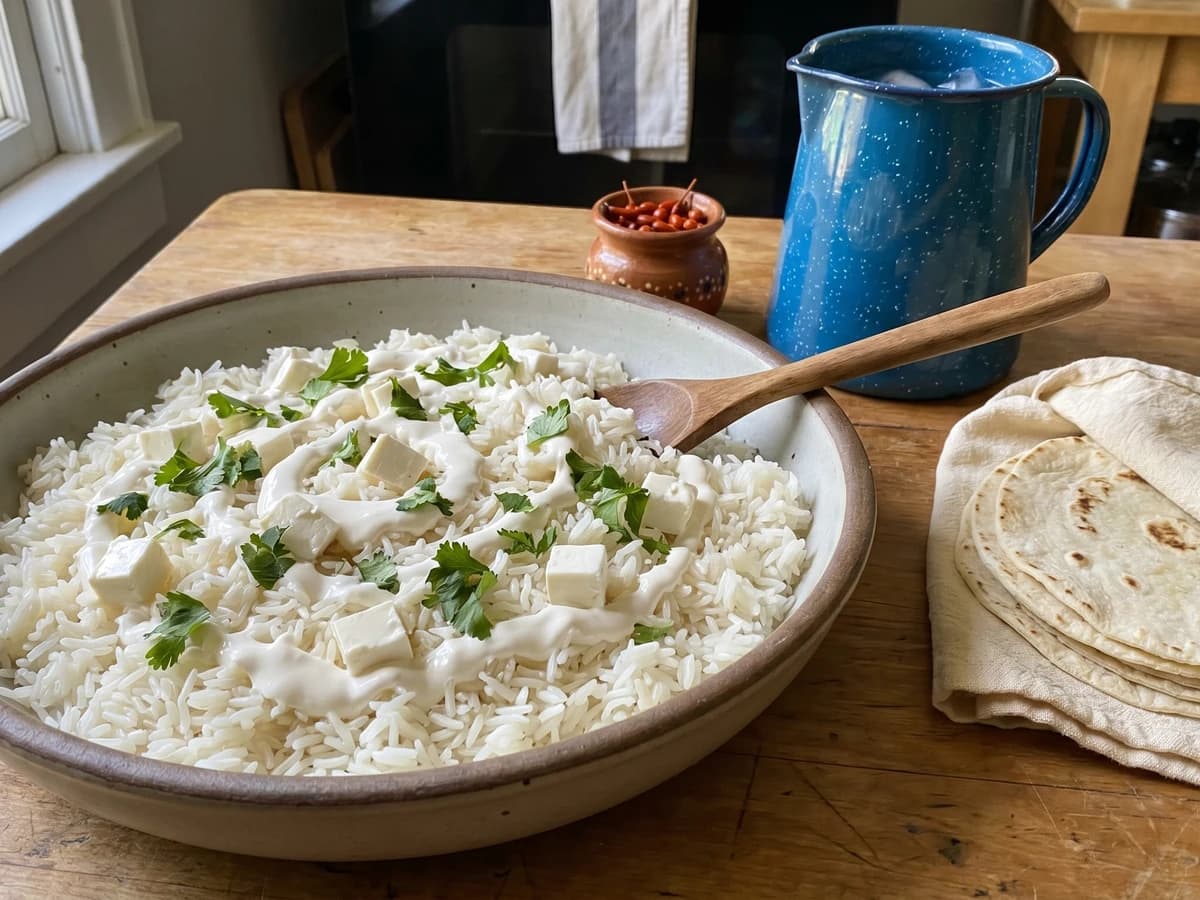
Sinaloa's home-cook white rice topped with cold cubes of cream cheese that soften into the warm grain, finished with crema and a sprinkle of chiltepin at the table. The trick that makes a side dish feel like a small luxury.
Chef Lupita
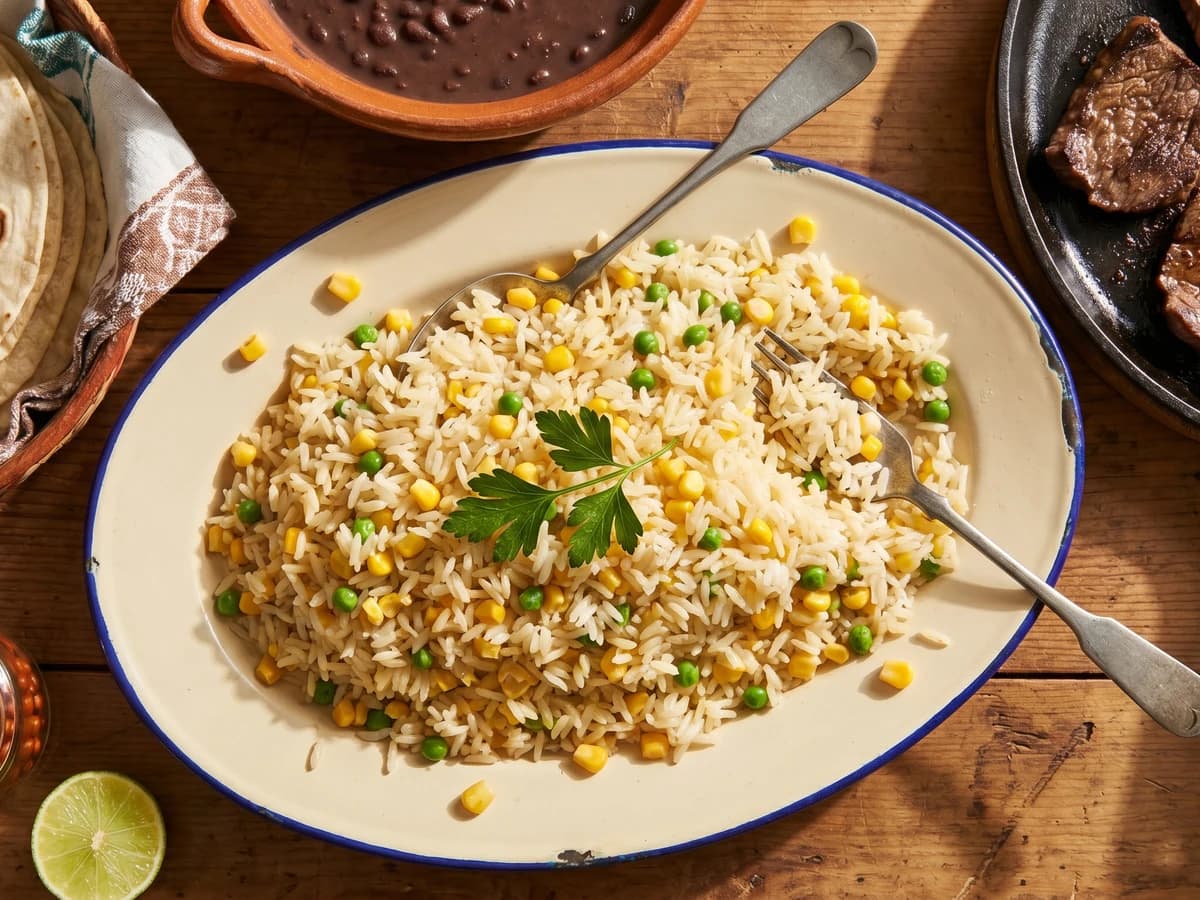
Sonora's white rice, toasted in butter and steamed with sweet corn and tender peas. The clean, quiet partner to a plate of carne asada, not the red rice of central Mexico.

Chef Lupita
Yucatán's white rice with sweet corn kernels, toasted in lard with garlic and onion. The quiet base that holds up against the peninsula's bold achiote-stained stews.