Chef Lupita
Acúmara Tatemada al Comal
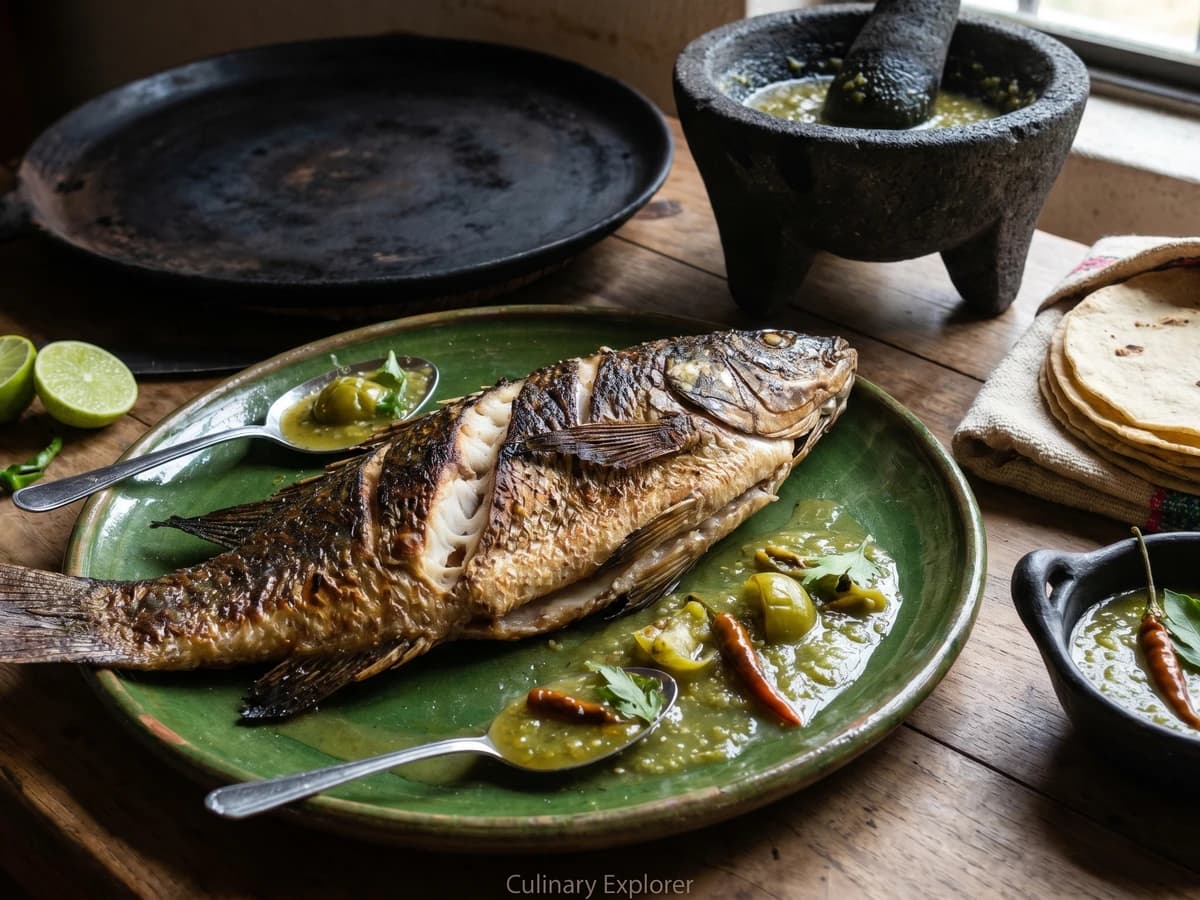
Michoacán's Lake Pátzcuaro acúmara, a whole kurucha from the lago tatemada on a comal de leña and served with chile perón atápakua, corn tortillas, and P'urhépecha discipline.
A cooking platform built around craft, culture, and the stories behind what we eat.
Created by
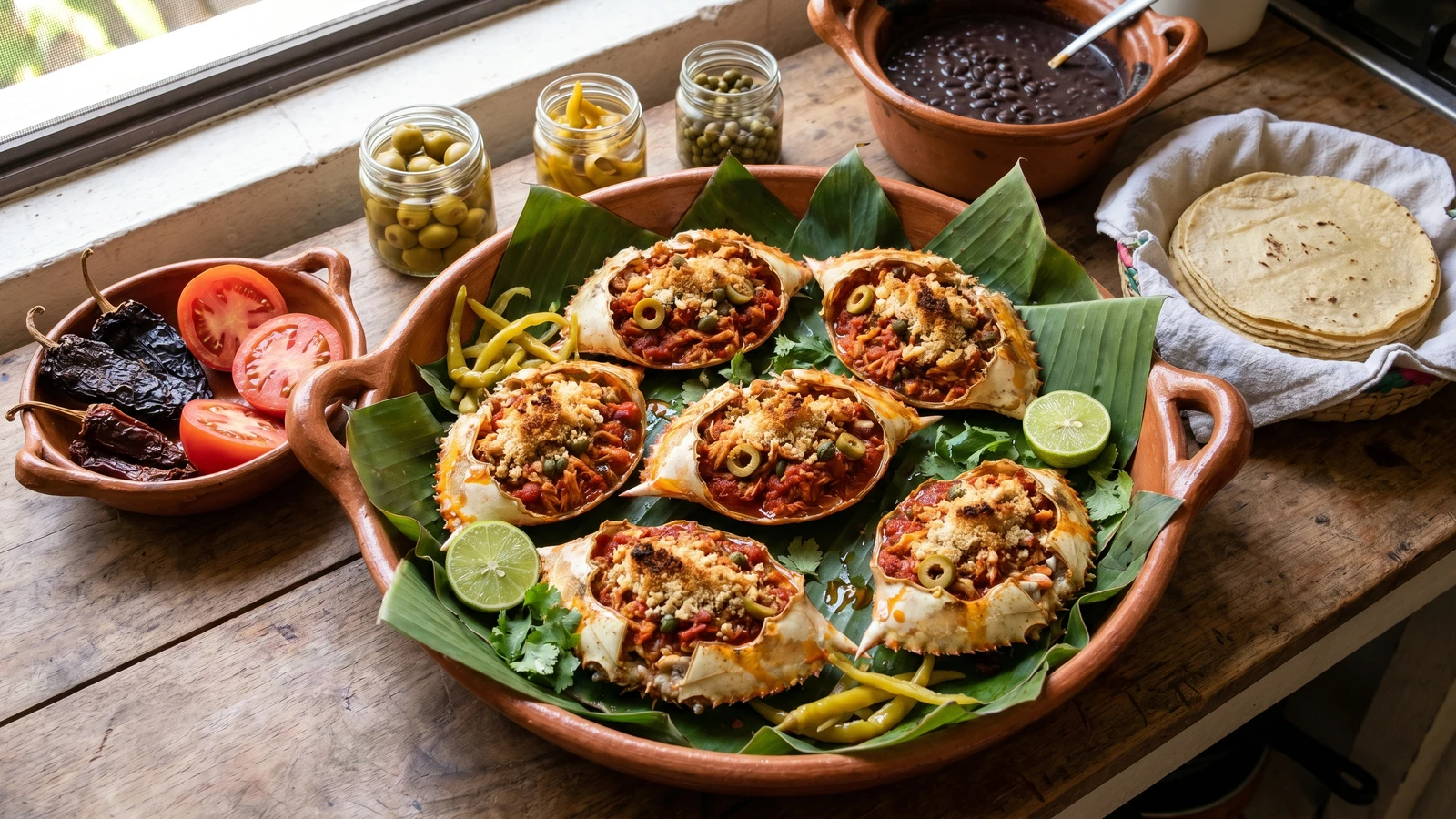
Veracruz's port-born stuffed crab shells, filled with Gulf blue crab, jitomate, olive, caper, chile guero, and crab broth, then baked until the bolillo crumb top turns golden.
Veracruz, the port and the Sotavento coast, is where jaibas rellenas jarochas live. You see them in family kitchens from the old Puerto to Boca del Rio and Alvarado, where the Gulf gives blue crab and the table still remembers the ships that brought olives, capers, almonds, raisins, and olive oil. This is not a taco filling stuffed into a shell. It is a jarocho picadillo of crab, jitomate, chile guero, caper, olive, and the broth from the same shells. Cada estado, su propia cocina.
The filling has to taste like crab first. That means you cook the jaibas gently, pick the meat with patience, and save the broth. The chile ancho gives color and body, the chipotle meco gives a little smoke, and neither is there to make the dish shout. Veracruz food often has that sea-salt and Spanish-port edge: tomato cooked down until it clings, olives that bite, capers that wake the sweet crab. If you use canned crab and chicken broth, you'll still eat dinner. You will not have this dish.
I learned my version from a senora near Mercado Hidalgo who sold cleaned shells in a plastic tub and corrected every student who overfilled the cazuela with tomato. "La jaiba manda," she told me. The crab commands. She was right. Bake the filling back in the carapace, set the shells over banana leaf or acuyo, and bring them to the table with arroz blanco and frijoles negros de olla. Saber cocinar es saber vivir.
Veracruz's port was founded by Hernan Cortes in 1519 as Villa Rica de la Vera Cruz and became New Spain's main Atlantic gate for Spanish goods, including olive oil, olives, capers, raisins, and almonds. Dishes called "a la veracruzana" grew from that port pantry: local Gulf fish or crab cooked with native jitomate and chiles, then sharpened with brined Mediterranean ingredients. Jaibas rellenas belong to the jarocho coastal repertoire around the Puerto, Boca del Rio, and Alvarado, where crab meat is returned to the cleaned shell for celebration tables rather than served loose as everyday stew.
Quantity
8 to 10 large crabs (about 5 pounds) or 1 1/2 pounds picked meat plus 6 cleaned shells
alive or cooked the same day
Quantity
6 cups
Quantity
1/2 medium
Quantity
3
lightly crushed
Quantity
2 sprigs
Quantity
1 teaspoon, plus more to taste
Quantity
1
stemmed and seeded
Quantity
1
stemmed and seeded
Quantity
1 1/2 pounds
cored and chopped, divided
Quantity
1 cup
divided
Quantity
5 tablespoons
divided
Quantity
1 small
finely chopped
Quantity
3
minced
Quantity
2
finely chopped
Quantity
1 tablespoon
Quantity
1
Quantity
1/2 teaspoon
crushed between your fingers
Quantity
1/3 cup
sliced
Quantity
2 tablespoons
drained
Quantity
2 tablespoons
chopped
Quantity
1/4 cup
toasted and chopped
Quantity
1 1/4 cups
divided
Quantity
1
lightly beaten
Quantity
2 tablespoons
chopped
Quantity
6 small leaves or squares
wiped clean
Quantity
for serving
Quantity
for serving
Quantity
for serving
| Ingredient | Quantity |
|---|---|
| Gulf blue crabs or fresh picked blue crab meatalive or cooked the same day | 8 to 10 large crabs (about 5 pounds) or 1 1/2 pounds picked meat plus 6 cleaned shells |
| water | 6 cups |
| white onion | 1/2 medium |
| garlic cloveslightly crushed | 3 |
| fresh epazote | 2 sprigs |
| sea salt | 1 teaspoon, plus more to taste |
| dried chile anchostemmed and seeded | 1 |
| dried chile chipotle mecostemmed and seeded | 1 |
| ripe jitomate de bolacored and chopped, divided | 1 1/2 pounds |
| reserved crab broth or unsalted shellfish stockdivided | 1 cup |
| olive oildivided | 5 tablespoons |
| white onionfinely chopped | 1 small |
| garlic clovesminced | 3 |
| chile guero en escabechefinely chopped | 2 |
| brine from the chile guero jar | 1 tablespoon |
| bay leaf | 1 |
| dried Mexican oreganocrushed between your fingers | 1/2 teaspoon |
| pimiento-stuffed green olivessliced | 1/3 cup |
| capersdrained | 2 tablespoons |
| golden raisinschopped | 2 tablespoons |
| slivered almondstoasted and chopped | 1/4 cup |
| dry bolillo breadcrumbsdivided | 1 1/4 cups |
| large egglightly beaten | 1 |
| fresh cilantrochopped | 2 tablespoons |
| hoja santa (acuyo) leaves or banana leaf squareswiped clean | 6 small leaves or squares |
| lime halves (optional) | for serving |
| arroz blanco (optional) | for serving |
| frijoles negros de olla (optional) | for serving |
If you bought picked crab meat and cleaned shells from the pescaderia, skip to step 3 and use crab broth or unsalted shellfish stock. If cooking whole crabs, bring the water, half onion, crushed garlic, epazote, and sea salt to a strong simmer in a heavy pot. Add the live crabs with tongs, cover, and cook 10 to 12 minutes, until the shells turn red and the meat is just cooked. Use only live crabs. A dead raw crab with slack legs goes in the trash.
Lift the crabs from the pot and let them cool until you can handle them. Strain and reserve the broth. Pull off the top shells and save the six largest carapaces. Scrub them clean and set them aside. Remove and discard the gills, stomach sac, and any sandy bits. Pick the body and claw meat carefully, feeling for shell fragments with your fingers. This is the slow part. No me vengas con atajos.
Heat a dry comal over medium. Toast the chile ancho and chipotle meco for about 20 to 30 seconds per side, just until they darken slightly and smell deep. Do not blacken them. Put the toasted chiles in a bowl, cover with hot water, and soak 15 minutes. Drain, then blend with 1 cup of the chopped jitomate and 1/2 cup reserved crab broth until smooth. Strain if your blender leaves skins behind. The ancho gives body. The chipotle gives smoke. The crab is still in charge.
Heat 3 tablespoons of the olive oil in a wide clay cazuela or heavy skillet over medium heat. Add the finely chopped onion and cook until it turns translucent, about 5 minutes. Add the minced garlic, chile guero, chile brine, bay leaf, and Mexican oregano. Stir for 1 minute, then add the remaining chopped jitomate. Cook 10 to 12 minutes, stirring often, until the tomato collapses and the oil begins to show at the edges. Olive oil belongs here. This is Veracruz, a port kitchen, not a lard pot from Michoacan.
Stir the chile-tomato puree into the sofrito. Add the olives, capers, raisins, and the remaining 1/2 cup crab broth. Simmer 8 to 10 minutes, until the sauce is thick enough to leave a clear path when you drag a spoon through it. Remove the bay leaf. Take the pan off the heat and let it cool 5 minutes, then fold in the picked crab meat, almonds, cilantro, 1/2 cup of the bolillo breadcrumbs, and the beaten egg. Taste for salt. The mixture should be moist, not soupy.
Heat the oven to 375F. Brush the cleaned crab shells lightly with 1 tablespoon olive oil. Set a small hoja santa leaf or banana leaf square inside each shell or under each shell on the baking tray. Divide the crab filling among the carapaces, mounding it generously but not packing it down. The leaf perfumes the dish. It does not become the dish.
Mix the remaining 3/4 cup bolillo breadcrumbs with the last 1 tablespoon olive oil and a small pinch of salt. Sprinkle over the stuffed shells. Bake 18 to 22 minutes, until the tops turn golden in uneven patches and the tomato oil glistens around the edges. Do not bake them dry. The filling should stay soft under the crumb.
Arrange the jaibas on a platter lined with banana leaves or acuyo. Serve with lime halves, arroz blanco, and frijoles negros de olla. Black beans, not pinto. No cheddar, no sour cream, no lettuce. This is the port of Veracruz, not a border plate. Asi se hace y punto.
1 serving (about 470g)
Culinary guides, cultural storytelling, and the editorial depth that makes cooking meaningful.
Discover Culinary ExplorerChef Lupita
Michoacán's Lake Pátzcuaro acúmara, a whole kurucha from the lago tatemada on a comal de leña and served with chile perón atápakua, corn tortillas, and P'urhépecha discipline.

Chef Lupita
Puebla's weekday adobo of pork shoulder braised in a thick guajillo and ancho sauce sharpened with vinegar, cumin, and clove. The deep red of a market spice stall, the dish a poblana cooks without thinking.

Chef Lupita
Loreto's pit-roasted clams, planted hinge-up in beach sand and tatemadas under a fast fire of dried romerillo brush, the resinous Baja desert shrub that gives this dish its smoke.

Chef Lupita
Oaxaca's eighth mole, the silky, almond-and-cinnamon almendrado, served over poached chicken. Mild, sweet, restrained, and a quiet rebuttal to anyone who thinks Mexican food has to be hot to be Mexican.