Chef Dean
Classic Italian Focaccia
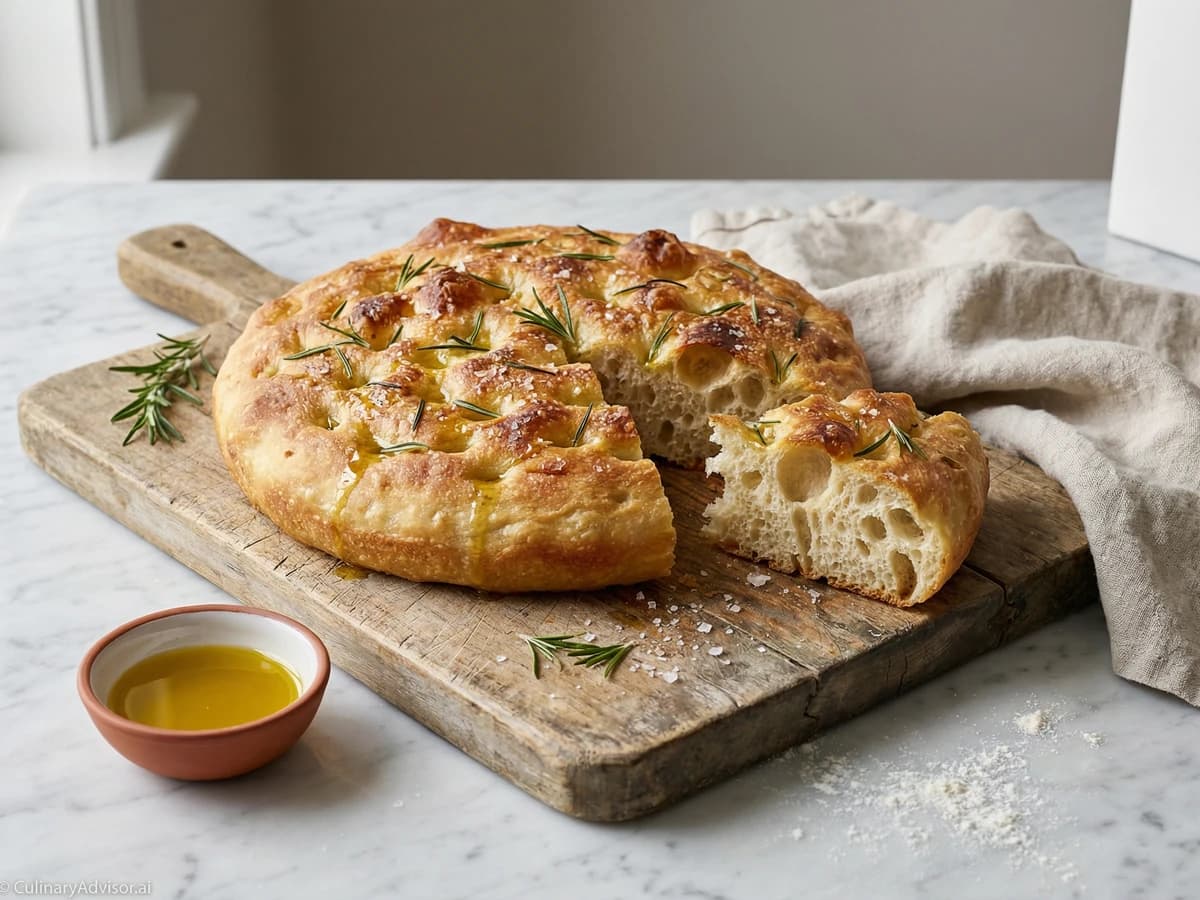
Golden-crusted Ligurian flatbread, generous with olive oil, dimpled by eager fingers, and scattered with rosemary and flaky salt. The bread that proves simplicity requires no apology.
A cooking platform built around craft, culture, and the stories behind what we eat.

Created by
The iconic Italian slipper bread with a shattering golden crust and an interior so open and airy you could lose your car keys in there. High-hydration dough rewards patience with results no bakery can match.
Ciabatta is a young bread with an old soul. Created in 1982 by a baker named Arnaldo Cavallari in the Veneto region, it was Italy's answer to the French baguette that had begun dominating sandwich shops across Europe. The name means slipper, and once you've shaped your first loaf, you'll understand why. Flat, rustic, utterly unpretentious.
What makes ciabatta remarkable is what it asks of you: restraint. This dough is wet. Sticky. It will cling to your hands and test your confidence. Every instinct will tell you to add more flour. Resist. That hydration is the whole secret. Water creates steam. Steam creates the dramatic holes. Those holes make the bread.
I've watched students panic at this dough a hundred times. They poke it, stretch it, frown at its slack refusal to behave like normal bread. Then they pull their first loaves from the oven and everything changes. The crust crackles as it cools. The interior reveals caverns you could hide a thumb in. They understand.
This recipe uses a poolish, a pre-ferment that develops flavor and structure overnight. It's an extra step, but bread rewards those who wait. Start the poolish before bed. Mix your dough after your morning coffee. Bake in time for dinner. The rhythm becomes natural, and the bread becomes yours.
Quantity
250g (about 2 cups)
Quantity
250g (1 cup)
Quantity
1/8 teaspoon
Quantity
250g (about 2 cups)
Quantity
100g (scant 1/2 cup)
Quantity
10g (2 teaspoons)
Quantity
1/2 teaspoon
Quantity
for coating bowl and hands
| Ingredient | Quantity |
|---|---|
| bread flour (for poolish) | 250g (about 2 cups) |
| water, room temperature (for poolish) | 250g (1 cup) |
| instant yeast (for poolish) | 1/8 teaspoon |
| bread flour (for dough) | 250g (about 2 cups) |
| water, room temperature (for dough) | 100g (scant 1/2 cup) |
| fine sea salt | 10g (2 teaspoons) |
| instant yeast (for dough) | 1/2 teaspoon |
| olive oil | for coating bowl and hands |
In a medium bowl, combine 250g bread flour, 250g room temperature water, and 1/8 teaspoon instant yeast. Stir with a wooden spoon until no dry flour remains. The mixture will be thick and shaggy, like wet concrete. Cover tightly with plastic wrap and leave at room temperature for 8 to 12 hours, ideally overnight. When ready, the poolish will have tripled in volume, its surface covered in bubbles, and it will smell yeasty and slightly tangy. This is fermentation doing its work.
Add the remaining 250g bread flour, 100g water, and 1/2 teaspoon instant yeast directly to the bowl with the poolish. Mix with a wooden spoon or your hand, squeezing and folding until everything is incorporated. This will take 2 to 3 minutes. The dough will be extremely sticky and wet. That is correct. Do not add flour. Sprinkle the salt over the top, then squeeze and fold it through the dough for another minute until fully incorporated. Cover the bowl and let rest for 20 minutes.
Oil a large bowl generously. Wet your hands and slide them under the dough, lifting it out of the mixing bowl in one piece. Transfer to the oiled bowl. Now perform your first set of folds: grab one edge of the dough, stretch it upward until you feel resistance, then fold it over to the opposite side. Rotate the bowl 90 degrees and repeat. Do this four times, once from each direction. The dough will tighten into a rough ball. Cover and rest 30 minutes. Repeat this folding process three more times, resting 30 minutes between each set. With each round, you'll feel the dough grow stronger, more elastic, more alive under your hands.
After your final set of folds, cover the bowl and let the dough ferment at room temperature until doubled in size. This takes 1 to 2 hours depending on your kitchen temperature. The dough should be puffy, jiggly when you nudge the bowl, and filled with visible bubbles when you look at it from the side. Press a floured finger into the surface: the indentation should spring back slowly but not completely. That hesitation tells you the fermentation is mature.
Generously flour a large work surface with bread flour. Have a bowl scraper or flexible spatula ready. Flour a rimless baking sheet or large cutting board that will serve as your transfer peel. Line a separate baking sheet with parchment paper. Place a cast iron skillet or metal pan on the bottom rack of your oven. Preheat the oven to 475°F. Let it heat for at least 30 minutes. The thermal mass needs time to saturate.
Tip the dough onto your floured surface. It will spread into a rough rectangle. Flour the top lightly. Using your bowl scraper, divide the dough in half crosswise. Now the critical part: handle this dough like a sleeping baby. No punching, no degassing, no aggressive shaping. Those bubbles are your crumb. Gently stretch each piece into a rough rectangle about 4 by 10 inches. The edges should be ragged and imperfect. That's authentic. Transfer each loaf to the floured peel, leaving space between them.
Let the shaped loaves rest uncovered for 30 to 45 minutes. They will spread slightly and puff visibly. The surface will develop a slight skin, which is fine. Resist the urge to reshape or tighten them. When you poke the dough gently, it should feel airy and spring back slowly.
Working quickly to preserve oven heat, slide the loaves from the peel onto the parchment-lined baking sheet. Transfer immediately to the oven. Pour 1 cup of hot water into the cast iron skillet on the bottom rack and close the door fast. The burst of steam will hit you. That steam keeps the crust soft during the first minutes of baking, allowing maximum oven spring. Bake for 10 minutes with steam, then carefully remove the skillet. Continue baking for 12 to 15 minutes more until the crust is deep golden brown, almost mahogany in spots. The loaves should feel light when lifted, their internal temperature at least 205°F.
Transfer the loaves to a wire rack. Listen. You should hear the crust crackling and singing as it cools, tiny fractures forming in the surface. This is called the song of the bread. Do not cut into the loaves for at least 30 minutes, preferably an hour. The interior is still cooking from residual heat. Cutting too soon releases steam and leaves you with a gummy crumb. Patience. You've waited this long.
1 serving (about 62g)
Culinary guides, cultural storytelling, and the editorial depth that makes cooking meaningful.
Discover Culinary ExplorerChef Dean
Golden-crusted Ligurian flatbread, generous with olive oil, dimpled by eager fingers, and scattered with rosemary and flaky salt. The bread that proves simplicity requires no apology.
Chef Dean
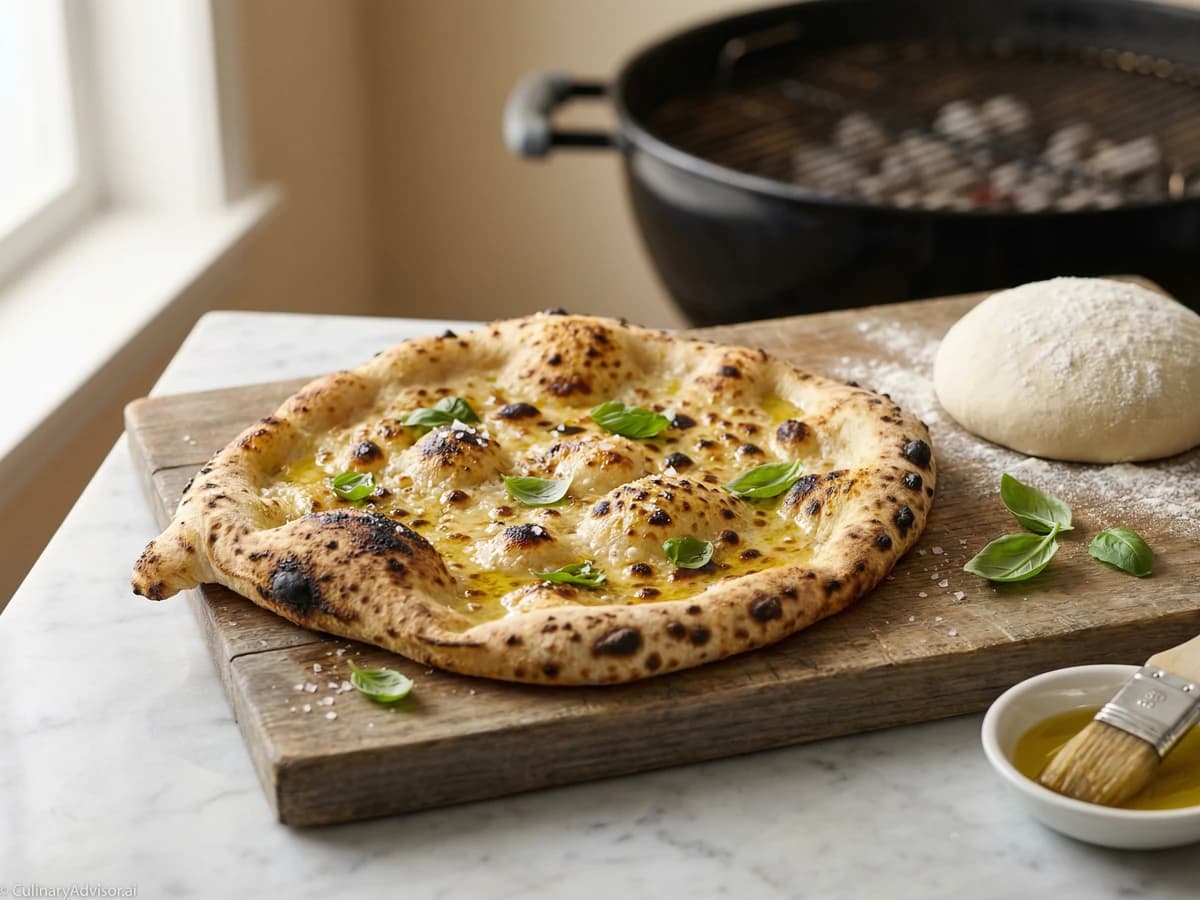
Supple, high-hydration dough stretched thin and kissed by live fire, producing the leopard-spotted char and smoky complexity that no kitchen oven can replicate. This is summer pizza.

Chef Dean
The legendary Milanese Christmas bread with its golden dome, butter-rich crumb, and jeweled interior of candied citrus and plump raisins. Patient fermentation rewards you with texture like sweet clouds pulled apart by eager hands.

Chef Ally
Four ingredients, twenty-four hours, and a willingness to let time do most of the work. This is dough the way Naples has made it for generations, simple and alive with flavor.