Culinary Explorer
A cooking platform built around craft, culture, and the stories behind what we eat.
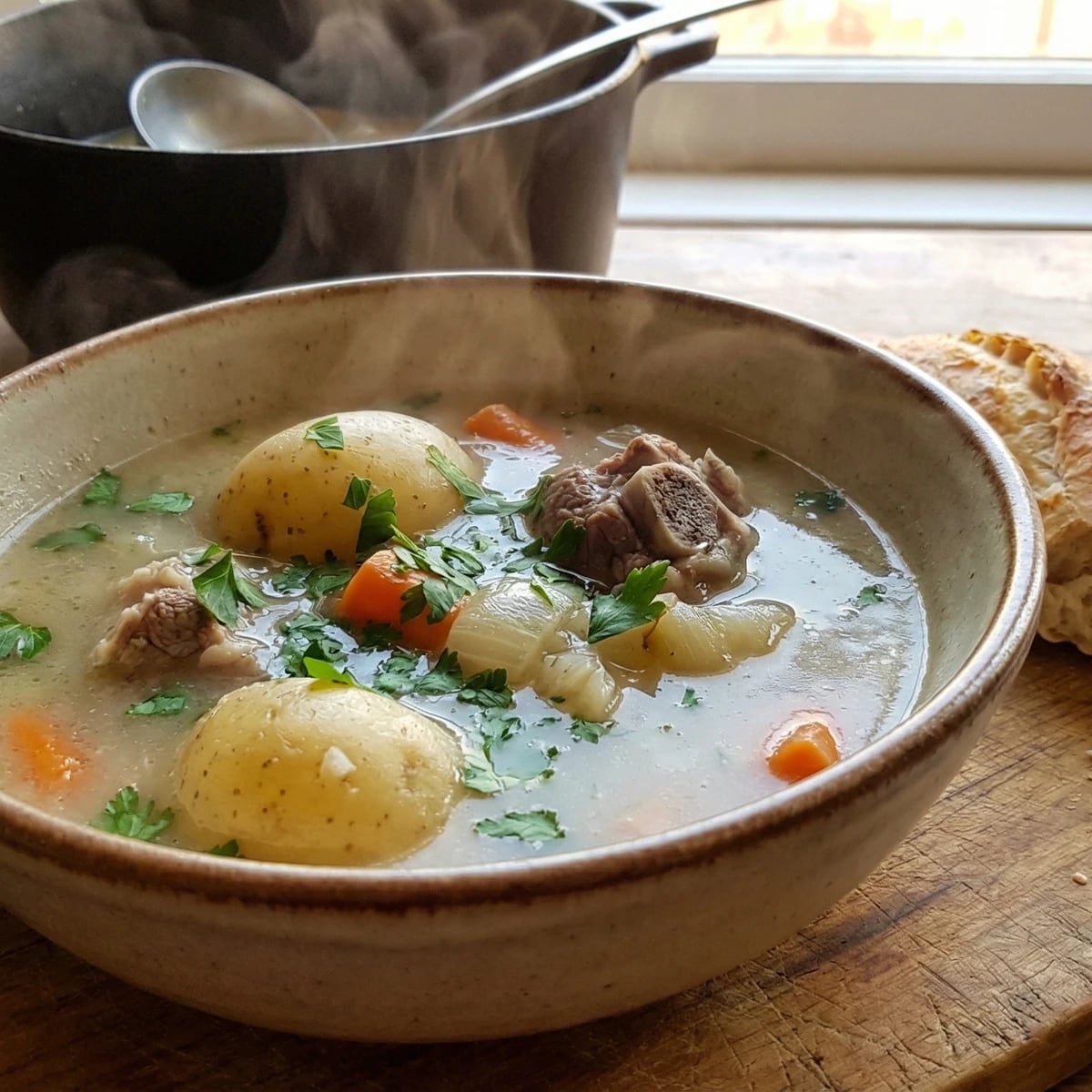
Irish Stew
Created by Chef Thomas
Lamb, potatoes, and onions layered in a pot with thyme, water, and two hours of patience, until the broth thickens itself and the kitchen smells like the kind of evening where nobody is in a hurry.
February rain on the window and the heating not quite doing its job. That's when you want this stew. Not a sophisticated one. Not the sort with red wine and herbs from three different continents. Just lamb, potatoes, onions, and water, cooked slowly until the potatoes fall apart and thicken the broth into something that clings to the back of a spoon.
I came to this late. For years I made stews the way I'd been taught: brown the meat first, build a base, add stock. All fine. But an Irish stew asks you to forget most of that. The lamb goes in raw. The potatoes do the thickening. There's no browning, no deglazing, no fond to scrape up. You layer everything in a pot, add water, and wait. It felt like doing nothing. It felt like cheating. It was neither.
What comes out, after two hours of the gentlest heat you can manage, is the cleanest lamb broth you've ever tasted. The meat is soft and giving. The potatoes on the bottom have dissolved into the liquid, while the ones on top sit whole and floury, soaked through with the flavour of everything beneath them. I wrote it down in the notebook the first time I made it properly: lamb, potatoes, patience, rain. A recipe is a conversation, not a contract, and this one barely needs words.
There are few better feelings than putting a warm plate in front of someone on a cold night and watching them eat without speaking for a while. This stew does that. We're only making dinner, but sometimes dinner is enough.
Ingredients
lamb neck or shoulder
Quantity
800g, bone-in
cut into large pieces
onions
Quantity
4 medium
thickly sliced
potatoes
Quantity
6 medium
peeled
| Ingredient | Quantity |
|---|---|
| lamb neck or shouldercut into large pieces | 800g, bone-in |
| onionsthickly sliced | 4 medium |
| potatoespeeled | 6 medium |
Where cooking meets culture.
Culinary guides, cultural storytelling, and the editorial depth that makes cooking meaningful.
Discover Culinary Explorer