
Chef Dean
Traditional Irish Soda Bread
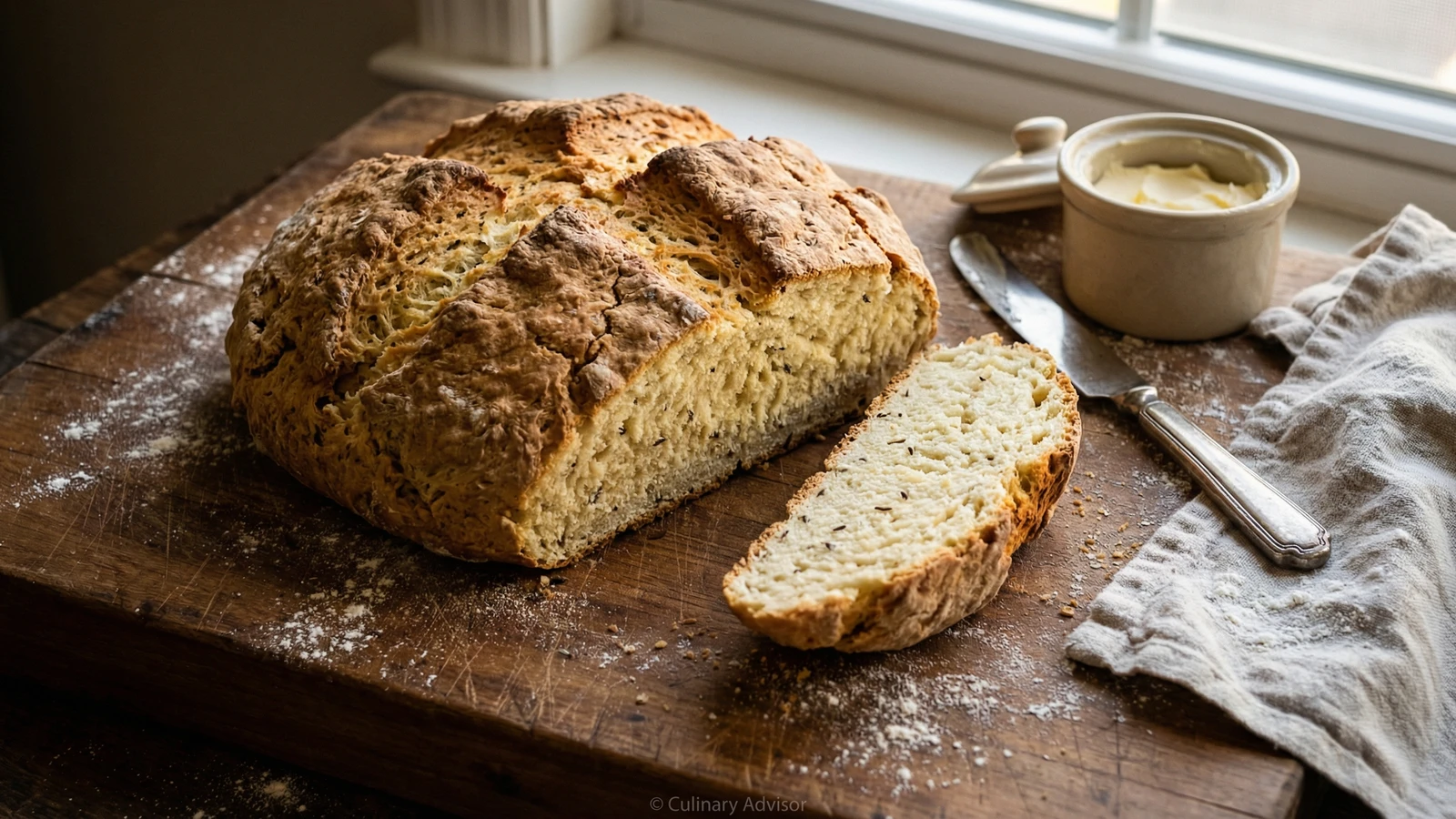
A crusty, tender loaf born from four humble ingredients and Irish ingenuity. No yeast, no kneading, no waiting. Just honest bread on your table in under an hour.
A cooking platform built around craft, culture, and the stories behind what we eat.
Created by
A rustic round of tender, golden bread that asks almost nothing of you: good flour, cold buttermilk, a handful of caraway seeds, and ten minutes of your attention before the oven does the rest.
Start with the flour. Stone-ground flour from a mill you trust will give you bread with character, with a wheaty sweetness that industrial flour cannot match. If you can find a local source, use it. The difference is immediate.
Irish soda bread exists because of scarcity and ingenuity. When bakers in nineteenth-century Ireland could not afford yeast or the fuel to let dough rise for hours, they turned to what they had: buttermilk from the dairy and baking soda from the chemist. The acid in the buttermilk reacts with the alkaline soda, producing carbon dioxide that lifts the bread. No waiting. No kneading. Just chemistry and heat.
Caraway seeds are traditional in some regions, not others. I love them here. They bring a warmth that makes the bread feel ancient somehow, like something your grandmother made. The flavor deepens when you toast a slice and spread it with good butter.
This is bread meant to be torn and shared. It does not keep like a yeasted loaf, but it does not need to. You will finish it in a day.
Quantity
4 cups (500g)
preferably stone-ground
Quantity
1 teaspoon
Quantity
1 teaspoon
Quantity
1 1/2 tablespoons
Quantity
1 3/4 cups (420ml)
well shaken
| Ingredient | Quantity |
|---|---|
| all-purpose flourpreferably stone-ground | 4 cups (500g) |
| fine sea salt | 1 teaspoon |
| baking soda | 1 teaspoon |
| caraway seeds | 1 1/2 tablespoons |
| cold buttermilkwell shaken | 1 3/4 cups (420ml) |
Heat your oven to 425F with a rack in the center position. Line a baking sheet with parchment paper. The hot oven is essential: it activates the baking soda immediately, creating the rise that yeast would otherwise provide.
Whisk together the flour, salt, baking soda, and caraway seeds in a large bowl. Make a well in the center. The caraway should be evenly distributed throughout the flour so every slice carries that distinctive warm, anise-like flavor.
Pour the cold buttermilk into the well all at once. Using a wooden spoon or your hand, stir in quick circles from the center outward, gradually incorporating flour from the edges. Work quickly. The moment the buttermilk meets the baking soda, the chemical reaction begins. You have perhaps ninety seconds before you lose the rise.
Turn the dough onto a lightly floured surface and gather it together with floured hands. Pat gently into a round about 7 inches across and 2 inches tall. Do not knead. Kneading develops gluten, which gives you a tough, dense bread. Three or four gentle folds to bring it together is all you need.
Transfer the round to your prepared baking sheet. Using a sharp knife, cut a deep cross into the top of the loaf, slicing about halfway through the dough. This is not decoration. The cross allows heat to penetrate the center evenly, ensuring the bread bakes through without burning the crust.
Bake for 40 to 45 minutes until the crust is deeply golden and the bottom sounds hollow when you tap it. The internal temperature should reach 200F if you want to be certain. Remove to a wire rack.
Let the bread cool for at least 15 minutes before cutting. The interior continues to set as it cools. Cutting too soon releases steam that would otherwise keep the crumb moist. Wrap a clean kitchen towel around the loaf while it rests if you prefer a softer crust.
1 serving (about 102g)
Culinary guides, cultural storytelling, and the editorial depth that makes cooking meaningful.
Discover Culinary ExplorerChef Dean
A crusty, tender loaf born from four humble ingredients and Irish ingenuity. No yeast, no kneading, no waiting. Just honest bread on your table in under an hour.

Chef Juliette
Pâte à brioche ordinaire teaches enriched dough properly: wake the leaven, build strength before the last egg, then work in pliable butter by stages and let one long fermentation do its quiet work.

Chef Juliette
Ordinary brioche takes one exact measure of butter and a patient rise in the mould, becoming so light and silken that it can cradle fruit without losing its tender crumb.

Chef Juliette
Pâte à brioche ordinaire, butter-rich yet firm, teaches the useful side of brioche: slow fermentation, disciplined mixing, and a dough that rolls cleanly for lining, wrapping, and every sturdy pastry job.