Culinary Explorer
A cooking platform built around craft, culture, and the stories behind what we eat.
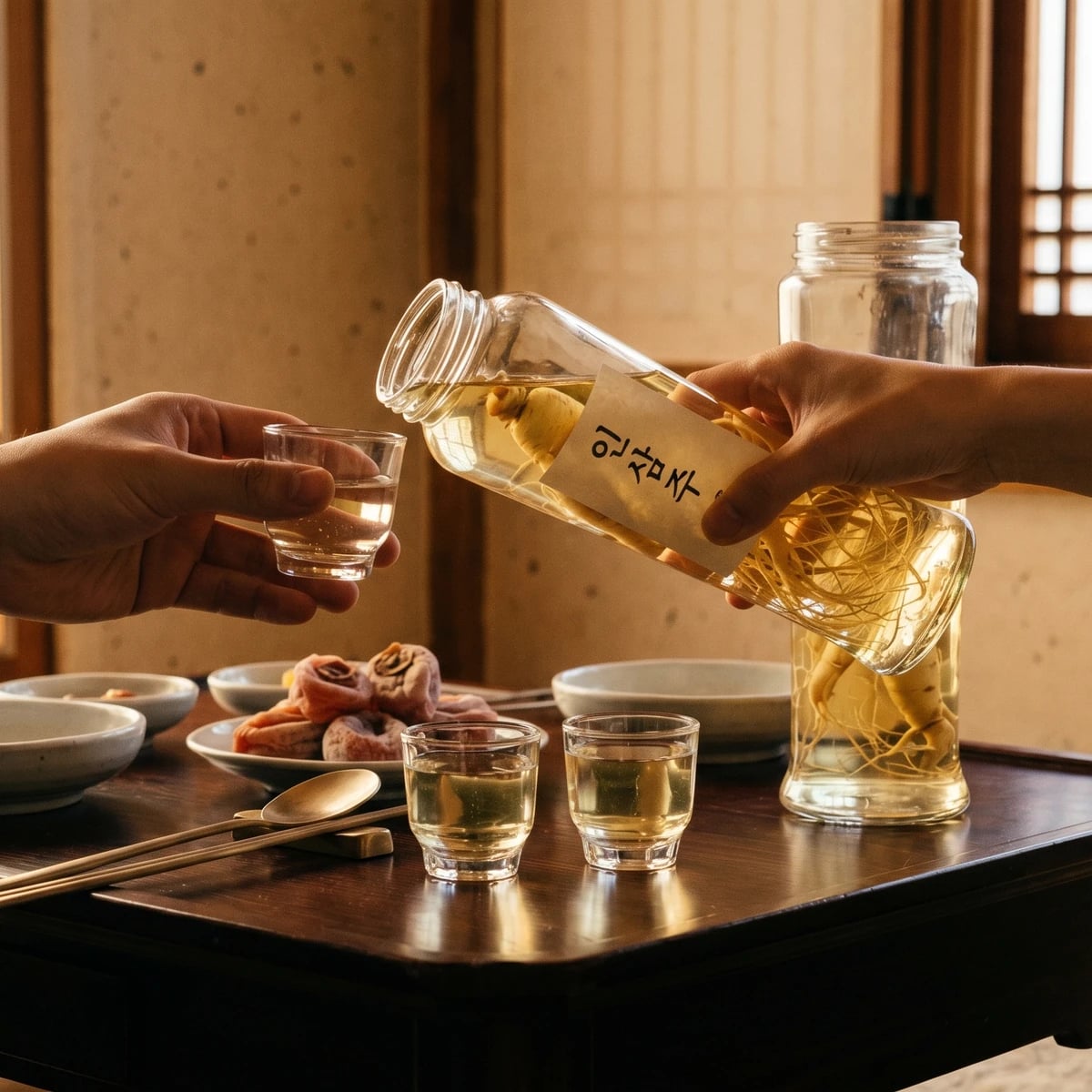
Insam-ju (Ginseng Liquor)
Created by Chef Jeong-sun
Fresh ginseng roots steeped whole in clean, high-proof liquor until the bottle turns pale gold, bitter at the edge, gently sweet, and ready for the smallest winter pour.
Insam-ju lives or dies by patience and cleanliness. There is almost no cooking here, so the work tonight is choosing good roots, washing them without bruising them, drying them fully, and putting them into a clean jar with liquor strong enough to preserve their character.
At the market, look for fresh insam (ginseng) with firm bodies, fine rootlets, and no soft spots. Four- to six-year roots give the deepest flavor, but do not pretend an ordinary market root is useless. Technique first. Dirt left in the roots muddies the liquor, and water trapped in the creases can cloud it, so rinse gently and dry longer than feels necessary.
This is not a drink for filling a tumbler. Korean homes pour insam-ju in small cups, often after a meal or when guests come in cold weather. It should taste bittersweet and earthy, the ginseng reading clearly through the spirit, not buried under sugar. Write it down. Memory is a borrowed bowl. If your roots were 120 grams and your bottle was right at six months, you should know that when you make the next one.
Ingredients
fresh Korean ginseng roots (insam)
Quantity
100 to 120g
whole, gently washed and fully dried
30 to 40 percent ABV soju, damgeumju liquor, or vodka
Quantity
1 liter
honey or rock sugar (optional)
Quantity
1 tablespoon
| Ingredient | Quantity |
|---|---|
| fresh Korean ginseng roots (insam)whole, gently washed and fully dried | 100 to 120g |
| 30 to 40 percent ABV soju, damgeumju liquor, or vodka | 1 liter |
| honey or rock sugar (optional) | 1 tablespoon |
Where cooking meets culture.
Culinary guides, cultural storytelling, and the editorial depth that makes cooking meaningful.
Discover Culinary Explorer