Chef Juliette
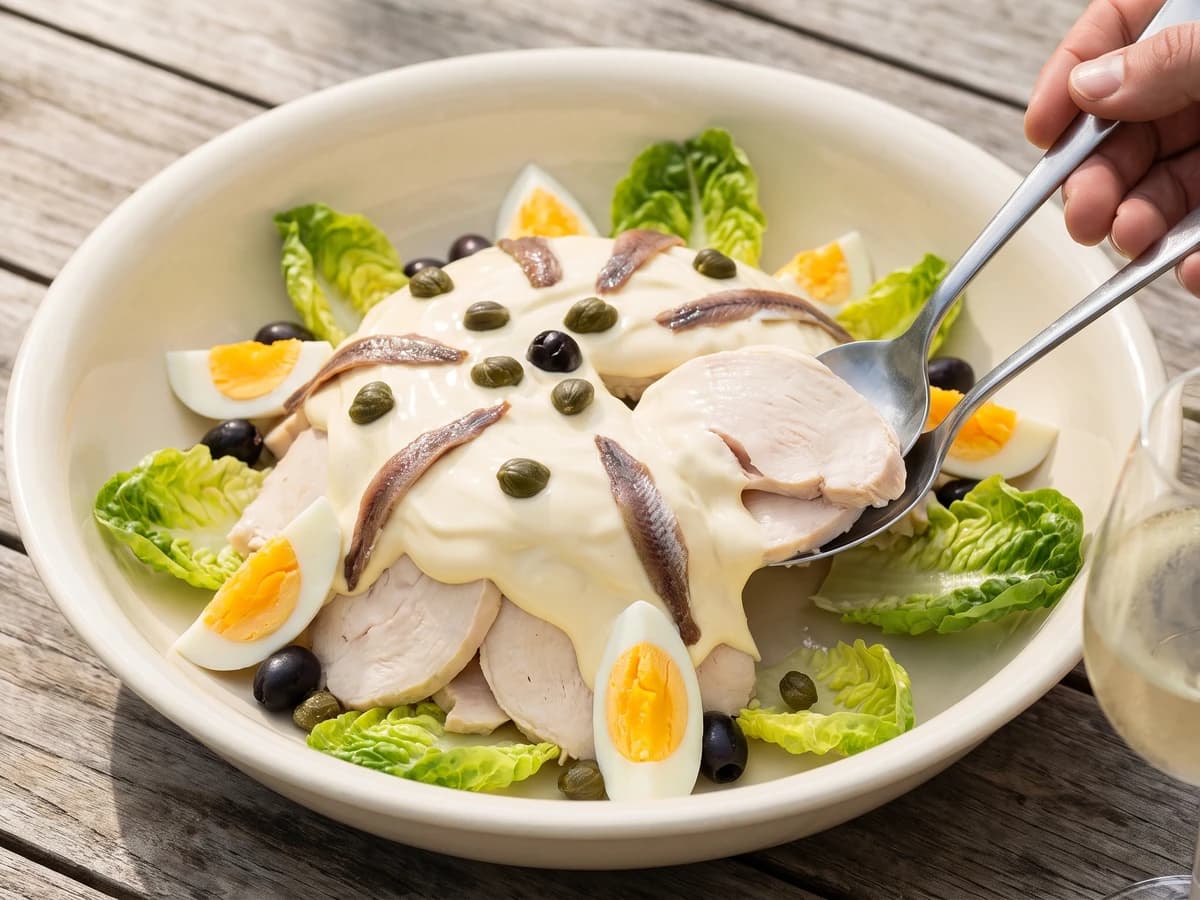
Mayonnaise de Volaille
Cold roast chicken, ciseled lettuce, and a shining coat of homemade mayonnaise, arranged with capers, olives, anchovies, eggs, and lettuce hearts, then tossed at the table as the canon intends.
A cooking platform built around craft, culture, and the stories behind what we eat.
Created by
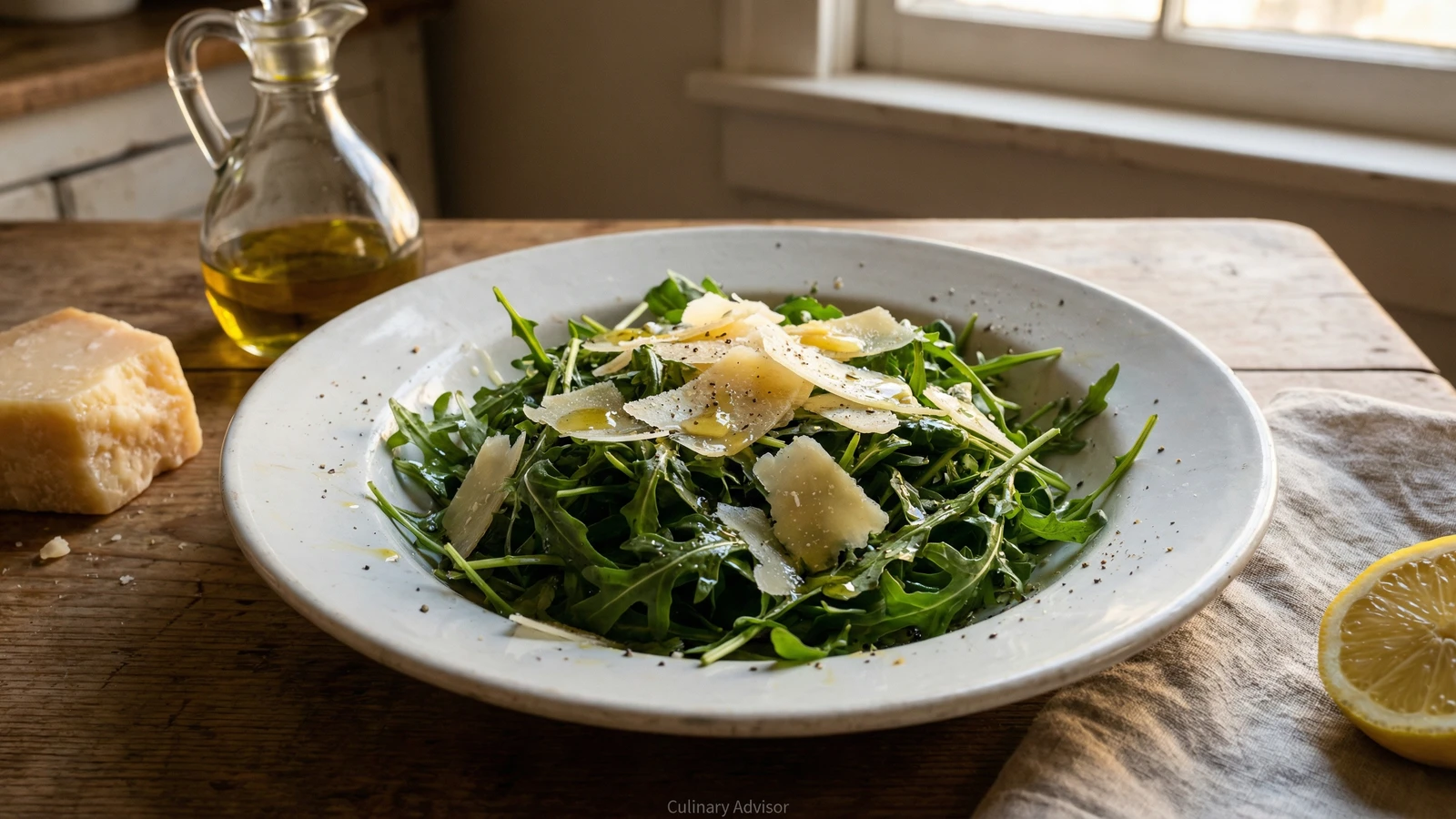
Peppery greens, aged cheese, good oil, fresh lemon. Four ingredients that prove Italian cooking is about knowing when to stop. The arugula bites back, the Parmigiano answers with salt and depth.
This salad has four ingredients. You cannot hide behind technique or complexity. Either your arugula is fresh and peppery, your Parmigiano is properly aged, your olive oil is worth the price you paid, and your lemon was squeezed moments ago, or the salad fails. There is no middle ground.
In Emilia-Romagna, where Parmigiano-Reggiano has been made the same way for eight centuries, this salad appears on tables without ceremony. It is what you serve before the main course, or alongside a piece of grilled meat. It is not a recipe that anyone writes down because everyone already knows it. The peppery bite of the arugula against the crystalline, nutty sweetness of aged Parmigiano. The oil coating each leaf. The lemon cutting through the richness.
What you keep out is as significant as what you put in. There is no garlic here, no vinegar, no dried herbs, no additions of any kind. When ingredients are this good, additions become subtractions.
Romans ate arugula two thousand years ago, believing it to be an aphrodisiac. The pairing with Parmigiano-Reggiano is a natural marriage of two ingredients from the same region, Emilia-Romagna, where the cheese has been produced under strict regulations since the Middle Ages. This salad represents the Emilian philosophy that great ingredients need nothing but each other.
Quantity
8 ounces
washed and thoroughly dried
Quantity
4 ounces
aged at least 24 months
Quantity
3 tablespoons
Quantity
1 tablespoon
about half a lemon
Quantity
to taste
Quantity
to taste
freshly ground
| Ingredient | Quantity |
|---|---|
| fresh arugula (rucola)washed and thoroughly dried | 8 ounces |
| Parmigiano-Reggianoaged at least 24 months | 4 ounces |
| extra virgin olive oil | 3 tablespoons |
| fresh lemon juiceabout half a lemon | 1 tablespoon |
| flaky sea salt | to taste |
| black pepperfreshly ground | to taste |
The arugula must be fresh, with no yellowing or slime. Small leaves are more tender and less bitter than large ones. Wash them in several changes of cold water, then dry them completely in a salad spinner. Wet greens dilute the dressing and create puddles at the bottom of the bowl. This is inexcusable.
Using a vegetable peeler or a sharp knife, shave the Parmigiano-Reggiano into thin, irregular curls. You want shavings, not grated cheese. The texture matters. Each shaving should be thin enough to see light through but substantial enough to provide a bite. Do this just before serving.
Place the dry arugula in a wide serving bowl. Drizzle the olive oil over the leaves and toss gently with your hands. Every leaf should glisten. Add the lemon juice and toss again. Season with salt sparingly, as the Parmigiano brings its own. The cheese is salty. Remember this.
Scatter the Parmigiano shavings over the dressed greens. Do not toss them in. They should rest on top where they can be seen and appreciated. Grind black pepper over all. Serve immediately. This salad waits for no one. Within five minutes the leaves begin to wilt under the acid and oil.
1 serving (about 100g)
Culinary guides, cultural storytelling, and the editorial depth that makes cooking meaningful.
Discover Culinary ExplorerChef Juliette
Cold roast chicken, ciseled lettuce, and a shining coat of homemade mayonnaise, arranged with capers, olives, anchovies, eggs, and lettuce hearts, then tossed at the table as the canon intends.

Chef Juliette
Cold roast or poached chicken with fine ribbons of lettuce, dressed at the final moment with oil and vinegar: a composed salad whose freshness depends entirely on timing.

Chef Juliette
Five leaves, one living rule: laitue, romaine, chicorée, mâche, or pissenlit must be washed, dried, and dressed only as they go to the table, while every leaf still carries its light vinaigrette.

Chef Juliette
Salade de Betteraves proves that baking, not boiling, is the whole argument: concentrated garnet sweetness, tender baked onion, sharp mustard, and herbs cut into a weeknight salad worth making ahead.