
Chef Graziella
Cavolo Cappuccio in Insalata
The cabbage slaw of the Alto Adige, where Austrian traditions meet Italian restraint. Caraway seeds give it character, vinegar gives it brightness, and time gives it depth.
A cooking platform built around craft, culture, and the stories behind what we eat.
Created by
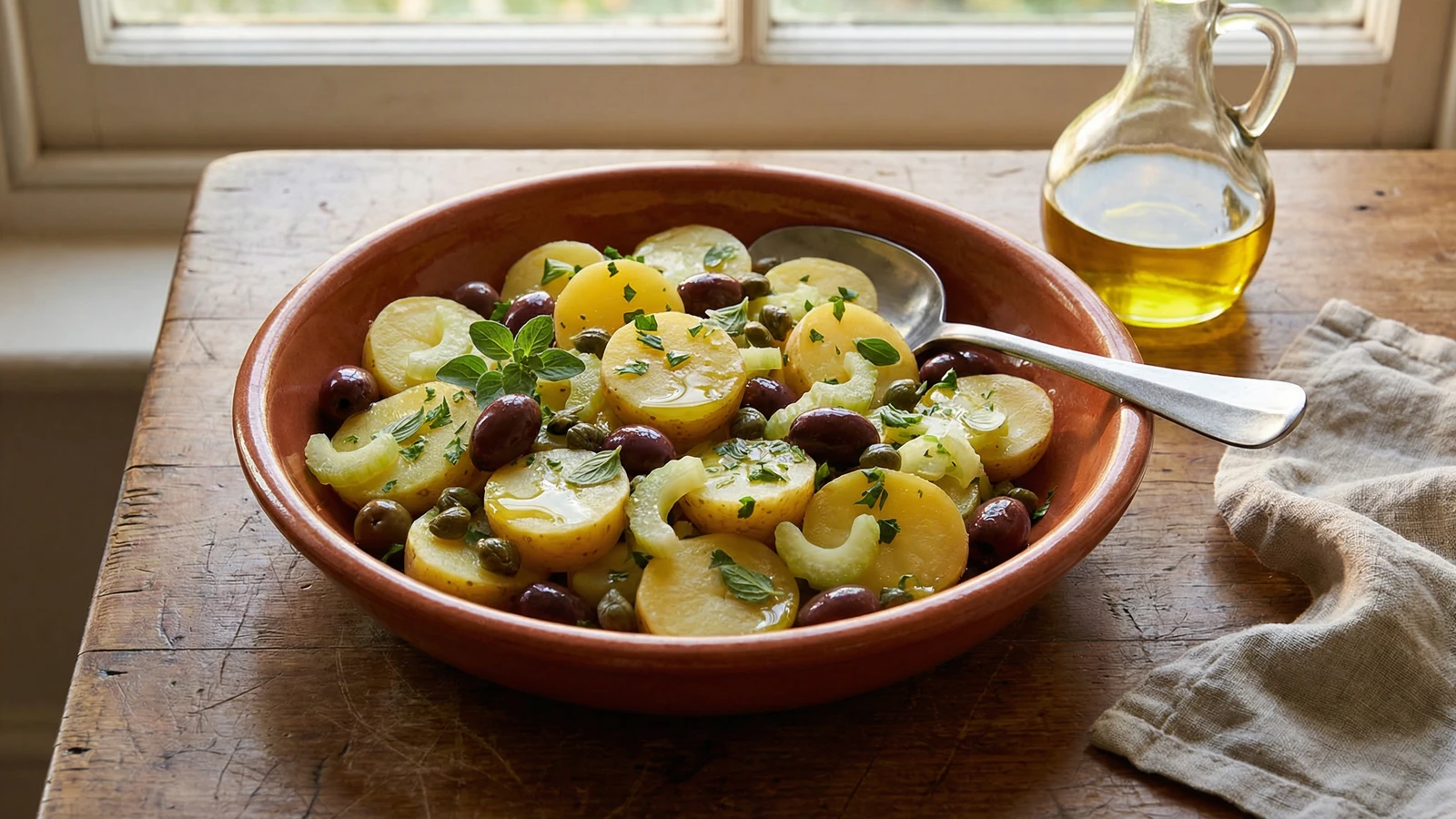
The potato salad of Italian summers, dressed while warm with olive oil and vinegar, scattered with capers and olives. No mayonnaise has ever touched it. None ever will.
Americans see potato salad and reach for the mayonnaise. Italians see potatoes and reach for the olive oil. This fundamental difference explains everything about how our cuisines diverge.
The secret to Italian potato salad is not a secret at all. You dress the potatoes while they are warm. Warm potatoes are porous, receptive, eager to absorb whatever you give them. Cold potatoes are dense and stubborn. They sit in the dressing without taking it in. Every Italian grandmother knows this. It is curious that so few American cooks have learned it.
This is a summer dish, best made when you can eat it outdoors with grilled fish or chicken. The capers and olives provide salt and brine. The celery adds crunch. The herbs remind you that you are eating something alive, something from the garden. What you keep out is as significant as what you put in. There is no onion here because the shallot is enough. There is no garlic because it would overwhelm. Restraint is not deprivation. It is wisdom.
Potato salads dressed with oil and vinegar appear throughout the Mediterranean, but the Italian versions distinguish themselves through restraint and regional variation. Coastal regions add capers and olives from local production. Inland areas might use more herbs. The technique of dressing warm potatoes likely came north from Naples, where cooks understood that temperature determines absorption.
Quantity
2 pounds
Yukon Gold or fingerling
Quantity
for cooking water and seasoning
Quantity
1/3 cup, plus more for drizzling
Quantity
3 tablespoons
Quantity
1 small
minced very fine
Quantity
2 tablespoons
rinsed and drained
Quantity
1/3 cup
pitted and halved
Quantity
1
sliced thin on the bias
Quantity
2 tablespoons
chopped
Quantity
1 tablespoon
Quantity
to taste
freshly ground
| Ingredient | Quantity |
|---|---|
| waxy potatoesYukon Gold or fingerling | 2 pounds |
| kosher salt | for cooking water and seasoning |
| extra virgin olive oil | 1/3 cup, plus more for drizzling |
| red wine vinegar | 3 tablespoons |
| shallotminced very fine | 1 small |
| capersrinsed and drained | 2 tablespoons |
| Gaeta or Taggiasca olivespitted and halved | 1/3 cup |
| celery stalksliced thin on the bias | 1 |
| fresh flat-leaf parsleychopped | 2 tablespoons |
| fresh oregano leaves | 1 tablespoon |
| black pepperfreshly ground | to taste |
Place the potatoes whole and unpeeled in a large pot. Cover with cold water by two inches. Add enough salt to make the water taste like the sea. Bring to a gentle simmer over medium heat. Cook until a thin knife slips easily into the center without resistance, 20 to 25 minutes depending on size. The potatoes must be tender throughout but not falling apart.
While the potatoes cook, whisk together the olive oil, red wine vinegar, and minced shallot in a small bowl. Let the shallot soften in the acid. This is your window to prepare the other ingredients.
Drain the potatoes and let them cool just until you can handle them, no more than five minutes. Peel them while still warm. The skins slip off easily when the potatoes are hot. Slice into rounds about one-third inch thick and place in a wide serving bowl.
Pour the dressing over the warm potato slices. Toss gently with your hands or two wooden spoons, taking care not to break the slices. The potatoes should glisten. Season generously with salt and pepper. Let stand for 10 minutes so the potatoes absorb the dressing.
Scatter the capers, olives, celery, parsley, and oregano over the potatoes. Toss once more, gently. Taste and adjust the salt and vinegar. The salad should be bright but not sharp.
Transfer to a serving platter if desired. Drizzle with additional olive oil. Serve at room temperature. Never cold. Cold mutes everything you have worked to build.
1 serving (about 190g)
Culinary guides, cultural storytelling, and the editorial depth that makes cooking meaningful.
Discover Culinary ExplorerChef Graziella
The cabbage slaw of the Alto Adige, where Austrian traditions meet Italian restraint. Caraway seeds give it character, vinegar gives it brightness, and time gives it depth.

Chef Graziella
Squid poached for mere seconds, dressed while still warm with good olive oil and lemon, scattered with celery and olives. The restraint of coastal Italian cooking, where the sea provides and the cook does not interfere.
Chef Graziella
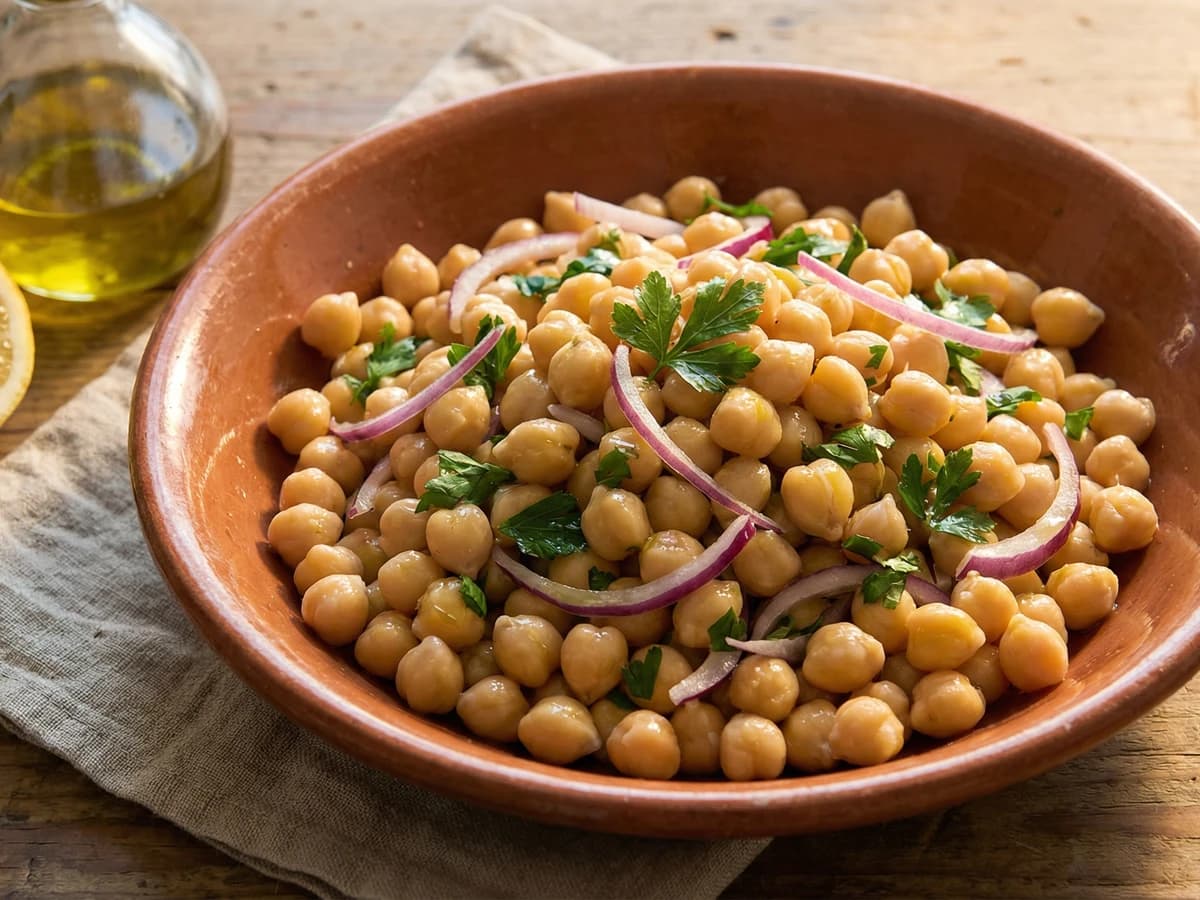
Warm chickpeas drink in olive oil and lemon as cold ones never can. This is the salad of Italian home cooks: five ingredients, honest technique, and nothing to hide behind.
Chef Graziella
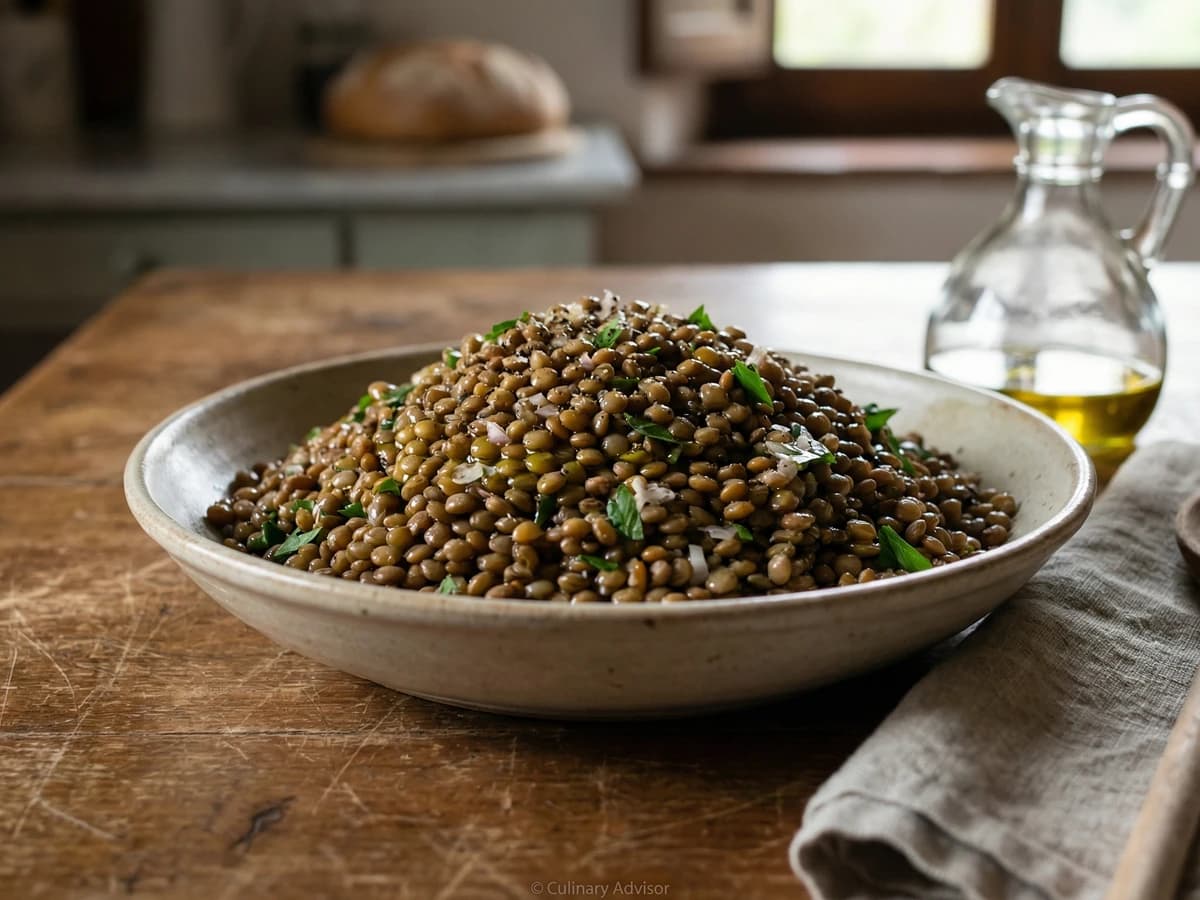
The tiny lentils of Umbria's high plateau, cooked until just tender and dressed simply with olive oil, vinegar, and parsley. What you keep out matters as much as what you put in.