Chef Graziella
Insalata di Peperoni Arrostiti
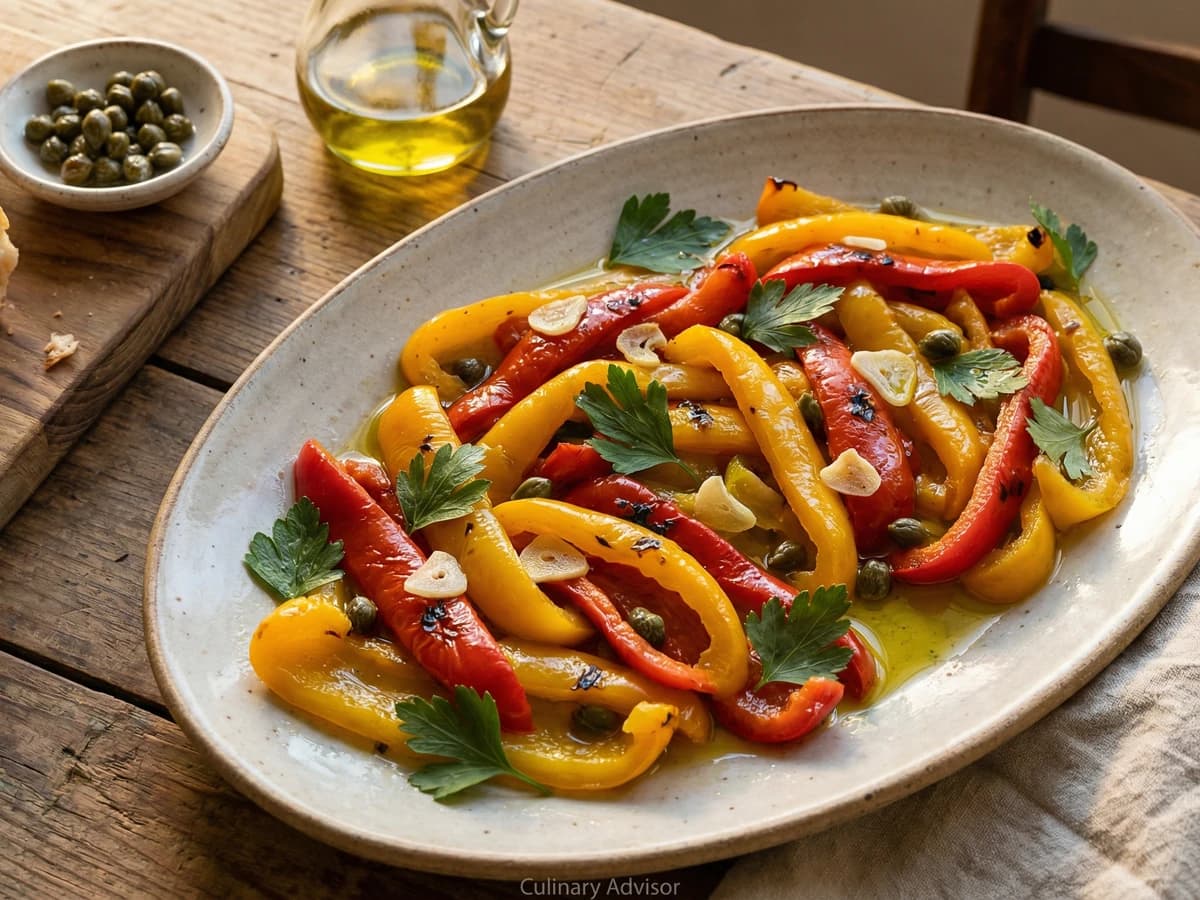
Piedmontese roasted peppers dressed with anchovies, capers, and the thinnest slices of garlic. A dish that rewards patience, improving for days in the refrigerator.
A cooking platform built around craft, culture, and the stories behind what we eat.
Created by
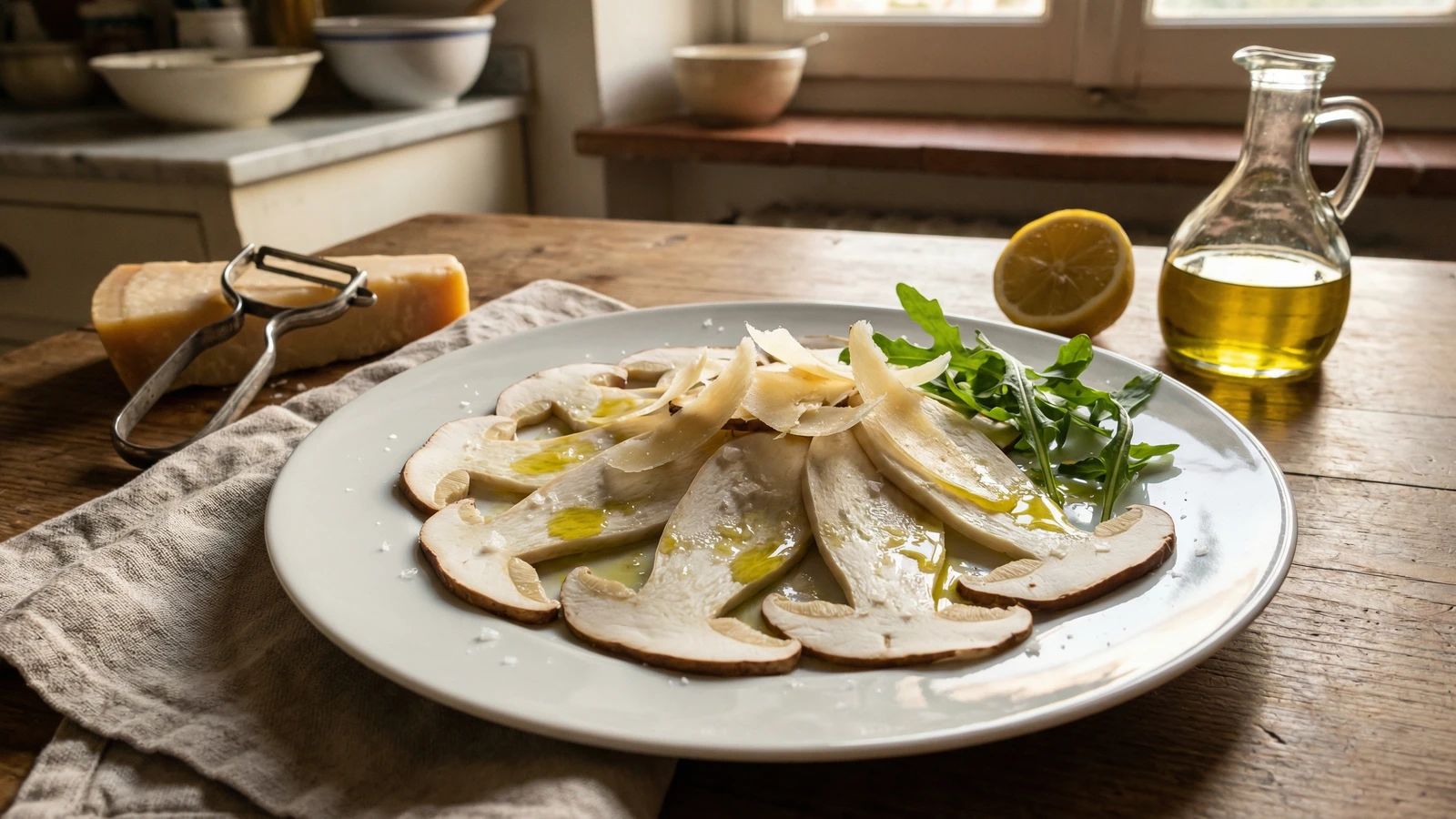
Piedmont's autumn ritual: pristine porcini shaved translucent, dressed at the last moment with lemon and the region's finest olive oil, finished with aged Parmigiano curls that melt against the cool mushroom flesh.
In Piedmont, when the first autumn rains bring porcini up from the forest floor, the cooks who understand these things do not rush to the stove. They reach for a sharp knife instead. The finest porcini need no cooking. Heat would destroy their delicate texture, their subtle sweetness, their faint perfume of hazelnuts and damp earth.
This is a salad that asks everything of its ingredients and nothing of the cook's technique beyond a steady hand and a sharp blade. The mushrooms must be perfect. Not good. Perfect. Firm, unblemished, freshly gathered. If you cannot find such mushrooms, wait. Make something else. Come back when the season and your vendor align.
The dressing is lemon and olive oil, nothing more. The cheese is Parmigiano-Reggiano, aged enough to have developed crystalline texture and complex flavor. What you keep out is as significant as what you put in. There is no garlic here, no herbs beyond what grows in your imagination. The porcini speaks. Everything else listens.
The tradition of eating raw porcini dates to the rural Langhe and Monferrato hills of Piedmont, where autumn foragers recognized that the freshest specimens needed nothing but good oil and salt. By the mid-20th century, the insalata di funghi crudi had become a fixture on elegant tables in Alba and Turin, transforming peasant simplicity into something that fetched serious prices during white truffle season, when a few shavings of tartufo might crown the dish.
Quantity
12 ounces
pristine and firm
Quantity
3 tablespoons
Quantity
2 tablespoons
about 1 lemon
Quantity
to taste
Quantity
to taste
freshly ground
Quantity
3-ounce wedge
24 months or older
Quantity
small handful
| Ingredient | Quantity |
|---|---|
| fresh porcini mushroomspristine and firm | 12 ounces |
| extra virgin olive oil | 3 tablespoons |
| fresh lemon juiceabout 1 lemon | 2 tablespoons |
| flaky sea salt | to taste |
| white pepperfreshly ground | to taste |
| Parmigiano-Reggiano24 months or older | 3-ounce wedge |
| wild arugula (optional) | small handful |
The porcini must be absolutely pristine. Look for firm caps with no soft spots, no worm holes, no sliminess. The flesh should be ivory white when cut. Smell them: they should have a clean, earthy fragrance, almost sweet. If you cannot find perfect porcini, very fresh cremini mushrooms may substitute, though the flavor will be less profound. Do not attempt this salad with mushrooms that are less than perfect. There is nowhere to hide.
Never wash porcini. They absorb water like sponges and become soggy and flavorless. Use a soft brush or damp cloth to remove any dirt from the caps. Trim the very bottom of the stems where they may be tough or dirty. If the stems are tender throughout, use them. They have excellent flavor.
Using a very sharp knife or a mandoline, shave the mushrooms into paper-thin slices, no thicker than a playing card. Work from the cap through the stem so each slice shows the beautiful cross-section. The thinness matters. Thick slices are chewy and raw-tasting in the wrong way. Thin slices are silky and delicate.
Spread the mushroom slices in a single layer on a serving plate. They should overlap slightly but not pile up. In a small bowl, whisk together the olive oil and lemon juice with a pinch of salt. The dressing should taste bright but not sharp, the oil and acid in balance. Drizzle this over the mushrooms, letting it pool into the curves of each slice.
Using a vegetable peeler, shave thin curls of Parmigiano-Reggiano directly over the dressed mushrooms. The curls should be generous but not so heavy that they obscure the mushrooms beneath. The cheese provides salt and savory depth. Finish with a light grinding of white pepper and a few flakes of sea salt.
This salad waits for no one. The moment the dressing touches the mushrooms, the clock starts. Within 10 minutes the mushrooms begin to soften and weep. Serve the instant it is assembled, while the mushrooms still have their silky texture and the cheese curls hold their shape. If using arugula, scatter a few leaves around the edge of the plate for peppery contrast.
1 serving (about 125g)
Culinary guides, cultural storytelling, and the editorial depth that makes cooking meaningful.
Discover Culinary ExplorerChef Graziella
Piedmontese roasted peppers dressed with anchovies, capers, and the thinnest slices of garlic. A dish that rewards patience, improving for days in the refrigerator.
Chef Graziella
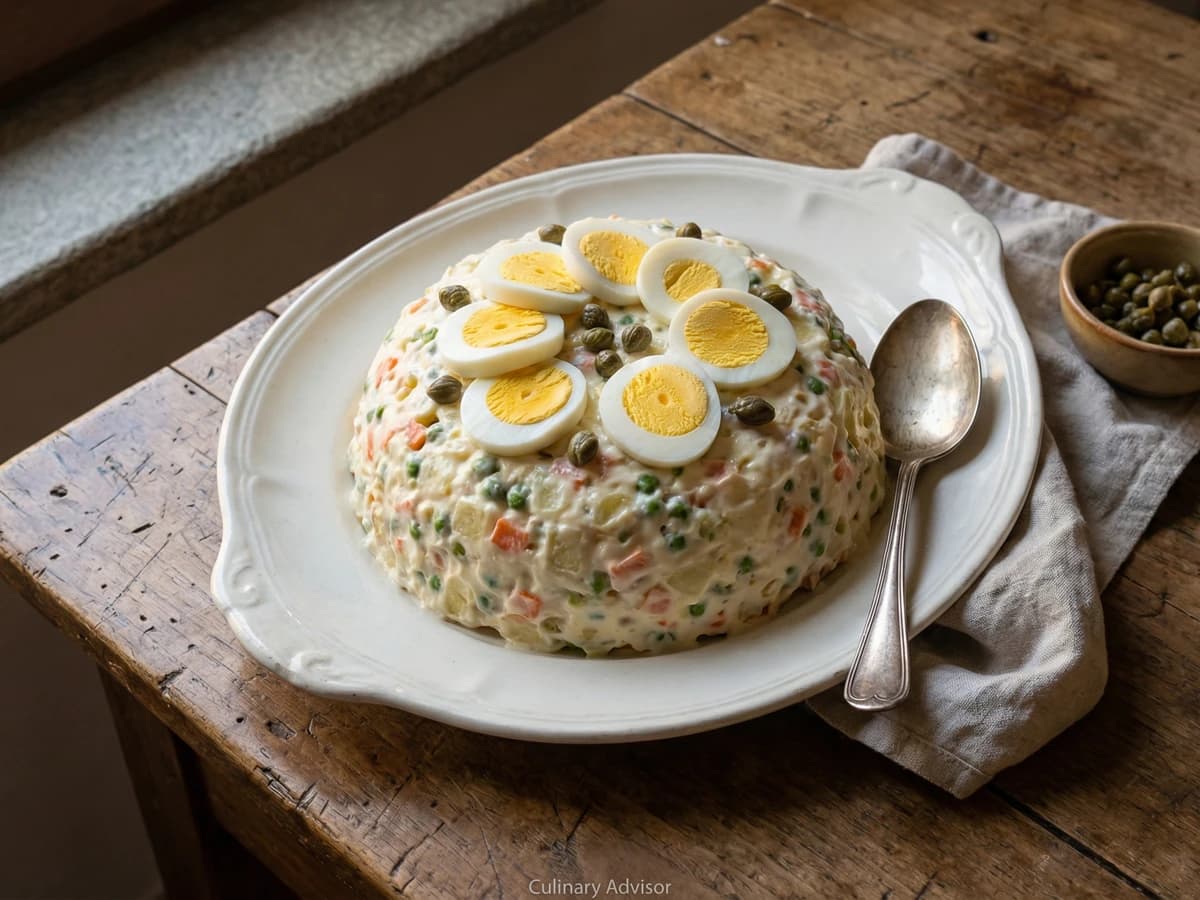
The celebrated salad of Piedmont, where precisely diced vegetables meet homemade mayonnaise and quality tuna. Every Italian family serves this at New Year's, and every family argues about whose mother made it best.
Chef Juliette
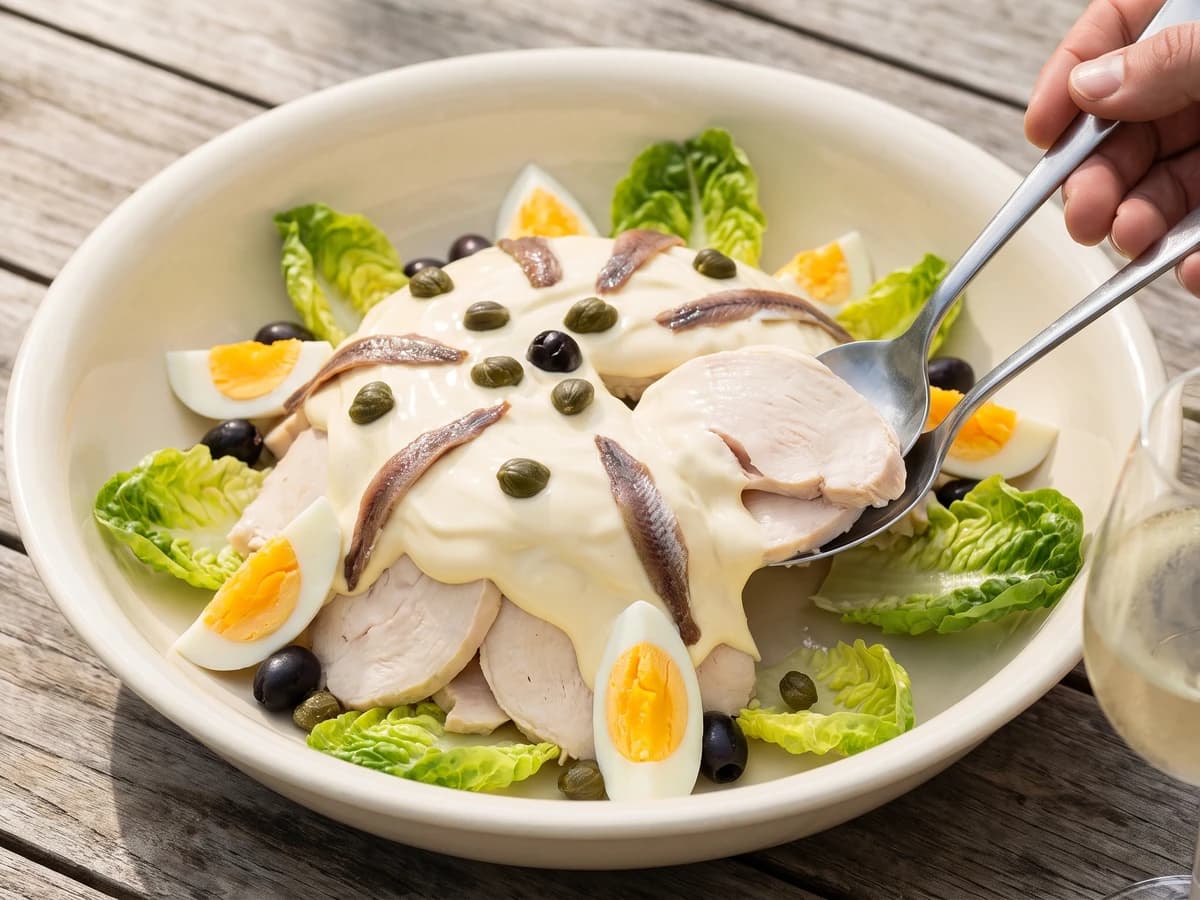
Cold roast chicken, ciseled lettuce, and a shining coat of homemade mayonnaise, arranged with capers, olives, anchovies, eggs, and lettuce hearts, then tossed at the table as the canon intends.

Chef Juliette
Cold roast or poached chicken with fine ribbons of lettuce, dressed at the final moment with oil and vinegar: a composed salad whose freshness depends entirely on timing.