
Chef Graziella
Insalata di Arance alla Siracusana
The orange salad of Syracuse, where winter citrus needs nothing but olive oil, salt, and the restraint to add nothing more. A lesson in what happens when you trust perfect ingredients.
A cooking platform built around craft, culture, and the stories behind what we eat.

Created by
A Sicilian winter salad where anise-sweet fennel meets blood oranges, black olives, and mint. The Arabs who ruled Sicily for two centuries left this gift behind.
This salad exists because of the Arabs. They ruled Sicily from the ninth to the eleventh century and transformed the island's cooking forever. They brought citrus groves to the hillsides, irrigation to the fields, and a way of thinking about flavor that combined sweet, bitter, and aromatic in a single dish. This salad is their legacy.
The fennel must be sliced so thin you can nearly see through it. Thick slices are fibrous and unpleasant to chew. Paper-thin slices are sweet and tender, the anise flavor gentle rather than aggressive. A mandoline helps, but I have watched Sicilian grandmothers achieve the same result with nothing but a worn knife and decades of practice.
Blood oranges appear in Sicilian markets from December through March, their flesh stained ruby and crimson from cold nights in the volcanic soil around Etna. They are not merely orange, they are something else entirely, with notes of raspberry beneath the citrus. If you cannot find them, navel oranges will do. But if you ever taste this salad made with true blood oranges in a Palermo winter, you will understand what you have been missing.
Arab rulers transformed Sicilian agriculture between 827 and 1091 AD, introducing citrus cultivation, sophisticated irrigation, and flavor combinations unknown in medieval Europe. The pairing of fennel with citrus reflects the Arab appreciation for contrasting flavors within a single dish, a sensibility that still defines Sicilian cooking a thousand years later.
Quantity
2 large (about 1 1/2 pounds)
fronds reserved
Quantity
4
Quantity
1/3 cup
pitted
Quantity
1 small bunch (about 12 leaves)
Quantity
1/4 cup
Quantity
to taste
Quantity
to taste
freshly ground
Quantity
1 small
sliced paper-thin
| Ingredient | Quantity |
|---|---|
| fennel bulbsfronds reserved | 2 large (about 1 1/2 pounds) |
| blood oranges or navel oranges | 4 |
| black olivespitted | 1/3 cup |
| fresh mint | 1 small bunch (about 12 leaves) |
| extra virgin olive oil | 1/4 cup |
| flaky sea salt | to taste |
| black pepperfreshly ground | to taste |
| shallot (optional)sliced paper-thin | 1 small |
Remove the tough outer layer of each fennel bulb and trim the stalks, reserving a few feathery fronds for garnish. Cut the bulb in half through the root, then slice as thin as you possibly can. A mandoline makes this easier, but a sharp knife and patience work just as well. The slices should be nearly translucent. Place the fennel in a bowl of ice water for 10 minutes. This crisps the slices and mellows any bitterness.
With a sharp knife, cut the top and bottom from each orange to expose the flesh. Stand the orange on one flat end and cut away the peel and white pith in strips, following the curve of the fruit. You must remove all the pith. It is bitter and ruins the salad. Slice the oranges into rounds about one-quarter inch thick, removing any seeds. Work over a bowl to catch the juices.
Drain the fennel thoroughly and pat dry with a clean towel. Moisture dilutes the dressing. Arrange the fennel and orange slices on a large serving platter, overlapping them casually. Scatter the olives over the top. If using shallot, distribute the thin slices throughout. Tear the mint leaves roughly and add them, along with a few reserved fennel fronds.
Drizzle the olive oil over all, then add any reserved orange juice from the cutting board. Season with flaky salt and freshly ground pepper. Do not toss. The beauty of this salad is in seeing its components. Serve immediately. The fennel softens as it sits, which is not desirable.
1 serving (about 220g)
Culinary guides, cultural storytelling, and the editorial depth that makes cooking meaningful.
Discover Culinary ExplorerChef Graziella
The orange salad of Syracuse, where winter citrus needs nothing but olive oil, salt, and the restraint to add nothing more. A lesson in what happens when you trust perfect ingredients.
Chef Graziella
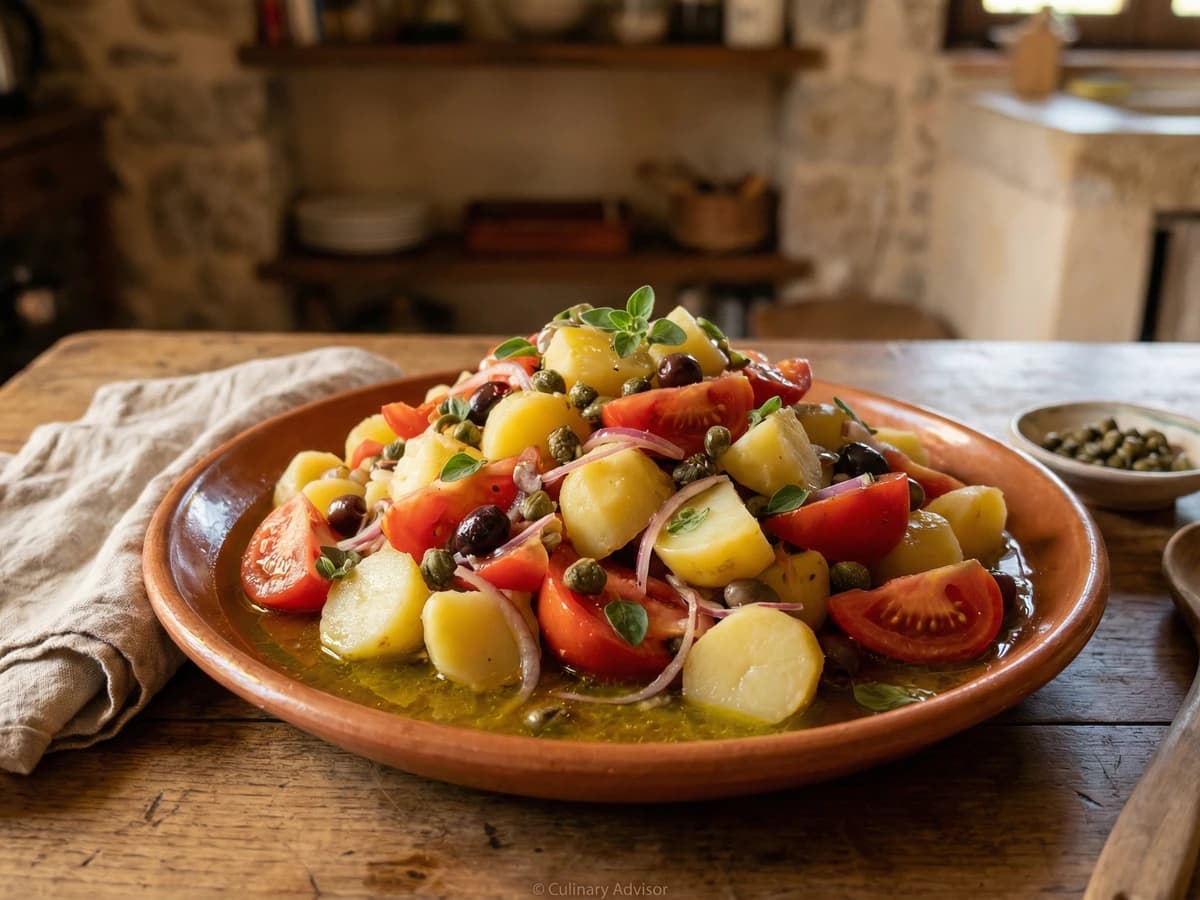
A salad born on a volcanic island suspended between Sicily and Africa, where the capers grow wild among the lava rocks and the sun ripens tomatoes to impossible sweetness. This is what summer tastes like.
Chef Graziella
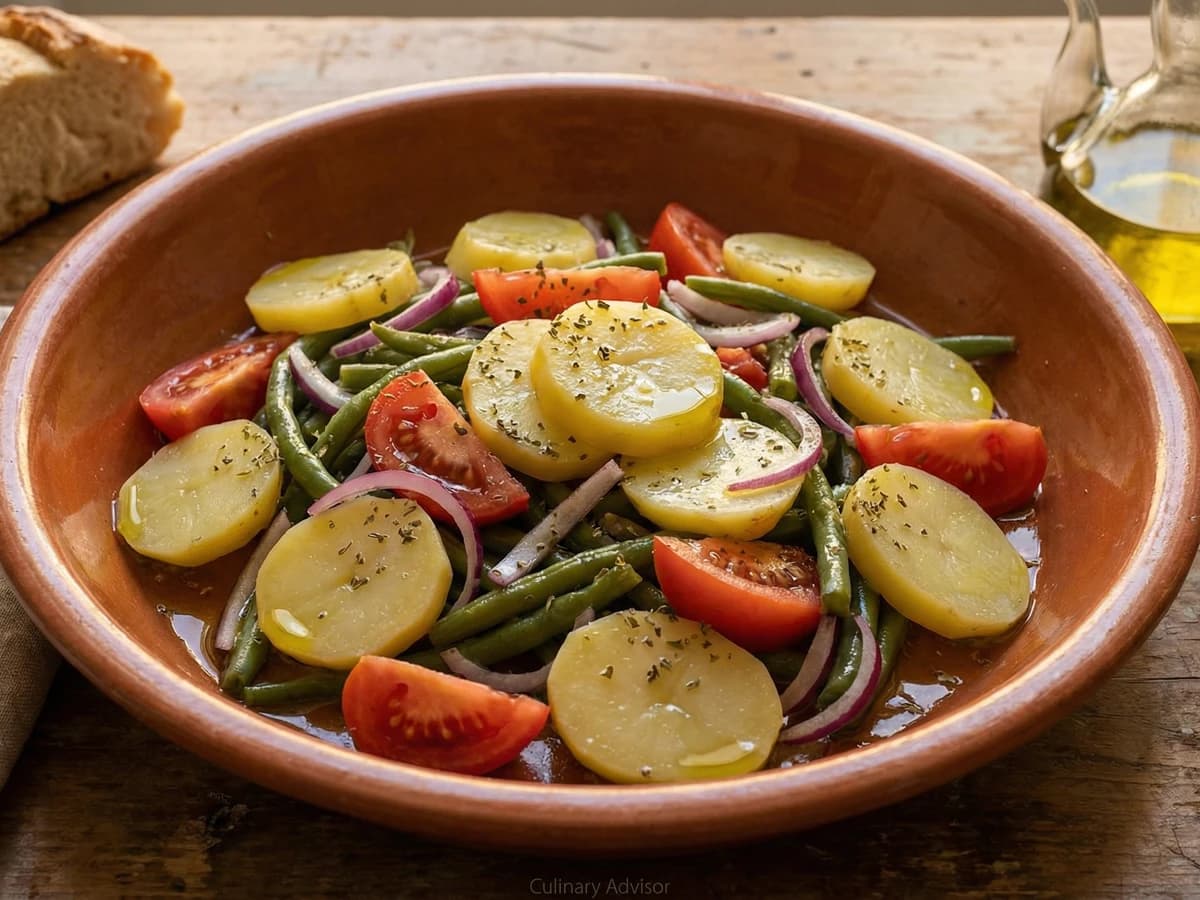
A Sicilian peasant salad of potatoes, green beans, tomatoes, and raw onion, dressed simply with olive oil and vinegar. Food for working people who knew that humble ingredients, treated with respect, feed both body and soul.
Chef Juliette
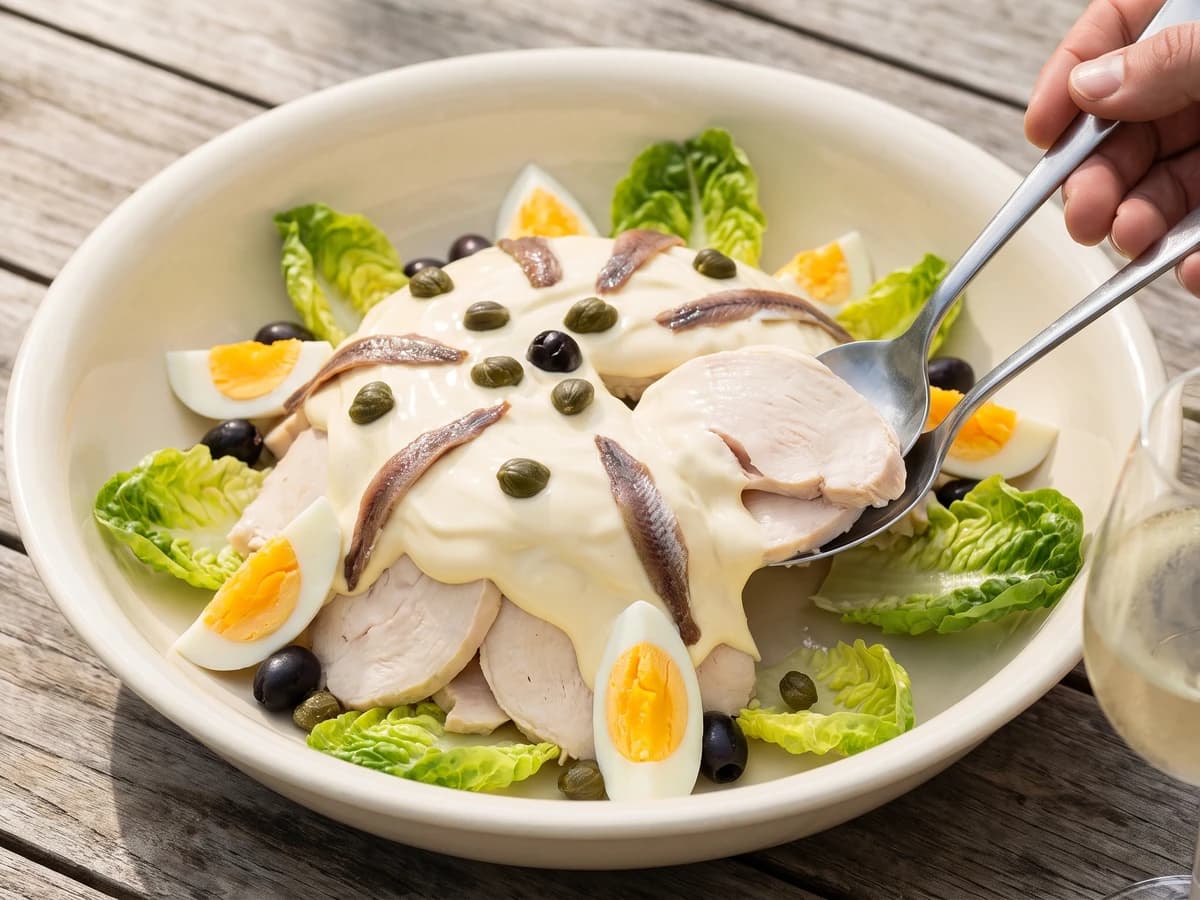
Cold roast chicken, ciseled lettuce, and a shining coat of homemade mayonnaise, arranged with capers, olives, anchovies, eggs, and lettuce hearts, then tossed at the table as the canon intends.