
Chef Takumi
Aji Fry (アジフライ, panko-fried horse mackerel)
Aji fry is weeknight fish with no mystery: fresh horse mackerel opened cleanly, breaded lightly, and fried until the panko crackles while the flesh stays sweet.
A cooking platform built around craft, culture, and the stories behind what we eat.

Created by
Squid tempura looks like a test of courage, but it asks for only three honest things: fresh squid, dry surfaces, and the nerve to pull it before it toughens.
Squid frightens people because it seems to have two moods: tender or rubber. That fear is useful. It points you straight to the one detail that decides the dish, time in the oil. Ika no tempura is not difficult, only quick.
Choose squid that smells clean and faintly sweet, with flesh that looks glossy rather than tired. If the market has fresh surume-ika in summer or early autumn, when it is often at its 旬 (shun), use it. If not, good frozen squid is a sensible stand-in, because squid freezes well. Nothing hidden here: a poor squid will not be rescued by batter.
The cut matters before the frying begins. Score the inside lightly in a crosshatch, then cut rings or rectangles. Those shallow cuts help the squid relax in the oil and give the batter little edges to cling to. Dry it well, dust it lightly, dip it briefly. The batter should be thin and cold, because tempura is a veil, not a coat.
Serve it the moment it leaves the oil, while the surface is crisp and the flesh is still tender. A squeeze of lemon and a pinch of salt are enough, or offer tentsuyu, the dashi dipping sauce, with grated daikon. This is the method, not the menu: cold batter, hot oil, short cooking. Keep those three in order and the real thing is already within reach.
Tempura took shape in Japan after Portuguese traders and missionaries arrived in the sixteenth century, bringing battered frying techniques that Japanese cooks gradually made their own. By the Edo period, tempura had become a popular urban food in Edo, often sold from street stalls and cooked quickly in front of the customer. Seafood tempura remained central because the method suited the city’s access to the bay, and squid became one of the standard tane, or pieces to be fried.
Quantity
450g
bodies opened, scored, and cut into rings or rectangles
Quantity
1/2 teaspoon, plus more for serving
Quantity
1/2 cup
kept cold if possible
Quantity
1
cold
Quantity
3/4 cup
Quantity
for deep-frying
Quantity
1 cup
Quantity
3 tablespoons
Quantity
3 tablespoons
Quantity
1/2 cup
grated and lightly drained
Quantity
1
cut into wedges
| Ingredient | Quantity |
|---|---|
| cleaned squid bodies and tentaclesbodies opened, scored, and cut into rings or rectangles | 450g |
| sea salt | 1/2 teaspoon, plus more for serving |
| cake flour or low-protein all-purpose flourkept cold if possible | 1/2 cup |
| large eggcold | 1 |
| ice-cold water | 3/4 cup |
| neutral oil, such as rice bran oil or canola oil | for deep-frying |
| dashi | 1 cup |
| soy sauce | 3 tablespoons |
| mirin | 3 tablespoons |
| daikongrated and lightly drained | 1/2 cup |
| lemoncut into wedges | 1 |
Pat the squid dry, then open the bodies flat with the inside facing up. Score the inside in a shallow crosshatch, barely cutting into the flesh, and cut into rings or small rectangles. Those little cuts help the squid curl less fiercely and give the batter edges to hold. Salt lightly and let it stand for five minutes, then pat dry again.
Combine the dashi, soy sauce, and mirin in a small pan. Bring just to a simmer, then turn off the heat. This is tentsuyu, the dipping sauce. The dashi gives depth, the soy gives salt, and the mirin rounds the edge without making the sauce heavy. Keep it warm or let it sit at room temperature.
Pour oil into a deep, heavy pot to a depth of about 5 cm. Heat it to 175 C. A drop of batter should sink slightly, then rise at once with small lively bubbles. Too cool and the batter drinks oil. Too hot and the outside colors before the squid has warmed through.
Beat the cold egg lightly with the ice-cold water, then stir in the flour with chopsticks just until loose and uneven. Leave lumps. A smooth batter builds gluten and fries heavy, while a barely mixed cold batter fries thin and crisp. This is not pancake batter, thank heaven.
Dust the squid pieces lightly with flour and shake off anything excess. Dip each piece into the batter and let the extra drip away for a breath. The flour gives the batter something dry to grip, but too much flour turns pasty under the crust.
Fry the squid in small batches for 60 to 90 seconds, turning once, until the batter is pale gold and crisp. Do not wait for deep color. Squid tightens quickly, and the difference between tender and tough is often half a minute. Lift each piece to a rack as soon as the batter sets and the bubbles around it quiet slightly.
Serve the ika tempura immediately with lemon wedges, a little salt, warm tentsuyu, and grated daikon. Dip lightly if using the sauce. Soaking tempura is a small tragedy, and we have enough of those already.
1 serving (about 210g)
Culinary guides, cultural storytelling, and the editorial depth that makes cooking meaningful.
Discover Culinary ExplorerChef Takumi
Aji fry is weeknight fish with no mystery: fresh horse mackerel opened cleanly, breaded lightly, and fried until the panko crackles while the flesh stays sweet.
Chef Takumi
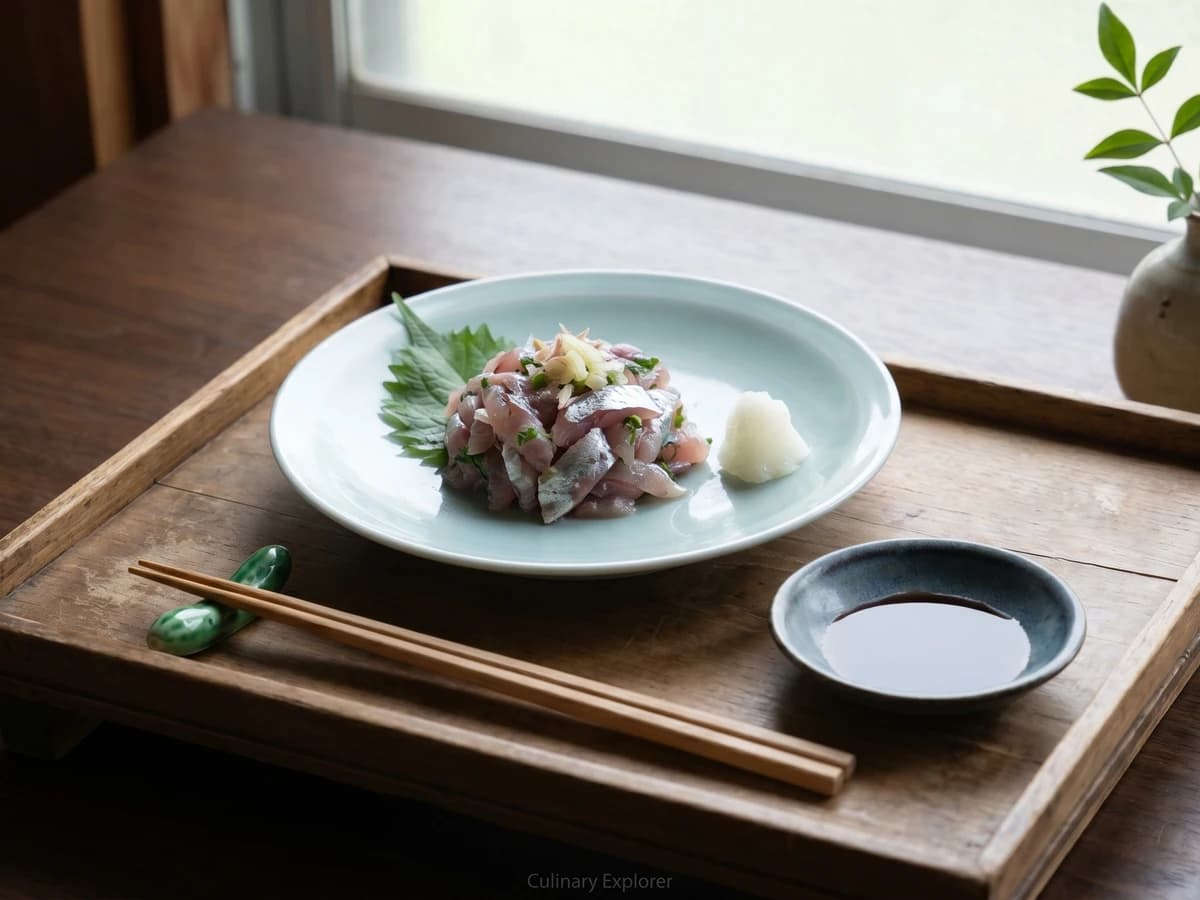
Summer horse mackerel, chopped just enough to catch ginger and scallion, becomes a cool, clean main dish with rice. The secret is fresh fish and a knife that does not bruise it.
Chef Takumi
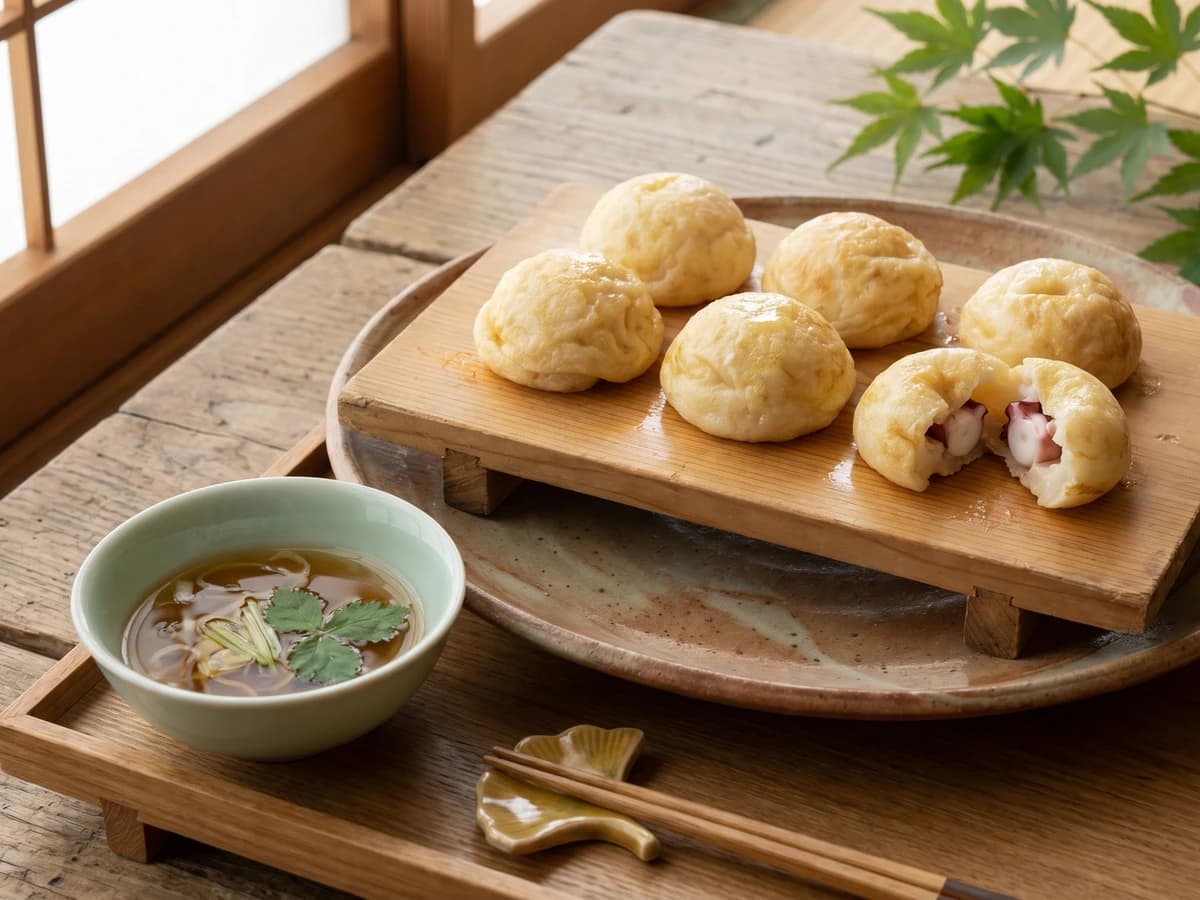
Akashi-yaki is not sauced takoyaki. It is egg-rich batter, tender octopus, and clear dashi, cooked pale and soft so each ball can be dipped like a small custard dumpling.

Chef Takumi
A whole anago looks like a test of nerve. It is mostly good sourcing, a dry skin, cold batter, and oil hot enough to leave the eel sweet under its lace.