
Chef Freja
Aeblesuppe
Warm Danish apple soup for the first cool evenings of autumn. Tart apples simmered with cinnamon and lemon peel, thickened to a soft gloss, and served with cold cream and buttery toasted oats.
A cooking platform built around craft, culture, and the stories behind what we eat.
Created by Chef Freja
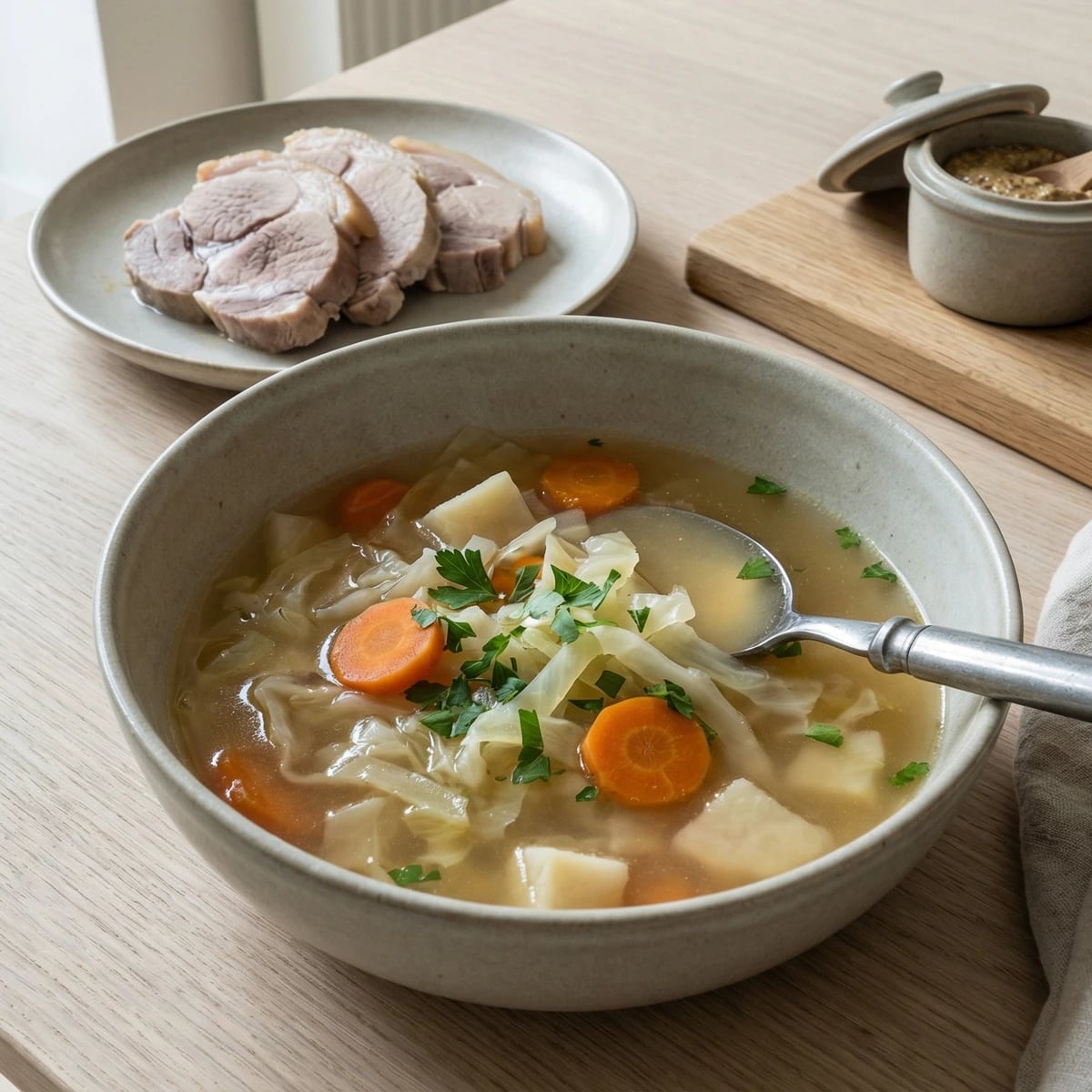
A Danish winter soup with medieval roots. White cabbage and pork shank simmered into a clear, savoury broth, the meat sliced alongside, dark rugbrod and sharp mustard on the table.
By January in Denmark the root cellars are doing the work the gardens cannot. The light is thin, the wind off the Kattegat has teeth, and the vegetables that made it into storage in October are what sits on the kitchen counter now. White cabbage, onions, carrots, a knob of celeriac. This is the month hvidkaalssuppe belongs to, and it has belonged to it for longer than most Danish dishes can claim.
The shape of the soup is older than the recipe. A pork shank simmered slowly in water until the meat surrenders, the broth strained clean, the cabbage cooked in the broth at the end so it keeps its body. The meat comes to the table on its own plate, sliced thick, with rugbrod and a pot of sharp mustard beside it. You build your bowl as you go. A spoon of soup, a bite of pork with mustard on dark rye, back to the spoon. This is faellesspisning, the shared meal, in one of its oldest Danish forms.
What I want you to pay attention to is the clarity of the broth. Hvidkaalssuppe is not a thick soup. It is not a stew. The beauty of it lives in the clean, honest broth that tastes of pork and cabbage and almost nothing else, and that clarity comes from two things: starting the pork in cold water, and skimming the foam patiently before anything else goes into the pot. Do those two things with care and the rest of the soup will reward you. You'll know when it's right because the broth will look like pale amber in the bowl, and the cabbage will float in it like ribbons in a window.
Hvidkaalssuppe is one of the oldest documented dishes in the Danish kitchen, with written references appearing in monastic and manor kitchen records from the late medieval period, when cabbage and salt pork were among the few foods that could be stored reliably through a Nordic winter. The dish travelled through the centuries largely unchanged because it never needed to change: cabbage kept in the cellar, pork kept in the salt barrel, and a long slow pot on the hearth turned both into a complete meal. In parts of Sjaelland and on Funen it was traditionally served on Shrove Tuesday to use up the last of the winter cabbage before Lent, a small domestic calendar that predates the modern Danish food year by several hundred years.
Quantity
1, about 1.2kg
lightly salted if you can find it
Quantity
1 small, about 1kg
cored and shredded into 1cm ribbons
Quantity
2 medium
peeled and halved
Quantity
2 medium
peeled and cut into thick coins
Quantity
1 small
peeled and cut into 2cm chunks
Quantity
2
Quantity
10
Quantity
4
Quantity
small bunch
tied with string
Quantity
2.5 litres
Quantity
1 tablespoon
Quantity
to taste
Quantity
freshly ground, to taste
Quantity
2 tablespoons
chopped, to finish
Quantity
thick slices, to serve
Quantity
to serve
| Ingredient | Quantity |
|---|---|
| pork shank on the bonelightly salted if you can find it | 1, about 1.2kg |
| white cabbagecored and shredded into 1cm ribbons | 1 small, about 1kg |
| yellow onionspeeled and halved | 2 medium |
| carrotspeeled and cut into thick coins | 2 medium |
| celeriacpeeled and cut into 2cm chunks | 1 small |
| bay leaves | 2 |
| whole black peppercorns | 10 |
| whole allspice berries | 4 |
| flat parsley stalkstied with string | small bunch |
| cold water | 2.5 litres |
| white wine vinegar | 1 tablespoon |
| fine sea salt | to taste |
| black pepper | freshly ground, to taste |
| flat parsley leaveschopped, to finish | 2 tablespoons |
| dark rugbrod | thick slices, to serve |
| strong Danish mustard | to serve |
Put the pork shank in a large heavy pot and cover with the cold water. Bring it slowly to a simmer over medium heat. As it warms, grey foam will rise to the surface. Skim it off patiently with a spoon and discard. This is the step most people rush, and it is the reason their broth turns cloudy. A clear hvidkaalssuppe begins here, with five quiet minutes of skimming before anything else goes in.
Once the foam has stopped rising, add the halved onions, one of the carrots, the bay leaves, peppercorns, allspice, and the tied parsley stalks. Do not add salt yet. If the pork is lightly salted, the broth will season itself as it cooks, and you want to taste it before you commit. Lower the heat until the surface barely trembles. A hard boil will toughen the meat and cloud the broth. You want a gentle simmer, nothing more.
Cook the shank for an hour and a half to two hours, until the meat is completely tender and pulls easily away from the bone when you test it with a fork. Top up with a splash of hot water if the level drops below the meat. The joy of waiting is real here. This is not a soup that can be hurried, and the slow hours are what turn tough shank into something you can cut with the side of a spoon.
Lift the shank out carefully and set it on a board to rest under a loose piece of foil. Strain the broth through a fine sieve into a clean pot. Discard the onion, bay, peppercorns, and parsley stalks. They have given everything they had. Taste the broth now. It should be savoury and clean. Season with salt and black pepper, keeping in mind the cabbage will draw some of the salt out when you add it.
Bring the strained broth back to a gentle simmer. Add the shredded cabbage, the remaining carrot coins, and the celeriac chunks. Cook for twenty to twenty-five minutes, until the cabbage is tender but still has a little body. You are not trying to cook it into collapse. The cabbage should hold its ribbon shape and carry the flavor of the broth, not surrender to it.
While the cabbage finishes, pull the pork meat away from the bone in large pieces and slice it thickly across the grain. Some cooks add the meat back into the soup. I prefer to serve it alongside on a warm plate, the way it has been done in Danish kitchens for generations. This is a soup and a main course served together, and keeping the meat separate lets each person build their own bowl.
Ladle the soup into deep bowls and scatter the chopped parsley over the top. Set the sliced pork on its own plate in the middle of the table, with thick slices of dark rugbrod and a pot of strong Danish mustard beside it. Each person spreads mustard on the meat, takes a slice of rye, and eats the soup alongside. That is the shape of the meal. Tak for mad.
1 serving (about 500g)
Culinary guides, cultural storytelling, and the editorial depth that makes cooking meaningful.
Discover Culinary Explorer
Chef Freja
Warm Danish apple soup for the first cool evenings of autumn. Tart apples simmered with cinnamon and lemon peel, thickened to a soft gloss, and served with cold cream and buttery toasted oats.

Chef Freja
Danish white asparagus velouté with tiny veal meatballs, flour dumplings, and bright green tips scattered on the surface. The Easter soup of Copenhagen, built from five small pans of spring.

Chef Freja
A Danish cauliflower cremesuppe pureed to velvet, crowned with crisp bacon and tiny North Sea shrimp. The kind of weeknight bowl that makes the whole evening feel cared for.

Chef Freja
A saffron-gold fish soup from Bornholm with cod, mussels, and cream, served with dark rugbrod from the island's smokehouse tradition. Baltic cooking at its most generous.