Chef Lesia
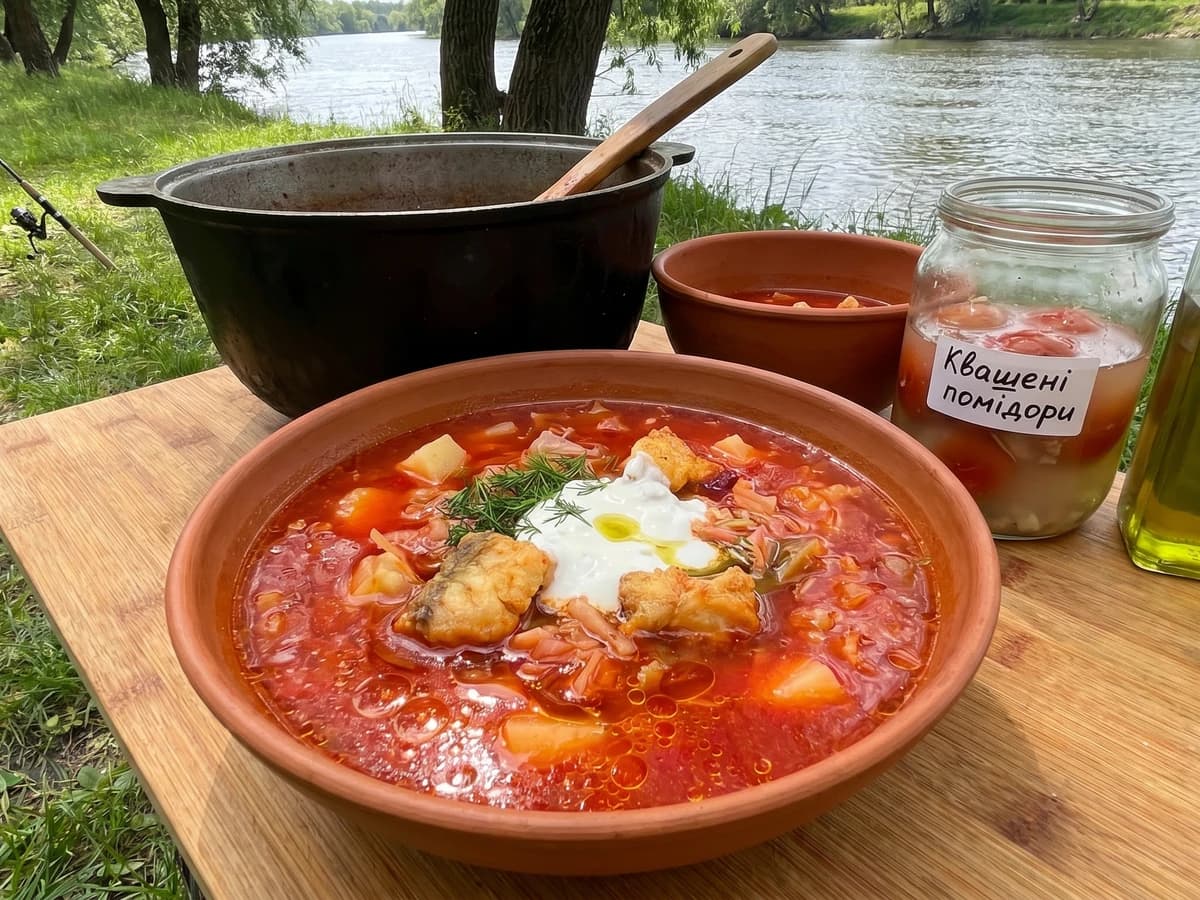
Bessarabskyi Borshch (бессарабський борщ, fish borshch)
The catch goes into the pan before it ever meets the pot, so Danube fish stays whole in a tomato-red broth sour enough to wake the table.
A cooking platform built around craft, culture, and the stories behind what we eat.

Created by
White where the lowland pot runs red, this Carpathian borshch is sharp from oat sour, sweet from white beet, and finished with dill-green brightness.
The first surprise is the colour. No beet-crimson here, no stained-glass pot, only a pale mountain broth with the sour smell of oats waking up in a jar and white beet turning sweet under the knife. It looks quiet until you taste it. Then it snaps awake.
This is Hutsul country, high Carpathian cooking, where sourness is not decoration but appetite. The oat ferment does the work vinegar cannot do: it rounds the broth, thickens it slightly, and gives that clean, hungry edge you want in cold weather. Aunt Nadia would have written only, "add sour until it sounds right," which is funny until you're standing there with a ladle learning that the soup really does change its sound when the starch and broth come together.
The one thing that decides the dish is the ending. The zasmazhka, onion and carrot sweated slowly in sunflower oil, goes in near the end so its sweetness sits brightly on the broth instead of flattening into the stock. After that, dill, garlic, smetana if you like, and a rest. Make a big pot. Mountain food has no use for nervous portions.
Hutsulskyi bilyi borshch belongs to Hutsulshchyna, the highland region of the Ukrainian Carpathians across parts of Ivano-Frankivsk, Chernivtsi, and Zakarpattia, where oat and cereal sours were practical winter pantry foods. Unlike the red beet borshch of the lowlands, this version is built from pale roots, potatoes, and an oat zakvaska, a short natural sour that shows how broad the Ukrainian borshch family really is. Soviet-era canteens made borshch look like one standardized red soup; regional pots like this one quietly disagree.
Quantity
120g
for the oat sour
Quantity
1 tablespoon
for the oat sour
Quantity
1 litre
for the oat sour
Quantity
1 clove
lightly crushed, for the oat sour
Quantity
1
for the oat sour
Quantity
1.2 kg
Quantity
3 litres
Quantity
2
peeled and cut into matchsticks
Quantity
4 medium
peeled and cubed
Quantity
1 small
peeled and diced
Quantity
1 small wedge or 2 stalks
diced
Quantity
2
finely diced
Quantity
2
coarsely grated
Quantity
3 tablespoons
Quantity
3 cloves
smashed
Quantity
300ml, plus more to taste
Quantity
150ml, plus more to serve
Quantity
1 large bunch
chopped
Quantity
to taste
| Ingredient | Quantity |
|---|---|
| rolled oats or cracked oatsfor the oat sour | 120g |
| wholemeal rye flour or wheat flourfor the oat sour | 1 tablespoon |
| lukewarm waterfor the oat sour | 1 litre |
| garliclightly crushed, for the oat sour | 1 clove |
| bay leaffor the oat sour | 1 |
| pork ribs, smoked pork bones, or meaty fresh pork on the bone | 1.2 kg |
| cold water | 3 litres |
| white beets or pale golden beetspeeled and cut into matchsticks | 2 |
| potatoespeeled and cubed | 4 medium |
| parsnippeeled and diced | 1 small |
| celeriac wedge or celery stalksdiced | 1 small wedge or 2 stalks |
| onionsfinely diced | 2 |
| carrotscoarsely grated | 2 |
| unrefined sunflower oil | 3 tablespoons |
| garlicsmashed | 3 cloves |
| strained oat sour | 300ml, plus more to taste |
| smetana or sour cream | 150ml, plus more to serve |
| dillchopped | 1 large bunch |
| sea salt and black pepper | to taste |
Three to four days before cooking, stir the oats, flour, lukewarm water, garlic, and bay leaf in a clean jar. Cover with cloth or a loose lid and leave at cool room temperature, stirring once a day. It is ready when it smells pleasantly sour, a little like yogurt and wet grain, and the liquid tastes sharp but clean.
Put the pork bones in a big pot with the cold water and bring it slowly to a bare simmer. Skim the grey foam as it rises, then keep the pot at the gentlest bubble until the meat relaxes from the bone and the broth tastes rounded. Salt lightly now. The oat sour will sharpen everything later.
Lift out the meat and bones. Add the white beet, potatoes, parsnip, and celeriac to the broth and simmer until the potatoes are soft at the edges and the beet has lost its raw-earth smell. It should still look pale. That is the point.
Warm the sunflower oil in a wide pan and add the onion. Let it go translucent and sweet before the carrot joins it. You're not browning anything. Cook slowly until the carrot softens, the oil turns gold, and the smell changes from raw onion to something round and almost buttery.
Strain the oat sour, then whisk 300ml into the soup in a thin stream, stirring as you pour. Keep the heat gentle and listen: the broth goes slightly thicker and softer in its bubbling when the oat starch catches. Taste. Add more sour if it needs to wake up.
Return the pulled meat to the pot, then stir in the zasmazhka, smashed garlic, black pepper, and most of the dill. Temper the smetana with a ladle of hot broth in a bowl, then stir it back into the pot so it turns creamy rather than splitting. Rest the borshch off the heat before serving. The spoon should stand up straight enough to make your aunt suspicious.
1 serving (about 650g)
Culinary guides, cultural storytelling, and the editorial depth that makes cooking meaningful.
Discover Culinary ExplorerChef Lesia
The catch goes into the pan before it ever meets the pot, so Danube fish stays whole in a tomato-red broth sour enough to wake the table.

Chef Lesia
The fish leaves the pot before the soup reaches the table: broth in the bowl, river fish on a platter, garlic salamur waiting to wake both.

Chef Lesia
Brick-red paprika blooms in bacon fat, beef darkens at the edges, and potatoes thicken the cauldron until it stands between soup and stew. This is comfort with a fire under it.
Chef Lesia
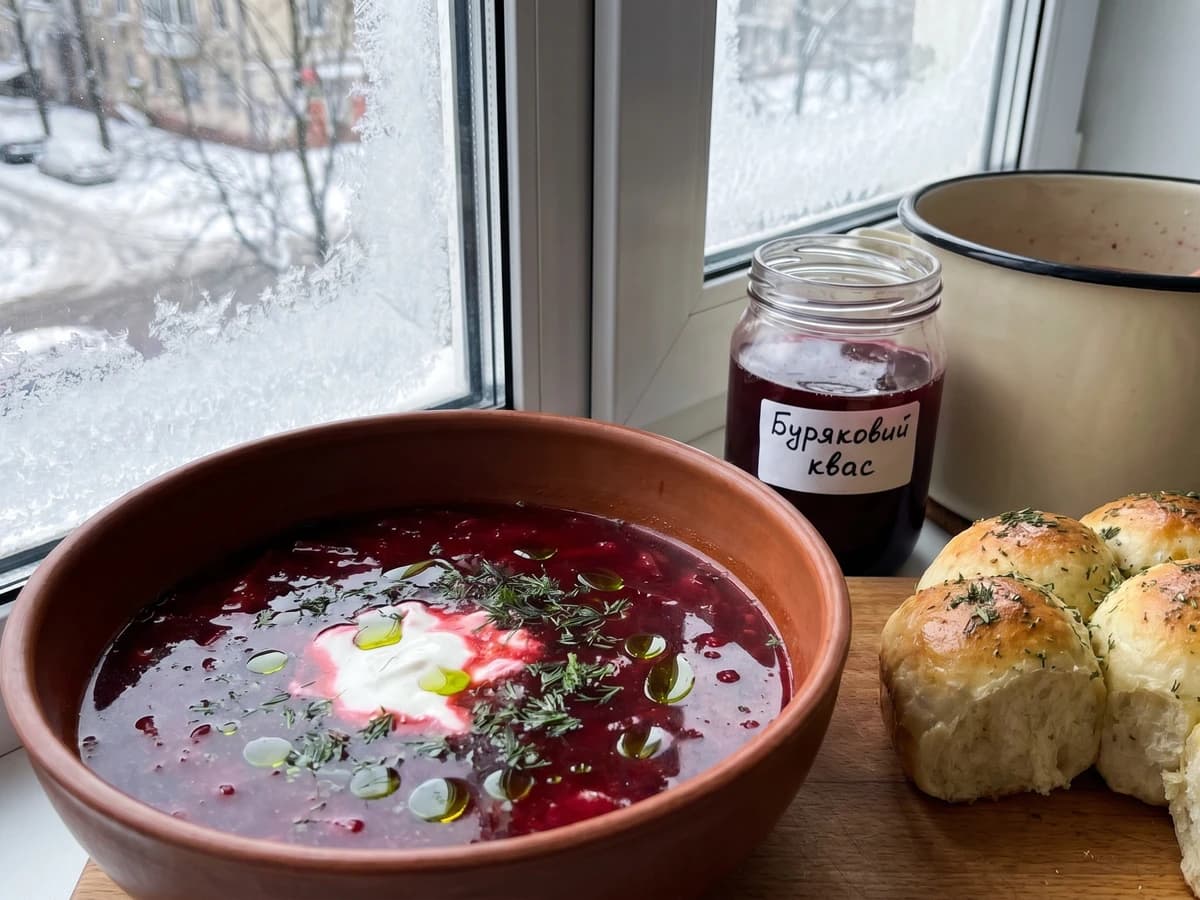
Beets hit slow-sweated zasmazhka and the broth goes dark ruby, sour from beet zakwas, sweet from bone and garden, thick enough for the spoon to stand up straight.