Chef Freja
Aebleflaesk
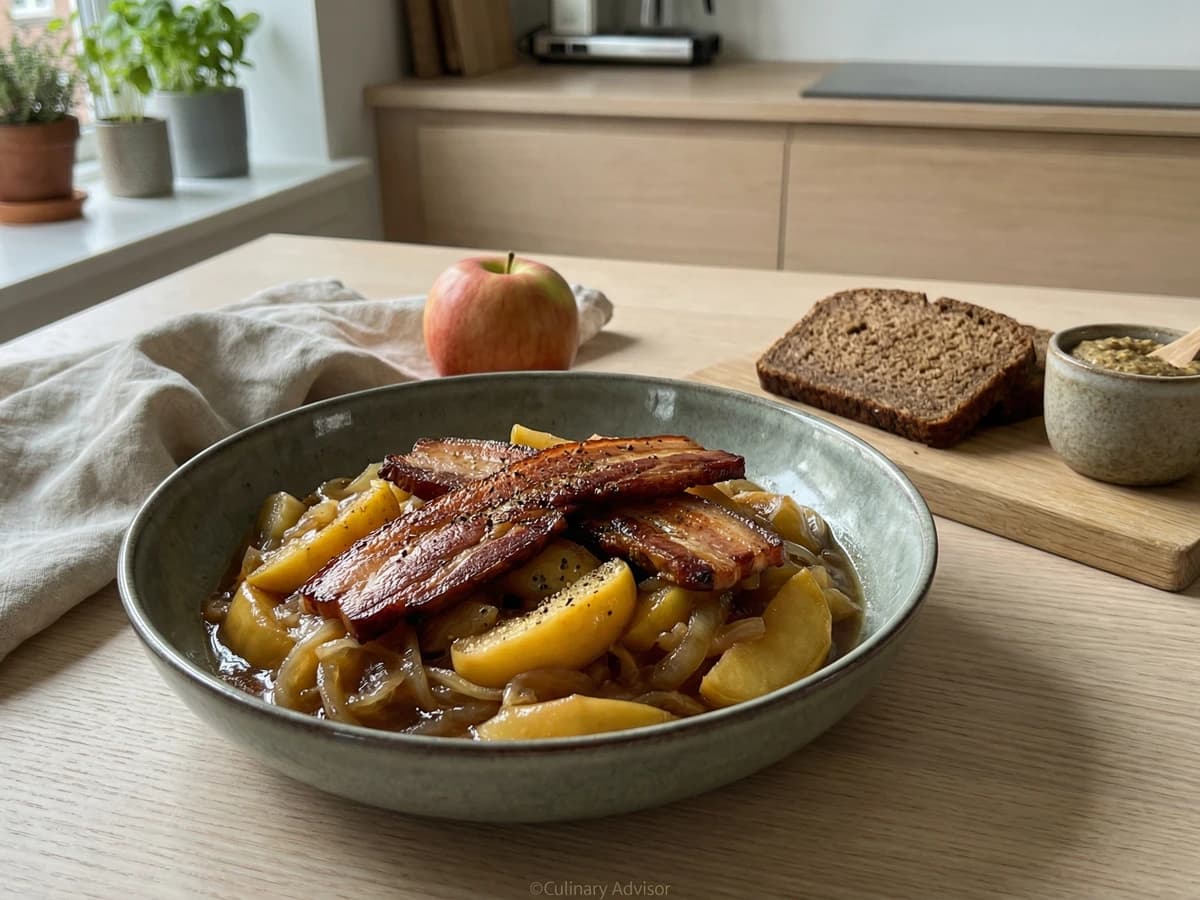
The Fyn autumn supper where thick pork belly renders slowly into its own fat, then meets apples and onions that cook down into a deep amber tangle. Sweet, salt, and the oldest pairing in the Danish larder.
A cooking platform built around craft, culture, and the stories behind what we eat.
Created by Chef Freja
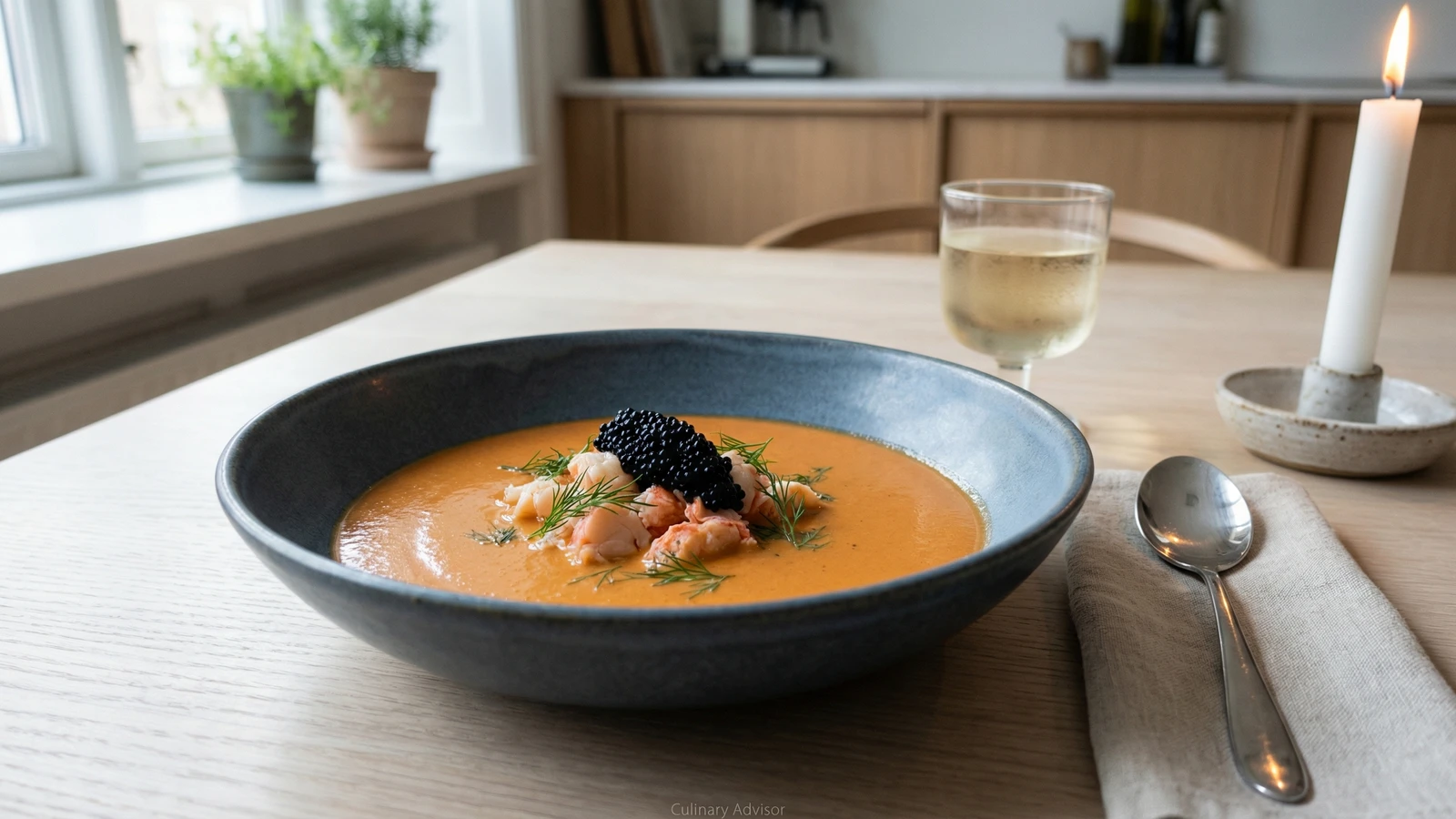
The Danish lobster bisque that starts a New Year's Eve dinner. Lobster shells roasted until they smell of the sea, flambéed with Cognac, simmered into velvet, finished with cream, dill, and a dark spoon of stenbiderrogn.
New Year's Eve in Denmark is the darkest week of the year, and the table is set against that darkness. Candles everywhere, the good silver out, the queen's speech at six o'clock on the television. This is when hummersuppe arrives.
It's a first course for a long evening, a small bowl of something deep and orange that tells everyone around the table that tonight is not an ordinary night. The bisque is French in its bones but Danish in its finish: cream, yes, but also dill, and a dark spoon of stenbiderrogn glistening on top of each bowl. Stenbiderrogn is the roe of the lumpfish, fished from the cold waters around Denmark in the first weeks of the year, and the timing matches the dish exactly. The season decides, even here.
What matters most is the first half hour. You roast the lobster shells in butter until they go from orange to deep rust red and the whole kitchen smells of the sea. That is where the flavor lives. Everything after is restraint: the Cognac, the wine, the stock, the slow simmer, the strain, the cream. I'll walk you through each step so you're never guessing, and I'll tell you exactly what to watch for at every stage. Cooked with love, hummersuppe is the kind of dish that makes people quiet for a moment when the bowls come to the table. That quiet is the point.
Lobster bisque arrived in Denmark through the French influence on 19th-century Copenhagen fine dining, when French cookery defined the upper register of Danish cuisine and the word bisque entered the Danish culinary vocabulary alongside consommé and velouté. It became a fixture of nytarsaften, New Year's Eve, menus in the early 20th century and has held that place ever since, usually served as a formal first course before torsk or a roast. The Danish addition of stenbiderrogn is the detail that marks it as something other than a French bisque: lumpfish roe is harvested in Danish waters from late December through early spring, which makes it the one caviar that is actually in season when New Year's Eve arrives.
Quantity
2, about 600g each
Quantity
80g
Quantity
1 large
finely diced
Quantity
1
white part only, finely sliced
Quantity
1 small
finely diced
Quantity
1
finely diced
Quantity
2
finely diced
Quantity
3
crushed
Quantity
2 tablespoons
Quantity
100ml, plus a small splash to finish
Quantity
200ml
Quantity
1.5 litres
Quantity
1
Quantity
3 sprigs
Quantity
300ml
Quantity
to taste
Quantity
to taste
Quantity
small bunch
fronds picked and roughly chopped
Quantity
6 teaspoons, to serve
Quantity
a squeeze, to finish
| Ingredient | Quantity |
|---|---|
| whole cooked lobsters | 2, about 600g each |
| unsalted butter | 80g |
| onionfinely diced | 1 large |
| leekwhite part only, finely sliced | 1 |
| fennel bulbfinely diced | 1 small |
| carrotfinely diced | 1 |
| celery stalksfinely diced | 2 |
| garlic clovescrushed | 3 |
| tomato paste | 2 tablespoons |
| Cognac | 100ml, plus a small splash to finish |
| dry white wine | 200ml |
| good fish stock | 1.5 litres |
| bay leaf | 1 |
| fresh thyme | 3 sprigs |
| double cream | 300ml |
| fine sea salt | to taste |
| white pepper | to taste |
| fresh dillfronds picked and roughly chopped | small bunch |
| stenbiderrogn (Danish lumpfish roe) | 6 teaspoons, to serve |
| lemon juice (optional) | a squeeze, to finish |
Crack the lobsters open and remove all the meat from the tails and claws. Cut the meat into bite-size pieces and keep it covered in the fridge. This is what goes into the bowl at the very end, so you want it kept cool and clean. Chop the shells into rough pieces with a heavy knife, or pound them with a rolling pin inside a folded tea towel. You want them broken open so their flavor can escape into the butter when you roast them. The shells are not waste; they are where the soup begins.
Melt the butter in your heaviest pot over medium heat. Add the broken shells and turn them through the butter until every piece is coated. Let them cook, stirring now and then, for about fifteen minutes. You're looking for the shells to go from orange to a deep rust red, and for the kitchen to fill with a smell that is unmistakably of the sea. Don't rush this. The color and the smell are the flavor. A pale bisque is a timid bisque, and hummersuppe is not a timid dish.
Add the onion, leek, fennel, carrot, celery, and garlic to the pot. Stir them through the lobster butter and let them soften for about ten minutes. They should turn translucent and start to smell sweet, never brown. Add the tomato paste and stir it in. Cook it for two minutes to take the raw edge off. It will darken and stick slightly to the bottom of the pan, and that's exactly what you want. That sticky layer is concentrated flavor, and you'll lift it with the Cognac in a moment.
Pour in the 100ml of Cognac and let it warm for a few seconds. If you have a gas burner and are confident, tilt the pot slightly and let the flame catch the surface. If you cook on induction or electric, hold a long match to the edge of the liquid instead. The flame will dance across the top for twenty or thirty seconds and die on its own. This isn't for show. The flame burns off the harsh alcohol and leaves behind the rounded, warm base of the spirit, which is what you want in the broth. If you'd rather not flambé at all, bring the Cognac to a hard simmer for two minutes. The result is nearly the same.
Pour in the white wine and let it bubble for a minute, scraping the bottom of the pot with a wooden spoon to lift everything the wine loosens. Add the fish stock, the bay leaf, and the thyme sprigs. Bring it up to a gentle simmer. Never a rolling boil. A hard boil turns shellfish stock bitter and muddy, and you can't undo it. Let the soup simmer uncovered for forty-five minutes. The broth should reduce slightly and deepen to a rich orange-red. Taste it after half an hour. You should taste the lobster clearly. If you don't, the shells didn't roast long enough, and more simmering won't fix it; remember that for next time.
Set a fine mesh sieve over a clean pot. Ladle the soup through, pressing hard on the solids with the back of a ladle or a small sturdy bowl to extract every drop of flavor. Don't be gentle. Everything good is trapped inside the shells and the vegetables, and your job is to get it out. When you've pressed the solids dry, discard them. The liquid in the clean pot is the soul of the dish.
Return the strained broth to a gentle heat. Pour in the cream and stir it through. Let it simmer softly for five minutes so the cream and the broth become one thing, not two. Season carefully with salt and white pepper. Taste. Adjust. Add a small splash of Cognac at the very end for lift, and a squeeze of lemon juice if the soup feels heavy. Stir in half the chopped dill. The rest goes on top of each bowl at the table. The bisque should coat the back of a spoon and hold a soft sheen. You'll know when it's right because the color will have turned from deep red to a warm coral, and the surface will look silky rather than broken.
Warm your serving bowls with hot water and dry them just before serving. Cold bowls kill a hot bisque in thirty seconds. Divide the reserved lobster meat between the bowls, piled gently in the centre. Ladle the hot bisque over the meat so the pieces half-surface in the broth like islands. Place a generous teaspoon of stenbiderrogn on top of each bowl; the black roe against the coral broth is half the beauty of the dish. Scatter the remaining dill fronds across the surface and bring the bowls to the table at once. This is the first course of a long Danish evening. Tak for mad.
1 serving (about 400g)
Culinary guides, cultural storytelling, and the editorial depth that makes cooking meaningful.
Discover Culinary ExplorerChef Freja
The Fyn autumn supper where thick pork belly renders slowly into its own fat, then meets apples and onions that cook down into a deep amber tangle. Sweet, salt, and the oldest pairing in the Danish larder.

Chef Freja
Warm Danish apple soup for the first cool evenings of autumn. Tart apples simmered with cinnamon and lemon peel, thickened to a soft gloss, and served with cold cream and buttery toasted oats.

Chef Freja
Danish white asparagus velouté with tiny veal meatballs, flour dumplings, and bright green tips scattered on the surface. The Easter soup of Copenhagen, built from five small pans of spring.
Chef Freja
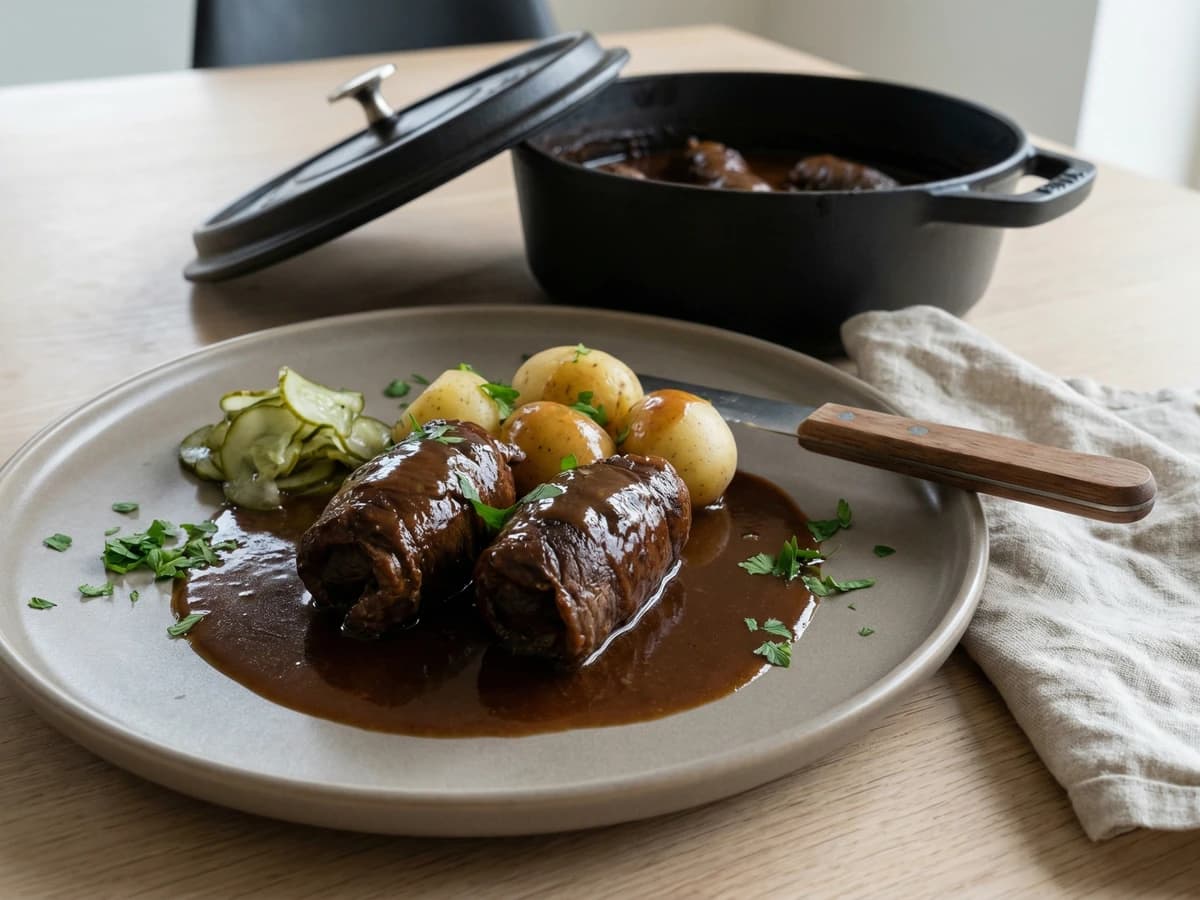
Thin beef slices rolled around bacon and onion, tied with string, and braised slowly in a dark glossy gravy finished with cream and redcurrant jelly. Danish Sunday dinner at its most comforting.