
Chef Lupita
Aporreadillo Michoacano con Huevo
Michoacán's Tierra Caliente almuerzo, where salted beef is softened, pounded, fried in lard, folded with egg and chile perón salsa, then served beside morisqueta like a proper working table.
A cooking platform built around craft, culture, and the stories behind what we eat.
Created by
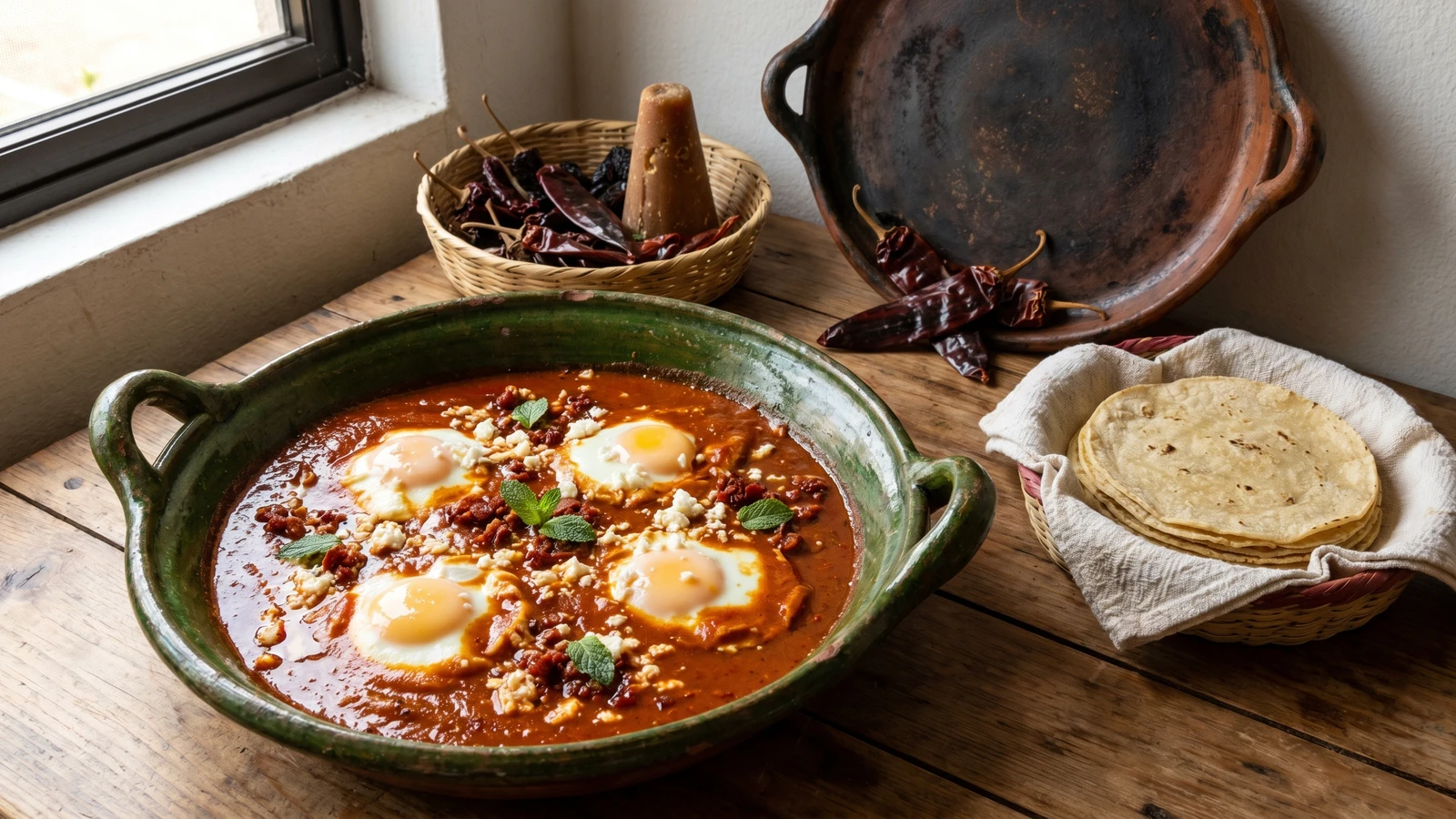
Morelia's morning eggs poached in thick xandúcata, the Purépecha red mole of guajillo, chile de árbol, masa, lard, and patient stirring, served from a green-glazed cazuela with corn tortillas.
Michoacán, especially Morelia and the Purépecha towns around Pátzcuaro, is where this dish belongs. Xandúcata is not a red sauce pretending to be mole. It is a thick Purépecha mole built from chile guajillo, a little chile de árbol, toasted seed, masa, and the patience of women who learned to read the cazuela by sound.
In Morelia, this lands on the breakfast table as huevos en xandúcata: eggs poached right in the sauce until the whites set and the yolks stay soft enough to run into the masa-thickened chile. This is almuerzo food, the mid-morning plate that makes a person useful again. You eat it with corn tortillas from the comal, not flour tortillas. Flour has its place in the north. This is Michoacán.
I first wrote this down after watching a señora near the Pátzcuaro road fry her chile paste in manteca until the fat separated at the rim. She did not measure the masa. She pinched it between her fingers and knew. That is not magic. That is repetition. La cocina no es decoración, es trabajo.
My mother did not make xandúcata. She was Jalisciense and she knew her lane. But her notebook taught me to mark where a dish belongs before I tried to teach it. These eggs belong in green-glazed barro, with Cotija on top, tortillas in a cloth basket, and the sauce thick enough to tell you somebody stood there and stirred. Saber cocinar es saber vivir.
Xandúcata belongs to the Purépecha mole families of Michoacán and is not one fixed recipe; Morelia and the surrounding Purépecha region preserve versions tied to weddings, fiestas, and ceremonial foods such as nacatamales. Red versions follow an older western Mexican logic: chile guajillo for color, toasted seed or peanut for body, and masa de maíz to thicken the sauce instead of a wheat roux. In 2010, UNESCO inscribed Traditional Mexican Cuisine as intangible cultural heritage using the Michoacán paradigm, recognizing the chain of corn, chile, communal cooking, and women keeping named regional dishes alive.
Quantity
8
wiped clean, stemmed, and seeded
Quantity
2
stemmed, seeds left in
Quantity
2 medium
Quantity
1/4 medium
cut into thick slices
Quantity
3
unpeeled
Quantity
3 tablespoons
Quantity
2 tablespoons
Quantity
1
lightly toasted
Quantity
2
Quantity
1/2 teaspoon
Quantity
2 cups
divided
Quantity
1/4 cup
or 3 tablespoons masa harina mixed with 1/4 cup warm water
Quantity
3 tablespoons
Quantity
3 ounces
casing removed and crumbled
Quantity
1 1/2 teaspoons, plus more to taste
Quantity
1 small sprig
Quantity
1 small sprig
Quantity
8
Quantity
2 ounces
finely crumbled
Quantity
8 to 12
warmed, for serving
Quantity
for serving
| Ingredient | Quantity |
|---|---|
| dried chile guajillowiped clean, stemmed, and seeded | 8 |
| dried chile de árbolstemmed, seeds left in | 2 |
| jitomates guaje or Roma tomatoes | 2 medium |
| white onioncut into thick slices | 1/4 medium |
| garlic clovesunpeeled | 3 |
| raw unsalted peanuts | 3 tablespoons |
| raw hulled pepitas | 2 tablespoons |
| dried hoja de aguacatelightly toasted | 1 |
| whole allspice berries | 2 |
| dried Mexican oregano | 1/2 teaspoon |
| homemade chicken broth or vegetable brothdivided | 2 cups |
| fresh masa de maíz nixtamalizadoor 3 tablespoons masa harina mixed with 1/4 cup warm water | 1/4 cup |
| manteca de cerdo | 3 tablespoons |
| chorizo seco estilo Michoacán (optional)casing removed and crumbled | 3 ounces |
| kosher salt | 1 1/2 teaspoons, plus more to taste |
| fresh epazote | 1 small sprig |
| fresh hierbabuena | 1 small sprig |
| large eggs | 8 |
| queso Cotija añejofinely crumbled | 2 ounces |
| hand-pressed corn tortillaswarmed, for serving | 8 to 12 |
| frijoles de la olla or refried beans (optional) | for serving |
Heat a dry comal over medium. Toast the chile guajillo one at a time, about 20 seconds per side, pressing them flat with a spatula until the skin darkens slightly and the chile smells deep and sweet. Toast the chile de árbol for only 5 to 8 seconds per side. It burns fast and burned chile is punishment, not flavor. Put the toasted chiles in a bowl and cover with hot water for 15 minutes.
On the same comal, roast the jitomates, onion, and unpeeled garlic until blistered in spots and softened, 8 to 10 minutes. Peel the garlic. Toast the peanuts and pepitas in a small dry skillet until fragrant and lightly golden, shaking the pan so they do not scorch. Pass the hoja de aguacate over the hot comal for a few seconds, just until its scent wakes up.
Drain the chiles and save 1/2 cup of the soaking liquid. Blend the chiles, roasted jitomates, onion, peeled garlic, peanuts, pepitas, hoja de aguacate, allspice, Mexican oregano, 1 cup of broth, and the reserved soaking liquid until completely smooth. Blend longer than you think. Xandúcata should be a sauce, not a gravel road. Strain through a fine-mesh sieve into a bowl, pressing hard on the solids.
Set a wide clay cazuela or heavy skillet over medium heat. If using chorizo, cook it first until its fat stains the pan red, then lift it out and reserve it. Add the manteca de cerdo to the pan. Pour in the strained chile puree carefully because it will sputter. Fry, stirring often, for 8 to 10 minutes, until the color turns brick red and the fat begins to show at the edges. La manteca es el sabor. This is where the sauce becomes Michoacán, not blender chile water.
Whisk the fresh masa with the remaining 1 cup broth until smooth. Pour it into the cazuela while stirring. Add the epazote, hierbabuena, and salt. Simmer gently for 12 to 15 minutes, stirring along the bottom so the masa does not catch. The sauce should thicken like a loose atole and coat a spoon. If it gets too thick, add a few tablespoons of broth. If it tastes thin, cook it longer. Remove the herb sprigs.
Lower the heat until the xandúcata moves in slow bubbles. Make eight shallow wells with the back of a spoon. Crack each egg into a small cup first, then slide it into the sauce. Cover the cazuela and cook 5 to 7 minutes, until the whites are set and the yolks are still soft. For children, older adults, or pregnant people, cook the yolks firm. Safety first, pride second.
Scatter the queso Cotija añejo over the eggs. Add the reserved chorizo if using. Let the cazuela sit off the heat for 2 minutes so the cheese softens into the surface and the sauce settles around the eggs. The xandúcata should be glossy, thick, and red enough to stain the tortilla.
Bring the cazuela straight to the table, preferably in green-glazed barro from Michoacán if you have it and it is lead-free. Serve two eggs per person with plenty of xandúcata, warm corn tortillas wrapped in a servilleta, and beans on the side if you want a proper almuerzo. Corn tortillas, not flour. Flour is the north. Cada estado, su propia cocina.
1 serving (about 360g)
Culinary guides, cultural storytelling, and the editorial depth that makes cooking meaningful.
Discover Culinary ExplorerChef Lupita
Michoacán's Tierra Caliente almuerzo, where salted beef is softened, pounded, fried in lard, folded with egg and chile perón salsa, then served beside morisqueta like a proper working table.

Chef Lupita
Guerrero's Costa Grande aporreado is salted cecina pounded soft, scrambled with egg, and finished in a red guajillo and chile de árbol salsa loud with garlic and cilantro.

Chef Lupita
Los Altos de Chiapas turns two-night fermented white corn into a tart-sweet atole, cooked with canela and piloncillo, then poured hot into jícaras for desayuno.

Chef Lupita
Oaxaca's Mixteca region ferments nixtamalized masa for days until it turns tart and alive, then simmers it with piloncillo and canela into a thick, warm atole served at first light in clay.