
Chef Lupita
Aporreadillo Michoacano con Huevo
Michoacán's Tierra Caliente almuerzo, where salted beef is softened, pounded, fried in lard, folded with egg and chile perón salsa, then served beside morisqueta like a proper working table.
A cooking platform built around craft, culture, and the stories behind what we eat.
Created by
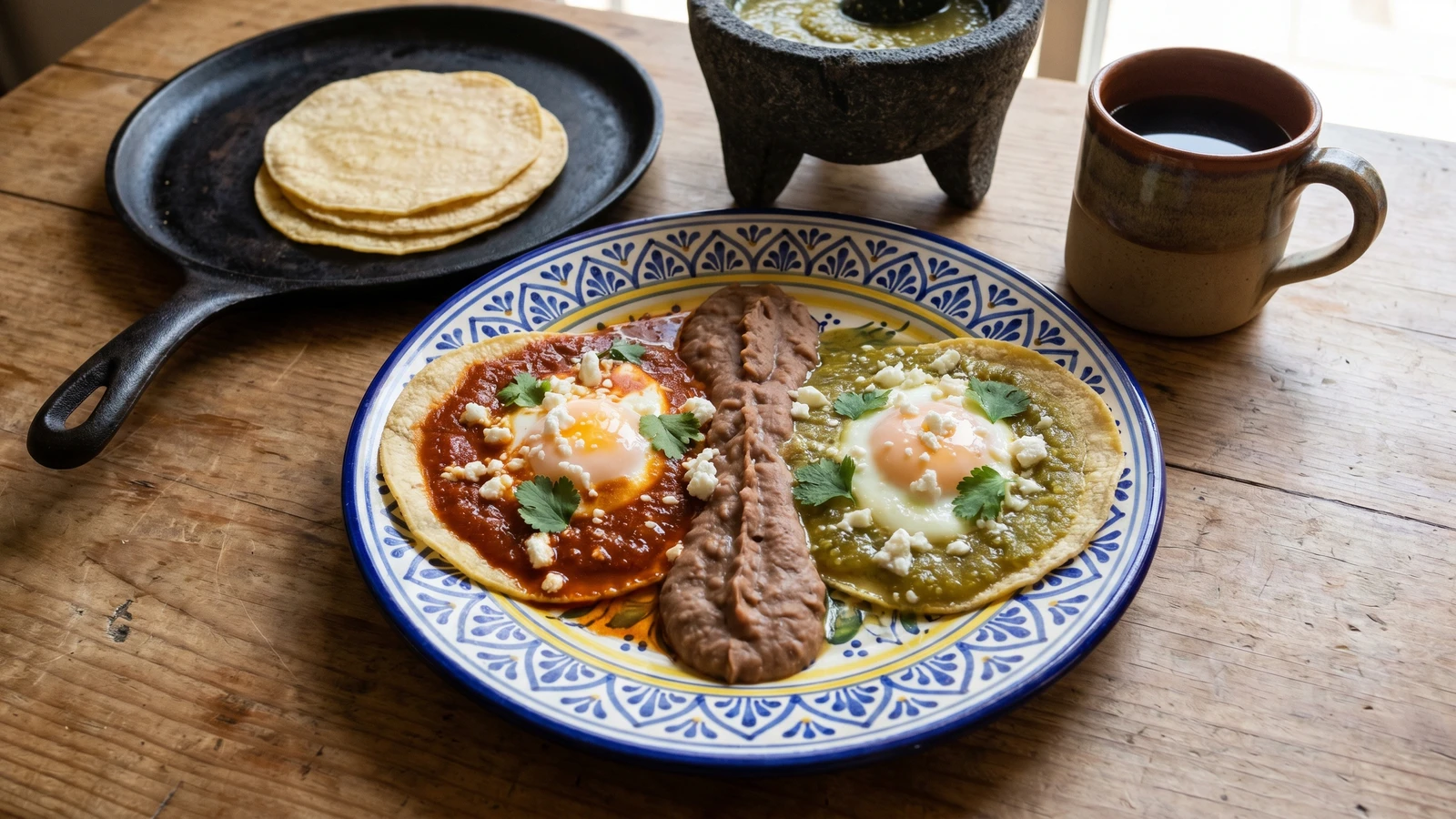
Guanajuato's Bajío almuerzo plate: two fried eggs on corn tortillas, one red with guajillo, one green with tomatillo, divided by refried beans cooked in manteca.
Guanajuato, in the Bajío, knows this plate from fondas, mercado counters, and quick home breakfasts before the day gets serious. Huevos divorciados are not rare food. They are practical food. Two eggs, two salsas, one line of frijoles refritos down the middle so the marriage stays separated.
The red salsa here is guajillo, with a little chile ancho for body. The green salsa is tomatillo with chile serrano and cilantro. That red and green division matters. Do not drown both eggs in the same salsa and call it divorced. No me vengas con atajos.
The beans are the spine of the plate. In Guanajuato and Querétaro, I watched señoras refry flor de mayo or bayo beans in manteca de cerdo until they held their shape on the spoon. La manteca es el sabor. Oil makes beans shiny. Lard makes them taste like breakfast.
Serve it on barro from the region if you have it, Capula or Dolores Hidalgo majolica, with bolillo from the panadería and café de olla in a stoneware mug. This is a 32-state cuisine. Cada estado, su propia cocina.
Huevos divorciados developed from the 20th-century Mexican fonda breakfast repertoire, where cooks reused yesterday's beans and fresh morning salsas to make a fast, filling almuerzo. In the Bajío, especially Guanajuato and Querétaro, the plate reflects the region's bean culture and its fonda habit of pairing red dried-chile sauces with green tomatillo sauces. The dish is related to huevos rancheros, but the defining feature is the separation: two salsas, two eggs, beans as the border.
Quantity
4
preferably day-old
Quantity
4
Quantity
3 tablespoons
divided
Quantity
1 1/2 cups
with 1/4 cup cooking liquid
Quantity
1/4 teaspoon, plus more to taste
Quantity
3
stemmed and seeded
Quantity
1
stemmed and seeded
Quantity
2
Quantity
1/4 small
Quantity
1
unpeeled
Quantity
1/2 teaspoon
Quantity
6
husked and rinsed
Quantity
1 to 2
stemmed
Quantity
2 tablespoons
chopped
Quantity
1 small
Quantity
for serving
crumbled
Quantity
for serving
Quantity
for serving
| Ingredient | Quantity |
|---|---|
| corn tortillaspreferably day-old | 4 |
| large eggs | 4 |
| manteca de cerdodivided | 3 tablespoons |
| cooked flor de mayo or bayo beanswith 1/4 cup cooking liquid | 1 1/2 cups |
| kosher salt | 1/4 teaspoon, plus more to taste |
| dried chile guajillostemmed and seeded | 3 |
| dried chile anchostemmed and seeded | 1 |
| Roma tomatoes | 2 |
| white onion | 1/4 small |
| garlic cloveunpeeled | 1 |
| dried Mexican oregano | 1/2 teaspoon |
| tomatilloshusked and rinsed | 6 |
| fresh chile serranostemmed | 1 to 2 |
| fresh cilantrochopped | 2 tablespoons |
| epazote sprig | 1 small |
| queso fresco (optional)crumbled | for serving |
| cilantro leaves (optional) | for serving |
| bolillos or warm corn tortillas (optional) | for serving |
Heat a dry comal over medium. Toast the guajillo and ancho chiles separately, 15 to 25 seconds per side, just until the skins darken slightly and smell sweet. Do not blacken them. Burned guajillo turns bitter and then your red salsa tastes like punishment. Cover the toasted chiles with hot water and soak for 15 minutes.
On the same comal, roast the tomatoes, onion, and unpeeled garlic until blistered in spots. The tomato skins should split and the onion should soften at the edges. Peel the garlic. This roasting gives the salsa its fonda flavor. Raw tomato in this salsa tastes thin.
Drain the soaked chiles and blend them with the roasted tomatoes, onion, peeled garlic, Mexican oregano, 1/4 teaspoon salt, and 1/4 cup water. Blend until smooth, then strain if your blender leaves skins behind. The salsa should be brick red, not orange, with the guajillo in front and the ancho rounding the back.
Place the tomatillos and serrano in a small saucepan and cover with water. Simmer until the tomatillos turn olive green, about 6 minutes. Drain and blend with cilantro, the epazote sprig, a pinch of salt, and 2 tablespoons water. Taste it. It should be bright and sharp enough to wake up the egg.
Melt 1 tablespoon manteca in a small skillet over medium. Add the salsa roja and cook, stirring, for 4 to 5 minutes until it thickens and the color deepens. Scrape it into a bowl. Melt another 1/2 tablespoon manteca and fry the salsa verde for 3 minutes. Frying the salsas takes away the raw edge and lets the fat carry the chile. Así se hace y punto.
Melt 1 tablespoon manteca in a skillet over medium. Add the cooked beans and their liquid. Mash with a bean masher or the back of a spoon until thick but not dry. Cook for 5 to 7 minutes, stirring, until the beans hold a soft ridge when pushed across the pan. Taste for salt. These beans are the wall between the eggs, so they need body.
Brush the tortillas lightly with the remaining 1/2 tablespoon manteca and warm them on the comal until pliable with a few toasted spots. Do not use flour tortillas here. Flour tortillas belong to the north. In the Bajío fonda, this plate sits on corn.
Fry the eggs in a lightly greased skillet over medium heat until the whites are set and the yolks are still soft, about 2 to 3 minutes. Salt them while they cook. Keep the edges a little crisp if you like them that way. A clean white egg with a soft yolk is fine. A rubber yolk is not breakfast, it is neglect.
Set two warm tortillas on each plate and place one fried egg on each tortilla. Spoon the refried beans in a thick line between them. Cover one egg with salsa roja and the other with salsa verde, keeping the colors separate. Finish with queso fresco and a few cilantro leaves if using. Serve immediately with bolillos or warm tortillas.
1 serving (about 565g)
Culinary guides, cultural storytelling, and the editorial depth that makes cooking meaningful.
Discover Culinary ExplorerChef Lupita
Michoacán's Tierra Caliente almuerzo, where salted beef is softened, pounded, fried in lard, folded with egg and chile perón salsa, then served beside morisqueta like a proper working table.

Chef Lupita
Guerrero's Costa Grande aporreado is salted cecina pounded soft, scrambled with egg, and finished in a red guajillo and chile de árbol salsa loud with garlic and cilantro.

Chef Lupita
Los Altos de Chiapas turns two-night fermented white corn into a tart-sweet atole, cooked with canela and piloncillo, then poured hot into jícaras for desayuno.

Chef Lupita
Oaxaca's Mixteca region ferments nixtamalized masa for days until it turns tart and alive, then simmers it with piloncillo and canela into a thick, warm atole served at first light in clay.