
Chef Lesia
Banosh (банош, Carpathian cornmeal porridge)
Cornmeal and sour cream go over the flame pale and separate, then suddenly turn glossy, yellow, and almost stubborn. Stir one way only, the shepherds say, and listen.
A cooking platform built around craft, culture, and the stories behind what we eat.
Created by
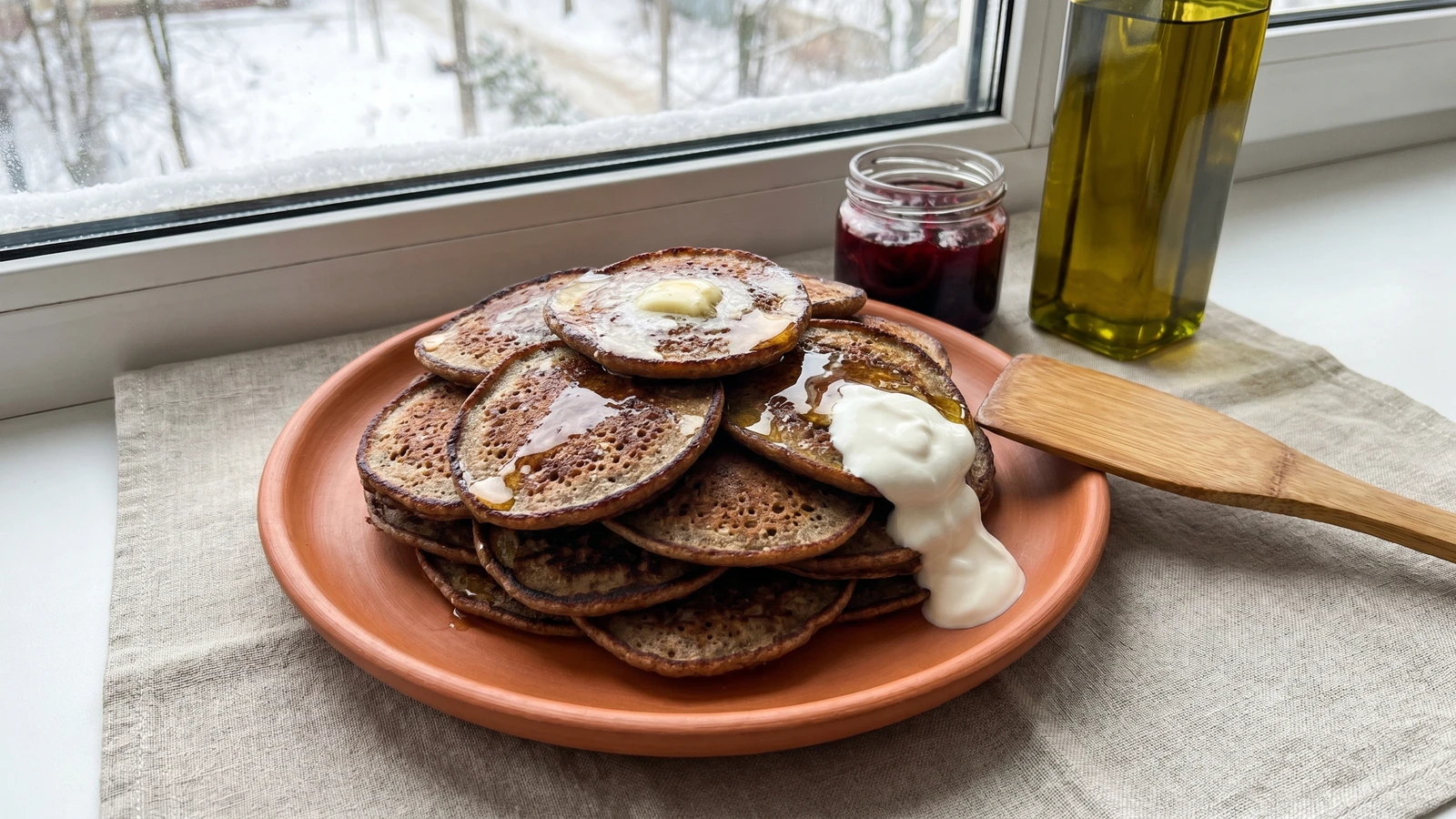
Buckwheat turns the griddle dark and nutty, almost smoky, then softens under smetana, honey, or a spoon of jam into a breakfast that costs little and feeds generously.
Buckwheat flour looks like soil in the bowl. Good soil. Dark, speckled, faintly grey-brown before the milk loosens it, then the pan wakes it up and the smell changes from raw grain to toasted nuts and warm crust. That is the moment hrechanyky begin to make sense.
These are not pale pancakes pretending to be cake. They belong to the same sensible Ukrainian table as kasha, sour cream, honey, mushrooms, fried onions, jars opened in winter, and children eating the first one standing beside the stove because patience is apparently for other families. Aunt Nadia wrote only "let it rest until it calms down," which annoyed me for years. She was right. The flour needs time to drink the milk, so the pancakes cook tender instead of sandy.
Make them small enough to turn without drama and dark enough that the edges smell toasted. Serve sweet with honey and sour cherry jam, or savoury with smetana and dill. Buckwheat goes both ways without losing itself.
Buckwheat, hrechka, has been grown across Ukrainian lands for centuries, with Poltava and the central forest-steppe especially known for grain cooking that turns modest crops into filling everyday meals. Hrechanyky can mean different buckwheat dishes by region: pancakes from flour, patties from cooked kasha, or savoury cutlets stretched with mushrooms or meat. Soviet canteens often flattened buckwheat into plain porridge, but village and home kitchens kept the livelier forms at the table.
Quantity
200g
Quantity
80g
Quantity
1 teaspoon
Quantity
1 tablespoon
Quantity
2 large
Quantity
500ml
warmed until just body-warm
Quantity
2 tablespoons, plus more for the pan
Quantity
1 teaspoon
Quantity
to serve
Quantity
to serve
Quantity
to serve for savoury pancakes
| Ingredient | Quantity |
|---|---|
| buckwheat flour | 200g |
| plain wheat flour | 80g |
| fine sea salt | 1 teaspoon |
| sugar (optional) | 1 tablespoon |
| eggs | 2 large |
| whole milkwarmed until just body-warm | 500ml |
| melted butter or unrefined sunflower oil | 2 tablespoons, plus more for the pan |
| baking powder | 1 teaspoon |
| smetana (sour cream) (optional) | to serve |
| honey or sour cherry jam (optional) | to serve |
| fresh dill (optional) | to serve for savoury pancakes |
Whisk the buckwheat flour, wheat flour, salt, and sugar if you're using it in a wide bowl. Buckwheat clumps like it has private business, so break up the darker lumps now before the milk arrives.
Beat the eggs with the warm milk, then pour this slowly into the flour while whisking from the centre outward. Stir in the melted butter or sunflower oil. The batter should pour like thick cream, not sit like dough; loosen it with a splash more milk if it sulks on the spoon.
Cover the bowl and let the batter rest for about half an hour, until it thickens slightly and looks calmer on the surface. This is the step that decides the dish: buckwheat needs time to drink, or the finished pancakes taste gritty instead of soft and nutty.
Heat a heavy pan or griddle over medium heat and brush it lightly with butter or sunflower oil. When a drop of batter lands with a quiet sizzle, not a hard spit, the pan is ready. Stir the baking powder into the batter just before cooking.
Ladle small rounds of batter into the pan, each about the width of your palm. Cook until the edges look dry, the top shows small holes, and the smell changes to toasted buckwheat, then turn once. The second side is quicker; listen for the softer sizzle and lift one edge to check for a deep brown freckled underside.
Stack the hrechanyky as they come off the pan and cover them with a clean towel so they soften into each other. Serve with smetana, honey, or sour cherry jam for breakfast, or with smetana and chopped dill when you want them savoury. Enough for eight polite guests or one hungry Ukrainian.
1 small pancake (about 60g)
Culinary guides, cultural storytelling, and the editorial depth that makes cooking meaningful.
Discover Culinary ExplorerChef Lesia
Cornmeal and sour cream go over the flame pale and separate, then suddenly turn glossy, yellow, and almost stubborn. Stir one way only, the shepherds say, and listen.

Chef Lesia
A benderyk is a crepe taught to hold its corners: soft pancake, peppery meat, egg-dipped edges fried crisp, and the same triangular confidence my hands learned at the varenyky table.

Chef Lesia
Raw potato turns sly the moment you grate it: wet, starchy, already darkening. Deruny reward speed, hot oil, and the courage to leave the edges alone until they crisp.

Chef Lesia
Pumpkin goes into the pot pale and stubborn, then gives itself up slowly to milk and millet until the whole breakfast turns deep orange, sweet, and spoon-thick.