Chef Juliana
Abará
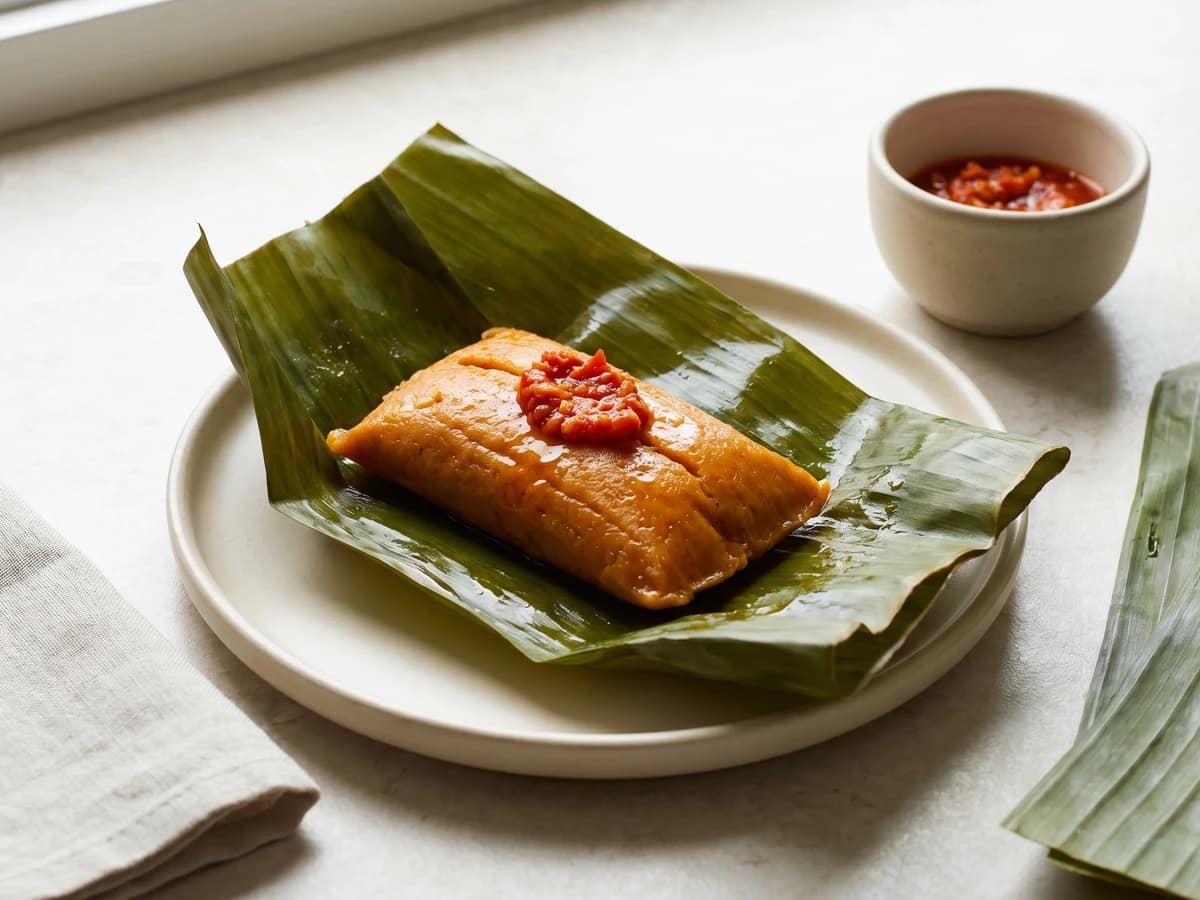
You think banana leaves and hand-whipped bean massa mean “isso não é pra mim.” Wrong. Soak, peel, beat, wrap, steam. Abará is learned by touch, not inherited by magic.
A cooking platform built around craft, culture, and the stories behind what we eat.
Created by
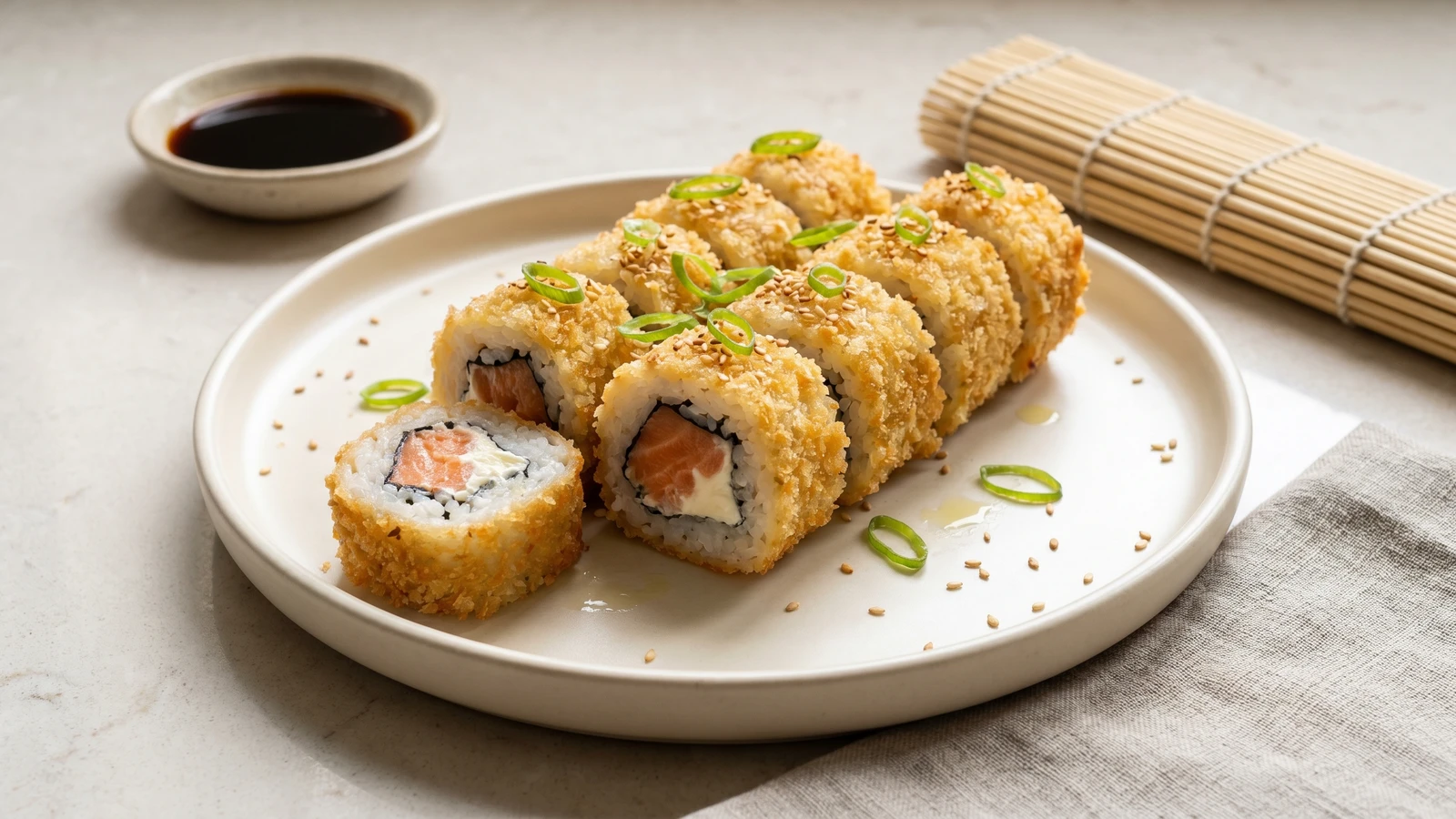
You think sushi at home is 'isso não é pra mim.' Wrong. Cooked salmon, sticky rice, cold cream cheese, and a calm fry turn the temakeria favorite into a receita que funciona.
You look at a bamboo mat and immediately hear that little voice: isso não é pra mim. I know that voice. I once wrote do not burn the onion in my caderno like it was a state secret, because I was learning from zero and needed receitas que funcionam, not kitchen theater.
Hot roll belongs to that very Brazilian habit of adopting a food, arguing with it a little, and sending it to the table with cream cheese. It is not the pê-efe, and a gente doesn't need to pretend it is. The pê-efe is rice, beans, a piece of fish or meat or an egg, and something green, the everyday formula that quietly makes a country itself. This roll is a snack for the same home kitchen: rice measured properly, fish cooked safely, a real batter, and oil kept hot enough to crisp instead of soak.
The why is simple. Sushi rice is not arroz soltinho; it must be sticky enough to hold, so you wash it, cook it gently, season it warm, and cool it before it meets the nori. You cook the salmon for this home version because a quick fry browns the outside but doesn't promise the center is safe. You chill the roll because cold cream cheese stays put. You fry one at a time because crowded oil drops in temperature and turns your crisp crust heavy.
By the end you have warm, crunchy pieces with rice, salmon, and cream cheese where they should be, not a collapsed tube of regret. Cozinhar não é dom, é um aprendizado. Anota aí: this one is just steps.
Sushi entered Brazil with Japanese immigration beginning in 1908, when the Kasato Maru arrived in Santos with the first large group of Japanese immigrants, many of whom settled in São Paulo. The hot roll is a Brazilian sushi-bar adaptation that became common in temakerias from the late twentieth century on, especially with salmon and cream cheese. The combination is Brazilian sushi language, not a traditional Japanese roll, and the Japanese-Brazilian story belongs to the communities that built it.
Quantity
1 1/2 cups
Quantity
1 3/4 cups
Quantity
3 tablespoons
Quantity
1 tablespoon
Quantity
1 1/4 teaspoons
divided
Quantity
250 g
skin and pin bones removed
Quantity
1 tablespoon
for cooking the salmon
Quantity
3/4 cup
cut into 4 long strips
Quantity
4 full sheets
Quantity
3/4 cup
divided
Quantity
1 large
Quantity
1/2 cup, plus 1 tablespoon if needed
Quantity
1 cup
Quantity
3 to 4 cups
for frying
Quantity
1/4 cup
for serving
Quantity
1 tablespoon
Quantity
1 teaspoon
| Ingredient | Quantity |
|---|---|
| Japanese short-grain rice | 1 1/2 cups |
| water | 1 3/4 cups |
| rice vinegar | 3 tablespoons |
| sugar | 1 tablespoon |
| fine saltdivided | 1 1/4 teaspoons |
| salmon filletskin and pin bones removed | 250 g |
| neutral oilfor cooking the salmon | 1 tablespoon |
| cold cream cheesecut into 4 long strips | 3/4 cup |
| nori | 4 full sheets |
| all-purpose flourdivided | 3/4 cup |
| egg | 1 large |
| ice-cold water | 1/2 cup, plus 1 tablespoon if needed |
| panko breadcrumbs | 1 cup |
| neutral oilfor frying | 3 to 4 cups |
| shoyu or soy saucefor serving | 1/4 cup |
| thinly sliced scallion (optional) | 1 tablespoon |
| toasted sesame seeds (optional) | 1 teaspoon |
Put the rice in a bowl, cover with cold water, and rub the grains gently with your fingers. Pour off the cloudy water and repeat 4 or 5 times, until the water is only lightly cloudy, not chalky. Drain for 10 minutes. Washing removes the loose starch from the outside of the grains, so the rice cooks sticky but not gluey. Sticky is useful here. Glue is a punishment.
Put the drained rice and 1 3/4 cups water in a small heavy pot. Bring to a boil over medium heat, cover, drop the heat to low, and cook for 15 minutes. Turn off the heat and let it rest, still covered, for 10 minutes. Don't lift the lid to peek. The trapped heat finishes the grains evenly, and impatience gives you a wet bottom and a hard top.
Warm the rice vinegar, sugar, and 3/4 teaspoon salt in a small pan or microwave just until the sugar dissolves. Tip the warm rice into a wide dish and fold in the vinegar mixture with a spatula, cutting through the rice instead of mashing it. The grains should look glossy and separate but still cling together. Season while warm so the rice drinks it in, then cool to room temperature before rolling, because hot rice makes the nori tough and the cream cheese sad.
Pat the salmon dry and season it with the remaining 1/2 teaspoon salt. Heat 1 tablespoon oil in a skillet over medium-high heat and cook the salmon for 2 to 3 minutes per side, until browned outside and just opaque in the center. Rest for 5 minutes, then break it into 4 long rough strips. Dry fish browns; wet fish steams and brings water into the roll. Cooking it now also matters because the final fry is quick and won't reliably cook a raw center.
Wrap a bamboo mat in plastic wrap and set a small bowl of water nearby for your fingers. Put the nori, cooled rice, salmon strips, and cold cream cheese within reach. A calm station makes a tight roll. If you stop halfway to hunt for the cheese, the rice dries, the nori softens, and suddenly everyone is blaming the mat. Poor mat.
Lay one nori sheet shiny side down on the mat, with the long edge facing you. With damp fingers, spread about 1 cup seasoned rice over the nori, leaving a 2 cm strip bare at the far edge. Lay one salmon strip and one cream cheese strip across the lower third. Lift the mat, roll the nori over the filling, tuck it in, and press evenly until the roll feels firm. Dab the bare edge with water to seal. Firm pressure holds the filling in place; squeezing like you're closing an overpacked suitcase pushes everything out.
Set the rolls seam side down, cover, and refrigerate for 20 minutes, or freeze for 10 minutes if you're moving fast. You want them cold and settled, not frozen solid. This firms the cream cheese and rice so the breading sticks and the oil doesn't open the roll like a bad secret.
Pour 2 inches of neutral oil into a heavy pot and heat to 180°C (350°F). If you don't have a thermometer, drop in a small crumb of bread: it should fizz right away and turn golden in about 25 seconds. If it darkens in 5 seconds, the oil is too hot. If it sinks and sulks, it's too cold. Hot oil sets the crust quickly; cold oil soaks into the crumbs and makes the roll heavy.
Put 1/4 cup flour in a shallow dish. Whisk the remaining 1/2 cup flour with the egg and ice-cold water until there are no dry pockets; a few small lumps are fine. Put the panko in another shallow dish. Dust each chilled roll lightly with flour, dip it in the batter, then roll it in panko and press gently so the crumbs hold. The flour is the glue between nori and batter. Too much flour turns pasty, so shake off the extra.
Fry one roll at a time, turning with tongs, until evenly golden and crisp, about 2 to 3 minutes. Keep the oil lively, not violent, and let it come back to temperature between rolls. Crowd the pot and the oil cools down; the crust drinks oil instead of crisping. Drain the rolls on a wire rack, not a paper towel, because trapped oil underneath softens the crust.
Let each fried roll sit for 2 minutes, then slice into 8 pieces with a serrated knife, wiping and wetting the blade between cuts. The short rest lets the cream cheese settle, so it stays inside instead of running across the board. Finish with scallion and sesame if using, and serve with shoyu on the side.
1 serving (about 355g)
Culinary guides, cultural storytelling, and the editorial depth that makes cooking meaningful.
Discover Culinary ExplorerChef Juliana
You think banana leaves and hand-whipped bean massa mean “isso não é pra mim.” Wrong. Soak, peel, beat, wrap, steam. Abará is learned by touch, not inherited by magic.

Chef Juliana
You think food of Iansã from the baianas' tabuleiro is not for your stove. Anota aí: soaked feijão-fradinho, real dendê, and hand-whipping make a home version learnable.

Chef Juliana
You think fried salgados belong to the birthday table you buy, not the one you make. Wrong. Learn the dough, seal the cheese, and the freezer starts working for you.

Chef Juliana
You think stuffed fried bolinhos are for the boteco cook, not your kitchen. Wrong. Mash the aipim warm, keep the filling dry, fry in small batches, and the tray disappears.