
Chef Thomas
A British BLT
Back bacon crisped in a hot pan, a ripe tomato that actually tastes of something, crisp lettuce and real butter on proper toast. A sandwich that earns its place in the notebook.
A cooking platform built around craft, culture, and the stories behind what we eat.
Created by Chef Thomas
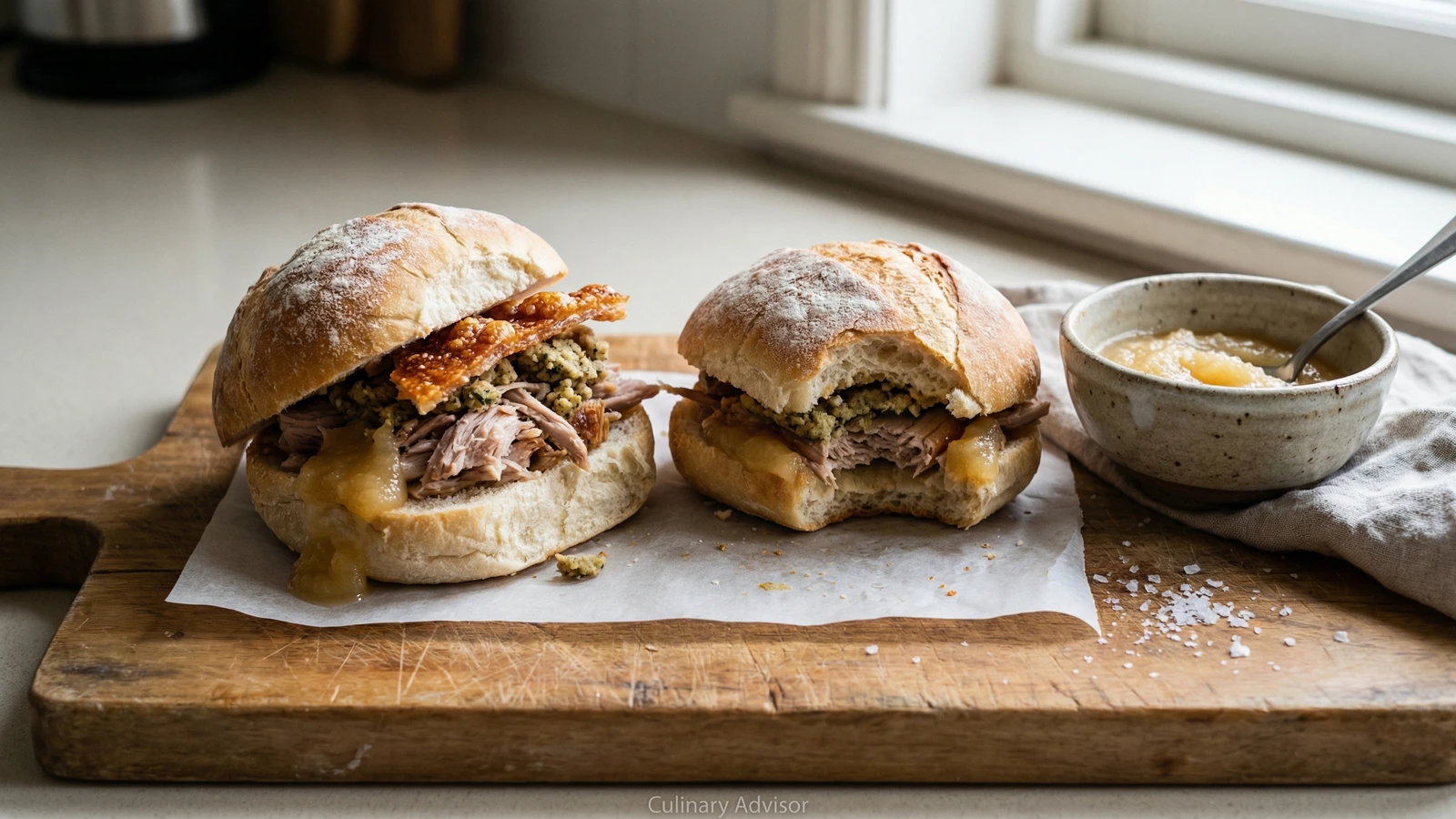
Slow-roasted pork pulled into soft shreds, tucked into a floury roll with sage stuffing, sharp apple sauce, and a shard of crackling that shatters when you bite through it.
The smell reaches you before anything else. Roasting pork, sage, the sweet-sharp note of apples cooking down. Every county show, every November fair, there's a stall somewhere with a whole shoulder turning behind glass and a queue that tells you everything you need to know. This is that sandwich, made at home, where you can take your time and do it properly.
A pork shoulder, slow-roasted until the meat gives way to a pair of forks. The skin, scored and salted and blasted in a fierce oven until it crackles and shatters. Sage and onion stuffing, the real sort, made with good bread and enough butter to hold it together. Apple sauce, not the smooth paste from a jar but something rough and sharp, with enough bite to cut through the richness of the pork. All of it piled into a floury roll with a proper crust.
It isn't elegant. It doesn't need to be. There are few better feelings than handing someone one of these, wrapped loosely in a napkin, and watching them take the first bite. I wrote it down in the notebook after a fair one October: pork roll, rain, canvas awning, apple sauce on my thumb. Some meals stay with you. This is one.
Quantity
2kg
skin on and scored by the butcher
Quantity
generous amount
Quantity
1 tablespoon
Quantity
4 (about 500g)
peeled, cored, and roughly chopped
Quantity
25g
Quantity
1-2 tablespoons
Quantity
a squeeze
Quantity
2 medium
finely chopped
Quantity
30g
Quantity
150g
Quantity
small bunch
leaves picked and finely chopped
Quantity
1
beaten
Quantity
to taste
Quantity
6
| Ingredient | Quantity |
|---|---|
| bone-in pork shoulderskin on and scored by the butcher | 2kg |
| fine sea salt | generous amount |
| olive oil | 1 tablespoon |
| Bramley applespeeled, cored, and roughly chopped | 4 (about 500g) |
| unsalted butter (apple sauce) | 25g |
| caster sugar | 1-2 tablespoons |
| lemon juice | a squeeze |
| onionsfinely chopped | 2 medium |
| unsalted butter (stuffing) | 30g |
| fresh white breadcrumbs | 150g |
| sageleaves picked and finely chopped | small bunch |
| eggbeaten | 1 |
| salt and black pepper | to taste |
| crusty white rolls | 6 |
Pat the skin bone-dry with kitchen paper. This matters. Wet skin won't crackle. If the butcher hasn't already scored it, take your sharpest knife and cut through the skin in lines about a finger's width apart, going through the skin and into the fat but not into the meat. Rub olive oil over the skin, then rub fine sea salt into every score line generously. More than you think. The salt draws moisture from the skin, and that's what gives you crackling.
Set the oven to its highest temperature, 240C/220C fan or as hot as it will go. Put the shoulder skin-side up in a roasting tin and roast for thirty minutes. The kitchen will smell of salt and hot fat and the skin will start to blister and pop. You'll hear it. That's the sound of crackling happening. Don't open the door. Let it do its work.
Turn the oven down to 160C/140C fan. Pour a glass of water into the bottom of the roasting tin, not over the skin, just into the tin. This keeps the meat moist as it cooks low and slow. Roast for three to three and a half hours. You'll know it's ready when the meat pulls away from the bone without resistance and yields to a fork pressed gently into the thickest part. If it resists, give it another thirty minutes. Pork shoulder forgives an extra half hour. It doesn't forgive being rushed.
While the pork roasts, put the chopped Bramleys in a saucepan with the butter and a tablespoon of sugar. No water. Bramleys have enough moisture in them. Set the heat low, put a lid on, and leave them for ten to fifteen minutes, stirring once or twice. They'll collapse into a rough, fluffy sauce almost by themselves. Taste it. If it needs more sugar, add a little. If it's flat, a squeeze of lemon brightens it. You want it sharp, not sweet. The pork is rich enough. The apple sauce is there to cut through it.
Melt the butter in a pan over a medium heat and soften the onions for eight to ten minutes until they're translucent and sweet, not coloured. Take them off the heat and stir in the breadcrumbs, the chopped sage, and a good seasoning of salt and pepper. Let it cool for a minute, then stir in the beaten egg to bind it. Press the mixture into a buttered baking dish, roughly two centimetres deep. Bake at 180C/160C fan for twenty to twenty-five minutes while the pork rests, until the top is golden and the edges have gone crisp. The stuffing should hold together when you spoon it but crumble when you bite through it.
When the shoulder comes out of the oven, cover it loosely with foil and let it rest for at least thirty minutes. Resting isn't optional. The meat relaxes, the juices redistribute, and everything becomes easier to pull apart. After resting, lift off the crackling and set it aside. Take two forks and pull the meat into rough shreds, working with the grain. It should come apart almost without effort. If you're pulling hard, it needed longer in the oven. Tip the resting juices from the tin back over the pulled meat and turn it through. Season with a little more salt if it needs it. Trust your tongue.
Split the rolls and warm them briefly in the oven if you like, just enough that the crust re-crisps. Pile the pulled pork generously onto the bottom half. Spoon a good amount of stuffing on top, breaking it roughly so it nests into the meat. Add a generous spoonful of apple sauce. Snap a piece of crackling and press it into the top, so it sits proud of the roll and shatters when you bite down. Put the lid on. Press it gently. Hand it to someone. Your kitchen, your rules.
1 serving (about 430g)
Culinary guides, cultural storytelling, and the editorial depth that makes cooking meaningful.
Discover Culinary ExplorerChef Thomas
Back bacon crisped in a hot pan, a ripe tomato that actually tastes of something, crisp lettuce and real butter on proper toast. A sandwich that earns its place in the notebook.

Chef Thomas
Salted anchovies pressed into hot buttered toast, sharp with lemon and cayenne, the kind of thing you eat standing at the kitchen counter with a glass of cold wine and nothing else planned.

Chef Thomas
Oysters wrapped in smoky bacon, grilled until the fat crisps and the sea-sweetness swells inside, set on hot buttered toast. The old savoury course, brought back to the table where it belongs.

Chef Thomas
English asparagus, steamed until just tender and laid across thick buttered toast with warm butter pooling beneath it. A dish that belongs to May and asks almost nothing of you except good ingredients and a few minutes of attention.