Chef Freja
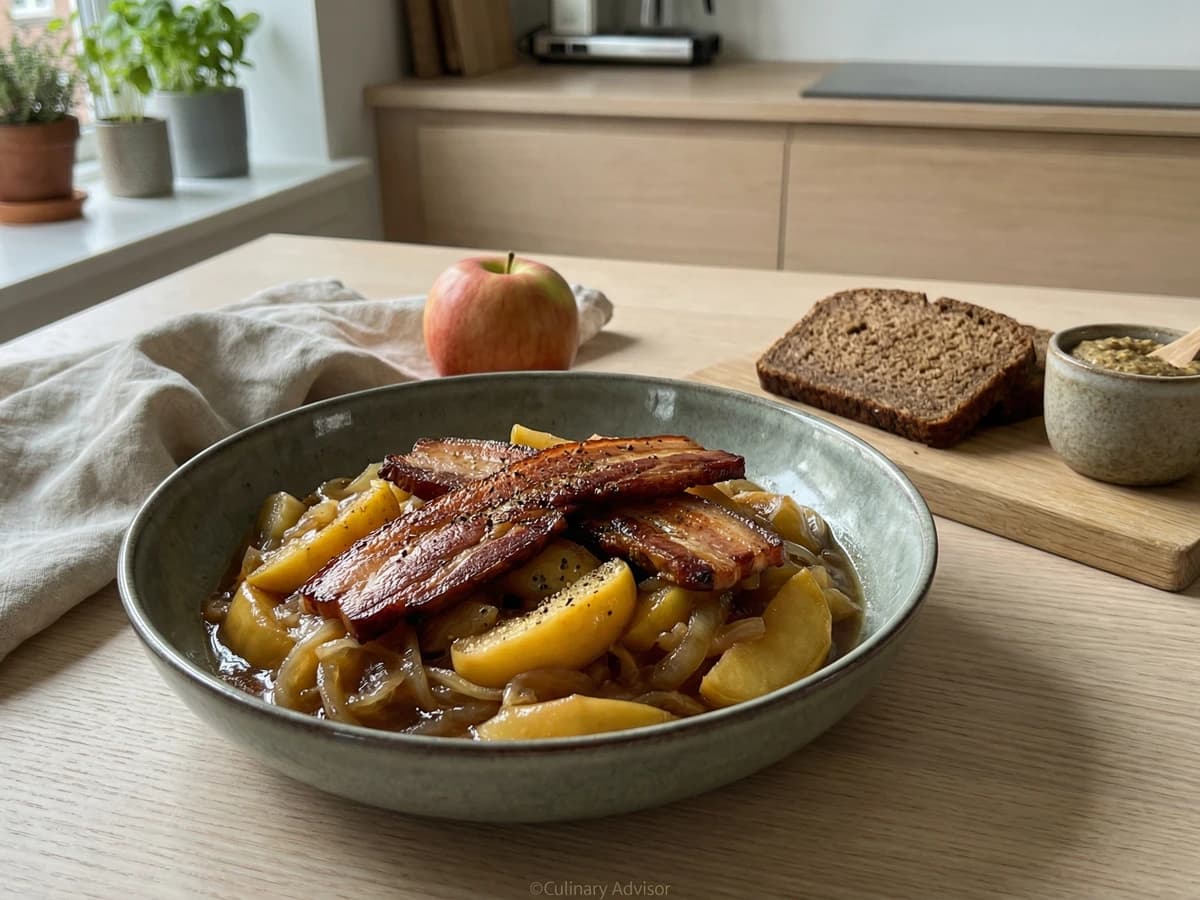
Aebleflaesk
The Fyn autumn supper where thick pork belly renders slowly into its own fat, then meets apples and onions that cook down into a deep amber tangle. Sweet, salt, and the oldest pairing in the Danish larder.
A cooking platform built around craft, culture, and the stories behind what we eat.
Created by Chef Freja
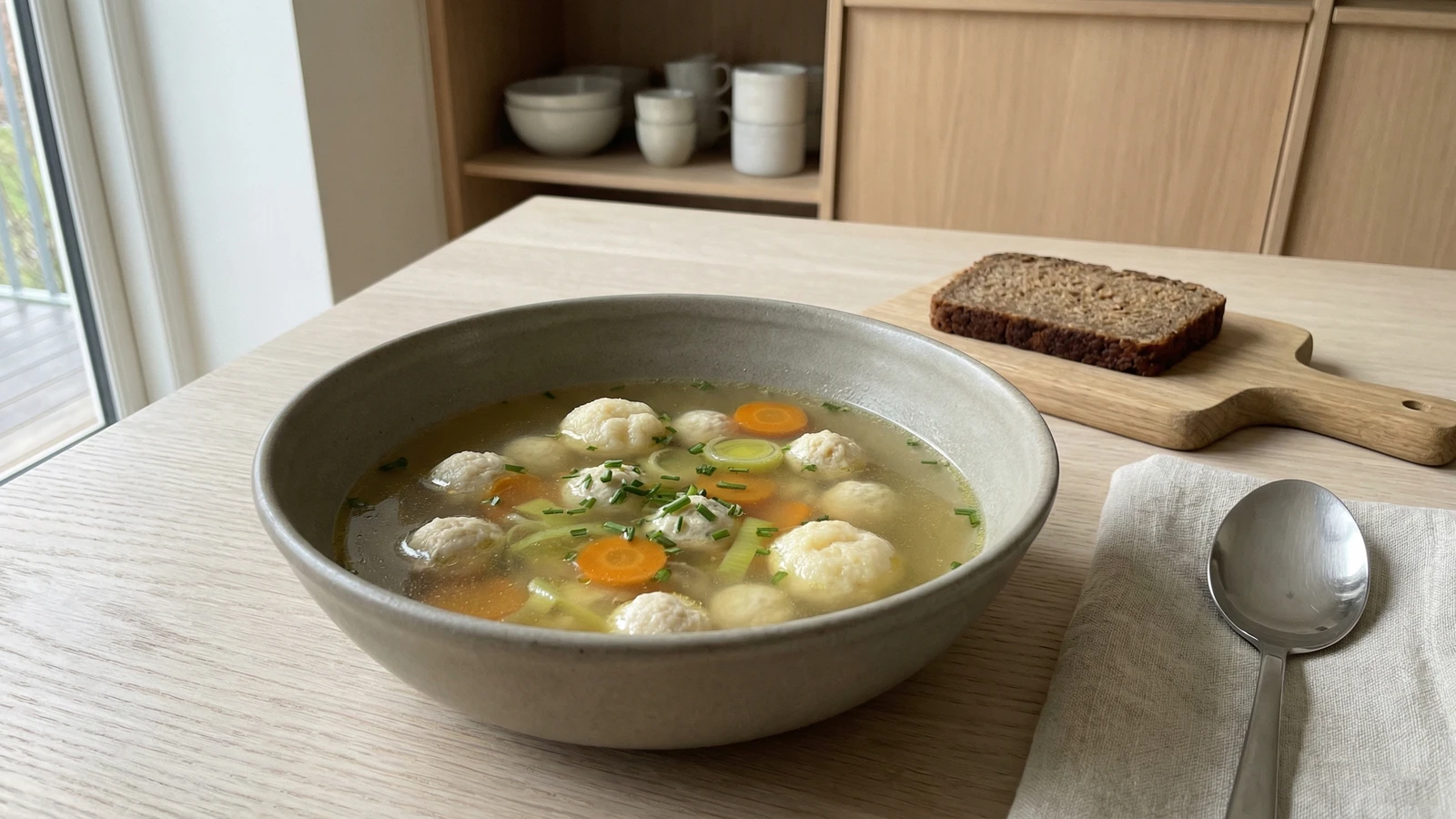
Denmark's most treasured soup. A whole hen simmered slowly until the broth runs clear and gold, finished with small chicken kodboller and cloud-light melboller dumplings. The Sunday bowl that holds a country's memory of winter.
Honsekodssuppe is a Sunday soup in every sense. Someone starts it in the morning, a whole hen lowered into a deep pot of cold water, and the kitchen fills slowly with the smell of simmering bird and bay leaves while the rest of the day unfolds around it. By the time the light begins to fade in the afternoon, the broth is ready, the dumplings have been shaped, and the whole house knows what's coming to the table.
This is the king of Danish soups. Not fancy, not modernized, just the oldest version of care a kitchen can make. A clear golden broth drawn patiently from the bones and flesh of a good hen, served with small chicken meatballs called kodboller and light flour dumplings called melboller that puff in the poaching water like tiny clouds. The dish has earned its place at the center of Danish winter cooking the honest way, by being worth the time it takes. The season decides when you make it, and the season is cold: late November through February, when the afternoons are short and a bowl of something hot feels like an argument for staying inside.
There are a few things I want you to watch for, because everything about this soup comes down to gentleness. The broth must simmer, never boil. Boiling makes it cloudy, and a cloudy honsekodssuppe is a bowl that never got the attention it needed. Keep the heat low enough that the surface only trembles. Skim the grey foam off the top when it rises during the first twenty minutes. And when you shape the melboller, don't fuss with them. Two wet spoons, a rough oval, into the pot. They don't need to be perfect. They need to be light, and lightness comes from leaving them alone. Cooked with love, served with rugbrod on the side, and you'll understand why this is the soup that won.
Honsekodssuppe was codified as the Sunday dish of bourgeois Danish households in the late 1800s and appears in Frøken Jensens Kogebog, the 1901 cookbook that shaped domestic Danish cooking for most of the twentieth century. The suppehone tradition, using an older laying hen whose best eggs were behind her, was practical economy that happened to produce the deepest flavor: older birds carry more collagen and more taste than young ones, and the long slow simmer that would ruin a tender roasting chicken was exactly what a soup hen needed to give up its richness. The division of labor between kodboller made from minced breast and melboller made from a pâte à choux dough enriched with nutmeg dates from this same period, and both have survived in Danish kitchens almost completely unchanged.
Quantity
1 bird, 1.8 to 2kg
Quantity
3 litres
Quantity
3 total
2 halved for the broth, 1 diced for serving
Quantity
1 large, plus extra pale green for serving
cleaned, halved for the broth, diced for serving
Quantity
200g
peeled and cut into large chunks
Quantity
1
halved with skin on
Quantity
small bunch
Quantity
2
Quantity
10
Quantity
1 tablespoon, plus more to taste
Quantity
300g
raw, finely minced or processed to a smooth paste
Quantity
half
finely grated
Quantity
1 large
Quantity
2 tablespoons
Quantity
50ml
Quantity
pinch
Quantity
to taste
Quantity
50g
Quantity
125ml
Quantity
75g
Quantity
2 large
Quantity
pinch
Quantity
small bunch
finely snipped
Quantity
thick slices, to serve
| Ingredient | Quantity |
|---|---|
| whole suppehone or free-range chicken | 1 bird, 1.8 to 2kg |
| cold water | 3 litres |
| carrots2 halved for the broth, 1 diced for serving | 3 total |
| leekcleaned, halved for the broth, diced for serving | 1 large, plus extra pale green for serving |
| celery rootpeeled and cut into large chunks | 200g |
| onion (for the broth)halved with skin on | 1 |
| parsley stems | small bunch |
| bay leaves | 2 |
| black peppercorns | 10 |
| fine sea salt | 1 tablespoon, plus more to taste |
| chicken breast (for kodboller)raw, finely minced or processed to a smooth paste | 300g |
| small onion (for kodboller)finely grated | half |
| egg (for kodboller) | 1 large |
| plain flour (for kodboller) | 2 tablespoons |
| whole milk (for kodboller) | 50ml |
| ground nutmeg (for kodboller) | pinch |
| white pepper | to taste |
| unsalted butter (for melboller) | 50g |
| whole milk (for melboller) | 125ml |
| plain flour (for melboller) | 75g |
| eggs (for melboller) | 2 large |
| ground nutmeg (for melboller) | pinch |
| fresh chivesfinely snipped | small bunch |
| rugbrod | thick slices, to serve |
Rinse the hen inside and out under cold water. Place it in a deep, heavy pot and cover with the cold water by about two fingers. Set the heat to medium-low. Starting in cold water and raising the temperature slowly is how you draw the impurities up cleanly. Hot water from the start seals them inside the meat and muddies the broth before you've even begun. Be patient. It will take twenty minutes or so for the pot to come to a bare simmer.
As the water heats, grey foam will rise to the surface. Skim it off with a spoon and discard it. This is where clarity comes from, and it only takes a few minutes of attention. Once the foam has mostly stopped rising, add the halved carrots, leek, celery root, onion, parsley stems, bay leaves, peppercorns, and the tablespoon of salt. Lower the heat until the surface barely trembles. Leave it alone for ninety minutes. Don't stir. Don't cover. Let the broth do its slow work.
Lift the hen out of the pot carefully with a pair of tongs and set it aside on a plate to cool. You can pick the breast meat off later for a smorrebrod lunch the next day, which is how every Danish kitchen makes the most of a soup hen. Strain the broth through a fine sieve lined with a clean muslin or a thin tea towel into a second clean pot. This second straining is what gives honsekodssuppe its glassy golden clarity. Discard the vegetables, they've given everything they had. Taste the broth and adjust the salt. It should taste round and full, almost sweet at the edges.
Mince the raw chicken breast very finely, or pulse it in a food processor until it forms a smooth, pale paste. Transfer to a bowl. Grate the half onion on the fine side of a box grater directly into the mixture. You want the juice as well as the flesh. Add the egg, the flour, the milk, a good pinch of salt, a grind of white pepper, and a small pinch of nutmeg. Beat the mixture with a wooden spoon for a full minute. This is not optional. Beating develops the protein structure that holds the little meatballs together when they hit the water. Cover and refrigerate for fifteen minutes.
Melt the butter and milk together in a small saucepan over medium heat. When the mixture reaches a full simmer, tip in the flour all at once. Stir hard with a wooden spoon. The dough will come together quickly into a smooth, glossy ball that pulls away from the sides of the pan. Keep stirring for a minute to cook out the raw flour taste. Take the pan off the heat and let it cool for two minutes. Beat in the eggs one at a time, working each one in fully before adding the next. Season with salt and a grating of fresh nutmeg. This is a pâte à choux dough, and the steam it traps when it hits the hot water is exactly what makes melboller fluffy.
Bring a wide pot of lightly salted water to a bare simmer. Use plain water, not the broth. The kodboller and melboller both shed a little flour and protein as they cook, and you want that to happen away from the clear broth you worked so hard to make. Using two wet teaspoons, shape the chilled chicken mixture into small oval meatballs about the size of a walnut. Drop them gently into the simmering water one by one. They'll sink first, then rise to the surface after about four minutes. Let them bob for another two minutes, then lift out with a slotted spoon and set aside in a warm bowl.
In the same simmering water, use two wet teaspoons to shape small quenelles of the choux dough. Slide them gently off the spoons into the water. They'll double in size within a minute, which is the whole trick of them. Poach for three to four minutes until they are firm to the touch and rolling lazily on the surface. Lift out with the slotted spoon and add them to the bowl with the kodboller. You'll know they're right when they feel light in the spoon and look like small pale clouds.
Bring the strained broth back to a gentle simmer. Tip in the freshly diced carrot and the pale green leek and cook for three minutes, just long enough to take the raw edge off while keeping the vegetables bright. Divide the kodboller and melboller between deep, warmed bowls. Ladle the hot golden broth over them. Scatter snipped chives across the top. Serve immediately with thick slices of rugbrod alongside. This is the Sunday bowl the whole Danish winter points toward. Tak for mad.
1 serving (about 420g)
Culinary guides, cultural storytelling, and the editorial depth that makes cooking meaningful.
Discover Culinary ExplorerChef Freja
The Fyn autumn supper where thick pork belly renders slowly into its own fat, then meets apples and onions that cook down into a deep amber tangle. Sweet, salt, and the oldest pairing in the Danish larder.

Chef Freja
Warm Danish apple soup for the first cool evenings of autumn. Tart apples simmered with cinnamon and lemon peel, thickened to a soft gloss, and served with cold cream and buttery toasted oats.

Chef Freja
Danish white asparagus velouté with tiny veal meatballs, flour dumplings, and bright green tips scattered on the surface. The Easter soup of Copenhagen, built from five small pans of spring.
Chef Freja
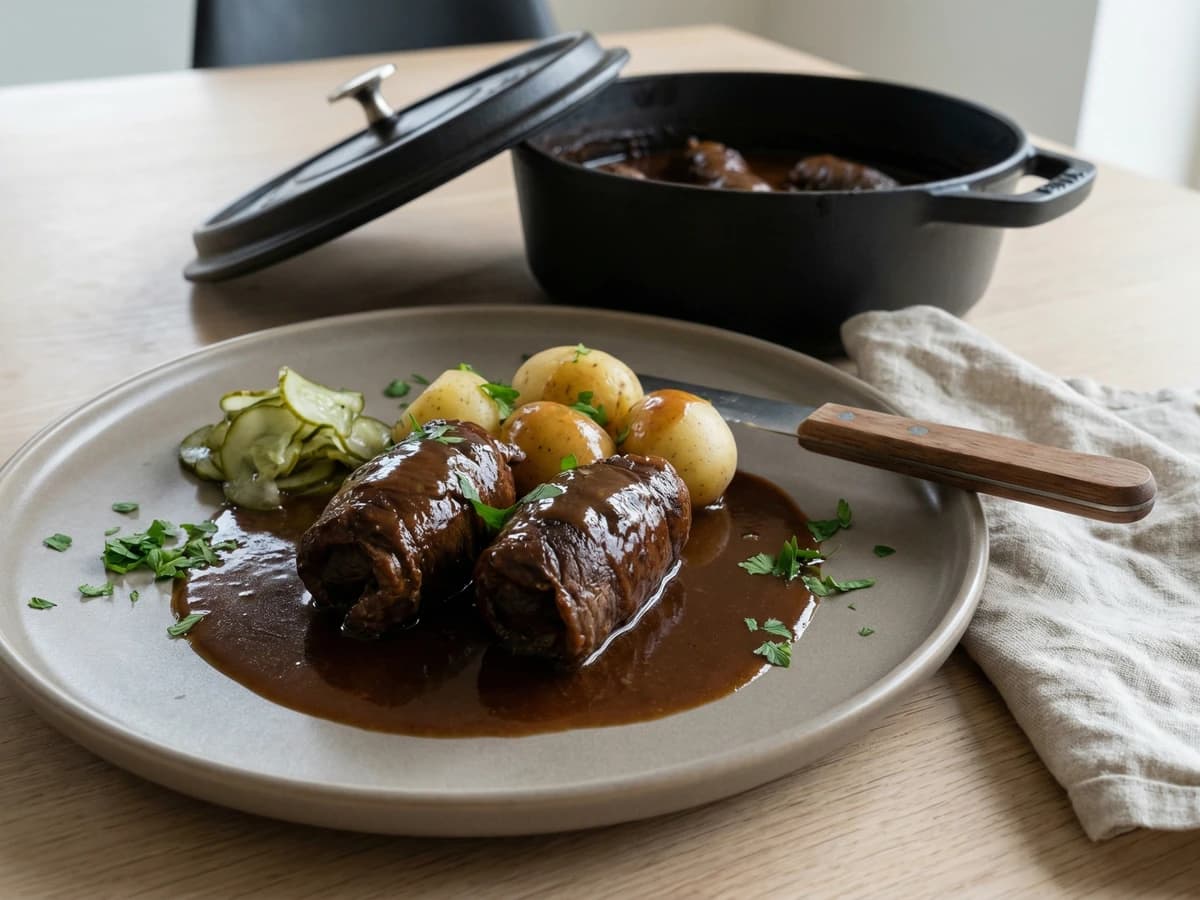
Thin beef slices rolled around bacon and onion, tied with string, and braised slowly in a dark glossy gravy finished with cream and redcurrant jelly. Danish Sunday dinner at its most comforting.