
Chef Freja
Æblegelé
Tart autumn apples, slow-boiled and strained clear overnight, then cooked with sugar to a trembling pale amber jelly that belongs on the cheese board, on morning toast, and in the kitchen of anyone who respects the season.
A cooking platform built around craft, culture, and the stories behind what we eat.
Created by Chef Freja
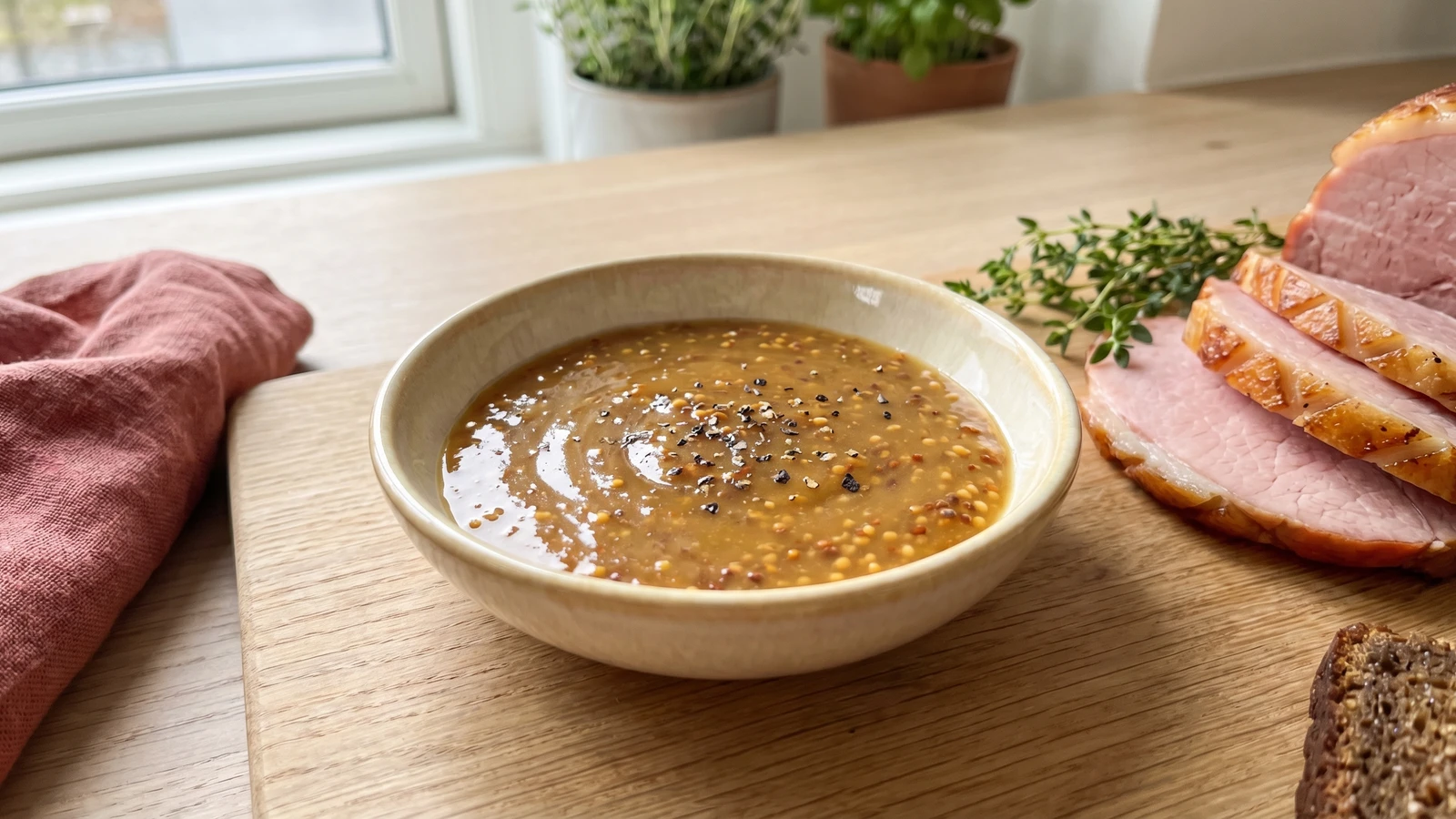
Honey and coarse mustard whisked with toasted seeds and cracked pepper. The sauce that belongs next to the Christmas ham, brushed on as a glaze or spooned alongside every slice at the julefrokost table.
December in Denmark is dark by three in the afternoon. The candles are lit, the table is set, and somewhere in the kitchen there is a ham. Juleskinke is the anchor of the Danish Christmas table, and this sauce is what it asks for: honning-sennep, honey-mustard, sweet and sharp and warm with cracked pepper and whole seeds that pop between your teeth.
This is not a recipe that needs technique. It needs good ingredients and the confidence to balance them by taste. You toast the mustard seeds until they crackle and smell alive, whisk them into honey and coarse Danish sennep, and finish with vinegar and pepper. Five minutes of work for a sauce that transforms the ham it sits beside.
The thing to watch for is the balance. Honey pulls the sauce toward sweetness. Mustard pushes back with heat. The vinegar is the quiet referee, andthe toasted seeds give you texture and a deeper, nuttier warmth that raw seeds can't offer. Taste it as you go, adjust until it feels right, and trust your own tongue. This is one of those recipes where the cook's instinct matters more than the measurements. Cooked with love, served with ham, carried to the table where it happens.
The pairing of honey and mustard with cured or roasted pork has roots in medieval Danish cooking, when honey was the primary sweetener and mustard one of the few spices widely available in Northern Europe. The tradition of glazing the juleskinke, the Christmas ham, became firmly established in bourgeois Danish households during the 1800s, when the julefrokost (Christmas lunch) evolved into the elaborate, multi-course celebration still practiced today. Regional variations exist: in Jutland the mustard tends to be sharper and the honey darker, while Copenhagen kitchens often favor a milder, more golden version with a gentler heat.
Quantity
150g
preferably Danish rapeseed honey
Quantity
100g
Quantity
1 tablespoon
Quantity
1 teaspoon
Quantity
1 tablespoon
Quantity
generous, freshly cracked
Quantity
pinch
| Ingredient | Quantity |
|---|---|
| runny honeypreferably Danish rapeseed honey | 150g |
| coarse-grain Danish mustard (grov sennep) | 100g |
| yellow mustard seeds | 1 tablespoon |
| black mustard seeds | 1 teaspoon |
| apple cider vinegar | 1 tablespoon |
| black pepper | generous, freshly cracked |
| fine sea salt | pinch |
Set a small dry pan over medium heat. Add the yellow and black mustard seeds and toast them, shaking the pan often, for two to three minutes. You'll hear them begin to pop and crack, and the kitchen will fill with a sharp, warm smell that is nothing like the jar. Toasting wakes the seeds up. Raw mustard seeds taste of almost nothing. Toasted, they carry a heat and a nuttiness that cuts through the sweetness of the honey and gives the sauce its backbone.
Tip the toasted seeds into a bowl and let them cool for a minute. Add the honey, coarse mustard, and apple cider vinegar. Whisk everything together until it's smooth and combined, with the whole seeds suspended throughout. The vinegar does quiet but important work here: it lifts the sauce and stops it from being one-note sweet. Without it, honey and mustard sit flat. With it, they sharpen and sing.
Crack a generous amount of black pepper over the surface and add a small pinch of salt. Stir once more. Now taste it. The balance you're looking for is this: sweetness first, then the slow burn of mustard, then the pop and crunch of the seeds, then pepper at the back of your tongue. If it's too sweet, add a little more mustard. If the mustard overwhelms, a small spoonful more honey brings it back. You'll know when it's right.
Transfer the honning-sennep to a clean jar or a small serving bowl. If you're using it as a glaze, brush it over the scored fat of the ham in the last thirty minutes of roasting, two or three times, letting each layer set before the next. If you're serving it at the table alongside the sliced juleskinke, spoon it into a small ceramic dish and let people help themselves. Both are correct. Both are tradition.
1 serving (about 28g)
Culinary guides, cultural storytelling, and the editorial depth that makes cooking meaningful.
Discover Culinary ExplorerChef Freja
Tart autumn apples, slow-boiled and strained clear overnight, then cooked with sugar to a trembling pale amber jelly that belongs on the cheese board, on morning toast, and in the kitchen of anyone who respects the season.

Chef Freja
Autumn apples simmered slowly with vanilla until they collapse into a rough, golden sauce. The condiment that waits on the shelf for flaeskesteg, for roast duck, for the meals that carry you through the Danish winter.

Chef Freja
The pan sauce that holds the Danish Christmas plate together. Duck drippings, good stock, cream, and a spoonful of red currant jelly for the tart brightness that makes juleaften taste like itself.

Chef Freja
September plums slow-cooked with onion, ginger, vinegar, and warm spice into a dark, glossy chutney that belongs beside aged cheese on a cold evening. The joy of waiting, sealed in a jar.