
Chef Lupita
Arroz a la Oaxaqueña
Oaxaca's red rice, stained with tomato and fried in lard, steamed with carrots, ejotes, black beans, and epazote. The side that anchors a Oaxacan family meal and earns its place beside the main.
A cooking platform built around craft, culture, and the stories behind what we eat.
Created by
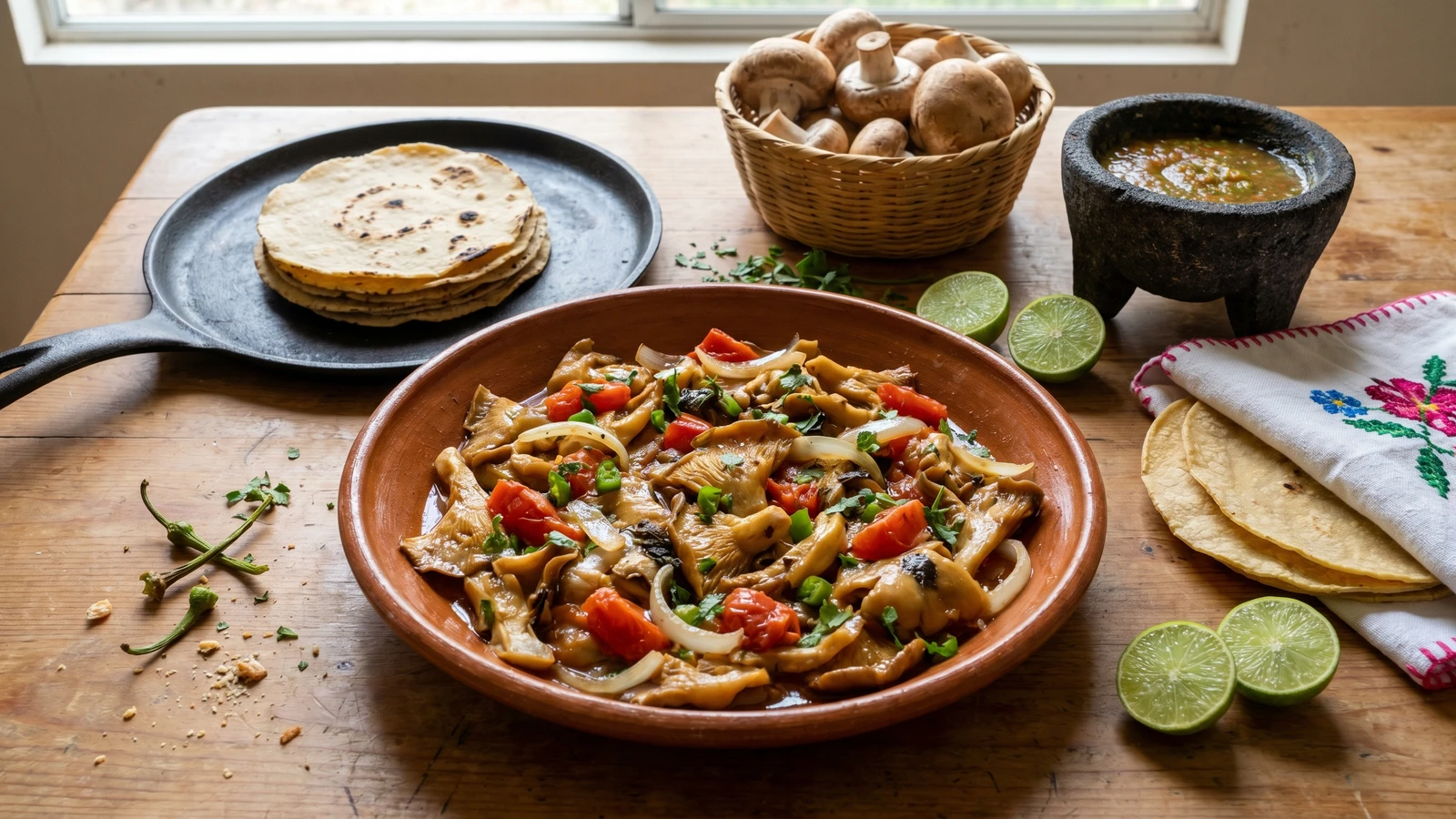
Estado de Mexico's rainy-season mushrooms, sauteed hard in manteca with tomato, white onion, serrano, and epazote, the central highland cazuela that tastes like the forest after rain.
Estado de Mexico, the high forest belt around the Valle de Toluca, owns this version. When the rains come to the slopes near La Marquesa, Amanalco, and the Nevado de Toluca, baskets of hongos de monte appear in the markets before noon. If you do not know the mushroom seller, buy cultivated oyster mushrooms. Preguntale a las senoras del mercado. They know who picked what and where.
A la mexicana means tomato, white onion, and fresh green chile, the colors of the flag in the pan. Here the chile is serrano, not jalapeno from a jar, and the herb is epazote because mushrooms from the central highlands need that wild, resinous edge. The technique is quick but not careless. A wide pan, hot fat, no crowding. Let the mushrooms brown before the tomato goes in, or you will make soup.
I learned this method from a woman in the Toluca market who sold clavitos, escobetas, and blue-gray setas from enamel buckets lined with newspaper. She cooked them in a blackened clay cazuela with manteca de cerdo and said, without looking up, that oil was for people in a hurry. La manteca es el sabor. Cada estado, su propia cocina.
Wild mushroom gathering in the central Mexican highlands predates the Spanish conquest and remains especially strong in Estado de Mexico, Tlaxcala, Puebla, Hidalgo, and the high forest communities around the Valley of Mexico. The phrase a la mexicana became common in the 19th century for dishes cooked with tomato, white onion, and green chile, a patriotic color logic that fit the national flag but was built from much older market ingredients. Epazote, a native herb used since pre-Columbian times, stayed in mushroom and bean cookery because its assertive flavor cuts through earthiness and fat without covering the ingredient.
Quantity
1 1/2 pounds
cleaned and torn into bite-size pieces
Quantity
2 tablespoons
Quantity
1/2 medium
finely chopped
Quantity
2
finely chopped
Quantity
2 large
cored and chopped
Quantity
2
finely chopped
Quantity
1 teaspoon, plus more to taste
Quantity
1/2 teaspoon
Quantity
3 sprigs
leaves stripped and chopped
Quantity
1 tablespoon
for serving
Quantity
for serving
Quantity
for serving
| Ingredient | Quantity |
|---|---|
| fresh wild mushrooms or cultivated oyster mushroomscleaned and torn into bite-size pieces | 1 1/2 pounds |
| manteca de cerdo | 2 tablespoons |
| white onionfinely chopped | 1/2 medium |
| fresh chile serranofinely chopped | 2 |
| ripe Roma tomatoescored and chopped | 2 large |
| garlic clovesfinely chopped | 2 |
| kosher salt | 1 teaspoon, plus more to taste |
| freshly ground black pepper | 1/2 teaspoon |
| fresh epazoteleaves stripped and chopped | 3 sprigs |
| chopped cilantro (optional)for serving | 1 tablespoon |
| lime halves (optional) | for serving |
| warm corn tortillas (optional) | for serving |
Brush the mushrooms with a dry towel or soft brush. If they are very dirty, wipe them with a barely damp cloth, then dry them well. Do not soak them. Mushrooms drink water like a sponge, and then they give you a wet pan instead of a good saute. Tear large mushrooms with your hands so the edges stay rough and catch the fat.
Set a wide clay cazuela or heavy skillet over medium-high heat. Add the manteca de cerdo and let it melt until glossy. The pan must be wide. If the mushrooms pile on top of each other, they sweat. If they touch the hot surface, they brown. That is the difference.
Add the mushrooms in a single loose layer. Leave them alone for 3 minutes so their edges take color. Stir, then cook 4 to 5 minutes more, until they release their liquid and that liquid cooks down. You want the smell of damp forest turning savory. Salt lightly only after they have started to brown.
Push the mushrooms to one side. Add the onion and chile serrano to the open space with a pinch of salt. Cook 2 minutes, stirring, until the onion turns translucent and the serrano smells green and sharp. Add the garlic and cook 30 seconds. Garlic burns fast, and burned garlic makes the whole cazuela bitter.
Stir in the chopped Roma tomatoes, the remaining salt, and black pepper. Cook 5 to 6 minutes, scraping the bottom of the pan, until the tomato collapses and coats the mushrooms in a loose red sauce. This is a la mexicana: white onion, green chile, red tomato. It is a cooking method, not a decoration.
Add the chopped epazote in the last minute of cooking. Stir once or twice, just until the herb darkens and perfumes the pan. Epazote is not parsley. It has its own resinous, wild flavor, and it belongs here because mushrooms and epazote understand each other. Taste for salt.
Spoon the hongos into a warm clay cazuela and scatter cilantro over the top only if you like it. Set lime halves and warm corn tortillas on the table. Eat them as a side with beans and rice, or tuck them into tortillas with a spoonful of salsa verde. Recetas probadas y garantizadas.
1 serving (about 230g)
Culinary guides, cultural storytelling, and the editorial depth that makes cooking meaningful.
Discover Culinary ExplorerChef Lupita
Oaxaca's red rice, stained with tomato and fried in lard, steamed with carrots, ejotes, black beans, and epazote. The side that anchors a Oaxacan family meal and earns its place beside the main.
Chef Lupita
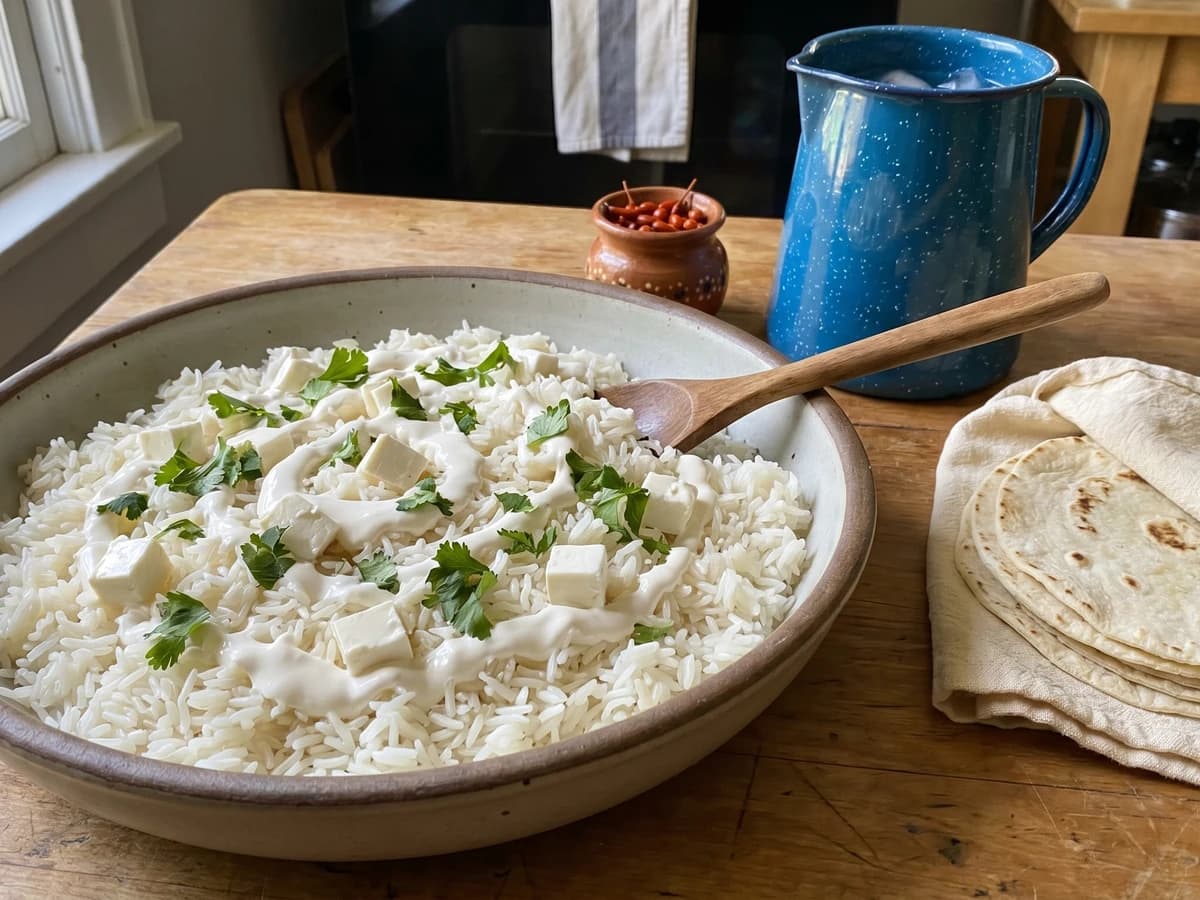
Sinaloa's home-cook white rice topped with cold cubes of cream cheese that soften into the warm grain, finished with crema and a sprinkle of chiltepin at the table. The trick that makes a side dish feel like a small luxury.
Chef Lupita
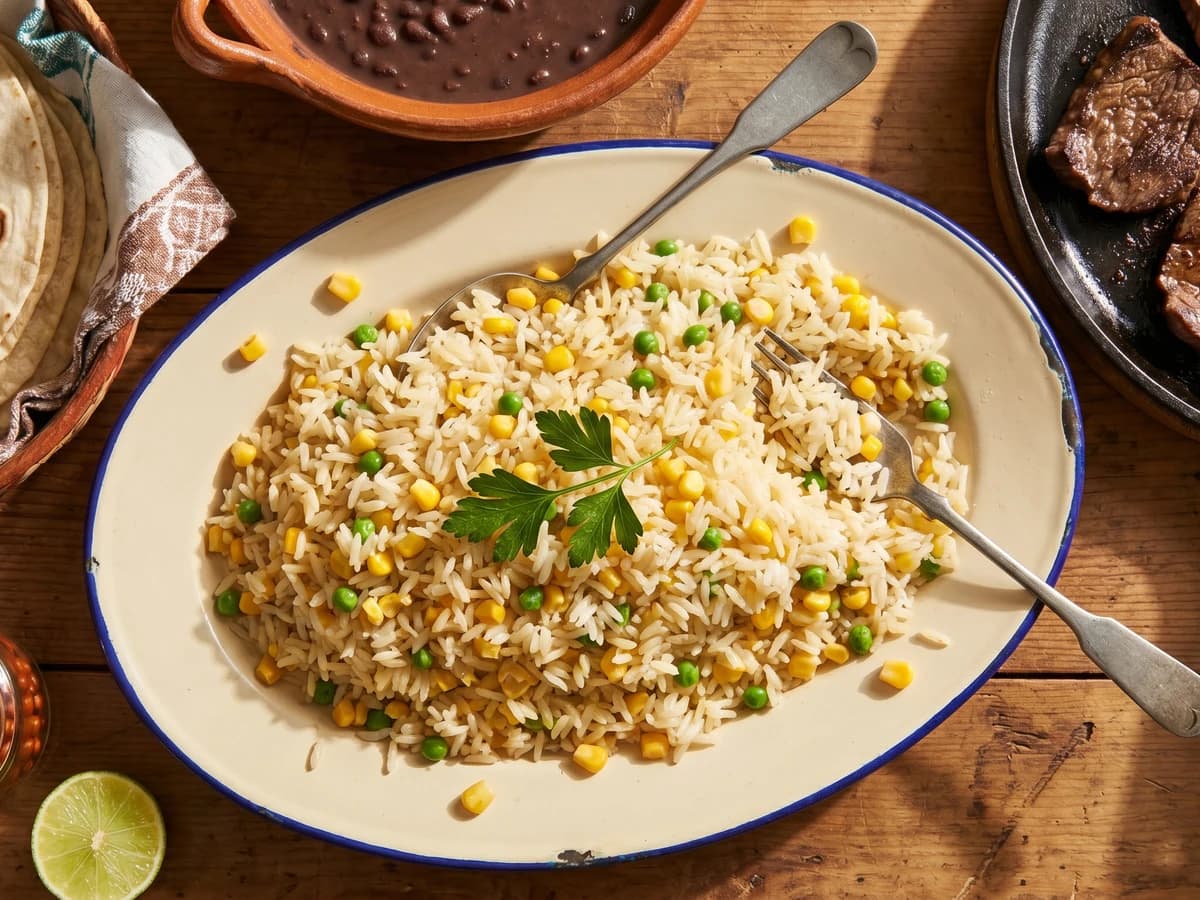
Sonora's white rice, toasted in butter and steamed with sweet corn and tender peas. The clean, quiet partner to a plate of carne asada, not the red rice of central Mexico.

Chef Lupita
Yucatán's white rice with sweet corn kernels, toasted in lard with garlic and onion. The quiet base that holds up against the peninsula's bold achiote-stained stews.