
Chef Ally
Honey Garlic Chicken Thighs
Bone-in chicken thighs with shatteringly crisp skin, bathed in a sticky glaze of local honey and enough garlic to make your kitchen smell like somewhere you want to be.
A cooking platform built around craft, culture, and the stories behind what we eat.
Created by
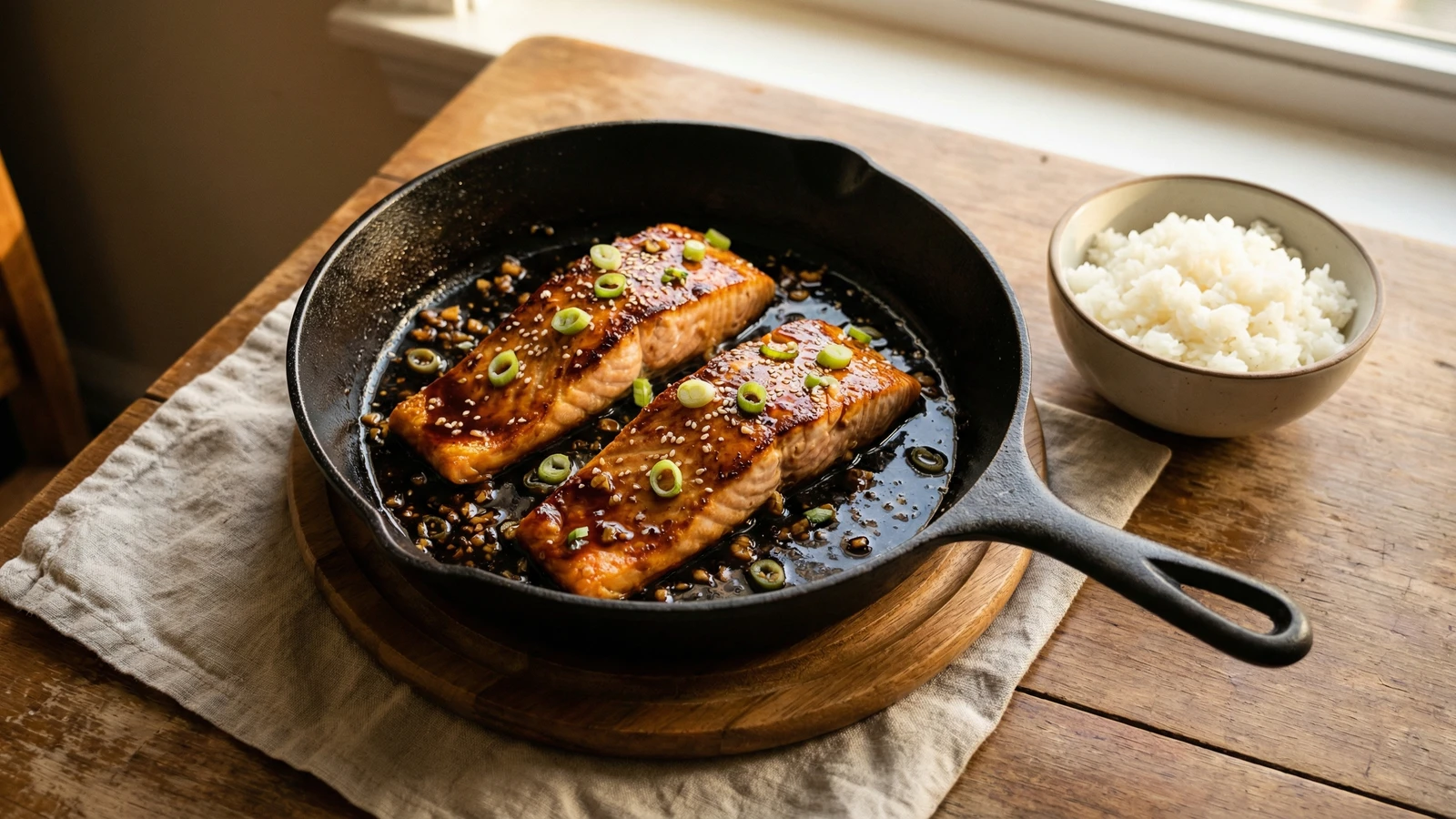
Wild salmon glazed with raw honey and fresh garlic, seared until golden and roasted until the edges caramelize and the center stays tender and pink. A weeknight meal that respects the fish.
Start with the salmon. This is everything. Wild-caught fish from cold Pacific waters has a depth of flavor that farmed salmon cannot match. The flesh is leaner, firmer, and carries the taste of the sea. Find a fishmonger you trust, someone who can tell you where the fish came from and when it was caught.
The glaze is simple because it should be. Honey, garlic, soy, a splash of vinegar, a whisper of sesame. These ingredients have worked together for centuries in kitchens across Asia. They caramelize into something glossy and deeply savory, but they do not compete with the salmon. They honor it.
Twenty-five minutes from refrigerator to table. This is weeknight cooking at its most honest. Your choices shape the food system, and choosing wild salmon supports fisheries that do things right. The meal tastes better when you know that.
Quantity
4 (6 ounces each)
skin-on
Quantity
3 tablespoons
Quantity
2 tablespoons
Quantity
5 cloves
minced
Quantity
1 tablespoon
Quantity
1 teaspoon
Quantity
1/4 teaspoon
freshly ground
Quantity
1 tablespoon
Quantity
2
thinly sliced
Quantity
1 teaspoon
| Ingredient | Quantity |
|---|---|
| wild-caught salmon filletsskin-on | 4 (6 ounces each) |
| raw honey | 3 tablespoons |
| soy sauce or tamari | 2 tablespoons |
| garlicminced | 5 cloves |
| rice vinegar | 1 tablespoon |
| toasted sesame oil | 1 teaspoon |
| black pepperfreshly ground | 1/4 teaspoon |
| neutral oil | 1 tablespoon |
| green onionsthinly sliced | 2 |
| sesame seeds | 1 teaspoon |
Remove the salmon from the refrigerator twenty minutes before cooking. Room temperature fish cooks more evenly. Pat the fillets thoroughly dry with paper towels. Moisture is the enemy of caramelization. Season both sides with black pepper.
Whisk together the honey, soy sauce, minced garlic, rice vinegar, and sesame oil in a small bowl. The glaze should smell fragrant and alive, sweet with an undercurrent of salt and the gentle bite of fresh garlic. Taste it. Adjust if needed. This is your chance to get it right.
Heat a large oven-safe skillet over medium-high heat. Add the neutral oil and let it shimmer. Place the salmon fillets skin-side up. Do not touch them for three minutes. You want a golden crust to form. Listen for the steady sizzle, not a violent sputter. When the edges turn opaque and the bottoms release easily, flip each fillet.
Preheat your oven to 400F while you sear. Once the salmon is flipped, spoon the honey garlic glaze generously over each fillet. Let it pool around the fish in the pan. Transfer the skillet to the oven and roast for eight to ten minutes. The glaze will bubble and caramelize. The salmon is done when it flakes easily at the thickest part but still glistens inside.
Remove the skillet from the oven and let the salmon rest in the pan for two minutes. The residual heat finishes the cooking gently. Spoon any pan glaze over the fillets. Scatter with sliced green onions and sesame seeds. Serve immediately while the glaze is still glossy and the fish still has its aliveness.
1 serving (about 180g)
Culinary guides, cultural storytelling, and the editorial depth that makes cooking meaningful.
Discover Culinary ExplorerChef Ally
Bone-in chicken thighs with shatteringly crisp skin, bathed in a sticky glaze of local honey and enough garlic to make your kitchen smell like somewhere you want to be.

Chef Ally
Tender pork medallions lacquered with a sticky honey-garlic glaze, finished with bright scallions and sesame. The kind of weeknight cooking that feels like a gift to yourself.

Chef Juliette
John Dory has the delicacy of sole and the firmness of turbot. A light flouring, a quick butter sauté, and nut-brown beurre noisette show exactly why looks never mattered.

Chef Juliette
Fresh haddock proves its delicacy in the meunière pan: a fine flour crust, moist pearly flakes, and beurre noisette sharpened with lemon and parsley, ready from one skillet in half an hour.