Chef Juliana
Abará
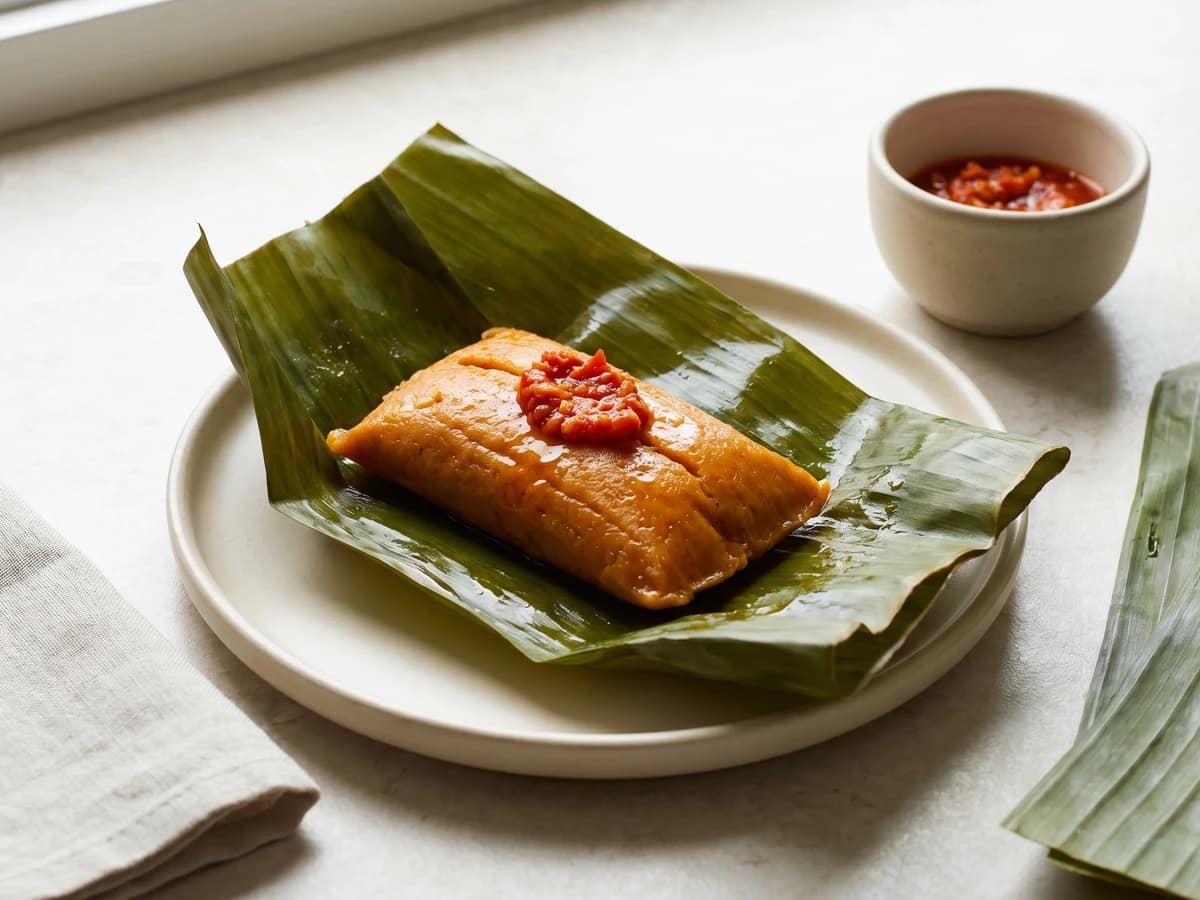
You think banana leaves and hand-whipped bean massa mean “isso não é pra mim.” Wrong. Soak, peel, beat, wrap, steam. Abará is learned by touch, not inherited by magic.
A cooking platform built around craft, culture, and the stories behind what we eat.
Created by
You think "isso não é pra mim" because the tub made it look like someone else's counter. Good. We'll cook chickpeas soft, blend them right, and solve the potluck.
You know that quiet little "isso não é pra mim" that appears when you stand in front of the refrigerated tub? I know it. I had the same voice in my kitchen as a grown woman, with a cheap caderno open and chickpeas rolling around like they had somewhere better to be. Anota aí: this is not a mystery. It is grão-de-bico, tahine, lemon, garlic, water, and the patience to cook the chickpeas until they give up.
Homus came into many Brazilian homes through Syrian-Lebanese counters in São Paulo, and it stayed because it behaves like comida de verdade: cheap, generous, make-ahead, good with bread, salad, grilled vegetables, a piece of chicken, an egg, whatever is helping resolver o jantar. It isn't the pê-efe by itself. It sits beautifully beside that everyday plate, rice, beans, an egg or meat, something green, reminding a gente that ordinary food can travel without becoming unreachable.
The method is the whole promise. Soak the chickpeas so they hydrate evenly and sit easier. Cook them past polite tenderness until they crush creamy. Save the cooking water because it carries body. Blend tahine with lemon before the chickpeas so the purée turns pale and smooth instead of grainy. No packet, no instant powder pretending to be dinner. The bean does the work.
By the end, you get a bowl you can take to a potluck, keep in the fridge, or put on the table tonight with pão sírio and raw vegetables. Creamy, lemony, honest. Receitas que funcionam are not magic. Cozinhar não é dom, é um aprendizado.
Homus is a Levantine chickpea and tahini puree, and in Brazil it became familiar through Syrian and Lebanese immigration that grew from the late nineteenth century into the twentieth, especially in São Paulo. Arab-Brazilian bakeries, lanchonetes, and family restaurants helped make quibe, esfiha, tabule, coalhada, and homus everyday foods outside their first communities. The Brazilian spelling homus is part of that adaptation: the dish came with the people who knew it first, then entered the way Brazilian cities eat.
Quantity
1 1/2 cups
picked over and soaked overnight
Quantity
1/2 teaspoon
for soaking
Quantity
8 cups for soaking, plus 6 cups for cooking
Quantity
1/2 cup
well stirred
Quantity
1/4 cup, plus more to taste
Quantity
1 small clove
finely grated or mashed
Quantity
1 1/4 teaspoons, plus more to taste
Quantity
1/2 teaspoon
Quantity
1/3 to 1/2 cup, plus more as needed
cold
Quantity
2 tablespoons, plus 1 tablespoon to finish
Quantity
1 tablespoon
Quantity
1/4 teaspoon
Quantity
4 rounds
for serving
| Ingredient | Quantity |
|---|---|
| dried chickpeaspicked over and soaked overnight | 1 1/2 cups |
| baking soda (optional)for soaking | 1/2 teaspoon |
| water | 8 cups for soaking, plus 6 cups for cooking |
| tahini (tahine)well stirred | 1/2 cup |
| fresh lemon juice | 1/4 cup, plus more to taste |
| garlicfinely grated or mashed | 1 small clove |
| salt | 1 1/4 teaspoons, plus more to taste |
| ground cumin (optional) | 1/2 teaspoon |
| reserved chickpea cooking watercold | 1/3 to 1/2 cup, plus more as needed |
| extra-virgin olive oil | 2 tablespoons, plus 1 tablespoon to finish |
| chopped parsley (optional) | 1 tablespoon |
| sweet paprika (optional) | 1/4 teaspoon |
| pão sírio or simple toast (optional)for serving | 4 rounds |
Put the chickpeas in a large bowl and cover with the soaking water. Stir in the baking soda if using, then leave them 8 to 12 hours. They should swell noticeably and lose that hard little stone look. Soaking is not fuss. It lets the centers hydrate so the chickpeas cook evenly and sit easier later.
Drain and rinse the soaked chickpeas, then put them in a heavy pot with 6 cups fresh water. Bring to a boil, skim off the foam, then lower to a steady simmer. Cook until the chickpeas crush completely between your fingers and the skins are slipping, about 60 to 90 minutes. Not firm. Not proud. Soft. Homus gets creamy from chickpeas that have stopped fighting the blender.
Scoop out at least 1 cup of the cooking water, then drain the chickpeas. Chill the liquid for a few minutes if you can, or add an ice cube to cool it. That water is not trash. It carries starch from the chickpeas, so it loosens the homus without making it taste thin.
Put the lemon juice, garlic, and salt in the food processor and let them sit for 5 minutes. The lemon takes the raw edge off the garlic, so the homus tastes alive instead of shouting at everyone at the table. Raw garlic has no manners unless you teach it.
Add the tahine to the lemon mixture and blend until it turns thick, pale, and a little fluffy, about 1 minute. Add 2 tablespoons of the cold cooking water and blend again. Tahine may seize at first, then relax. That's the point. This builds a creamy base before the chickpeas arrive, so the final purée doesn't go grainy.
Add the warm chickpeas, cumin if using, and 2 tablespoons olive oil. Blend for 2 to 3 minutes, stopping to scrape the sides, and add cold cooking water by the tablespoon until the homus becomes smooth and soft enough to fall slowly from a spoon. If the machine sounds like it's struggling, don't punish it. Add a little liquid. The texture should be creamy, not cement.
Taste and fix it now: more salt if it tastes flat, more lemon if it tastes heavy, more cooking water if it stands stiff in the bowl. Make it a little looser than you want, because homus firms up in the fridge. This is pegar ponto, not obeying a clock.
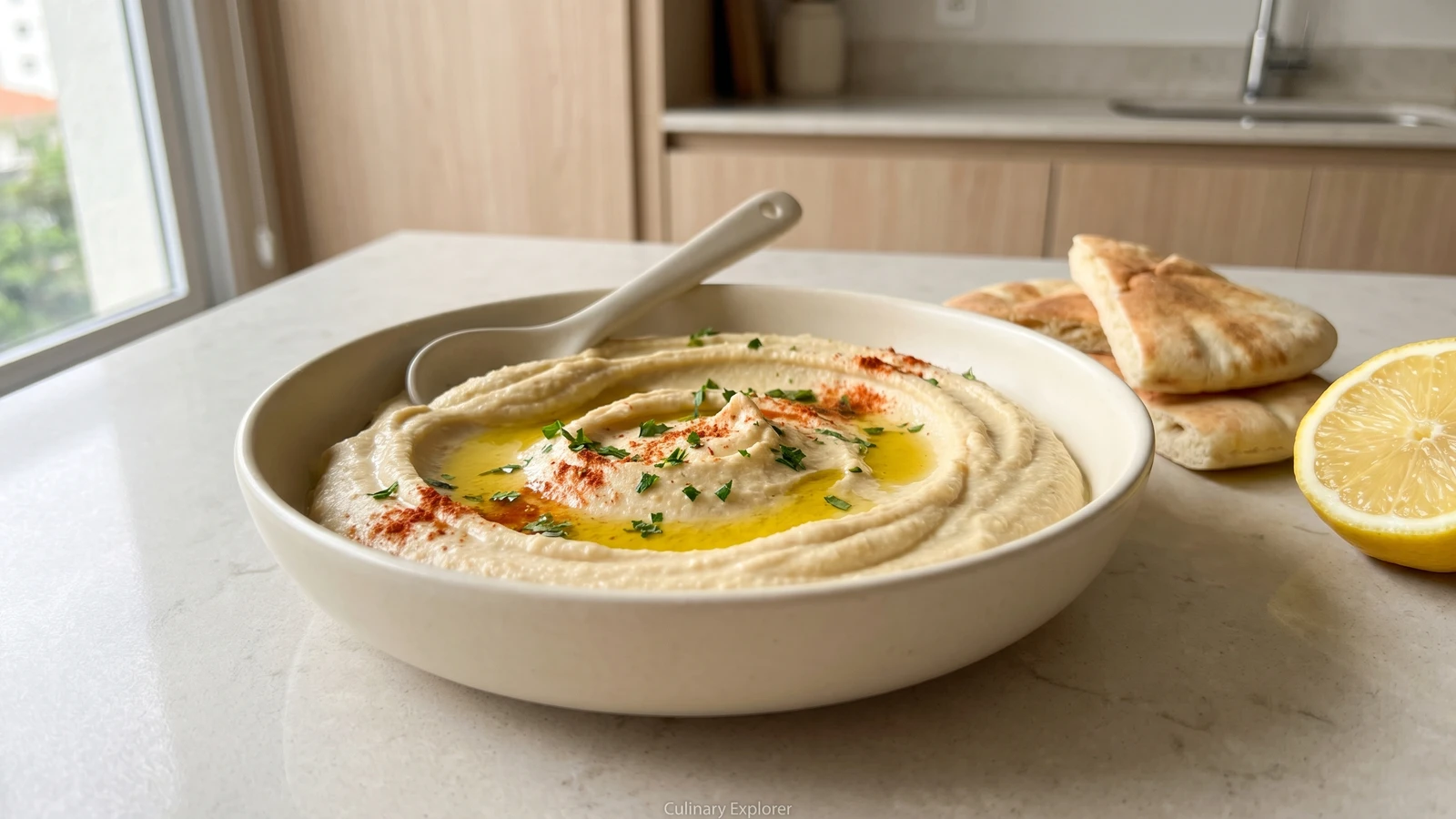
Spoon the homus into a shallow bowl and make a soft groove through the top with the back of a spoon. Pour over the remaining tablespoon of olive oil, then scatter parsley and paprika if using. Let it sit 15 minutes before serving if you have the time. The garlic calms down, the lemon settles, and the bowl tastes like it belongs together.
1 serving (about 125g)
Culinary guides, cultural storytelling, and the editorial depth that makes cooking meaningful.
Discover Culinary ExplorerChef Juliana
You think banana leaves and hand-whipped bean massa mean “isso não é pra mim.” Wrong. Soak, peel, beat, wrap, steam. Abará is learned by touch, not inherited by magic.

Chef Juliana
You think food of Iansã from the baianas' tabuleiro is not for your stove. Anota aí: soaked feijão-fradinho, real dendê, and hand-whipping make a home version learnable.

Chef Juliana
You think fried salgados belong to the birthday table you buy, not the one you make. Wrong. Learn the dough, seal the cheese, and the freezer starts working for you.

Chef Juliana
You think stuffed fried bolinhos are for the boteco cook, not your kitchen. Wrong. Mash the aipim warm, keep the filling dry, fry in small batches, and the tray disappears.