
Chef Juliette
Bavaroise
Bavaroise turns the ribbon stage into a drink: yolks and sugar, boiling tea and milk, and Kirsch whisked into a light crown of foam. Keep the whisk moving, and the café comes home.
A cooking platform built around craft, culture, and the stories behind what we eat.
Created by
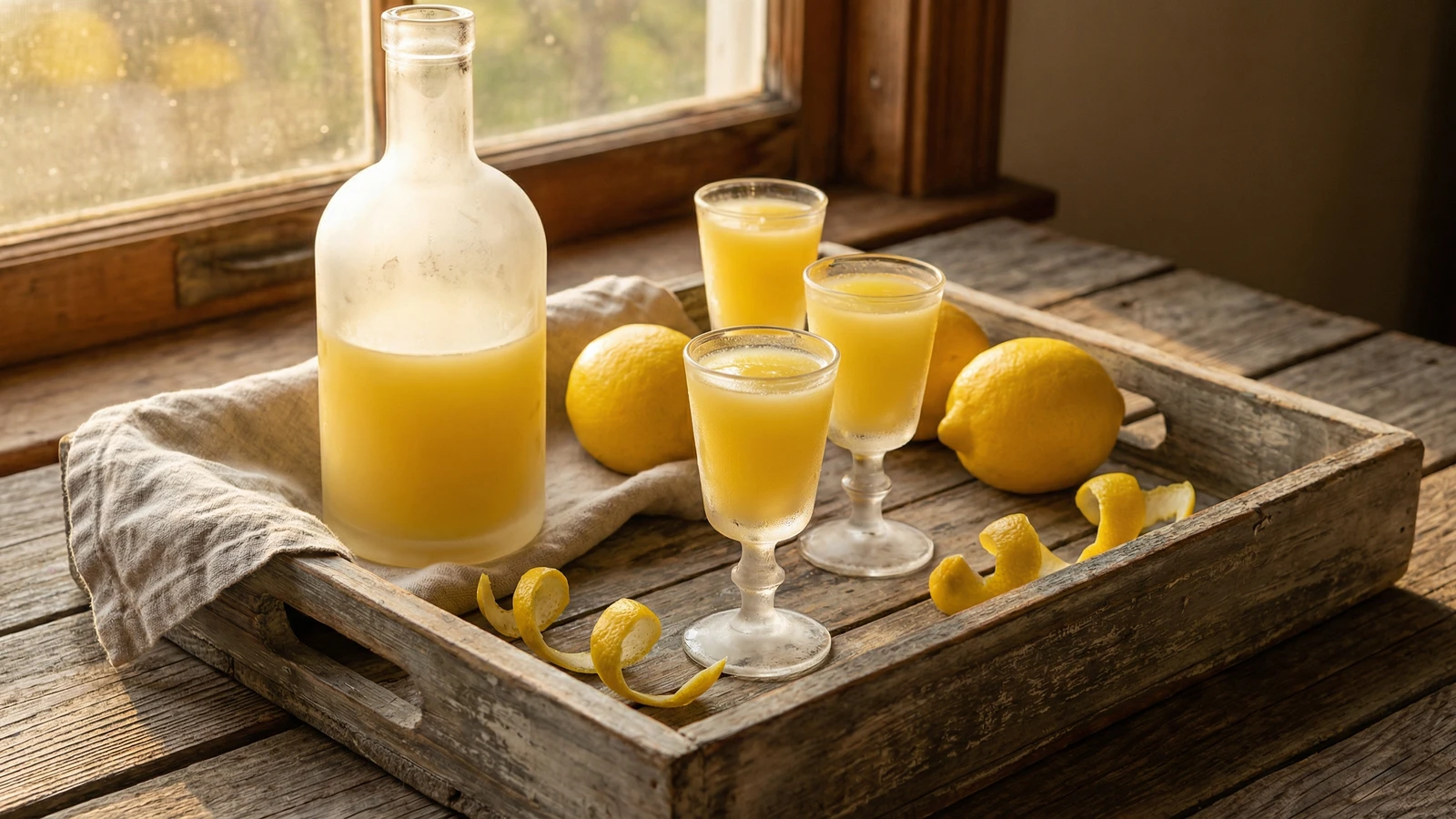
The digestivo of the Amalfi Coast, where lemon peels surrender their oils to pure alcohol over patient weeks. No cooking required. Only time, good lemons, and the restraint to wait.
Limoncello is not complicated. It is lemons, alcohol, sugar, water, and time. The difficulty lies not in technique but in patience, which Americans find harder than any soufflé.
The lemons must be unwaxed and fragrant. Commercial lemons wear a coat of wax to survive shipping. This wax has no place in your limoncello. Seek out organic lemons, or better yet, find someone with a lemon tree. The lemons of the Amalfi Coast are called sfusato amalfitano, and they are larger, more aromatic, and less acidic than what you find in supermarkets. Do the best you can with what you have.
The pith, the white layer beneath the yellow zest, is your enemy. It is bitter. It will ruin everything. When you peel your lemons, you must remove only the yellow. This requires a steady hand and a sharp peeler. If you see white, you have gone too deep.
Limoncello is a digestivo, served after dinner, ice-cold, in small glasses. It is not a cocktail mixer. It is not poured over ice cream, whatever the restaurants tell you. It is sipped slowly at the end of a meal, when the conversation softens and no one is in a hurry to leave.
Limoncello emerged from the lemon groves of the Amalfi Coast and Sorrento peninsula in the early 20th century, though every family claims their grandmother invented it. The liqueur remained a homemade specialty until the 1980s, when commercial production began and it spread from Campanian homes to bars across Italy and eventually the world.
Quantity
10 large
unwaxed, scrubbed clean
Quantity
750ml (1 bottle)
190-proof or 151-proof Everclear
Quantity
3 cups
Quantity
2 cups
| Ingredient | Quantity |
|---|---|
| organic lemonsunwaxed, scrubbed clean | 10 large |
| grain alcohol190-proof or 151-proof Everclear | 750ml (1 bottle) |
| water | 3 cups |
| granulated sugar | 2 cups |
Scrub the lemons thoroughly under warm running water to remove any residue, even if they are organic. Dry them completely. The oils you want live in the yellow zest. Water dilutes them.
Using a sharp vegetable peeler, remove only the yellow zest from each lemon in long strips. Work slowly. Turn the lemon, not the peeler. If you see white pith on the underside of any strip, scrape it away with a paring knife. The pith makes limoncello bitter and cloudy. What you keep out is as significant as what you put in.
Place all the lemon peels in a large glass jar. Pour the grain alcohol over them. The alcohol should cover the peels completely. Seal the jar tightly. Place it in a cool, dark place. A cupboard works. Not the refrigerator.
Leave the jar undisturbed for at least two weeks. Three weeks is better. Four weeks is better still. The alcohol will turn deep yellow as it extracts the oils from the zest. Give the jar a gentle swirl every few days if you cannot resist touching it. The longer you wait, the more intense the lemon flavor.
When the steeping time has passed, combine the water and sugar in a saucepan. Heat over medium, stirring, until the sugar dissolves completely. Do not let it boil. Remove from heat and let it cool to room temperature. This takes at least one hour. Do not rush it. Adding hot syrup to alcohol creates problems.
Line a fine-mesh strainer with cheesecloth and set it over a large bowl or pitcher. Pour the infused alcohol through, discarding the spent lemon peels. They have given you everything they had. Add the cooled simple syrup to the strained alcohol. Stir gently to combine.
Pour the limoncello into clean glass bottles and seal them. Return to that dark cupboard for at least one more week. The flavors need time to marry. The harshness of the alcohol will soften. The sweetness will integrate.
Transfer the bottles to the freezer. Limoncello does not freeze due to its alcohol content. It becomes thick, syrupy, and intensely cold. Serve in small glasses that have also been in the freezer. Pour no more than two ounces. This is a digestivo, not a beverage. Sip it slowly at the end of a meal, when the evening is winding down and there is nowhere else to be.
1 serving (about 50g)
Culinary guides, cultural storytelling, and the editorial depth that makes cooking meaningful.
Discover Culinary ExplorerChef Juliette
Bavaroise turns the ribbon stage into a drink: yolks and sugar, boiling tea and milk, and Kirsch whisked into a light crown of foam. Keep the whisk moving, and the café comes home.

Chef Juliette
Bischoff turns Champagne, tilleul, citrus, and brandy into pale-gold granité, coarse enough to sparkle under the spoon. The scraping makes the texture, and the timer becomes your smallest member of the brigade.

Chef Juliette
Café glacé is coffee taught by texture: dark, sweet, vanilla-softened, and churned only until it moves like loose snow. Stop before ice cream, pour into cold cups, and take it outside.
Chef Juliette
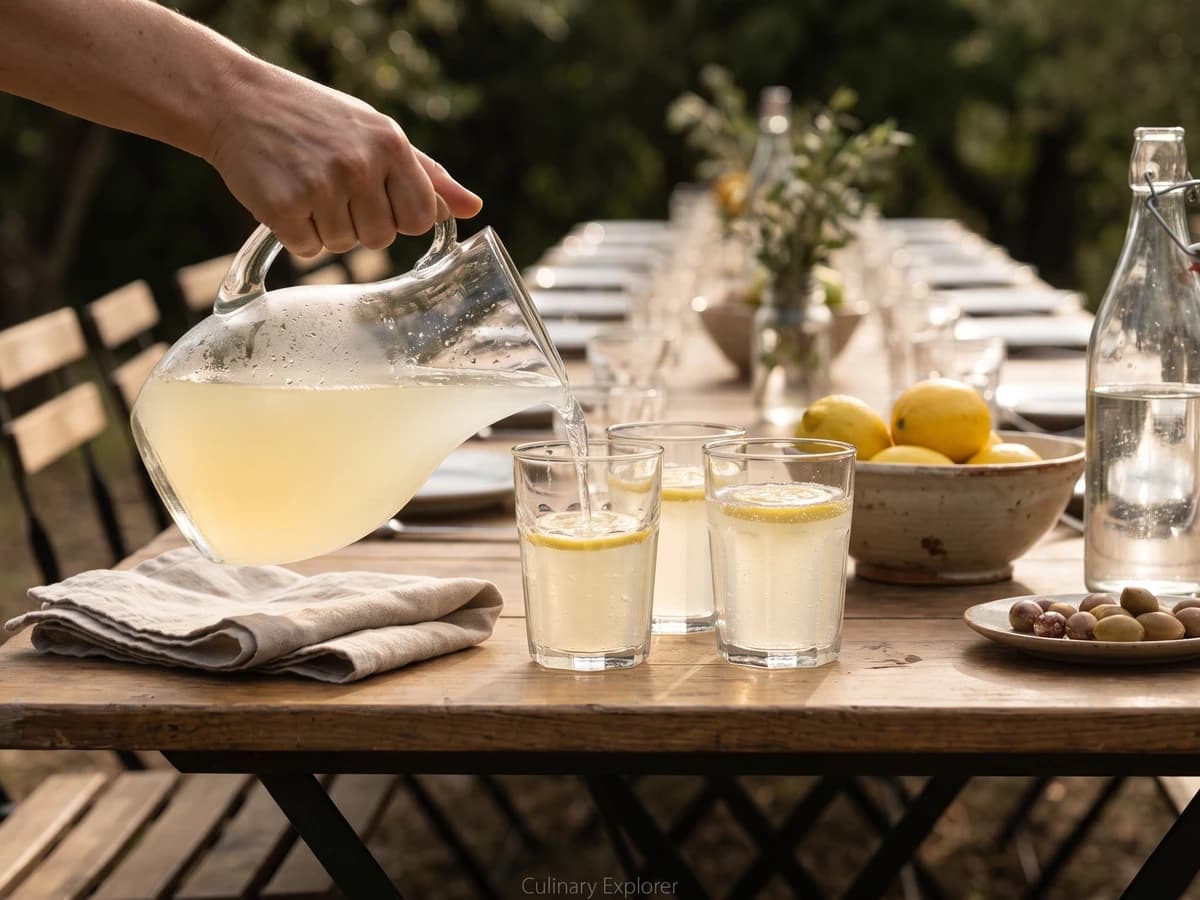
Zest brings perfume, juice brings acid, and three cool hours join them: a clear, lively French limonade finished with seltzer for the picnic table in the shade.