
Chef Takumi
Ago Dashi (あごだし, grilled flying fish stock)
Ago dashi is quiet luxury: roasted flying fish, konbu, and patient water. Steep it slowly and you get a clear stock that tastes sweet, clean, and full without heaviness.
A cooking platform built around craft, culture, and the stories behind what we eat.

Created by
Nishinzuke is Hokkaido winter in a crock: crisp autumn vegetables, dried herring, salt, and rice kōji left to settle into something sweet, savory, and quietly alive.
Nishinzuke begins when the fields are nearly finished for the year. Cabbage, daikon, and carrot are cut while they still have their autumn firmness, then layered with dried herring and rice kōji, the cooked rice inoculated with kōji mold that brings sweetness and depth. It sounds like a cellar project. It is mostly orderly stacking.
The one detail that decides it is salt by weight. Too little and the vegetables soften badly before the good sourness takes hold. Too much and the pickle goes hard and dull. We use enough salt to draw water from the vegetables and make their own brine, then weight everything so no piece sits in air. The brine is not decoration. It is protection.
The herring is the northern note. Soak it first, not to make it bland, but to wake it from dryness and wash away the stale edge that dried fish can carry if handled carelessly. Rice kōji does the quiet work after that, changing the pickle from merely salty to rounded and faintly sweet. This is honmono, the real winter thing: preserved food that still tastes of the season that made it.
Nishinzuke belongs to Hokkaido, where large spring herring runs supported major fisheries from the late Edo period into the Meiji era. Dried herring, called migaki nishin, was valuable both as food and as a trade good carried south by kitamaebune coastal ships, but in Hokkaido households it also became a practical winter partner for stored cabbage and daikon. The pickle is traditionally made after the autumn harvest and before deep snow, when cold rooms hold a slow fermentation without spoiling it.
Quantity
1kg
cored and cut into 4cm squares
Quantity
500g
peeled and cut into 4cm batons
Quantity
150g
peeled and cut into thin batons
Quantity
120g
soaked, rinsed, and cut into bite-size strips
Quantity
40g
Quantity
200g
loosened by hand
Quantity
30g
peeled and cut into fine matchsticks
Quantity
2
seeds removed and thinly sliced
Quantity
1 piece (about 8g)
wiped and cut into thin strips
| Ingredient | Quantity |
|---|---|
| green cabbagecored and cut into 4cm squares | 1kg |
| daikonpeeled and cut into 4cm batons | 500g |
| carrotpeeled and cut into thin batons | 150g |
| migaki nishin (dried herring fillets)soaked, rinsed, and cut into bite-size strips | 120g |
| sea salt | 40g |
| rice kōjiloosened by hand | 200g |
| fresh gingerpeeled and cut into fine matchsticks | 30g |
| dried red chiliesseeds removed and thinly sliced | 2 |
| konbu (dried kelp)wiped and cut into thin strips | 1 piece (about 8g) |
Rinse the dried herring briefly, then soak it in cold water for 6 to 8 hours, changing the water once if it smells very strong. Drain, pat dry, pull out any obvious bones, and cut the fish into bite-size strips. The soaking restores flexibility and removes the stale surface saltiness, so the herring seasons the pickle instead of bullying it.
Cut the cabbage into broad squares, the daikon into sturdy batons, and the carrot thinner so it softens at the same pace. Keep the pieces generous. Nishinzuke is a whole-meal pickle, not a shredded relish, and the vegetables need enough body to stay crisp through the week.
Put the cabbage, daikon, and carrot in a large clean tub or bowl and toss with the sea salt. Massage lightly, then let the vegetables stand for 1 hour, turning once or twice, until they glisten and begin to bend. Salt draws out the vegetables' own water, and that water becomes the brine that keeps the fermentation clean.
Loosen the rice kōji with your fingers so there are no hard clumps. Add it to the vegetables with the herring, ginger, chili, and konbu, then mix thoroughly but gently. The kōji needs contact with the brine and vegetables to do its work evenly, while rough handling bruises the cabbage and clouds the texture.
Pack the mixture into a clean pickling crock, enamel pot, or food-safe container, pressing down firmly after each layer. Pour in any liquid left in the bowl. Set a clean inner lid or plate directly on the surface and add a weight about equal to the weight of the pickle. Air is the enemy here; pressure brings the brine up and keeps every piece submerged.
Leave the container in a cool place, ideally 5 to 10 C, for 5 to 7 days. Check after the first day: the brine should rise above the plate. If it has not, add a small brine made from 1 cup water and 2 teaspoons sea salt, just enough to cover. Cold slows the fermentation so the vegetables stay crisp while the flavor turns sweet, savory, and lightly sour.
Begin tasting on day 5. The cabbage should still snap, the daikon should be seasoned through, and the herring should taste clean and rounded, not sharp with dryness. When it tastes balanced, transfer the pickle and enough brine to cover into clean jars and refrigerate. Keeping it cold slows the souring and holds the texture.
Lift out only what you need with clean chopsticks, drain lightly, and mound a small portion in a kobachi or saucer. Serve it beside rice, grilled fish, or New Year dishes as a bright, savory pickle. Don't pile it high. This is strong food, and it speaks more clearly when you leave it room.
1 serving (about 180g)
Culinary guides, cultural storytelling, and the editorial depth that makes cooking meaningful.
Discover Culinary ExplorerChef Takumi
Ago dashi is quiet luxury: roasted flying fish, konbu, and patient water. Steep it slowly and you get a clear stock that tastes sweet, clean, and full without heaviness.
Chef Takumi
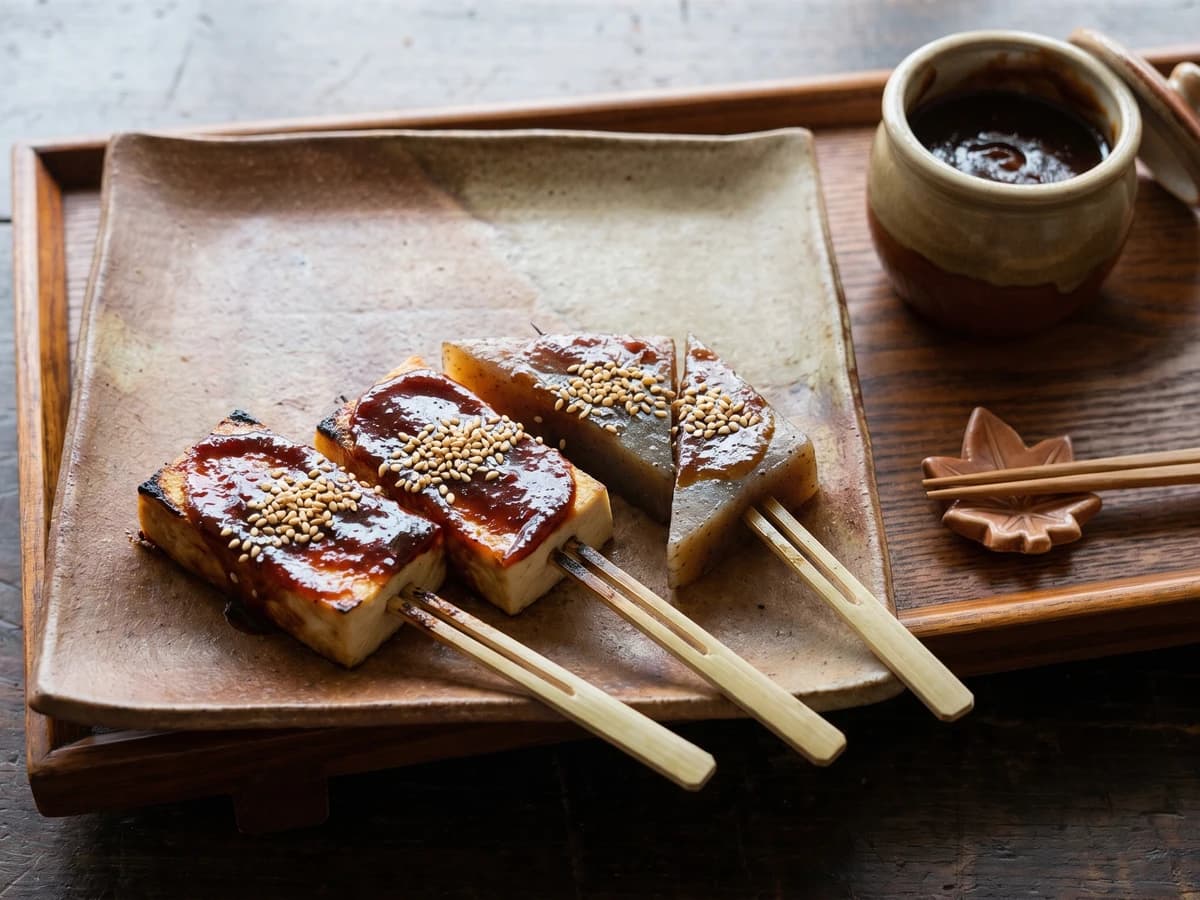
Akamiso dengaku-miso is plain work: bean miso, sweetness, sake, and patient stirring until the glaze turns dark, glossy, and thick enough to cling to the grill.
Chef Takumi
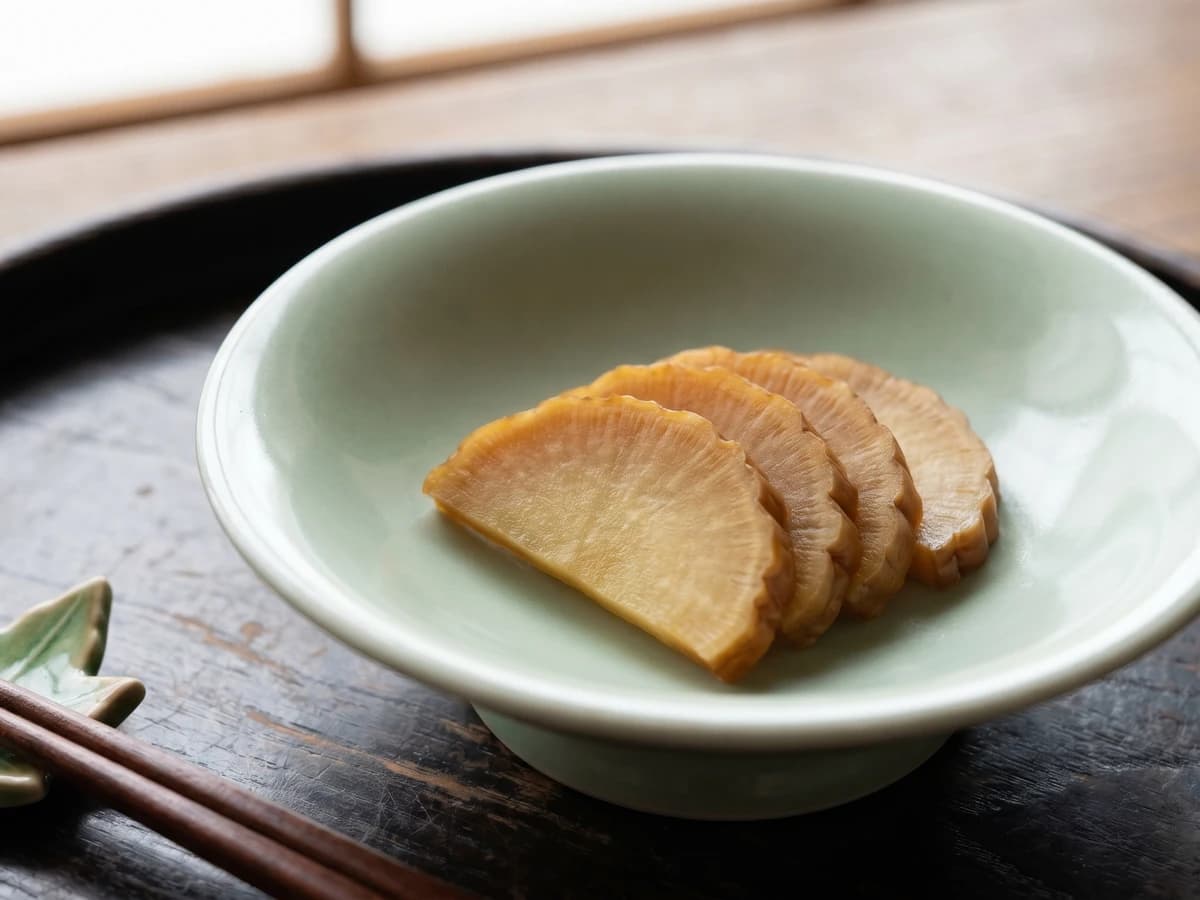
Snow-country takuan begins with smoke. Hang the daikon, dry it gently, then let rice bran, salt, and time turn it into Akita's amber pickle.

Chef Takumi
Aso takanazuke is spring caught in salt: sharp mustard greens pressed until they soften, fermented until their edge turns round, then fried briefly with sesame for rice.