
Chef Takumi
Aji Fry (アジフライ, panko-fried horse mackerel)
Aji fry is weeknight fish with no mystery: fresh horse mackerel opened cleanly, breaded lightly, and fried until the panko crackles while the flesh stays sweet.
A cooking platform built around craft, culture, and the stories behind what we eat.

Created by
Lean tenderloin, thick rounds, fresh panko, and steady oil. Hire-katsu gives you tonkatsu's pleasure with a cleaner bite, tender inside and crisp outside, without making a ceremony of frying.
Hire-katsu begins with the quietest cut of the pig: the tenderloin, pale, soft, and almost too polite for deep frying. People worry that lean pork will turn dry under a crust. It will, if you treat it roughly. Cut it into thick rounds, salt it early enough to season the meat, and fry it only until the center is just cooked. That's the whole bridge from fear to supper.
Fresh panko does the showy work, but the oil temperature decides the dish. At about 170°C, the crumbs set into a light shell while the filet warms through before it has time to tighten. Too cool and the crust drinks oil. Too hot and the outside darkens while the center is still waiting. This is not difficult. It asks you to watch the pan for a few minutes, which is hardly surgery, though some books manage to make it sound like that.
Serve hire-katsu the way we do it here: with finely shredded cabbage, a small dish of tonkatsu sauce, a dab of karashi, rice, and miso soup if the meal wants to be complete. The sauce is sharp and brown, but it is not a disguise. The pork should taste clean and tender under the crust, nothing hidden, and the plate should have enough space that each round keeps its crisp edge.
Japanese katsuretsu began as yōshoku, Western-style food adapted in the Meiji period, when cutlets appeared on Tokyo menus as thin meat fried in breadcrumbs. Ginza's Rengatei is widely credited with serving a pork cutlet in 1899, helping move the dish toward the tonkatsu style eaten with rice, cabbage, and brown sauce. By the early Shōwa period, shops commonly distinguished rōsu-katsu, the fattier loin cutlet, from hire-katsu, the lean filet version.
Quantity
600g
silver skin trimmed, cut into thick rounds
Quantity
1 teaspoon
Quantity
1/4 teaspoon
Quantity
1/2 cup
for dusting
Quantity
2
beaten
Quantity
1 tablespoon
Quantity
3 cups
or 2 1/2 cups dry panko
Quantity
4 cups, or enough for a 4cm depth
rice bran or canola
Quantity
1/4 small head
shredded very fine
Quantity
1/2 cup
Quantity
for serving
Quantity
1
cut into wedges
Quantity
for serving
Quantity
for serving
| Ingredient | Quantity |
|---|---|
| pork tenderloin (hire)silver skin trimmed, cut into thick rounds | 600g |
| fine sea salt | 1 teaspoon |
| white pepper | 1/4 teaspoon |
| all-purpose flourfor dusting | 1/2 cup |
| large eggsbeaten | 2 |
| cold water | 1 tablespoon |
| fresh pankoor 2 1/2 cups dry panko | 3 cups |
| neutral frying oilrice bran or canola | 4 cups, or enough for a 4cm depth |
| green cabbageshredded very fine | 1/4 small head |
| tonkatsu sauce | 1/2 cup |
| karashi (Japanese mustard) (optional) | for serving |
| lemon (optional)cut into wedges | 1 |
| steamed short-grain rice (optional) | for serving |
| miso soup (optional) | for serving |
Shred the cabbage as finely as you can, the cut called sen-giri, fine shreds. Soak it in cold water for ten minutes, then drain it very well and pat it dry. The water crisps the cabbage, but any water left clinging to it will run into the sauce and make the plate sloppy. Cabbage is not decoration here. It cuts the richness and gives the cutlet somewhere clean to land between bites.
Trim away the silver skin from the pork tenderloin, because that thin membrane tightens in the oil and bends the meat out of shape. Cut the tenderloin crosswise into 8 to 10 thick rounds, about 3cm each. Press each round lightly with the flat of your knife or your palm, just enough to make the thickness even. Don't pound it thin. Hire-katsu should stay proud and tender, not become a little carpet.
Season the pork on both sides with the salt and white pepper, then leave it at room temperature for 15 minutes while you set up the coating. That short rest lets the salt move into the surface instead of sitting there like dust. It also takes the chill off the meat, so the center cooks before the crust grows too dark.
Put the flour in one shallow dish. Beat the eggs with the cold water in a second dish. Put the panko in a third. The flour gives the egg something to hold, the egg gives the panko something to hold, and the panko gives you that airy crust. Fresh panko makes the lightest shell, but dry panko still works if you handle it gently.
Dust each pork round lightly in flour and shake off the extra. Dip it in the egg, let the excess drip away, then set it into the panko and press just enough for the crumbs to cling. Don't crush the crumbs flat. Their little corners are what fry into crispness. Set the breaded rounds on a tray for 5 minutes so the coating settles before it meets the oil.
Pour the oil into a deep heavy pot to a depth of about 4cm and heat it to 170°C. If you don't have a thermometer, drop in a few panko crumbs. They should sink for a breath, rise, and bubble steadily without darkening at once. Too cool, and the crust drinks oil. Too hot, and the outside browns before the filet is safely cooked.
Fry the pork in batches, giving each piece room. Cook for 4 to 5 minutes total, turning once or twice, until the crust is even golden and the center reaches 63°C. The bubbling will grow finer as moisture leaves the coating. Don't crowd the pot, because crowded oil drops in temperature and the panko loses its clean bite.
Lift the cutlets onto an abura-kiri, an oil-draining rack, or a wire rack set over a tray. Rest them for 3 minutes. Paper towels trap oil against the crust, while a rack lets the coating stay crisp all around. Serve the rounds whole, or halve one or two to show the pale tender center. Plate with the shredded cabbage, tonkatsu sauce, karashi, and lemon. Add rice and miso soup if you're making the full meal.
1 serving (about 270g)
Culinary guides, cultural storytelling, and the editorial depth that makes cooking meaningful.
Discover Culinary ExplorerChef Takumi
Aji fry is weeknight fish with no mystery: fresh horse mackerel opened cleanly, breaded lightly, and fried until the panko crackles while the flesh stays sweet.
Chef Takumi
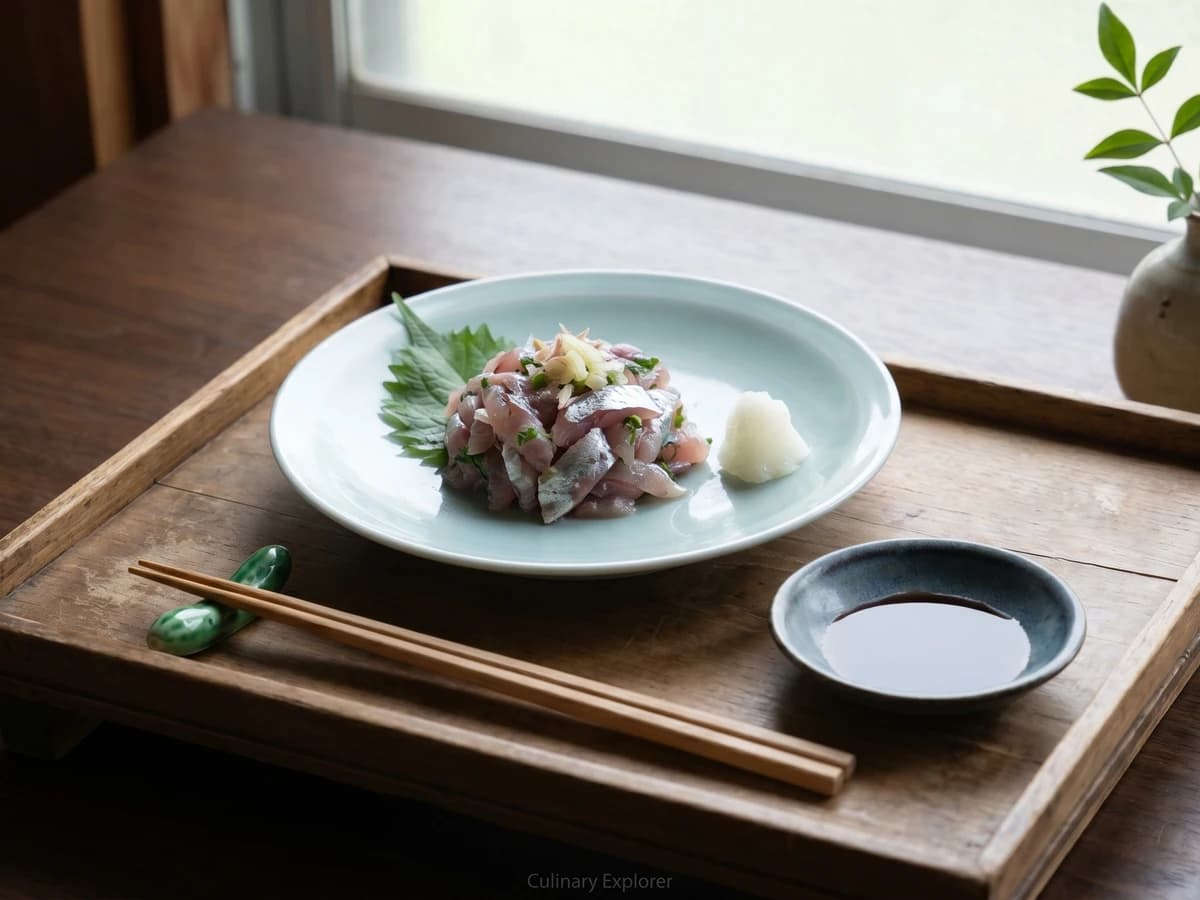
Summer horse mackerel, chopped just enough to catch ginger and scallion, becomes a cool, clean main dish with rice. The secret is fresh fish and a knife that does not bruise it.
Chef Takumi
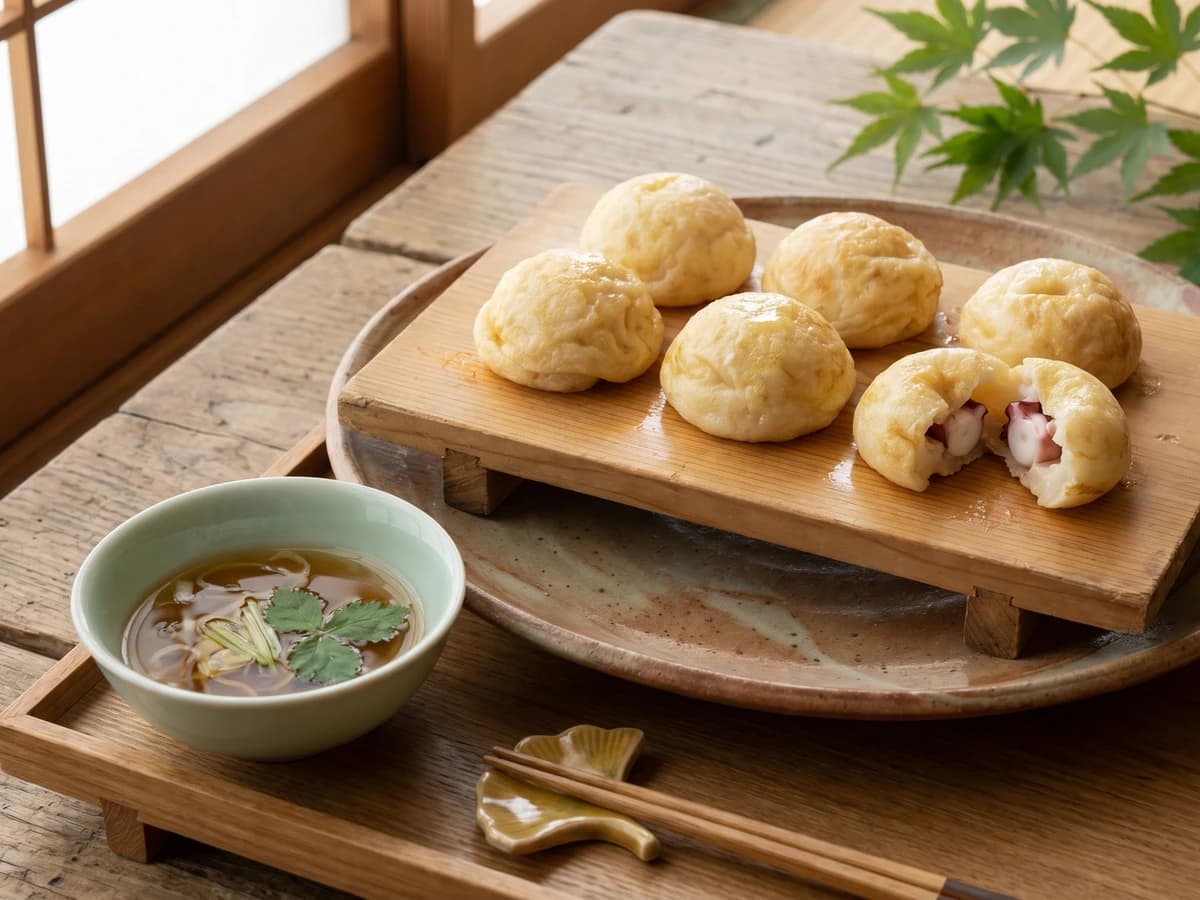
Akashi-yaki is not sauced takoyaki. It is egg-rich batter, tender octopus, and clear dashi, cooked pale and soft so each ball can be dipped like a small custard dumpling.

Chef Takumi
A whole anago looks like a test of nerve. It is mostly good sourcing, a dry skin, cold batter, and oil hot enough to leave the eel sweet under its lace.