Chef Jeong-sun
Amjuk (Dried-Grain Weaning Porridge)
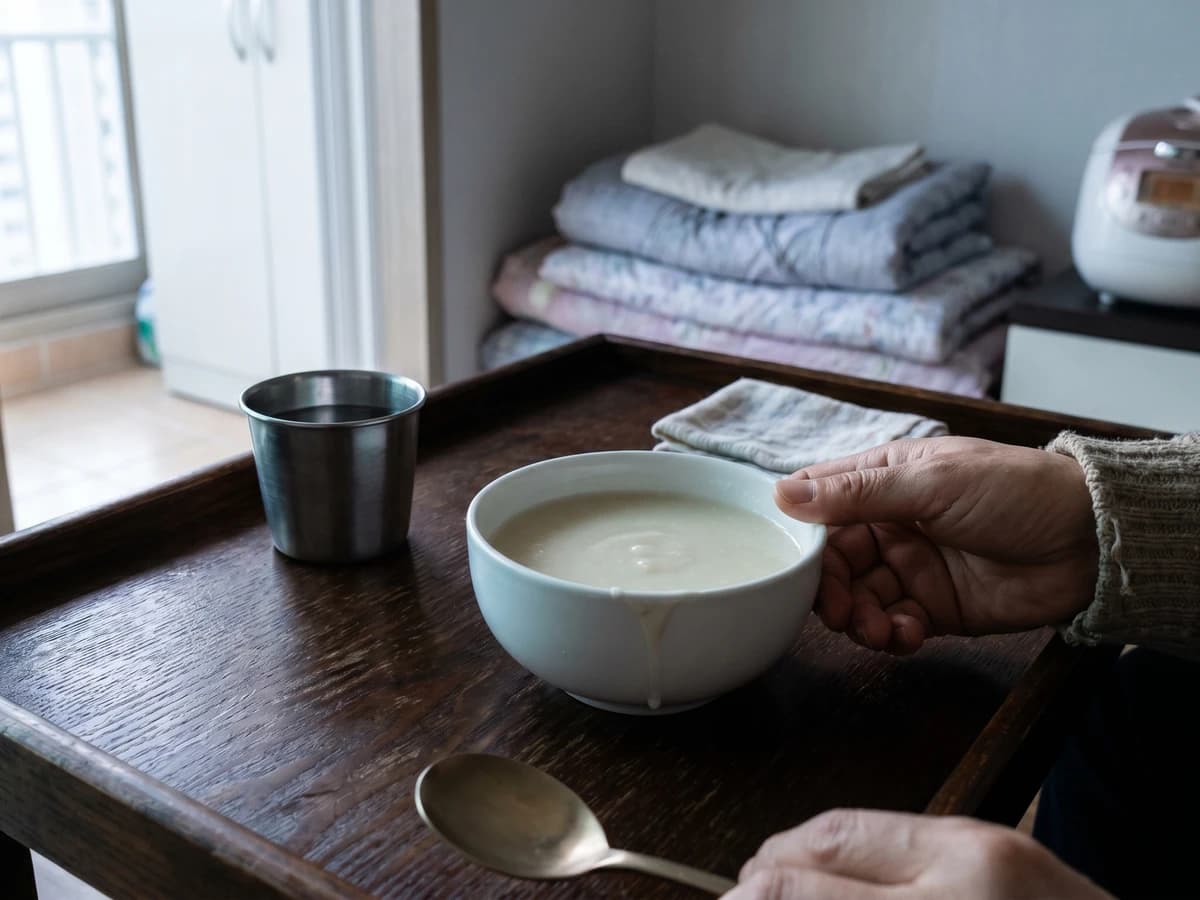
Powdered rice or dried baekseolgi cooked thin in cloudy rice water, an old Korean first-spoon porridge that asks for patience at the sieve and gentleness at the stove.
A cooking platform built around craft, culture, and the stories behind what we eat.
Created by
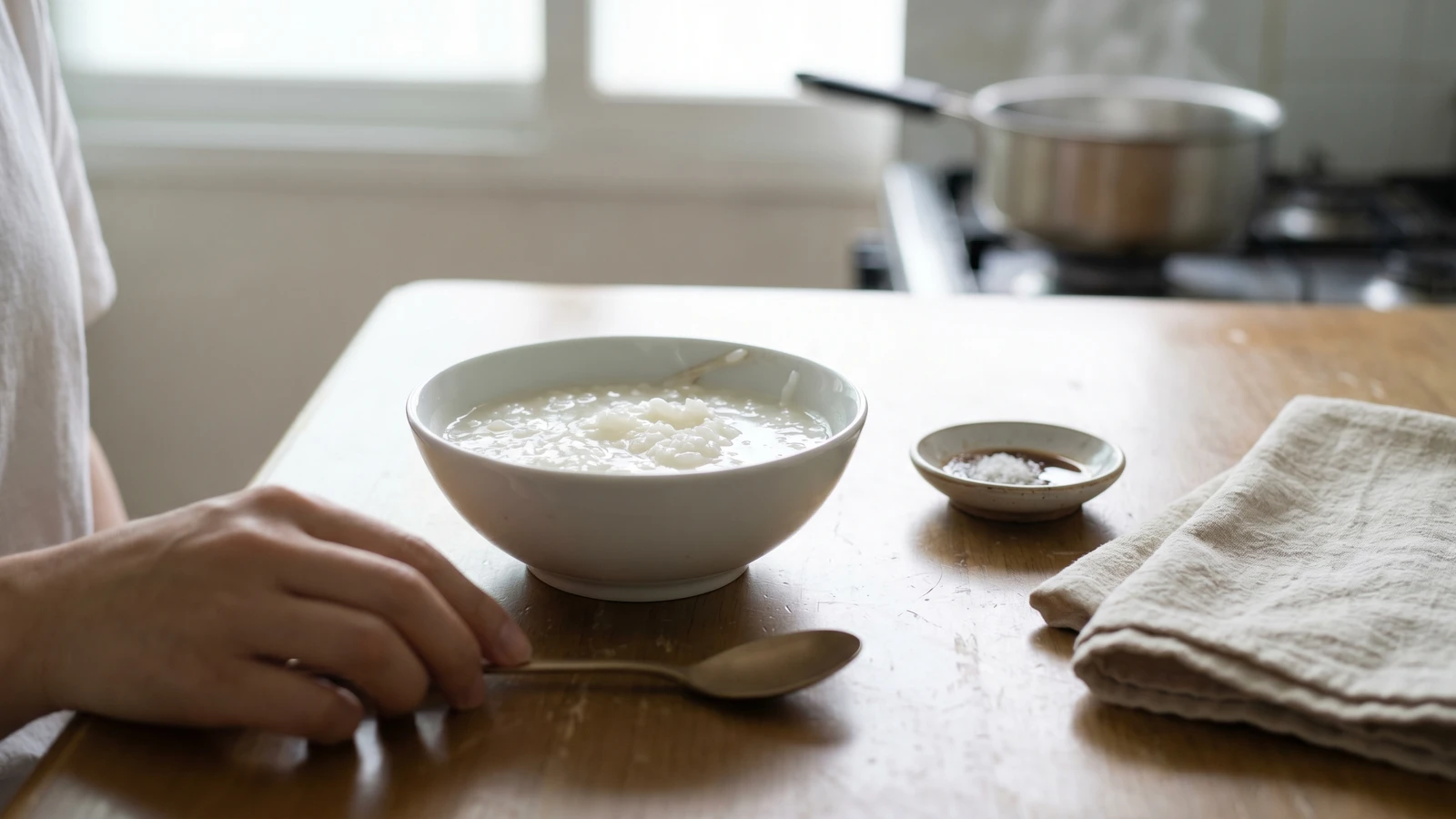
The plain white porridge Koreans feed to a tired body: rice and water, simmered slowly until each grain opens and the bowl asks for nothing more.
Hin-juk lives or dies by patience. There is no anchovy broth, no sesame oil, no garnish to hide behind. Just rice, water, and a low flame until the grains give themselves up. That is why people think it is too simple to write down. They are wrong.
My mother made this when a stomach was unsettled, when a child had fever, when an elder needed food that would not argue with the body. She used the same plain white bowl every time. The measure in my notebook is five parts water to one part rice by volume, and it matters: less water makes soft rice, more water makes a thin gruel. Five gives you porridge with body, gentle enough to eat slowly.
Do not season the pot heavily. Hin-juk should taste clean. Put a little salt or soy sauce on the table if the person eating wants it, but the porridge itself should stay quiet. Write it down. Memory is a borrowed bowl.
Juk (rice porridge) appears throughout Korean household and medical food traditions as a gentle preparation for illness, recovery, elders, and babies, with plain hin-juk serving as the base from which richer porridges are built. Before rice cookers and convenience foods, porridge also stretched a small amount of rice into a filling meal, which made it both practical and careful. Its history is ordinary home history, not court grandeur: a pot used to feed someone softly when ordinary rice was too much.
Quantity
1 cup
rinsed until the water runs mostly clear
Quantity
5 cups, plus 1/2 cup more if needed
Quantity
1/4 teaspoon
Quantity
to serve
| Ingredient | Quantity |
|---|---|
| short-grain white ricerinsed until the water runs mostly clear | 1 cup |
| water | 5 cups, plus 1/2 cup more if needed |
| fine sea salt (optional) | 1/4 teaspoon |
| soy sauce (optional) | to serve |
Put the rice in a bowl, cover with cold water, and rub it gently between your fingers. Pour off the cloudy water and repeat 3 to 4 times, until the water is only lightly cloudy. You are not washing away flavor; you are removing loose surface starch so the porridge turns soft and clean instead of gluey.
Combine the rinsed rice and 5 cups water in a heavy pot. Bring it to a gentle boil over medium heat, stirring once so no grains stick to the bottom. The five-to-one measure is the spine of this dish: it gives a spoonable porridge with enough body to satisfy, but not so thick that it sits heavily.
As soon as the water boils, lower the heat to the smallest steady simmer. Leave the lid slightly ajar and cook 35 to 45 minutes, stirring every 8 to 10 minutes. Scrape the bottom with a wooden spoon each time. Rice settles quietly, then burns suddenly, and burnt rice will flavor the whole pot.
When the rice has swollen and begun to split, stir more often for the last 10 minutes. Press a few grains against the side of the pot with the spoon. They should collapse easily, and the liquid should look creamy without added milk or stock. If the porridge thickens before the grains fully soften, add up to 1/2 cup hot water, 2 tablespoons at a time.
Turn off the heat, cover the pot, and let the porridge rest 5 minutes. This small rest finishes the texture and keeps the bowl gentle. Serve plain, with salt or a few drops of soy sauce on the side. Do not season the whole pot unless everyone eating it needs the same thing.
1 serving (about 315g)
Culinary guides, cultural storytelling, and the editorial depth that makes cooking meaningful.
Discover Culinary ExplorerChef Jeong-sun
Powdered rice or dried baekseolgi cooked thin in cloudy rice water, an old Korean first-spoon porridge that asks for patience at the sieve and gentleness at the stove.

Chef Jeong-sun
A soft summer rice porridge of kneaded mallow greens, dried shrimp, and careful doenjang broth, plain enough for breakfast and exact enough to keep the grit and bitterness out.
Chef Jeong-sun
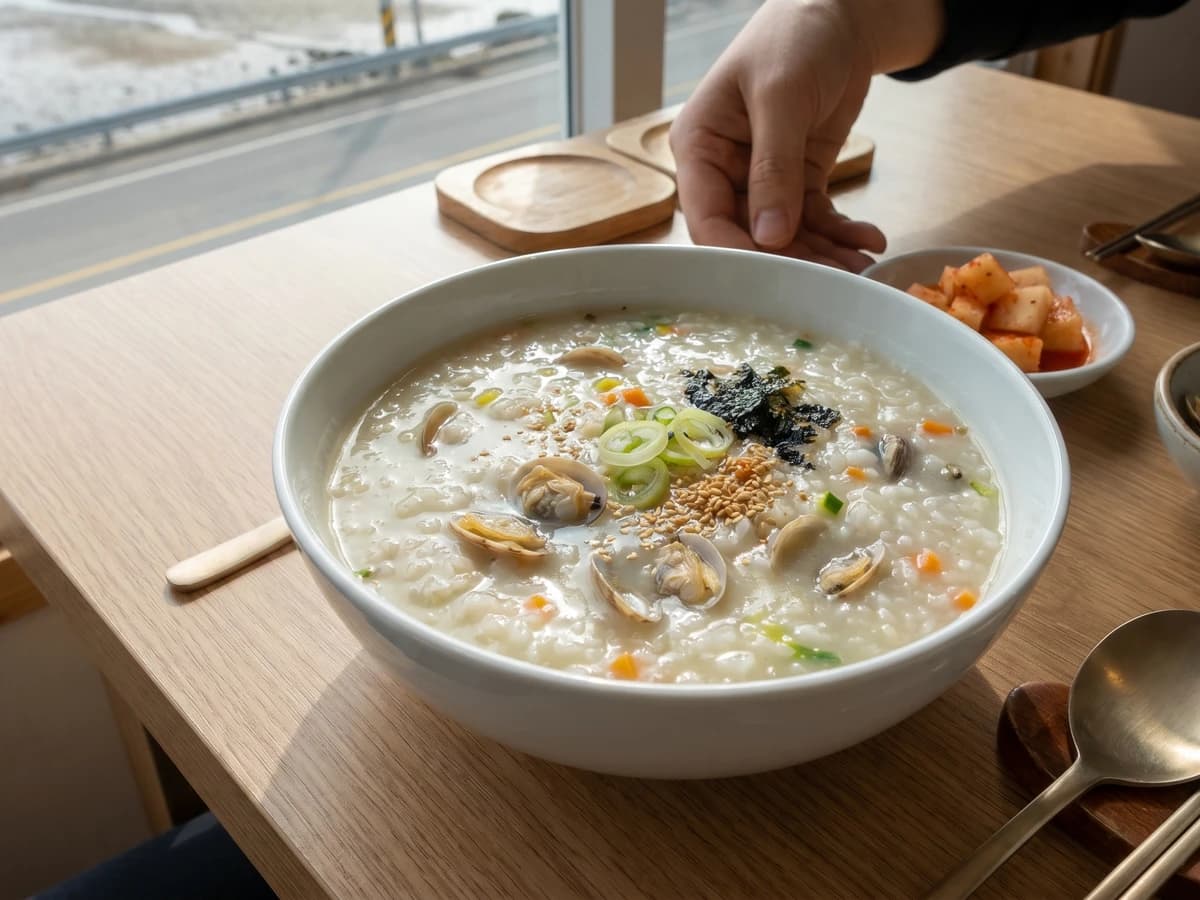
A west-coast clam porridge from Buan's tidal flats: live bajirak opened for their liquor, sesame-slicked rice toasted in the pot, and vegetables cut small enough to comfort without hiding the clams.

Chef Jeong-sun
An autumn juk of boiled chestnuts and soaked short-grain rice, simmered low until smooth and softly sweet, the kind of bowl you set before an elder, a child, or yourself.