
Chef Joost
Bavarois met Frambozensaus
A French-Bavarian name, a Dutch party mould, and the quiet trick of gelatine: custard cooled just enough, cream folded gently, and a dessert made ahead like a host with sense.
A cooking platform built around craft, culture, and the stories behind what we eat.
Created by
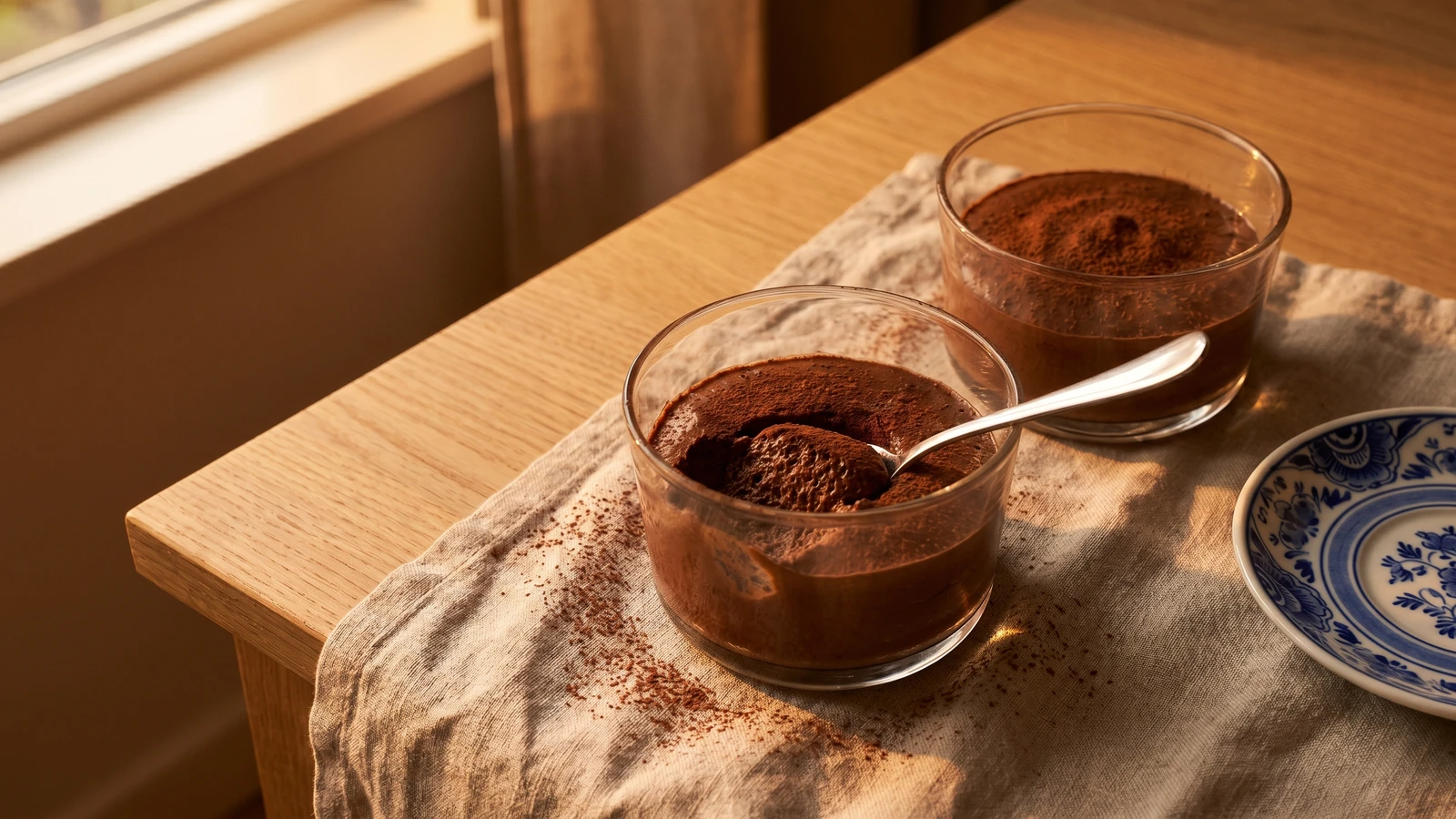
The name means heavenly mud, which is Dutch dessert logic at its finest: no perfume, no ceremony, just dark chocolate folded into cream until the spoon goes quiet.
The first time I saw hemelse modder on a menu, I laughed before I ordered it. Heavenly mud. Only the Dutch would look at chocolate mousse, that French word with its airy little manners, and rename it after wet earth. For obvious reasons, this is why I love us.
But let me tell you a secret. The name already tells you how to cook it. Hemels, heavenly, asks for lightness; modder, mud, demands depth. You need both, or you have missed the joke. The chocolate must be dark enough to taste like itself, the egg whites must be folded in without being bullied, and the cream should soften the bitterness without turning the bowl into sweetened air.
Chocolate is not old Dutch peasant fare, of course. It came by ship, by trade, by industry, and by the nineteenth century Amsterdam had helped make cocoa a household ingredient instead of an aristocratic drink. History and cookery, they cannot be separated, even when the evidence is sitting in a pudding glass.
So we keep this simple. Hou het altijd simpel, always keep it simple. Melt the chocolate gently, cool it before the eggs meet it, fold with patience, and let the refrigerator do the last work. It is a toetje, a little after-dinner sweet, but a dangerous one: put it on the table in small glasses and watch sensible adults become extremely quiet.
Hemelse modder is the Dutch household name for chocolate mousse, a twentieth-century dessert-menu and home-cookbook favorite that translates the French idea into plain Dutch wit. The wider Dutch chocolate story runs through Amsterdam: in 1828 Coenraad Johannes van Houten patented a cocoa press that separated cocoa butter from roasted beans, helping make cocoa powder and chocolate cookery far more accessible. The dish is not regional in the way Zeeland bolus or Limburg vlaai are regional; its Dutchness lies in the name, the small glass, and the refusal to pretend pudding is anything grander than pudding.
Quantity
200g
chopped
Quantity
30g
Quantity
3
separated, at room temperature
Quantity
40g
Quantity
250ml
cold
Quantity
1 pinch
Quantity
1 teaspoon
for dusting
| Ingredient | Quantity |
|---|---|
| dark chocolate, 70 percent cocoachopped | 200g |
| unsalted butter | 30g |
| large eggsseparated, at room temperature | 3 |
| fine sugar | 40g |
| heavy creamcold | 250ml |
| fine sea salt | 1 pinch |
| Dutch cocoa powder (optional)for dusting | 1 teaspoon |
Set the chopped chocolate and butter in a heatproof bowl over a pan of barely simmering water, making sure the bowl does not touch the water. Stir until smooth and glossy, then lift the bowl off the heat. Let it cool for five minutes; hot chocolate scrambles egg yolks, and that is a sorrow no dessert should carry.
Beat the egg yolks into the cooled chocolate one at a time, then stir in the pinch of salt. The mixture will tighten slightly and look darker. That is good. The yolks give the mousse its body, the mud part of heavenly mud.
In a clean bowl, beat the egg whites until they foam, then add the sugar a spoonful at a time and beat to soft, glossy peaks. Stop before they become dry and clumpy. You want a foldable cloud, not insulation.
In another bowl, whip the cold cream to soft peaks. It should hold a gentle shape and still look smooth. If you whip it stiff, the finished mousse will feel heavy, and hemels, heavenly, will have left the room.
Stir one large spoonful of egg white into the chocolate to loosen it. Fold in the remaining whites in two additions, then fold in the whipped cream. Use a wide spatula and turn the bowl as you go, lifting from the bottom until no white streaks remain. Be thorough, but not heroic; air is an ingredient here.
Spoon the mousse into six small glasses or bowls, cover, and chill for at least four hours. Serve cold, with a light dusting of cocoa if you like. Small portions are correct. This is not me being stingy, it is the chocolate telling the truth.
1 serving (about 110g)
Culinary guides, cultural storytelling, and the editorial depth that makes cooking meaningful.
Discover Culinary ExplorerChef Joost
A French-Bavarian name, a Dutch party mould, and the quiet trick of gelatine: custard cooled just enough, cream folded gently, and a dessert made ahead like a host with sense.

Chef Joost
An old Dutch moulded toetje, where bitter-almond macaroons soften into milk pudding and turn thrift, patience, and one good puddingvorm into celebration.

Chef Joost
A bowl of vanillevla with bitterkoekjes folded through it is the quiet Dutch trick that turns milk, eggs, sugar, and a few almond biscuits into a proper toetje.

Chef Joost
Goat-hoof biscuits made into a whole taart: almond meringue, chocolate, advocaat, and cream, the Dutch bakery counter quietly becoming a dinner-party secret.