
Chef Freja
Andelår med Rødkål
Slow-roasted duck legs with crisp, deeply golden skin, served with braised red cabbage and caramelized potatoes. The weeknight Danish duck that proves the best part of the bird is the one that takes its time.
A cooking platform built around craft, culture, and the stories behind what we eat.
Created by Chef Freja
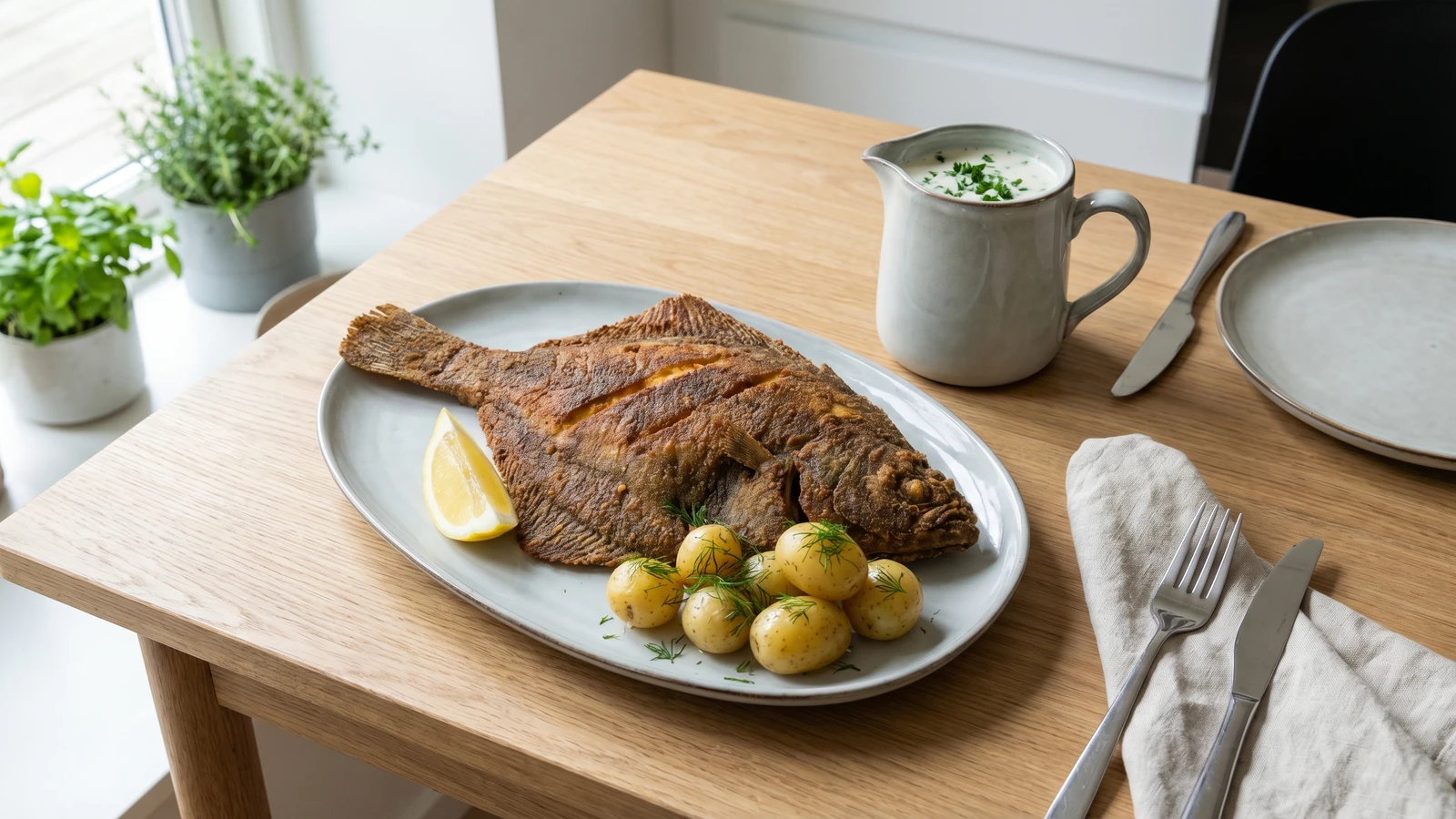
Denmark's summer fish dinner: whole rodspaette dredged in dark rugmel and fried in browned butter, served with creamy persillesovs and the first nye kartofler of June. The season on a plate, cooked with love.
June in Denmark is light that doesn't end. The sun hangs over the harbour until nearly eleven, and the market stalls fill with the two things every Danish cook has been waiting for: the first nye kartofler, still dusty with the soil they came from, and whole rodspaette, flat and glistening, just hours off the boat. This is when summer starts in a Danish kitchen. Not on the calendar. On the plate.
Helstegt rodspaette is Denmark's national fish dinner, and it has been for as long as anyone can remember. The whole plaice, fried in butter until the skin crackles and the flesh underneath stays sweet and white. Beside it, persillesovs, the creamy parsley sauce that belongs here the way dill belongs on everything else. And nye kartofler, small enough to eat whole, rolled in butter with nothing more than a pinch of salt. Three things on a plate. None of them complicated. All of them requiring your attention at the right moment.
What I want you to understand before you start is this: the fish is dredged in rugmel, dark rye flour, not wheat. Rugmel gives a thinner, crispier coat that browns faster in the butter and carries a nuttiness wheat flour can't. It's also what grows in Denmark, and that's not a coincidence. You dredge the fish the moment before it goes into the pan, not earlier. Earlier, and the flour absorbs moisture from the skin, goes damp, and refuses to crisp. The butter should be foaming and golden-brown when the fish hits it. You'll smell toasted hazelnuts. That's the moment. You'll know when it's right.
This is not a difficult meal. It is an attentive one. Make the sauce while the potatoes boil. Fry the fish last, just before you sit down. Everything arrives at the table at the same time, warm and honest and exactly what a June evening calls for. The season decides, and the season has decided well.
Rodspaette has been the most prized flatfish in Danish waters for centuries, caught in the North Sea and across the shallow sandbanks of the Kattegat, where the cold, sandy bottom produces fish with firm, sweet flesh. The trinity of fried plaice, parsley sauce, and new potatoes became codified as Denmark's national summer dinner during the 19th century, when the arrival of the first nye kartofler in early June marked the unofficial opening of the season. The dish is so deeply embedded in Danish identity that the phrase 'rodspaette med persillesovs' functions almost as cultural shorthand for home, summer, and the uncomplicated pleasures of a shared table.
Quantity
4, about 300g each
gutted and trimmed by your fishmonger
Quantity
100g
for dredging
Quantity
80g, divided
Quantity
to taste
Quantity
to serve
Quantity
800g
Quantity
30g
Quantity
small bunch
fronds picked
Quantity
30g
Quantity
30g
Quantity
500ml
Quantity
large bunch, about 30g leaves
finely chopped
Quantity
to taste
Quantity
pinch
| Ingredient | Quantity |
|---|---|
| whole plaice (rodspaette)gutted and trimmed by your fishmonger | 4, about 300g each |
| dark stone-ground rye flour (rugmel)for dredging | 100g |
| unsalted butter (for frying) | 80g, divided |
| fine sea salt | to taste |
| lemon wedges | to serve |
| small new potatoes (nye kartofler) | 800g |
| unsalted butter (for the potatoes) | 30g |
| fresh dill (optional)fronds picked | small bunch |
| unsalted butter (for the sauce) | 30g |
| plain flour | 30g |
| whole milk | 500ml |
| fresh curly parsleyfinely chopped | large bunch, about 30g leaves |
| white pepper | to taste |
| freshly grated nutmeg (optional) | pinch |
Put the new potatoes in a large pot and cover with cold, well-salted water. Bring to a gentle boil and cook for fifteen to twenty minutes until a knife slides through the largest potato without any resistance. Starting in cold water lets them heat evenly from the outside in. If you drop potatoes into boiling water, the exterior overcooks before the center catches up, and you get a mealy shell around a hard core. When they're done, drain and set them aside with the lid on. They'll wait patiently while you finish everything else.
Melt 30g butter in a medium saucepan over a low heat. Add the plain flour and stir it in with a wooden spoon. Cook this roux for two minutes, stirring constantly, until it smells biscuity and has lost its raw-flour taste. Don't let it take on any color. You want a white roux for a white sauce. Now add the milk a little at a time, stirring each addition completely smooth before pouring in the next. This is where patience matters. If you add the milk all at once, you'll spend the rest of the evening chasing lumps. Once all the milk is incorporated, let the sauce simmer gently for eight to ten minutes, stirring often, until it coats the back of a spoon and leaves a clean trail when you run your finger through it. Season with salt, white pepper, and a grating of nutmeg if you like.
Stir the finely chopped parsley into the sauce just before serving, not while it simmers. The parsley goes in last because heat dulls its color and flattens its flavor. You want it vivid green and fresh against the cream of the sauce, and you want to taste the herb, not a memory of it. Keep the sauce warm with a lid on while you fry the fish. If the sauce thickens too much as it sits, stir in a splash of milk to loosen it.
Rinse the plaice under cold running water and pat them very dry with kitchen paper, both sides. Dry skin is essential. Wet skin sticks to the pan and tears, and then you lose the crisp surface that makes this dish. With a sharp knife, make three shallow diagonal cuts across the dark side of each fish. The dark side is the top, the presentation side. These cuts let the heat reach the thickest part of the flesh evenly and help the rugmel grip the surface. Season both sides lightly with fine sea salt.
Spread the rugmel on a wide plate. Just before the fish goes into the pan, not a moment earlier, press each plaice into the flour on both sides and shake off any excess. Rugmel, dark stone-ground rye flour, is the traditional dredge for Danish fried fish, not wheat. It creates a thinner, crispier coat that browns faster in the butter and carries a nutty, almost earthy depth that flatters the delicate sweetness of the plaice. Wheat flour coats too thickly and tastes of nothing in particular. Dredging at the last moment matters because rye flour is absorbent. Give it time and it draws moisture from the fish skin, turns damp, and won't crisp. The flour needs to hit the hot butter dry.
Heat 40g of the butter in a large heavy frying pan over medium-high heat. Watch it carefully. The butter will melt, then foam, then the foam will begin to subside and the butter will turn golden. You'll smell toasted hazelnuts. That is the moment the fish goes in, dark side down. The dark side fries first because it's the presentation side, and first contact with the pan gives the best color and the best crust. Cook for four minutes without moving the fish. The edges will curl slightly and the crust will turn deep golden-brown. Carefully flip with a wide fish slice and cook for three minutes more on the pale side. The flesh should be white and opaque all the way through, pulling gently away from the bone at the thickest point. Transfer to a warm platter while you wipe the pan, add the remaining 40g butter, and repeat with the second pair of fish.
Return the drained nye kartofler to their warm pot. Add 30g butter and a pinch of salt. Shake the pot gently so the butter melts and glazes every potato. The skin of a new potato in June is so thin it drinks the butter. Tear a few dill fronds over the top if you have them. Dill and new potatoes are inseparable in Denmark, and for good reason.
Lay the fried plaice on a warm serving platter, dark side up so the golden crust shows. Pile the buttery nye kartofler beside the fish. Serve the persillesovs in a warm jug or bowl alongside, never poured over the fish, because the crisp rugmel crust deserves to stay crisp until the very last moment when the fork breaks through it. Set lemon wedges on the platter for anyone who wants the brightness. This is a plate that needs nothing else. A cold beer or a glass of dry white wine, the window open to the long evening light, and the people you want at your table. Tak for mad.
1 serving (about 500g)
Culinary guides, cultural storytelling, and the editorial depth that makes cooking meaningful.
Discover Culinary ExplorerChef Freja
Slow-roasted duck legs with crisp, deeply golden skin, served with braised red cabbage and caramelized potatoes. The weeknight Danish duck that proves the best part of the bird is the one that takes its time.

Chef Freja
The whole roasted duck of juleaften, stuffed with tart apples and dark prunes, slow-roasted for four patient hours until the skin crackles like something earned and the meat underneath gives way without resistance.
Chef Freja
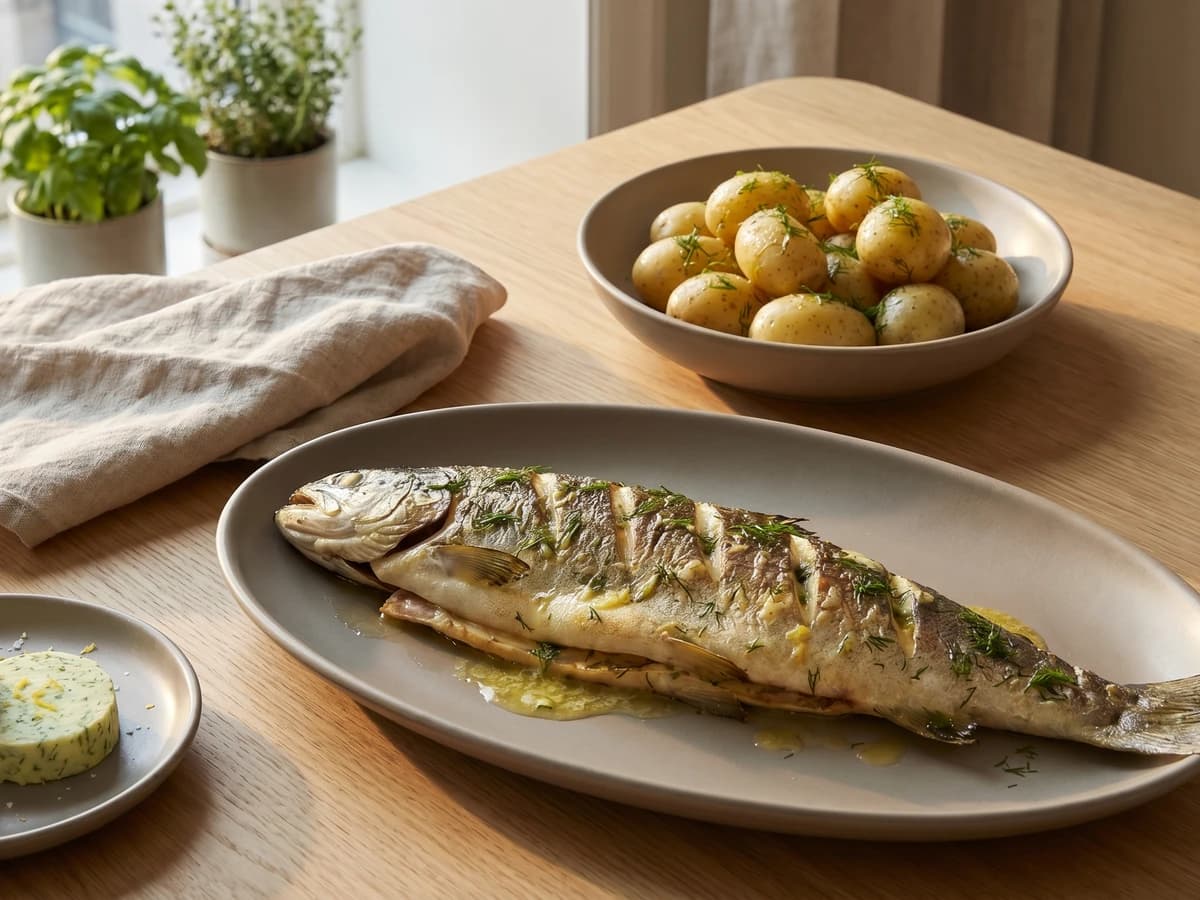
Whole sea trout baked with butter, lemon, and armfuls of dill, served beside the first nye kartofler of the season and a melting slab of dildsmor. The Danish summer table at its most generous.
Chef Freja
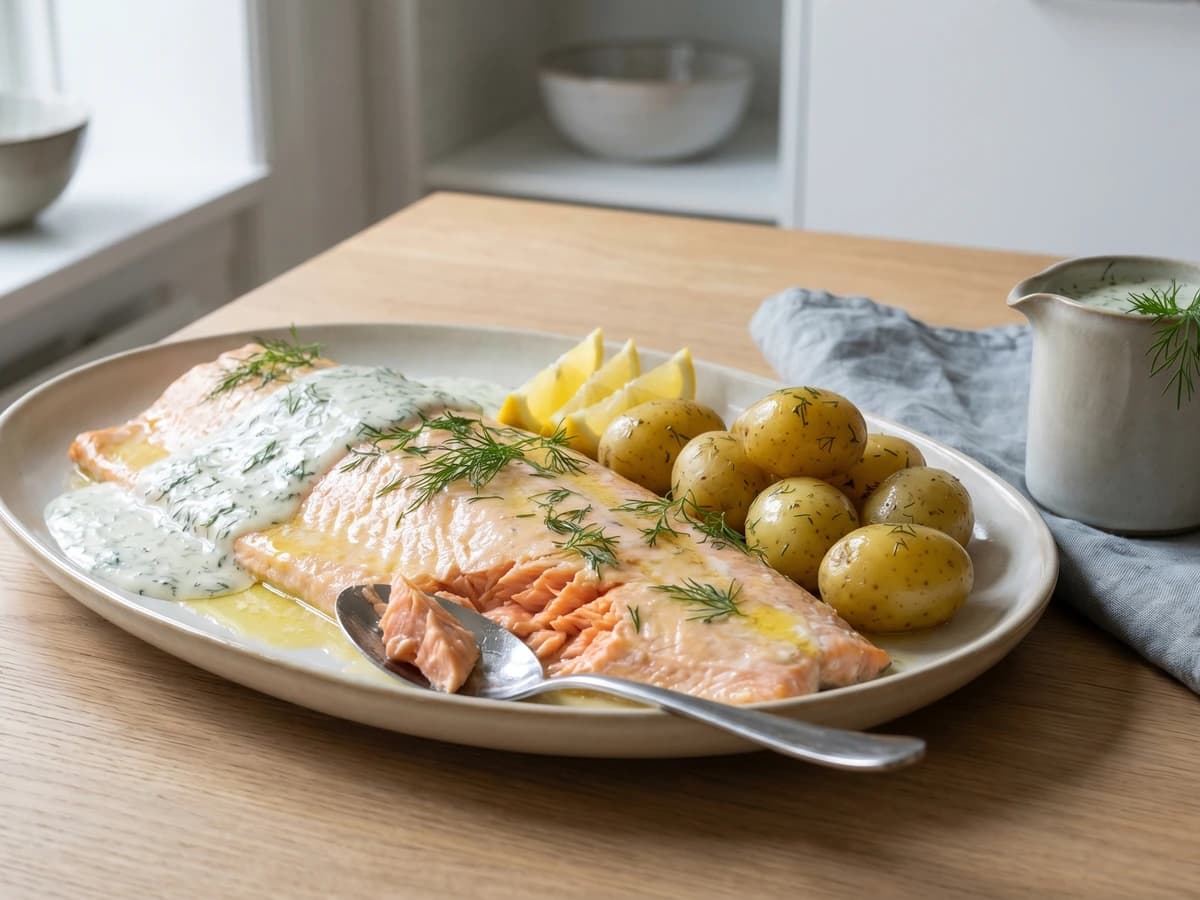
A side of salmon baked gently in butter and white wine, served warm with a bright dill cream sauce and the season's first nye kartofler. Late spring on a Danish table, cooked with love.