Culinary Explorer
A cooking platform built around craft, culture, and the stories behind what we eat.
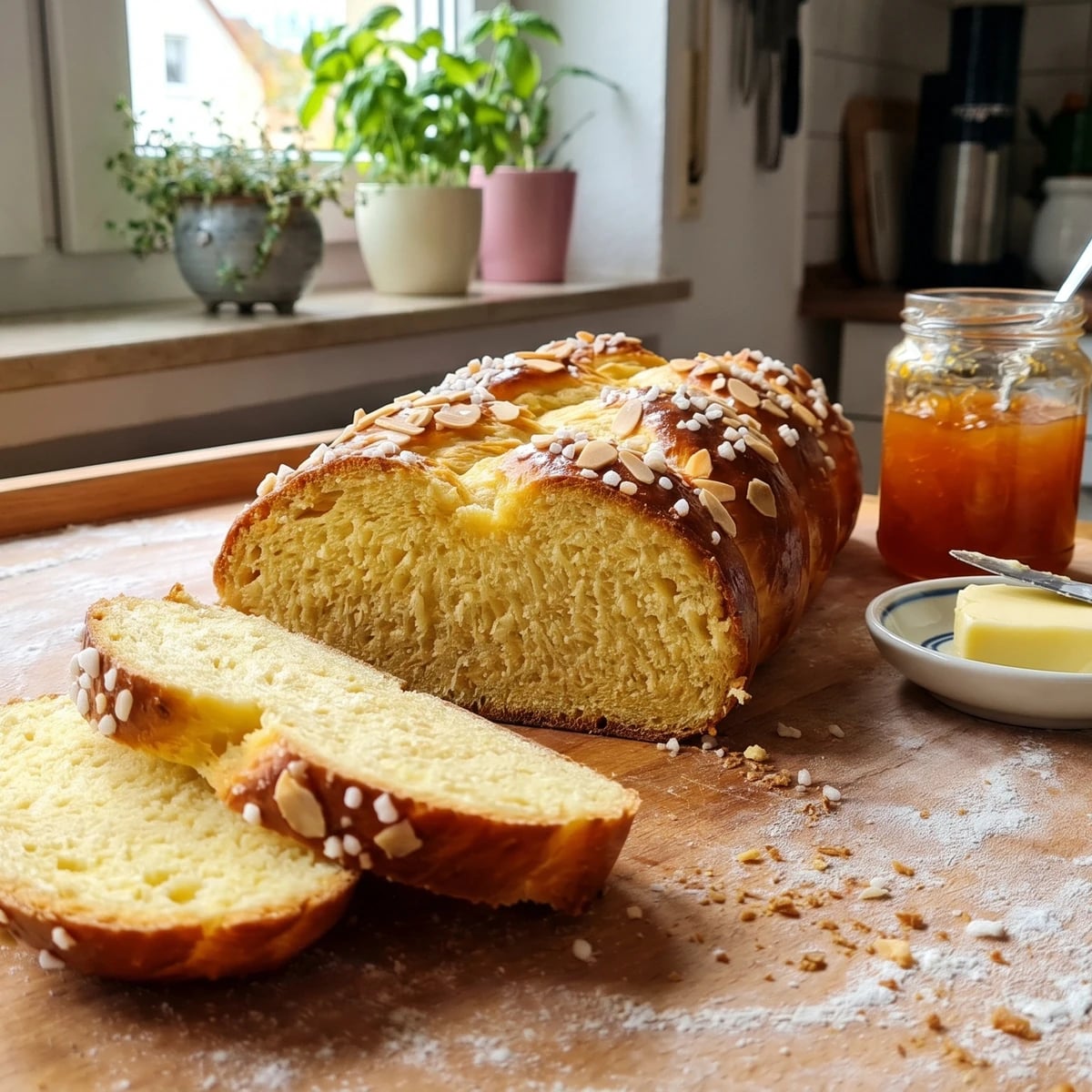
Hefezopf
Created by Chef Klaus
The sweet braided loaf of the Easter table and the Sunday breakfast board, built on soft dough, patient rising, and a glossy egg wash before the bake.
Hefezopf is the braided yeast loaf you put on the table for Easter morning, and it belongs especially to the south and southwest, where a sweet dough, butter, milk, and egg get treated with proper patience. In Baden and Swabia it may come with raisins or sliced almonds. In Bavaria you hear Striezel. Further north, the sweet yeast loaf changes shape and name, with Stuten or Klöben doing related work at different tables. Im Norden anders, im Süden anders.
I make it plain first: milk, butter, egg, flour, yeast, a little sugar, a little salt. The single technique that decides it is the kneading after the butter goes in. Butter coats flour and slows gluten, so you don't panic when the dough turns slippery at first. Keep working it until it becomes smooth, elastic, and soft as an earlobe. Stop early and the braid tears instead of stretching.
The dough rises twice because the first rise builds flavour and the second rise relaxes the braid so it bakes high instead of splitting at the seams. Brush with egg just before the oven, not an hour before, because the gloss needs to sit fresh on the skin. Das braucht seine Zeit. Not much drama. Just don't bully the dough.
Ingredients
strong white bread flour or German type 550 flour
Quantity
500g
plus more for dusting
whole milk
Quantity
200ml
lukewarm
fresh yeast or instant yeast
Quantity
20g fresh / 7g instant
| Ingredient | Quantity |
|---|---|
| strong white bread flour or German type 550 flourplus more for dusting | 500g |
| whole milklukewarm | 200ml |
| fresh yeast or instant yeast | 20g fresh / 7g instant |
Where cooking meets culture.
Culinary guides, cultural storytelling, and the editorial depth that makes cooking meaningful.
Discover Culinary Explorer