
Chef Elsa
Eiersalat (Austrian Egg Salad)
Cool, creamy Austrian egg salad with sour gherkins and tart apple in a mustard-yogurt dressing, the kind of honest Jause food that tastes like an Austrian Easter table and works beautifully all year round.
A cooking platform built around craft, culture, and the stories behind what we eat.
Created by
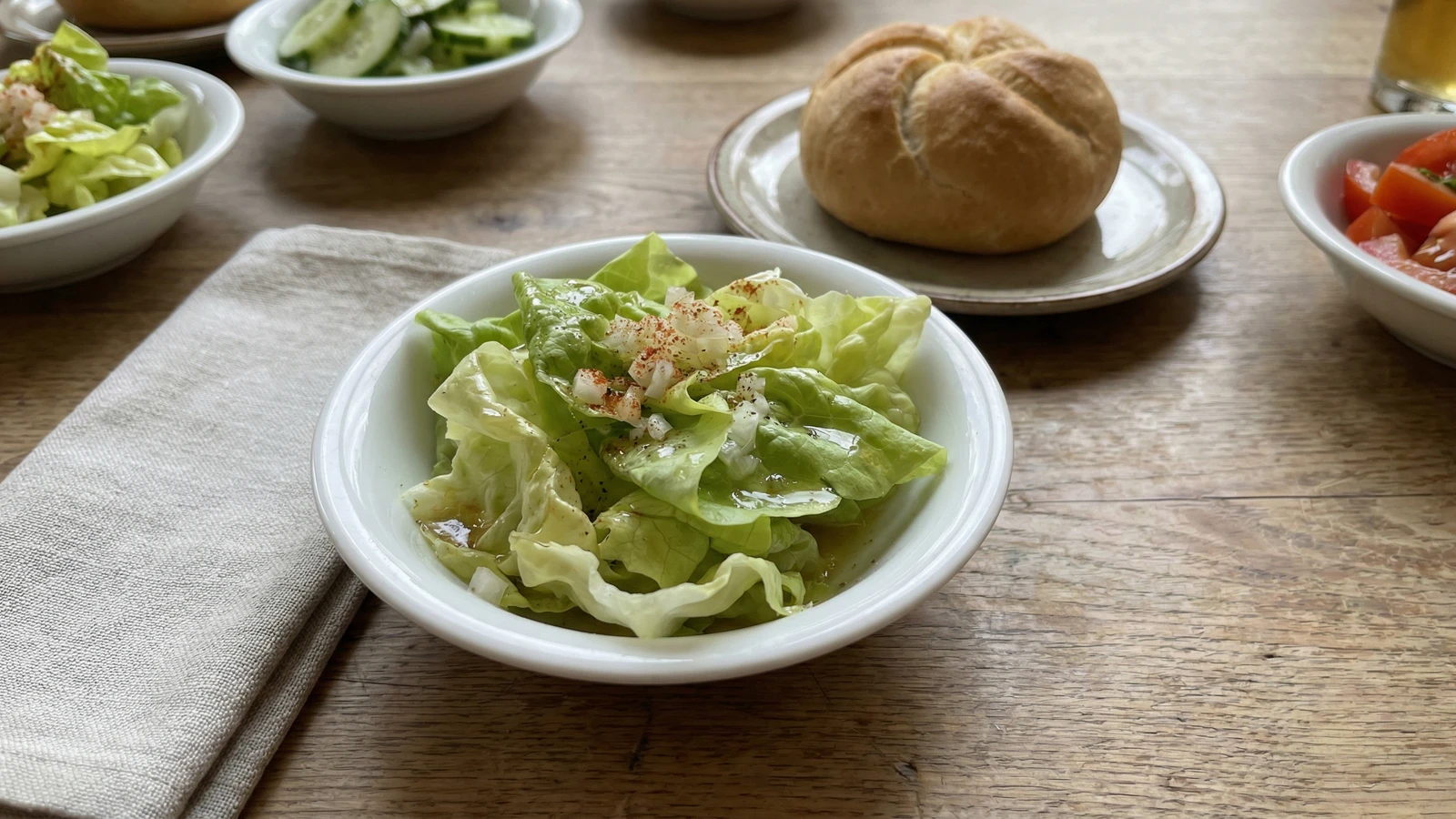
Butterhead lettuce dressed in Austria's tangy, vinegar-forward Marinade with finely minced onion, a pinch of sugar, and good oil. The side salad on every Gasthaus table, and the one that makes you stop and pay attention.
In my grandmother Eva's kitchen in Kent, Gretel made this salad the way every Austrian grandmother makes it: with one hand, while doing something else. She'd tear the lettuce, whisk the Marinade in a cup, pour it over, toss it twice, and put it on the table. The whole thing took ninety seconds. But the Marinade was perfect every time. Vinegar-forward, a little sweet, with enough raw onion to remind you this isn't French food.
Häuptelsalat is what Austrians call butterhead lettuce, that soft, round head with pale green leaves that bruise if you look at them too hard. The name comes from Häuptel, meaning "little head," which is exactly what it looks like sitting in your kitchen. It's the most common salad in Austria and the one most people get wrong outside the country, because they don't understand the Marinade.
Austrian Marinade is not a vinaigrette. A vinaigrette is three parts oil to one part vinegar. Marinade reverses that instinct. The vinegar leads. The oil follows. There's sugar in it, just enough to balance the acid, and finely minced onion that softens in the dressing as it sits. If your version tastes oily and mild, you've made a French dressing on Austrian lettuce. Go back. Add more vinegar. Taste it again. It should make your mouth wake up.
I serve this at my restaurant in Salzburg every day of the year, as part of our Gemischter Salat. It sits in its little bowl next to the Gurkensalat and the Erdäpfelsalat, and it's always the first one people finish. Good Austrian home cooking doesn't need to be complicated. It needs to be right.
The Austrian Marinade descends from a dressing tradition common across the former Habsburg lands, where wine vinegar was plentiful and olive oil was expensive and rarely used. Sunflower oil or pumpkin seed oil became the fats of choice, depending on the region. The word Marinade in Austrian usage refers specifically to this salad dressing, not to a meat marinade, which confuses German speakers from across the border. Gretel Beer documented the formula in her cookbooks as essential knowledge for anyone wanting to understand Austrian salad culture, because every Austrian Beisl, Gasthaus, and home kitchen uses some version of it daily.
Quantity
1 large head
Quantity
3 tablespoons
Quantity
2 tablespoons
Quantity
1/2 teaspoon
Quantity
1 small
very finely minced
Quantity
3 tablespoons
Quantity
to taste
Quantity
to taste
freshly ground
Quantity
1 pinch
| Ingredient | Quantity |
|---|---|
| butterhead lettuce (Häuptelsalat) | 1 large head |
| white wine vinegar or Hesperidenessig | 3 tablespoons |
| neutral oil (sunflower or rapeseed) | 2 tablespoons |
| granulated sugar | 1/2 teaspoon |
| onionvery finely minced | 1 small |
| warm water | 3 tablespoons |
| salt | to taste |
| black pepperfreshly ground | to taste |
| sweet paprika (optional) | 1 pinch |
Remove the outer leaves of the butterhead lettuce and set them aside for another use if they're still good, or discard them if they're wilted. Separate the remaining leaves by hand. Don't cut them. Butterhead lettuce bruises the moment metal touches it, and bruised leaves turn brown and taste bitter within minutes. Tear any large outer leaves in half. Leave the tender inner leaves whole. Wash them gently in cold water, swishing rather than scrubbing, then dry them thoroughly. A salad spinner works, or lay them on a clean tea towel and pat gently. The leaves must be dry. Wet lettuce dilutes the Marinade and turns the whole salad watery.
Peel the onion and mince it as finely as you possibly can. You want pieces so small they almost dissolve into the Marinade, not chunks that crunch between your teeth. A sharp knife matters here. If your knife is dull, the onion will crush instead of cut, and crushed onion releases harsh sulfur compounds that overwhelm everything else. Fine, clean cuts keep the flavor sharp but not aggressive.
In a cup or small bowl, combine the white wine vinegar, sugar, a generous pinch of salt, and the warm water. Stir until the sugar and salt dissolve completely. This is why the water is warm: cold water won't dissolve the sugar, and undissolved sugar sits at the bottom doing nothing. Add the minced onion and the oil. Whisk or stir with a fork until combined. Taste it. The Marinade should be distinctly vinegary with a gentle sweetness rounding the edges. If it tastes flat, add more salt. If it's too sharp, a tiny bit more sugar. If it tastes oily, you've added too much oil. The vinegar should lead. Always.
Place the dry lettuce leaves in a wide bowl. Pour the Marinade over them and toss gently with your hands or two spoons, lifting from the bottom so every leaf gets coated. Don't drown it. You want each leaf glistening, not swimming. If you have a little Marinade left over, that's fine. Better to underdress than overdress. A pinch of freshly ground black pepper on top, a dusting of sweet paprika if you like, and it's done. Serve immediately. Häuptelsalat waits for no one. The leaves wilt within ten minutes of being dressed, and a wilted Häuptelsalat is a sad thing.
1 serving (about 120g)
Culinary guides, cultural storytelling, and the editorial depth that makes cooking meaningful.
Discover Culinary ExplorerChef Elsa
Cool, creamy Austrian egg salad with sour gherkins and tart apple in a mustard-yogurt dressing, the kind of honest Jause food that tastes like an Austrian Easter table and works beautifully all year round.

Chef Elsa
Bitter curly endive wilted just so by a warm dressing of rendered Speck, sharp vinegar, and a touch of mustard, the kind of salad that makes a roast pork dinner feel complete.

Chef Elsa
Warm broth-soaked potatoes and crispy Speck over tender Vogerlsalat, finished with a drizzle of dark Steirisches Kürbiskernöl and a soft-boiled egg that ties the whole bowl together.

Chef Elsa
Tender Austrian green beans dressed in warm Marinade the moment they leave the pot, absorbing every drop of vinegar and oil while they cool into something far greater than the sum of their parts.