Culinary Explorer
A cooking platform built around craft, culture, and the stories behind what we eat.
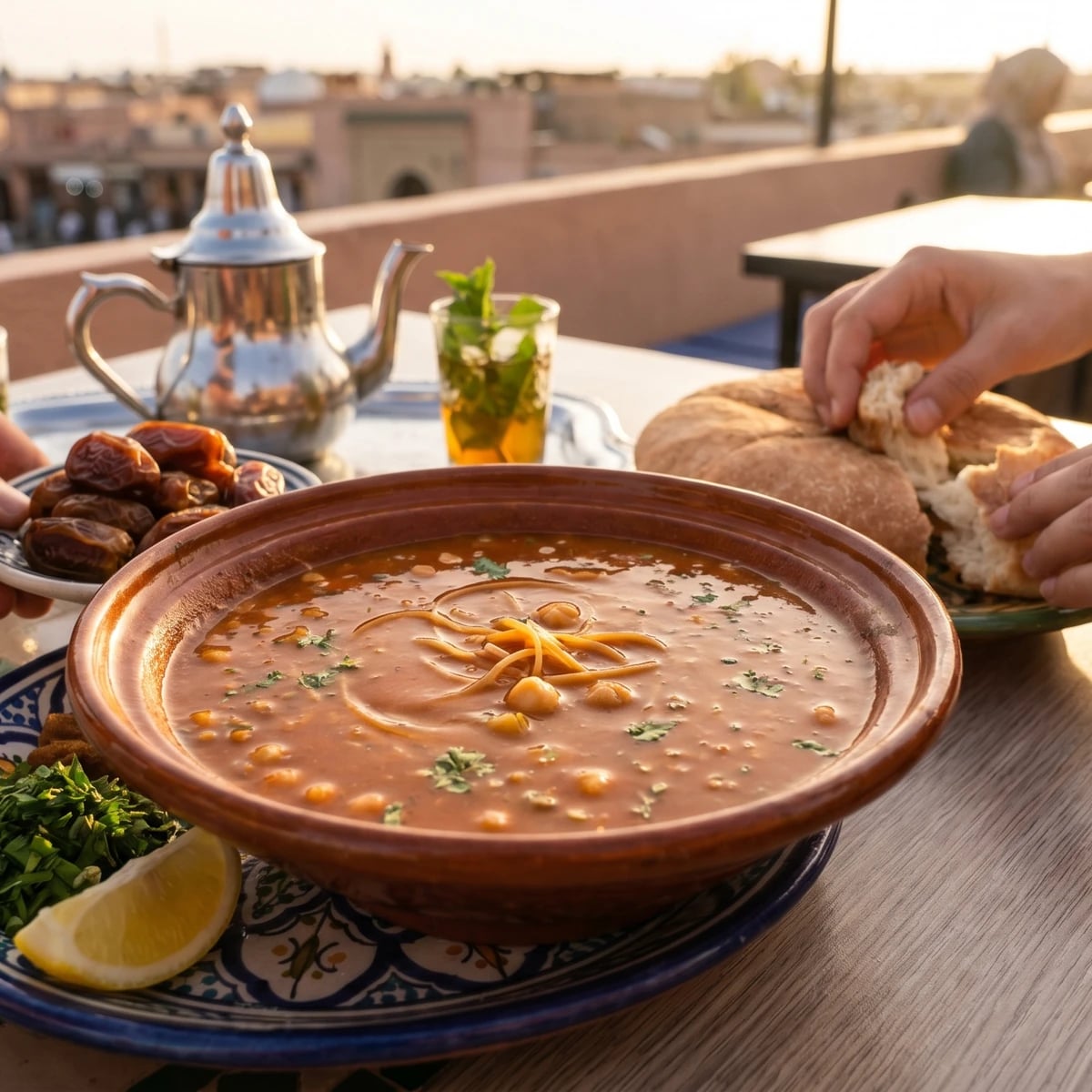
Harira (حريرة)
Created by Chef Zohra
The rust-red soup that breaks the Ramadan fast with a date, chickpeas and lentils in a tomato broth, finished with the flour thread that makes harira hold together.
At sunset in Ramadan, the first spoonful of harira lands after the date. That matters. The body has been quiet all day, and this soup wakes it gently: tomato, chickpeas, lentils, celery, parsley, coriander, ginger, pepper, turmeric, a little cinnamon, sometimes saffron if the house has it. It smells like the whole country leaning toward the table at the same hour.
The gesture that decides harira is the tedouira, the flour and water beaten smooth and poured in near the end. It doesn't make the soup heavy. It ties the broth together, so the tomato, pulses, herbs, and meat, if you use it, stop floating separately and become one bowl. Pour it slowly, stir without laziness, and let it cook until the raw flour taste disappears.
Harira belongs to Ramadan, yes, but don't trap it there. It is comfort food for a cold evening, food for a neighbor, food for one more bowl than you counted. Une table, c'est une porte qu'on laisse ouverte, a table is a door you leave open, and harira is one of the ways Morocco keeps that door warm.
Ingredients
dried chickpeas
Quantity
200g
soaked overnight and peeled if you have patience, or use 400g cooked chickpeas
lamb or beef shoulder (optional)
Quantity
250g
cut into small pieces
olive oil
Quantity
2 tbsp
| Ingredient | Quantity |
|---|---|
| dried chickpeassoaked overnight and peeled if you have patience, or use 400g cooked chickpeas | 200g |
| lamb or beef shoulder (optional)cut into small pieces | 250g |
| olive oil | 2 tbsp |
Where cooking meets culture.
Culinary guides, cultural storytelling, and the editorial depth that makes cooking meaningful.
Discover Culinary Explorer