
Chef Juliana
Bauru Clássico (Ponto Chic)
You don't need a lanchonete password. Hollow the pão francês, soften four cheeses in hot water, tuck in real rosbife, tomato, and picles, and São Paulo dinner lands in your hand.
A cooking platform built around craft, culture, and the stories behind what we eat.
Created by
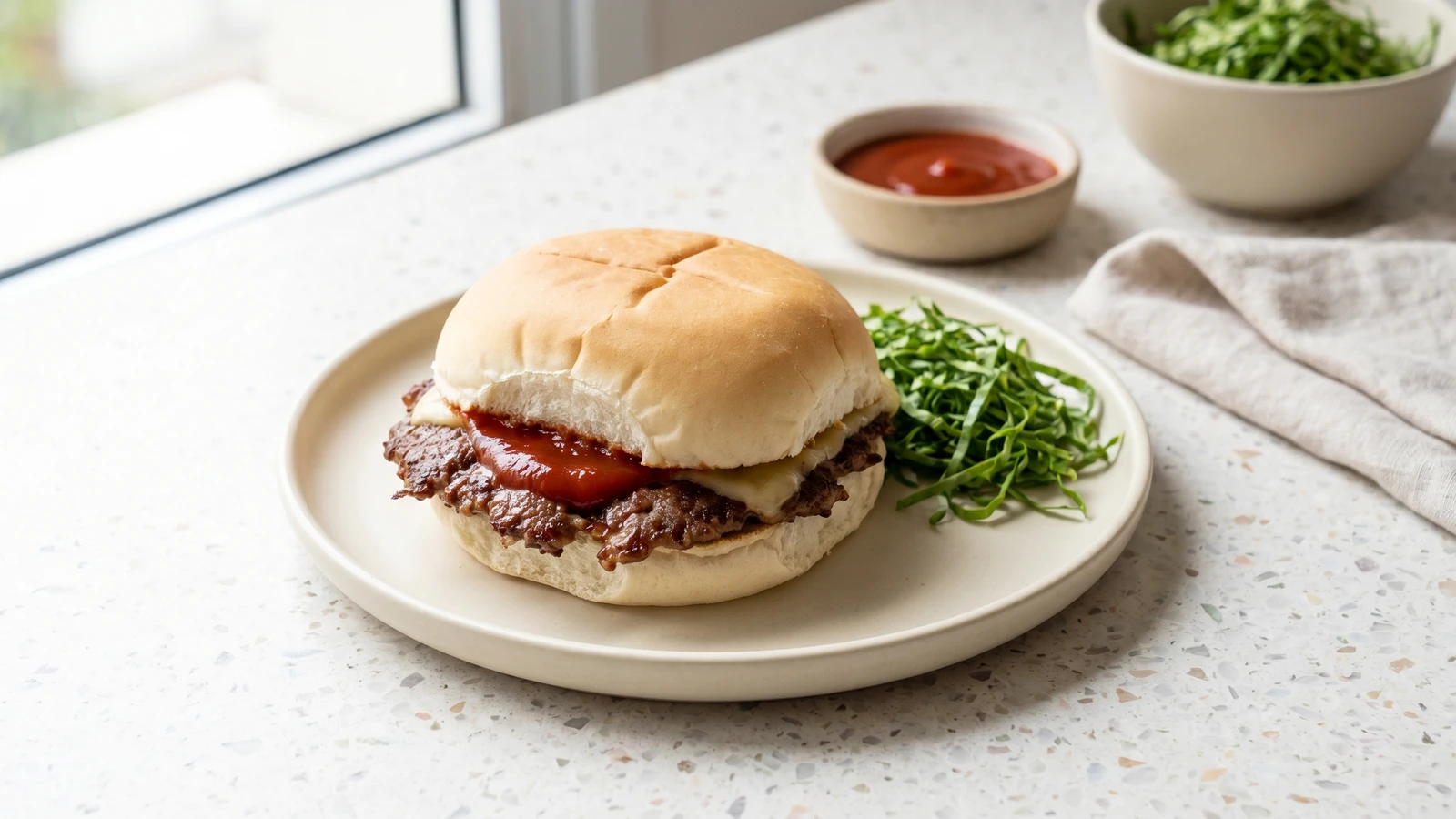
You don't need a tower of toppings. A hot pan, a thin patty, soft bread, and real tomato sauce give you the São Paulo counter burger that solves dinner fast.
You might hear isso não é pra mim the second you imagine a burger hitting the chapa: too quick, too counter-only, too much like something another person knows by instinct. I have bad news for that little voice. Cozinhar não é dom, é um aprendizado, and a thin lanchonete burger is mostly a hot pan, a loose patty, and the patience not to fiddle with it.
I learned to cook late enough to write every ridiculous detail in a school notebook, including how not to turn meat grey in its own water. This recipe is that kind of note: make a real tomato sauce from onion, garlic, and tomato; press the beef thin so it browns fast; toast the soft bun so the sauce doesn't turn it to mush. A step without its why is a rule, and rules get forgotten. So a gente puts the reason beside the method.
This isn't the everyday pê-efe of rice, beans, meat or egg, and something green, but it respects the same country of the table. Real food, simple work, no packet pretending to be flavor. If tonight's dinner is a soft white bun, a browned patty, a glossy tomato sauce, and a quick green side, dinner is solved without turning the kitchen into a performance.
Lanchonete Seu Oswaldo opened in 1966 in Ipiranga, São Paulo, and became known for a short menu built around a thin burger made on the chapa, soft white bun, queijo prato, and a red tomato sauce. The style belongs to the urban Brazilian lanchonete, where the American hamburger was absorbed into local snack-counter habits: fast, saucy, affordable, and less interested in height than in timing. This recipe follows the public style of that counter, not the private house recipe.
Quantity
1 tablespoon
Quantity
1/2 small
finely minced
Quantity
2 cloves
minced
Quantity
1 1/2 cups
Quantity
1/4 cup
Quantity
1
Quantity
1/2 teaspoon, plus more to taste
Quantity
1/4 teaspoon
Quantity
1 teaspoon
Quantity
1/2 teaspoon
only if the tomatoes taste sharp
Quantity
450 g (about 1 pound)
80/20 or 85/15, kept cold
Quantity
3/4 teaspoon
Quantity
1 tablespoon
Quantity
4
Quantity
1 tablespoon
Quantity
4 slices
Quantity
2 cups
finely shredded, for serving
Quantity
1 teaspoon
Quantity
1 teaspoon
Quantity
1 pinch
| Ingredient | Quantity |
|---|---|
| oil for the tomato sauce | 1 tablespoon |
| onionfinely minced | 1/2 small |
| garlicminced | 2 cloves |
| tomato passata or crushed tomatoes | 1 1/2 cups |
| water | 1/4 cup |
| bay leaf | 1 |
| salt for the sauce | 1/2 teaspoon, plus more to taste |
| black pepper | 1/4 teaspoon |
| white vinegar | 1 teaspoon |
| sugar (optional)only if the tomatoes taste sharp | 1/2 teaspoon |
| ground beef80/20 or 85/15, kept cold | 450 g (about 1 pound) |
| fine salt for the patties | 3/4 teaspoon |
| oil for the chapa | 1 tablespoon |
| soft white burger buns | 4 |
| butter or oil for toasting | 1 tablespoon |
| queijo prato (optional) | 4 slices |
| couve or green cabbage (optional)finely shredded, for serving | 2 cups |
| vinegar for the greens (optional) | 1 teaspoon |
| oil for the greens (optional) | 1 teaspoon |
| salt for the greens (optional) | 1 pinch |
Warm 1 tablespoon oil in a small saucepan over medium heat. Add the onion and cook until it murcha, soft and see-through, about 3 to 4 minutes. Add the garlic for 30 seconds, just until you smell it, then stir in the tomato, water, bay leaf, salt, and pepper. Simmer uncovered for 12 to 15 minutes, until the sauce looks glossy and leaves a short trail when you drag a spoon through it. Finish with the vinegar, taste, and add the sugar only if the tomato tastes sharp. This little refogado is why the sauce tastes like food, not like red liquid.
If you're serving the green side, toss the shredded couve or cabbage with the vinegar, oil, and a pinch of salt. Squeeze it once with your hand until it softens slightly and turns brighter. This is not decoration. It's the something green that keeps the plate honest, the same common sense as the pê-efe.
Divide the cold beef into 4 loose balls. Don't knead them smooth and don't salt them yet. A loose ball presses into a tender thin patty; a worked ball turns tight, and early salt pulls the texture toward bouncy. We want a lanchonete burger, not a rubber disk. Anota aí.
Heat a heavy skillet or chapa over medium-high heat for 3 to 4 minutes. Spread the cut sides of the buns with the butter or oil and toast them cut side down until pale gold, about 1 minute. The bun should still be soft, just sealed at the surface. That light toast is what lets it hold tomato sauce without becoming mush.
Raise the heat to high and film the chapa with a little oil. Put 1 or 2 beef balls on the pan, leaving plenty of space, cover each with a square of parchment, and press hard with a wide spatula for 10 seconds until the patty is thin, about 1/4 inch, with ragged edges. Salt the top. Let it cook without poking for about 2 minutes, until the edges brown deeply and little juices pearl on top. Crowd the pan and the temperature drops; the meat releases water and steams grey instead of dourar.
Scrape firmly under each patty so you lift the browned crust instead of leaving it glued to the pan. Flip, salt the second side lightly, and add queijo prato if using. Cover for 45 to 60 seconds, just until the cheese relaxes and the second side browns. The scraping matters because those browned bits are flavor, not dirt.
Spoon 1 tablespoon of tomato sauce onto the bottom bun, set the patty on top, add another spoonful of sauce, and close with the top bun. Press gently, just enough for the sauce to meet the bread. Eat right away, with the green side if you made it. Too much sauce turns the bun into a sponge; enough sauce makes the whole thing taste like a São Paulo counter.
1 serving (about 300g)
Culinary guides, cultural storytelling, and the editorial depth that makes cooking meaningful.
Discover Culinary ExplorerChef Juliana
You don't need a lanchonete password. Hollow the pão francês, soften four cheeses in hot water, tuck in real rosbife, tomato, and picles, and São Paulo dinner lands in your hand.

Chef Juliana
You don't need a lanchonete counter to make this. Pão sírio, roast beef, cheese, egg, salad, and a hot pan solve dinner without powder, drama, or fear.

Chef Juliana
You think this is just a hot dog. It's not. It's the birthday table, the game-day tray, and a very São Paulo lesson in sauce, crunch, and no fear.

Chef Juliana
You don't need a snack bar to make the padaria sandwich people order without thinking. Bread, ham, cheese, butter, and the patience to let the chapa do its work.