
Chef Dean
Classic French Baguette
Four humble ingredients transformed through time and technique into shattering-crusted, airy-crumbed bread that rivals any Parisian bakery. This is bread worth the effort.
A cooking platform built around craft, culture, and the stories behind what we eat.

Created by
Buttery brioche spirals hiding layers of smoky ham and molten Gruyère, their tops lacquered to a deep mahogany shine. The kind of generous, unhurried baking that turns a Saturday morning into a memory worth keeping.
Brioche is the great equalizer of French baking. It began as a bread for the aristocracy, all that butter and those eggs marking it as food for the privileged. But the technique traveled, as good techniques always do, until home bakers on both sides of the Atlantic realized they could produce something magnificent with nothing more than patience and a willingness to get their hands sticky.
These rolls marry that French tradition with the American instinct to stuff good bread with ham and cheese. The dough itself is rich, almost cake-like in its tenderness, but sturdy enough to cradle thin-sliced ham and a generous measure of Gruyère. When they emerge from the oven, the tops burnished from an egg wash, the cheese will have melted into golden pockets throughout.
I learned to make brioche from a baker who insisted the dough should feel like a baby's bottom after proper kneading. He was right. The butter incorporates slowly, reluctantly at first, then suddenly the whole mass transforms into something silky and alive. Don't rush this process. The dough knows what it needs.
Make these for a weekend breakfast when people you love are gathered in your kitchen. Set out good coffee, real butter, and perhaps some preserves. Watch the rolls disappear. This is what home baking is for.
Quantity
3 1/2 cups (440g)
plus more for dusting
Quantity
1/4 cup (50g)
Quantity
2 1/4 teaspoons (1 packet)
Quantity
1 1/2 teaspoons
Quantity
4
at room temperature
Quantity
1/3 cup (80ml)
lukewarm
Quantity
1 cup (2 sticks/226g)
softened and cut into tablespoons
Quantity
8 ounces
Black Forest or good deli ham
Quantity
8 ounces
coarsely grated
Quantity
2 tablespoons
Quantity
1 tablespoon
Quantity
1
beaten with 1 tablespoon water for egg wash
Quantity
for finishing
| Ingredient | Quantity |
|---|---|
| all-purpose flourplus more for dusting | 3 1/2 cups (440g) |
| granulated sugar | 1/4 cup (50g) |
| instant yeast | 2 1/4 teaspoons (1 packet) |
| fine sea salt | 1 1/2 teaspoons |
| large eggsat room temperature | 4 |
| whole milklukewarm | 1/3 cup (80ml) |
| unsalted buttersoftened and cut into tablespoons | 1 cup (2 sticks/226g) |
| thin-sliced hamBlack Forest or good deli ham | 8 ounces |
| Gruyère cheesecoarsely grated | 8 ounces |
| Dijon mustard | 2 tablespoons |
| fresh thyme leaves | 1 tablespoon |
| large eggbeaten with 1 tablespoon water for egg wash | 1 |
| flaky sea salt | for finishing |
In the bowl of a stand mixer fitted with the dough hook, whisk together the flour, sugar, yeast, and salt. Make a well in the center. The yeast and salt should not touch directly until the mixing begins, as salt can inhibit yeast activity before they're properly hydrated.
Add the four room-temperature eggs and the lukewarm milk to the well. Mix on low speed until a shaggy dough forms, about two minutes. Increase to medium speed and knead for eight to ten minutes. The dough will slap against the sides of the bowl, then gradually begin to pull away and climb the hook. It should look smooth but still quite sticky.
With the mixer running on medium-low, add the softened butter one tablespoon at a time, waiting until each piece mostly disappears before adding the next. This takes patience, perhaps ten minutes. The dough will look hopelessly greasy and broken at first. Keep mixing. It will come together into a glossy, elastic mass that pulls cleanly from the bowl. When you stretch a small piece, it should form a thin, translucent window without tearing.
Transfer the dough to a large, lightly oiled bowl. Cover tightly with plastic wrap. Let rise at room temperature until doubled in size, about two hours. The dough will be puffy and soft, jiggling when you tap the bowl.
Press the dough down to deflate it, re-cover tightly, and refrigerate for at least eight hours or overnight. This cold fermentation develops flavor and firms the butter, making the dough infinitely easier to roll. Do not skip this step. Warm brioche dough is unmanageable.
Remove dough from refrigerator and let rest at room temperature for fifteen minutes to take off the chill. On a lightly floured surface, roll into a large rectangle roughly 16 by 12 inches, with the long side facing you. Work quickly. If the dough resists or springs back stubbornly, cover it with a towel and let it rest five minutes before continuing.
Spread the Dijon mustard evenly over the dough, leaving a one-inch border along the far long edge. Layer the ham slices to cover the mustard, overlapping slightly. Scatter the grated Gruyère evenly over the ham, then sprinkle with thyme leaves. The filling should look generous but not mountainous.
Starting from the long edge nearest you, roll the dough into a tight cylinder, tucking as you go to keep tension. Pinch the seam firmly to seal. Using a sharp knife or unflavored dental floss, cut the log into twelve equal rounds, each about one and a quarter inches thick. A gentle sawing motion prevents the filling from squeezing out.
Grease a 9 by 13-inch baking pan or arrange the rolls on a parchment-lined sheet pan, spacing them about an inch apart. They will expand to touch during proofing and baking, creating pull-apart rolls with soft sides. Cover loosely with plastic wrap and let rise in a warm spot until puffy and nearly doubled, forty-five minutes to one hour. They should spring back slowly when poked.
Preheat your oven to 375°F during the final fifteen minutes of proofing. Brush the tops of the rolls generously with the egg wash, taking care to cover all exposed dough. Sprinkle with flaky sea salt. Bake until deeply golden brown and the internal temperature reaches 190°F, twenty-two to twenty-five minutes. The kitchen will smell impossibly good. The cheese may bubble and escape in places. This is a feature, not a flaw.
Let the rolls cool in the pan for ten minutes. This rest allows the cheese to set slightly, so it pulls in stretchy strands rather than running out when you tear them apart. Serve warm from the pan, inviting everyone to pull their own roll free. These are at their absolute peak within an hour of baking, but remain excellent at room temperature for a picnic or potluck.
1 roll (about 95g)
Culinary guides, cultural storytelling, and the editorial depth that makes cooking meaningful.
Discover Culinary ExplorerChef Dean
Four humble ingredients transformed through time and technique into shattering-crusted, airy-crumbed bread that rivals any Parisian bakery. This is bread worth the effort.
Chef Dean
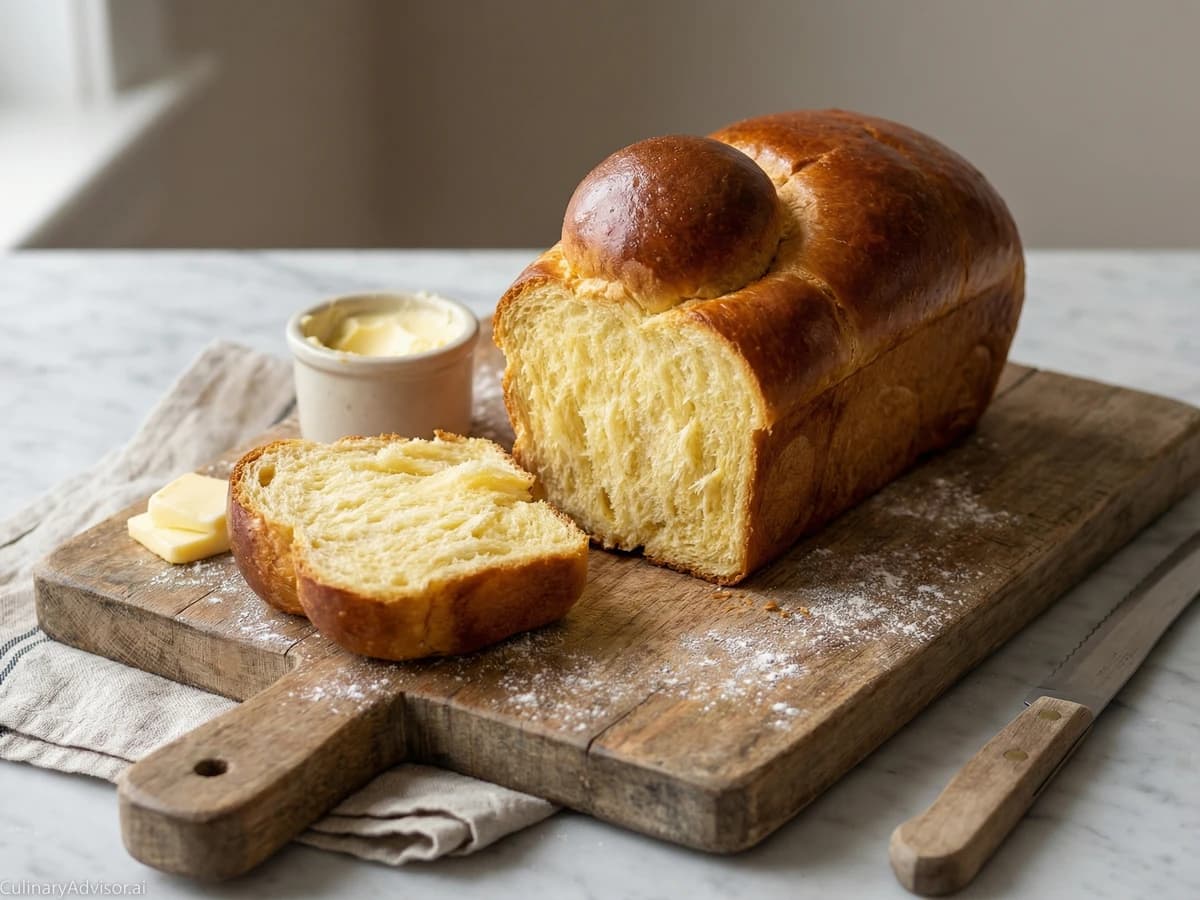
The crown jewel of enriched breads, brioche walks the line between bread and pastry with shameless amounts of butter and eggs folded into a tender, golden crumb that tears like clouds.

Chef Ally
A golden loaf of butter-rich French bread with a mahogany crust and a crumb so tender it tears like cotton. This is bread meant for holiday mornings, French toast that matters, and the simple pleasure of something made with your own hands.

Chef Ally
Four ingredients, two hands, and one day of unhurried attention. This is the loaf that connects you to ten thousand years of bread-making, and it starts with flour you can trust.