Chef Lesia
Bessarabskyi Borshch (бессарабський борщ, fish borshch)
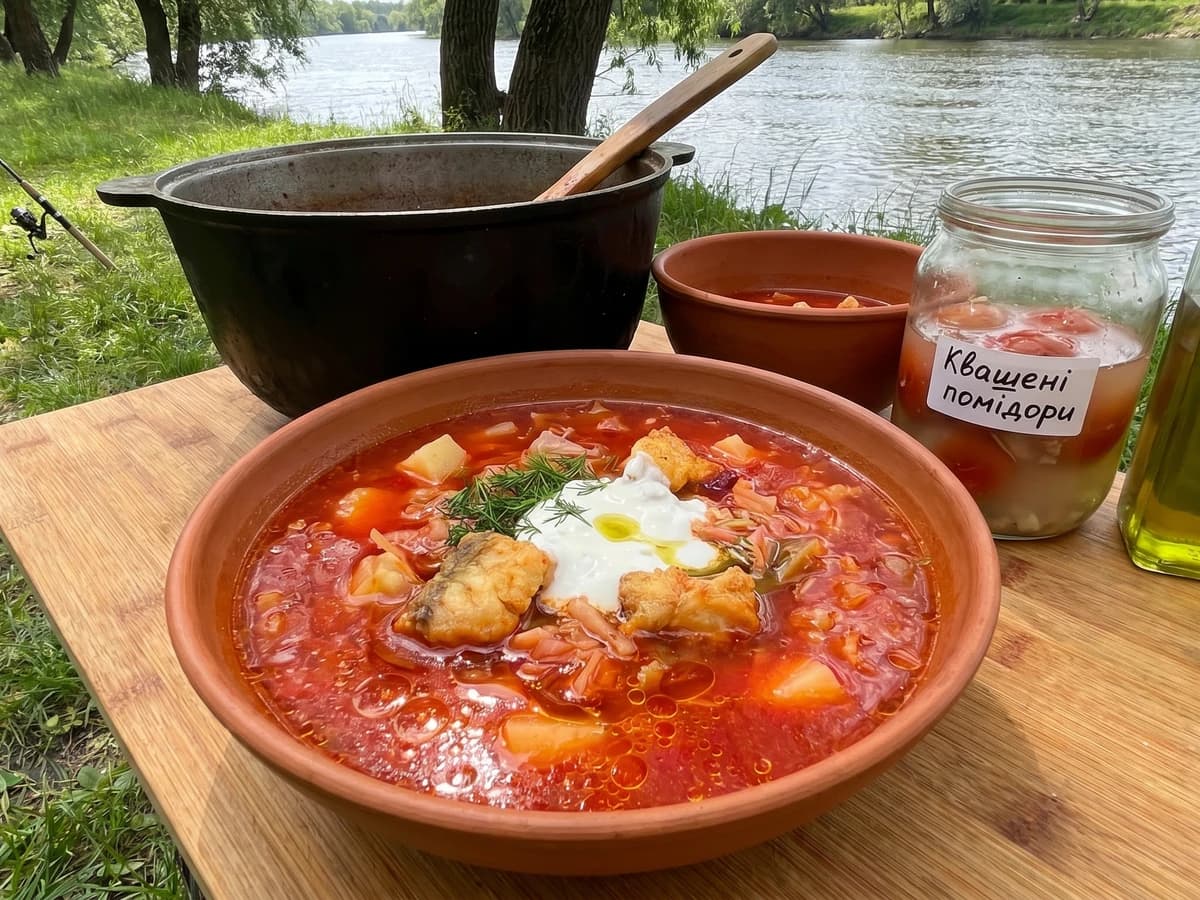
The catch goes into the pan before it ever meets the pot, so Danube fish stays whole in a tomato-red broth sour enough to wake the table.
A cooking platform built around craft, culture, and the stories behind what we eat.
Created by
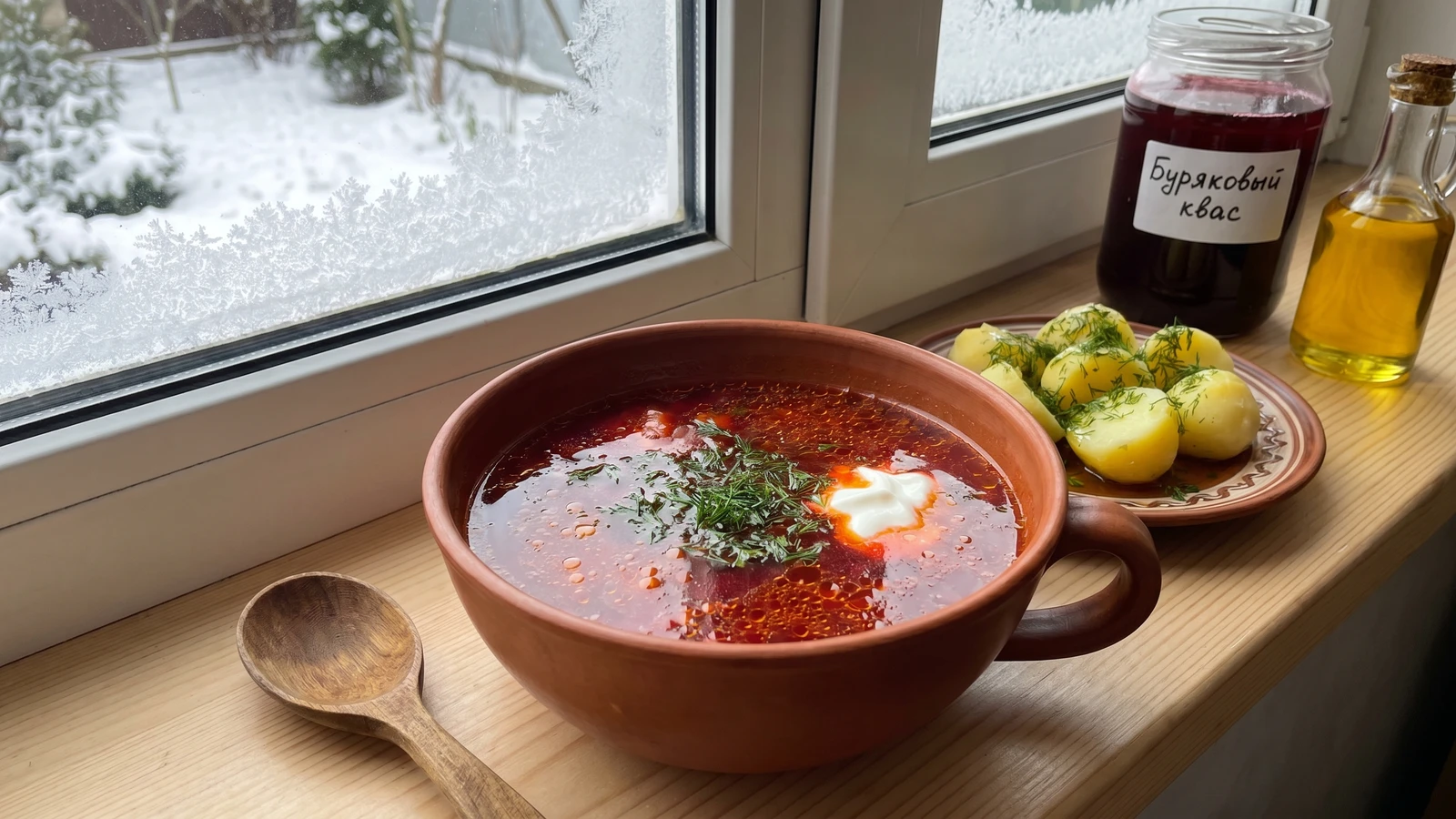
This western borshch is not thick. It is ruby-clear, sour from beet kvass, sweet from slow roots, and clean enough that people in Halychyna drink it as much as eat it.
The first surprise is the clarity. Not thinness, clarity. Halytskyi borshch should shine dark ruby in the ladle, sharp with beet kvass, sweet from roasted roots, and clean enough to drink from a cup while the potatoes wait on a separate plate with dill and sunflower oil.
This is western Ukrainian borshch, from Halychyna, and it has its own manners. No cabbage here. No spoon standing straight today. The strength comes from a good broth, beets cooked until the smell changes from raw earth to warm sweetness, and beet kvass, buriachkovyi kvas, stirred in late so the sourness stays alive instead of being boiled flat.
The one why that decides the pot is the zasmazhka, the slow-sweated onion and carrot. Add it near the end. Let its sweetness sit brightly on the broth, with little orange beads of fat on the surface; add it early and it disappears into the stock, polite and lost. Aunt Nadia would have written, "until it sounds right," and here that means a quiet pot, not a storm.
Make a big pot anyway. Clear borshch is still borshch, and leftovers grow deeper overnight, once the kvass and the roasted beets have stopped arguing.
Halytskyi borshch belongs to Halychyna, the western Ukrainian region around Lviv, Ternopil, and Ivano-Frankivsk, where clear beet borshch is often soured with fermented beet kvass and served with potatoes or mushroom vushka. The style reflects a borderland kitchen shaped by Ukrainian village cooking, Jewish markets, Polish neighbors, and the old Austro-Hungarian city table, but the sour beet base remains recognizably Ukrainian. Unlike the cabbage-rich central and southern pots, this version values a clean broth and fermented sourness, which is why the west drinks it as much as eats it.
Quantity
1.2 kg
Quantity
3 litres
Quantity
2
Quantity
8
Quantity
1 large
halved
Quantity
1
Quantity
1 kg
scrubbed, tails left on
Quantity
2 tablespoons
Quantity
1 large
finely diced
Quantity
1 large
coarsely grated
Quantity
2 tablespoons tomato paste or 150ml mors
Quantity
600ml, plus more to taste
Quantity
2 cloves
crushed with salt
Quantity
1 tablespoon
Quantity
to taste
Quantity
1 large bunch
finely chopped
Quantity
to serve
Quantity
to serve
| Ingredient | Quantity |
|---|---|
| beef short ribs or beef shin on the bone | 1.2 kg |
| cold water | 3 litres |
| bay leaves | 2 |
| black peppercorns | 8 |
| onion for the brothhalved | 1 large |
| celery stalk or parsley root (optional) | 1 |
| red beetsscrubbed, tails left on | 1 kg |
| unrefined sunflower oil | 2 tablespoons |
| onionfinely diced | 1 large |
| carrotcoarsely grated | 1 large |
| tomato paste or fermented tomato mors | 2 tablespoons tomato paste or 150ml mors |
| beet kvass | 600ml, plus more to taste |
| garliccrushed with salt | 2 cloves |
| sugar (optional) | 1 tablespoon |
| sea salt and black pepper | to taste |
| dillfinely chopped | 1 large bunch |
| smetana (optional) | to serve |
| boiled potatoes with dill and sunflower oil | to serve |
Put the beef bones in a large pot with the cold water and bring it up slowly. Skim the grey foam as it rises, then add the bay leaves, peppercorns, halved onion, and celery or parsley root if you're using it. Keep the pot at the barest tremble until the broth smells sweet and meaty, not raw, and the meat loosens when you pull at it with a fork.
While the broth cooks, wrap the whole beets in foil or place them in a covered dish and roast at 200C until a knife slides in without a fight. Keep the tails on so the color stays inside. When they are cool enough to handle, slip off the skins and grate them coarse; they should smell sweet and dark, like warm earth after rain.
Lift the meat and bones from the broth, then strain the liquid through a fine sieve into a clean pot. Pull the meat into bite-size pieces and keep it for serving or for another meal, depending how clear and light you want the bowl. Taste the broth now and salt it cautiously, because the beet kvass will bring its own salt and sourness.
Warm the sunflower oil in a wide pan and add the diced onion. Let it go soft and translucent before the carrot joins it, then cook slowly until the carrot relaxes and the oil turns orange. Stir in the tomato paste or fermented tomato mors and cook until the raw tomato smell disappears.
Add the grated beets to the strained broth and let them steep at a very gentle simmer until the liquid turns deep ruby. The pot should murmur, not shout. If the beets taste flat, add the spoon of sugar; if they are naturally sweet, leave it alone.
Stir in the zasmazhka, then pour in the beet kvass. Bring the pot only back to a tremble and stop there; boiling hard after the kvass goes in dulls the sourness and muddies the color. Taste for the balance of sweet, sour, and salt, then add more kvass by the splash until your mouth wakes up.
Stir in the crushed garlic and most of the dill, then take the pot off the heat and let it stand. The surface should be glossy, with little orange beads from the zasmazhka and a clean beet-crimson broth underneath. Serve in deep bowls or cups, with smetana if you like, and boiled potatoes dressed with dill and unrefined sunflower oil on the side.
1 serving (about 760g)
Culinary guides, cultural storytelling, and the editorial depth that makes cooking meaningful.
Discover Culinary ExplorerChef Lesia
The catch goes into the pan before it ever meets the pot, so Danube fish stays whole in a tomato-red broth sour enough to wake the table.

Chef Lesia
The fish leaves the pot before the soup reaches the table: broth in the bowl, river fish on a platter, garlic salamur waiting to wake both.

Chef Lesia
Brick-red paprika blooms in bacon fat, beef darkens at the edges, and potatoes thicken the cauldron until it stands between soup and stew. This is comfort with a fire under it.
Chef Lesia
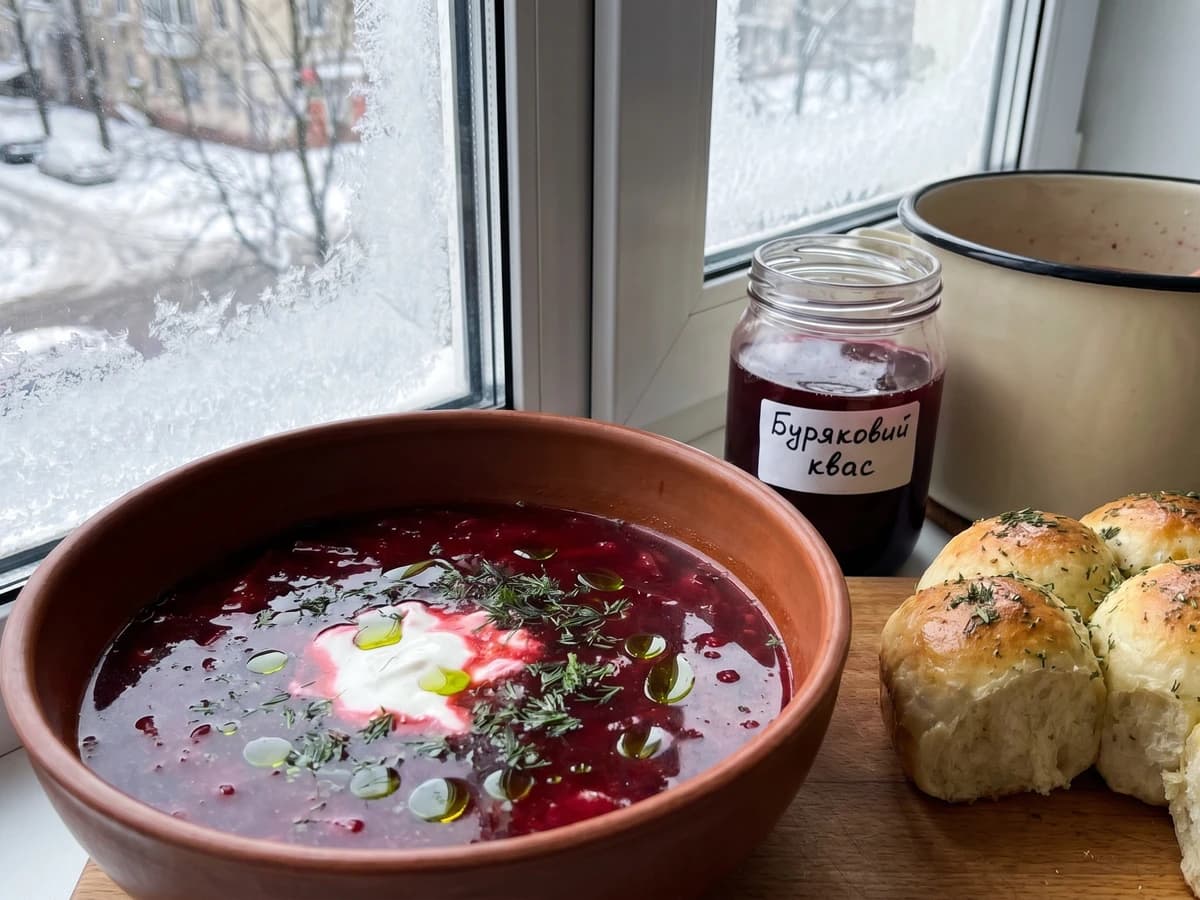
Beets hit slow-sweated zasmazhka and the broth goes dark ruby, sour from beet zakwas, sweet from bone and garden, thick enough for the spoon to stand up straight.