
Chef Freja
Andelår med Rødkål
Slow-roasted duck legs with crisp, deeply golden skin, served with braised red cabbage and caramelized potatoes. The weeknight Danish duck that proves the best part of the bird is the one that takes its time.
A cooking platform built around craft, culture, and the stories behind what we eat.
Created by Chef Freja
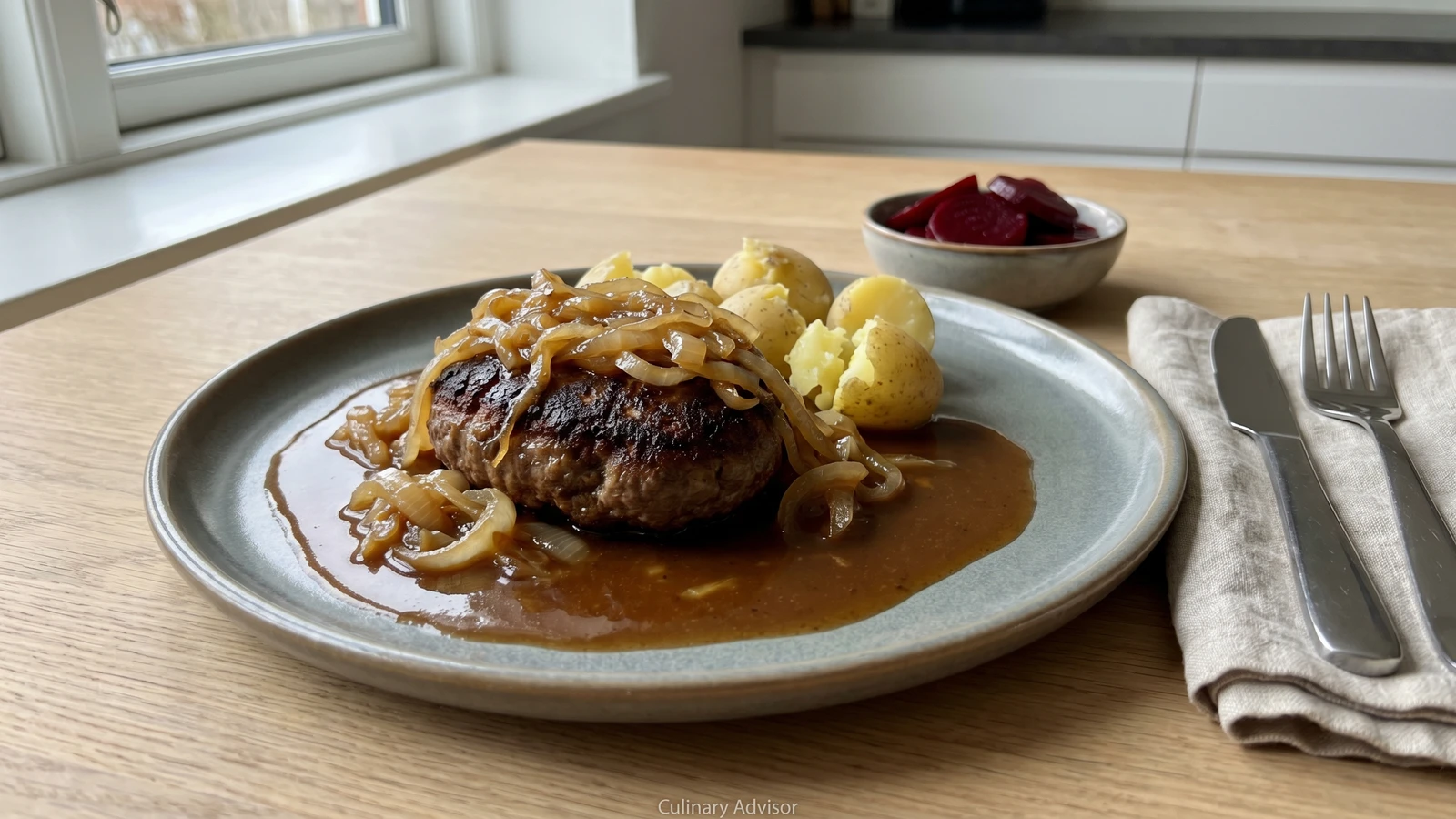
Pan-seared Danish beef patties buried under a mountain of slow-cooked golden onions and proper brown gravy. The Tuesday evening dinner that every Dane remembers from childhood and never stops making.
Every country has a Tuesday dinner. A dish nobody writes poems about, nobody photographs for magazines, nobody puts on a restaurant menu. In Denmark, that dish is hakkebøf med bløde løg. Beef patties with soft onions. It sounds like nothing. It tastes like home.
The patties themselves are modest: good ground beef, an egg, a little flour and cold water to keep them tender. You shape them into ovals, not rounds, because the wider shape gives you more crust, and the crust is everything. They go into a hot pan with butter and oil and they don't move until the underside is dark and firm. Then you flip once. That's it.
But the dish lives or dies with the onions. Four large onions, sliced thin and cooked slowly in butter for half an hour until they collapse into something golden and sweet and barely recognisable as the sharp, eye-watering things you started with. Bløde løg. Soft onions. The name tells you what to aim for. If you rush them, you get fried onions, and fried onions are not this dish. Give them time. That patience is the entire recipe.
The gravy comes together in the same pan you fried the patties in, built on the dark fond that clings to the bottom. A spoon of flour, good stock, a dash of soy for colour and depth. Three minutes and you have a sauce that pulls everything together. Serve it with plain boiled potatoes and pickled beetroot if you like, and don't worry about presentation. This food wants to be eaten, not admired.
Hakkebøf, from the French haché meaning chopped or minced, entered the Danish kitchen vocabulary in the 19th century as butchers began selling pre-ground beef to working households who could not afford whole cuts. By the early 20th century it had become the most common weeknight dinner in Denmark, so universal that the word itself became shorthand for everyday home cooking. The bløde løg, slow-cooked soft onions, are the distinctly Danish addition that separates this from a simple fried patty. The tradition of adding a splash of dark soy sauce to the gravy, a technique that puzzles outsiders, dates from the 1950s when Kikkoman became widely available in Danish supermarkets and home cooks discovered it gave their brown sauces an unidentifiable savoury depth.
Quantity
500g
15-20% fat
Quantity
1
Quantity
2 tablespoons
Quantity
3 tablespoons
Quantity
1 teaspoon
Quantity
freshly ground, to taste
Quantity
4
halved and thinly sliced
Quantity
60g, divided
Quantity
1 tablespoon
Quantity
1 teaspoon
Quantity
1 tablespoon
Quantity
300ml
Quantity
1 tablespoon
Quantity
to serve
Quantity
to serve
| Ingredient | Quantity |
|---|---|
| ground beef15-20% fat | 500g |
| egg | 1 |
| plain flour (for the patties) | 2 tablespoons |
| cold water | 3 tablespoons |
| fine sea salt | 1 teaspoon |
| black pepper | freshly ground, to taste |
| large yellow onionshalved and thinly sliced | 4 |
| unsalted butter | 60g, divided |
| neutral oil | 1 tablespoon |
| caster sugar | 1 teaspoon |
| plain flour (for the gravy) | 1 tablespoon |
| beef stock | 300ml |
| dark soy sauce | 1 tablespoon |
| boiled potatoes | to serve |
| pickled beetroot (optional) | to serve |
Melt 30g of the butter in a wide, heavy pan over medium heat. Add all the sliced onions, a pinch of salt, and the teaspoon of sugar. Stir everything through the butter, then lower the heat. The sugar is not there to make the onions sweet. It helps them release their moisture and begin to caramelize evenly. Cook for twenty-five to thirty minutes, stirring now and then, until the onions are completely soft, golden, and collapsed to a fraction of their original volume. Do not rush this. High heat gives you fried onions, which are a different thing entirely. Bløde løg means soft onions, and soft is what you want.
While the onions cook, combine the ground beef, egg, flour, cold water, salt, and a good grinding of black pepper in a bowl. Mix with your hands until just combined. The flour and water give the patties a softer, more tender interior. Without them, the beef tightens as it cooks and you end up with something tough and dry. Don't overwork the mixture. As soon as it holds together, stop.
Divide the mixture into four equal portions. Wet your hands and shape each one into an oval patty about two centimetres thick. Hakkebøf are not round like hamburgers. They're oval, slightly flattened, and wider than you'd think. The shape gives you more surface area for the crust, and the crust is where the flavour concentrates. Set them on a plate and let them rest while you check the onions.
When the onions are done, transfer them to a bowl and cover to keep warm. Wipe the pan clean and return it to high heat. Add the remaining 30g of butter and the oil. When the butter foams and the foam begins to subside, lay the patties in the pan. Do not move them. Let them cook undisturbed for three to four minutes until a deep brown crust forms on the underside. Flip once and cook for another three minutes. The crust should be dark and firm, the centre still slightly pink. That's a hakkebøf cooked with respect for the meat.
Transfer the patties to a warm plate and tent loosely with foil. The pan will be dark with fond, the caramelized meat residue stuck to the surface. That is not mess. That is flavour. Lower the heat to medium, sprinkle in the tablespoon of flour, and stir it into the fat for thirty seconds. It will smell nutty and toasted. Pour in the beef stock in a steady stream, scraping the bottom of the pan with a wooden spoon to lift every scrap of fond. Add the soy sauce. The soy is an old Danish kitchen trick, not for saltiness but for the deep colour and savoury depth it gives without tasting of anything you can identify. Simmer for three to four minutes until the gravy thickens enough to coat the back of a spoon.
Place each hakkebøf on a warm plate. Spoon the soft onions generously over the top, letting them drape across the patty and onto the plate. Pour the gravy around and over. Serve with plain boiled potatoes, the kind that have been cooked in salted water until they break at the edges, and pickled beetroot on the side if you like. This is not a dish that needs garnish or arrangement. It needs to be hot, generous, and on the table while the gravy is still moving. Tak for mad.
1 serving (about 300g)
Culinary guides, cultural storytelling, and the editorial depth that makes cooking meaningful.
Discover Culinary ExplorerChef Freja
Slow-roasted duck legs with crisp, deeply golden skin, served with braised red cabbage and caramelized potatoes. The weeknight Danish duck that proves the best part of the bird is the one that takes its time.

Chef Freja
The whole roasted duck of juleaften, stuffed with tart apples and dark prunes, slow-roasted for four patient hours until the skin crackles like something earned and the meat underneath gives way without resistance.
Chef Freja
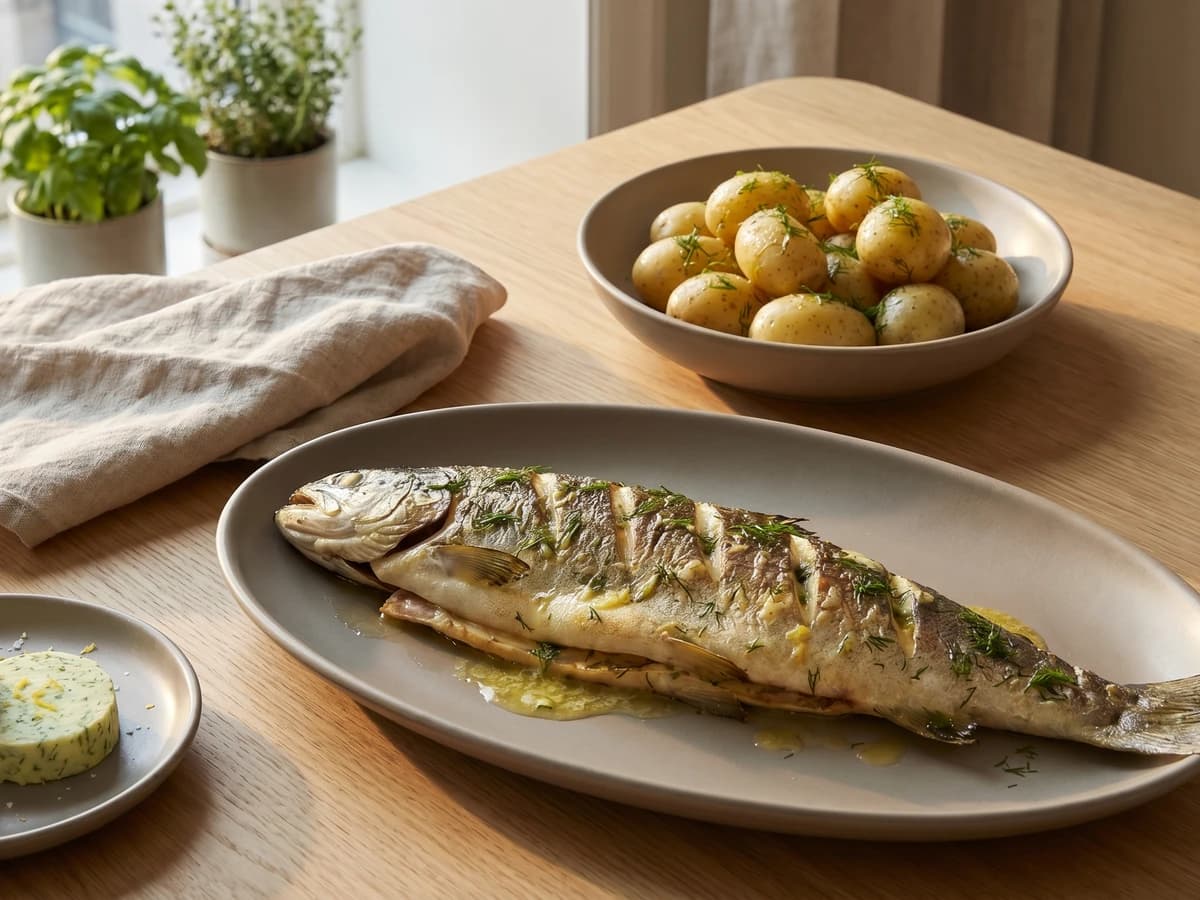
Whole sea trout baked with butter, lemon, and armfuls of dill, served beside the first nye kartofler of the season and a melting slab of dildsmor. The Danish summer table at its most generous.
Chef Freja
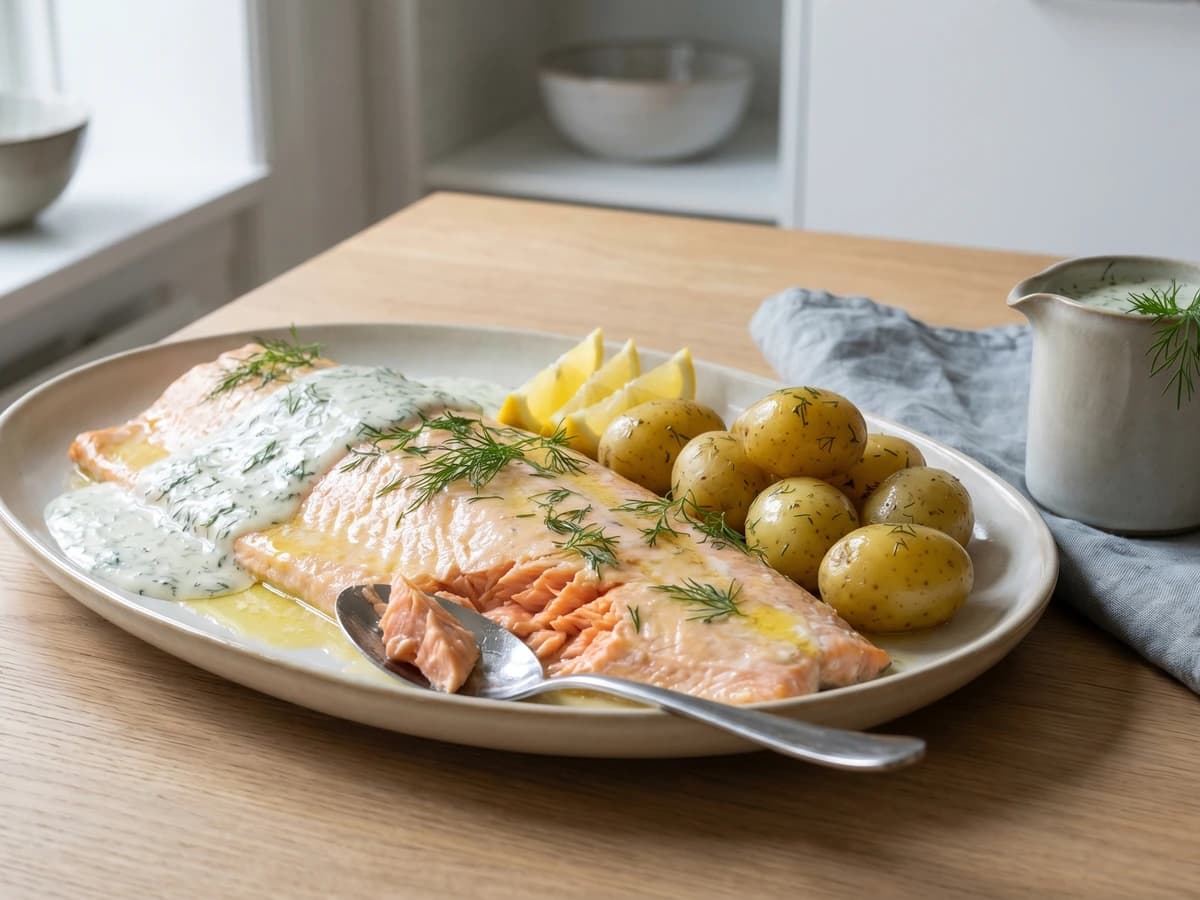
A side of salmon baked gently in butter and white wine, served warm with a bright dill cream sauce and the season's first nye kartofler. Late spring on a Danish table, cooked with love.