Chef Freja
Aebleflaesk
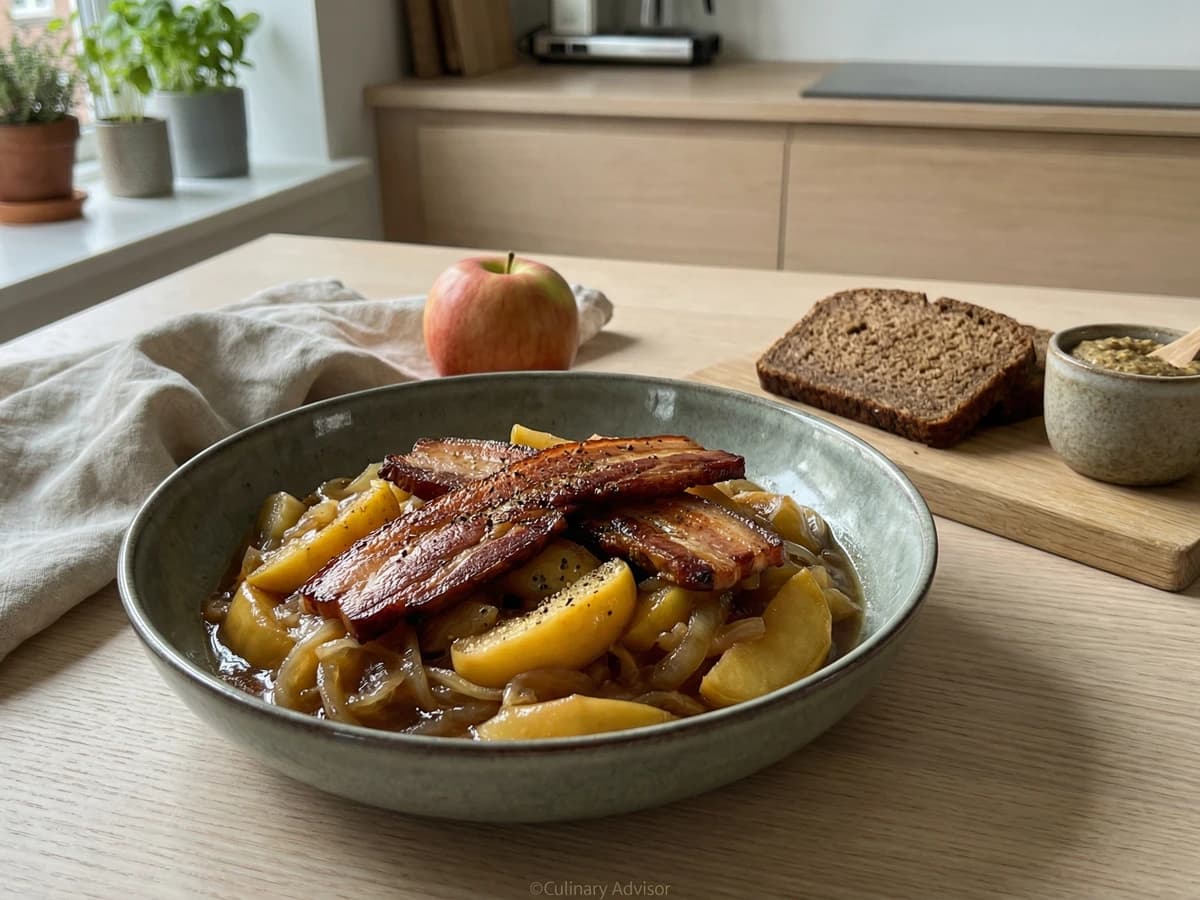
The Fyn autumn supper where thick pork belly renders slowly into its own fat, then meets apples and onions that cook down into a deep amber tangle. Sweet, salt, and the oldest pairing in the Danish larder.
A cooking platform built around craft, culture, and the stories behind what we eat.
Created by Chef Freja
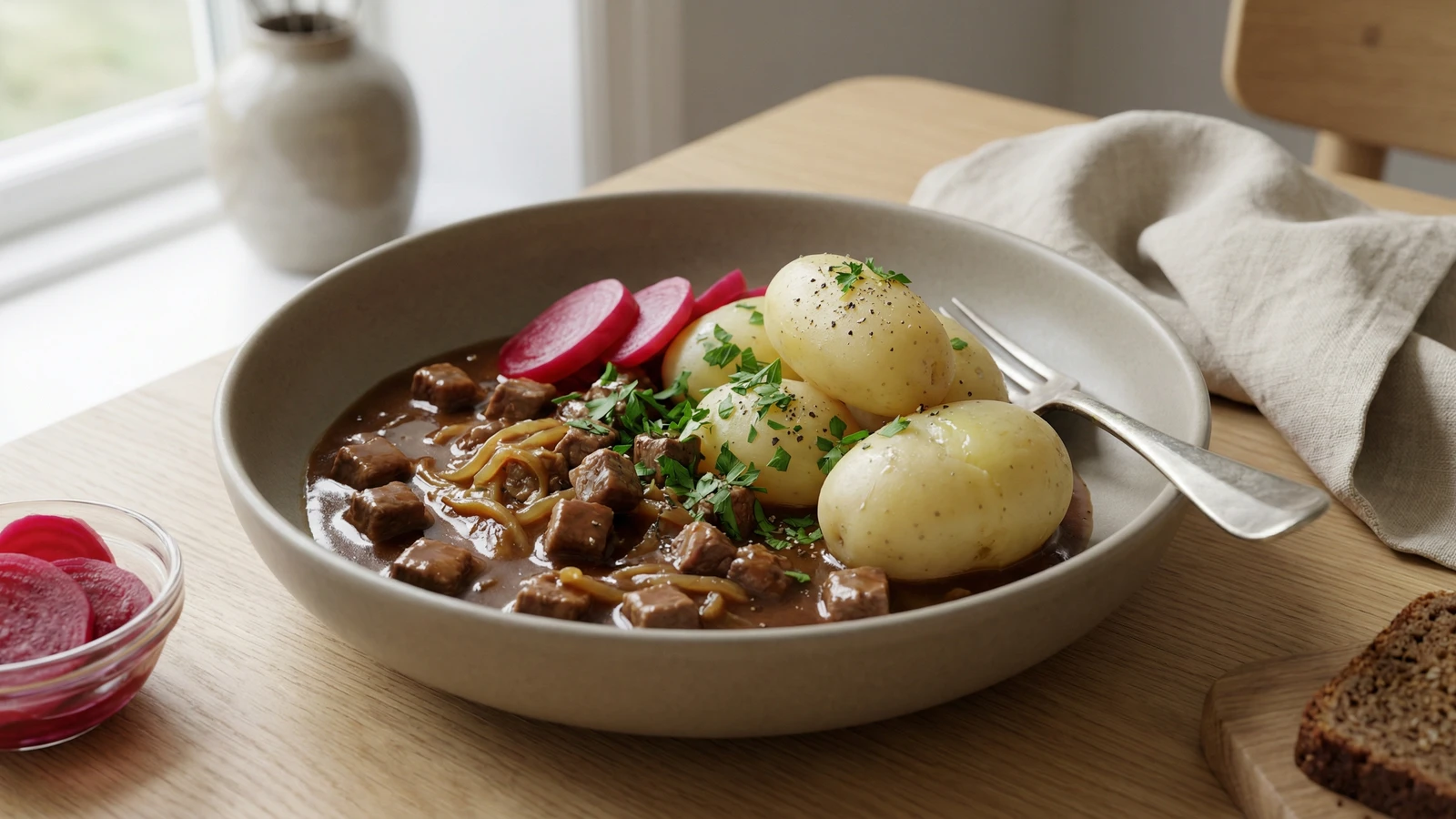
The Danish art of the leftover: Sunday's roast finely diced and simmered with caramelized onions in a rich brown gravy, served with boiled potatoes and the bright pink shock of pickled beets.
Monday evening in a Danish kitchen has a particular rhythm. Sunday's roast is still in the fridge, wrapped in foil, and the question isn't whether to use it but how. This is where hachis comes in. Not a rustic hash thrown together in a pan, but something more considered: the meat finely diced, the onions cooked slow and golden, the whole thing brought together in a proper brown gravy. It's the kind of dish that turns the honest thrift of leftovers into dinner you actually look forward to.
Hachis belongs to the quiet tradition of Danish home cooking where nothing is wasted and everything is given its due. It's weeknight food, yes, but weeknight food with care in it. The difference between this and biksemad, the more rustic Danish hash, is the gravy. Biksemad is everything fried together until crisp. Hachis holds the meat in a silky brown sauce that carries the flavor of the onions and the memory of the roast, and it's served with the calm dignity of boiled potatoes and pickled beets on the side.
There are two moments I want you to pay attention to. The first is the onions. Give them twenty minutes over low heat. They need to go soft and deeply golden, never browned hard, because everything the gravy becomes starts there. The second is when the meat goes into the sauce at the end. Keep the heat low. The meat is already cooked, and your only job is to warm it through gently without tightening it. Boil it and the texture goes stringy. Barely simmer it and it stays tender and glossy and exactly what you want on a fork next to a waxy potato. Cooked with love, and the leftover becomes the main event.
The word hachis comes from the French hacher, to chop, and entered the Danish kitchen during the 1800s when French culinary terminology swept through middle-class European households and reshaped how they cooked and named their food. Danish cookbooks of the late nineteenth century, most notably Frøken Jensens Kogebog of 1901, codified hachis as the proper Monday dinner, the refined counterpart to the more rustic biksemad. The distinction still matters to Danish cooks today: biksemad is fried until crisp, hachis is held in gravy, and the two are never confused in a kitchen that knows what it's doing.
Quantity
500g
finely diced, about 5mm cubes
Quantity
2 large
finely sliced
Quantity
60g
Quantity
2 tablespoons
Quantity
500ml
Quantity
2 tablespoons
Quantity
1 teaspoon
Quantity
1
Quantity
to taste
Quantity
freshly ground, to taste
Quantity
small handful
finely chopped
Quantity
800g
peeled, to serve
Quantity
to serve
sliced
| Ingredient | Quantity |
|---|---|
| cooked roast meat (beef, pork, or veal)finely diced, about 5mm cubes | 500g |
| yellow onionsfinely sliced | 2 large |
| unsalted butter | 60g |
| plain flour | 2 tablespoons |
| beef stock | 500ml |
| Madeira or dry sherry (optional) | 2 tablespoons |
| kulør (Danish gravy browning) or dark soy sauce | 1 teaspoon |
| bay leaf | 1 |
| fine sea salt | to taste |
| black pepper | freshly ground, to taste |
| flat-leaf parsleyfinely chopped | small handful |
| waxy potatoespeeled, to serve | 800g |
| pickled beetrootsliced | to serve |
Take your leftover roast and trim away any dry edges or heavy fat. Dice the meat into small, even cubes, about 5mm across. Even is the word that matters. If the pieces are different sizes, some will dry out in the gravy while others stay cold in the middle. Set the meat aside at room temperature while you build the sauce. Cold meat from the fridge will drop the temperature of the gravy the moment it goes in.
Melt half the butter in a heavy pan over medium-low heat. Add the sliced onions with a small pinch of salt and stir them through the butter. Now give them time. Twenty minutes, maybe a little more, stirring every few minutes. You want them soft, deeply golden, and sweet, not brown and bitter. The patience here is what carries the whole dish. Danish home cooks call this the part where you trust the heat and leave the onions alone, and they're right. Rushing the onions is the most common mistake in hachis.
Push the caramelized onions to one side of the pan and add the rest of the butter to the empty space. Let it melt, then sprinkle the flour over it and stir. Cook the flour in the butter for a full minute, stirring constantly, until it smells nutty and turns the color of pale toast. This is a proper brun sovs, a Danish brown sauce, and the flour needs this moment to lose its raw taste. Skip it and the gravy tastes flat.
Pour in the stock slowly, a little at a time, stirring the whole pan together as you go. The flour will thicken the liquid into a smooth, glossy gravy. Add the Madeira, the kulør or dark soy, and the bay leaf. Bring everything to a gentle simmer and let it cook for five minutes so the flavors come together. The gravy should coat the back of a spoon. If it's too thick, loosen it with a splash more stock. If it's too thin, let it reduce another minute or two.
Turn the heat right down. Add the diced meat to the gravy and stir gently to coat every piece. This is the most important moment of the whole recipe: you are warming the meat, not cooking it. The roast is already cooked. If you let the gravy boil hard now, the meat will tighten and go dry and stringy. Keep the pan at the lowest tremble of a simmer for five minutes, just until everything is hot through. You'll know when it's right because the meat will have taken on the color of the gravy and the kitchen will smell of onions and beef and butter.
While the gravy simmers, boil the potatoes in salted water until a knife slides through them cleanly, about fifteen to twenty minutes depending on size. Waxy potatoes are the right choice here. They hold their shape next to the gravy instead of breaking into the sauce. Drain them well and keep them warm.
Fish out the bay leaf. Taste the gravy and adjust the seasoning. Leftover roast is often already well-seasoned, so the hachis may need less salt than you think. Grind in plenty of black pepper. Stir through most of the chopped parsley, keeping a little back for the top.
Spoon the hachis into warm, shallow bowls. Place the boiled potatoes alongside so the gravy can pool around them. Lay a few slices of pickled beetroot on the edge of each plate, the way Danish home cooks have always done it. The sharp sweetness of the beets cuts through the richness of the gravy and wakes everything up. Scatter the last of the parsley over the top. Tak for mad.
1 serving (about 520g)
Culinary guides, cultural storytelling, and the editorial depth that makes cooking meaningful.
Discover Culinary ExplorerChef Freja
The Fyn autumn supper where thick pork belly renders slowly into its own fat, then meets apples and onions that cook down into a deep amber tangle. Sweet, salt, and the oldest pairing in the Danish larder.

Chef Freja
Warm Danish apple soup for the first cool evenings of autumn. Tart apples simmered with cinnamon and lemon peel, thickened to a soft gloss, and served with cold cream and buttery toasted oats.

Chef Freja
Danish white asparagus velouté with tiny veal meatballs, flour dumplings, and bright green tips scattered on the surface. The Easter soup of Copenhagen, built from five small pans of spring.
Chef Freja
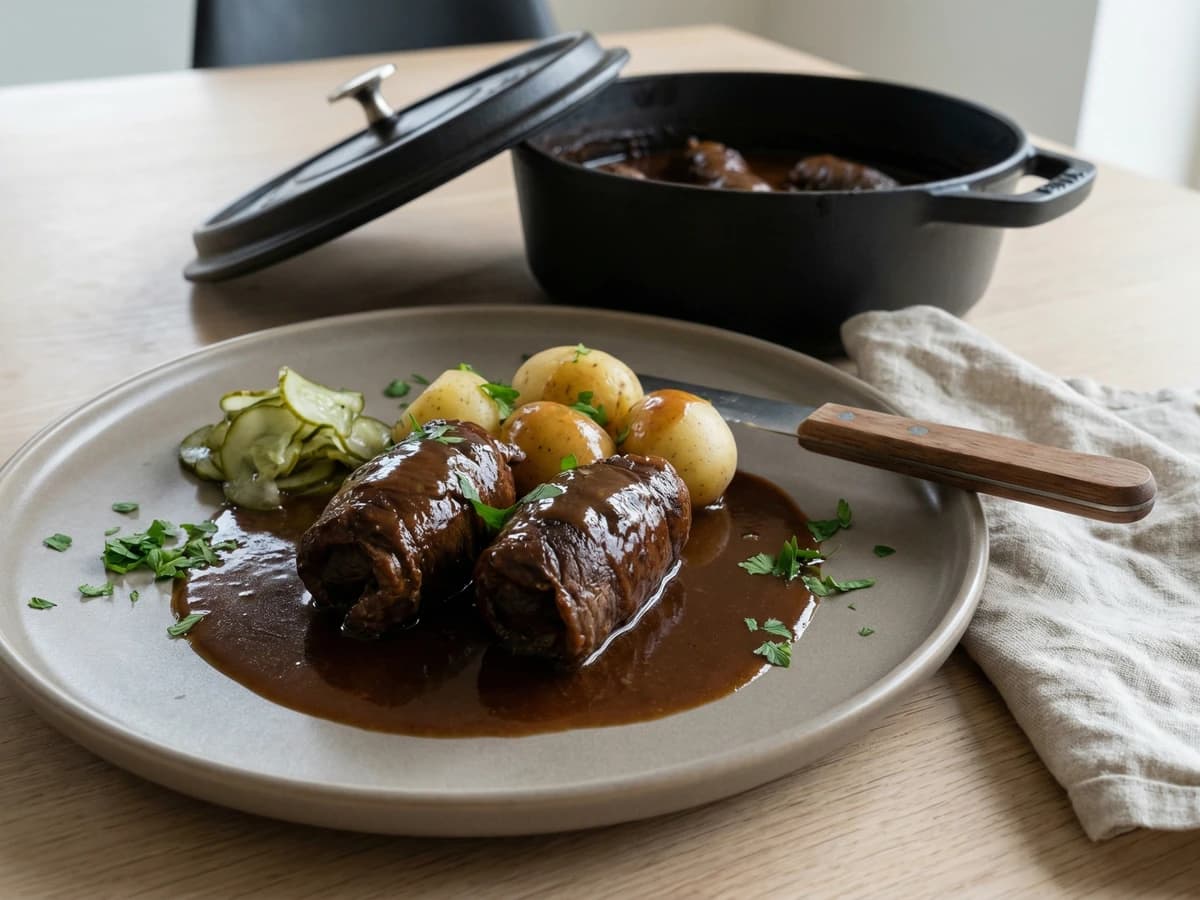
Thin beef slices rolled around bacon and onion, tied with string, and braised slowly in a dark glossy gravy finished with cream and redcurrant jelly. Danish Sunday dinner at its most comforting.