
Chef Makoa
Ahimaʻa Puaʻa (Tahitian Earth-Oven Pork)
Tahitian puaʻa cooked in the spirit of the ahimaʻa, the earth oven of maʻa Tahiti, wrapped in banana leaf and held low and slow until the meat gives in two fingers.
A cooking platform built around craft, culture, and the stories behind what we eat.
Created by
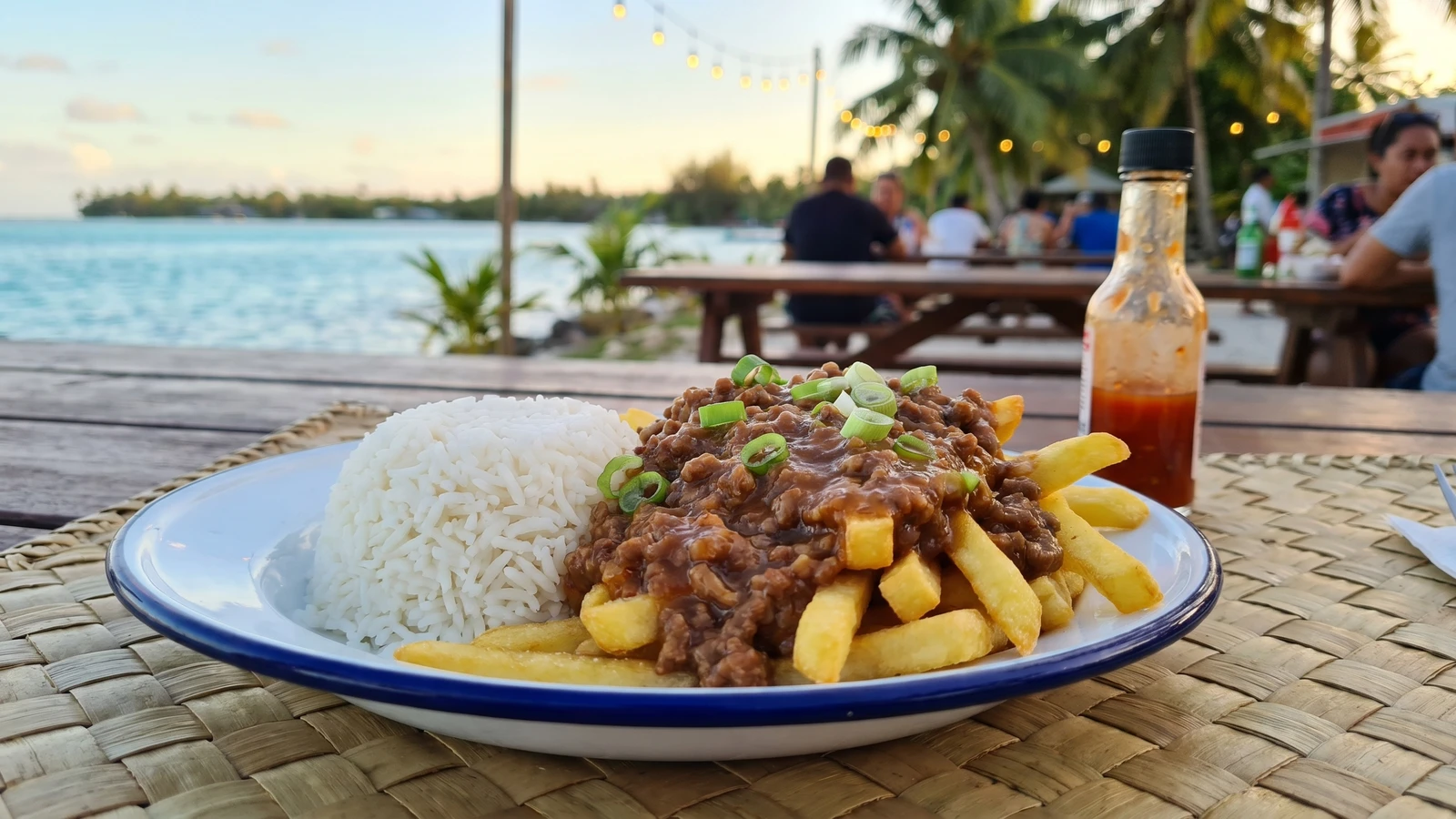
A Tahitian roulotte plate from Papeʻete nights: savory minced beef, crisp fries, and white rice piled big, French casse-croûte comfort carried into island appetite.
The table in Tahiti has the old canoe foods on it, ʻuru, the breadfruit, taro, fish, coconut, and it also has the food people actually buy after work under the lights of a roulotte. That matters too. Hachis frites belongs to Tahiti's everyday hand, the supper plate you find around Papeʻete when the night is warm and nobody wants to make a sermon out of dinner.
This is not the deep ceremonial table like an ahimaʻa, the Tahitian earth oven, and I don't dress it up like that. It comes from another part of the island's life: French words, local appetite, rice on the plate, fries because people love fries, minced beef stretched with onion and a little sauce until it feeds more than you thought. Eat what you have. That's not lesser food. That's family getting through the week.
Across the Triangle, every island has this kind of practical comfort. Hawaiʻi has plate lunch and loco moco, Sāmoa has sapasui, Tonga has corned beef and rice, Tahiti has the casse-croûte and the roulotte plate. Same ocean, different counter. Make the rice soft, keep the fries crisp, cook the beef until it turns glossy and savory, then pile it high enough that one more cousin can sit down.
Hachis frites shows the French presence in Tahiti in plain language: hachis means minced meat and frites means fries, but the plate became Tahitian through the way it is served, generously, often from snacks and roulottes in Papeʻete, with rice alongside. This is post-contact everyday food, not pre-contact deep food, and it sits honestly beside ʻuru, taro, coconut, and fish on the modern Tahitian table. Like plate lunch in Hawaiʻi or sapasui in Sāmoa, it tells the truth that island foodways kept moving after empire, trade, migration, and wage work changed the pantry.
Quantity
1 1/2 pounds
80 to 85 percent lean
Quantity
1 tablespoon
Quantity
1 large
finely diced
Quantity
3 cloves
minced
Quantity
1 small
finely diced or grated
Quantity
1 tablespoon
Quantity
2 tablespoons
Quantity
1 tablespoon
Quantity
1 cup
Quantity
1 teaspoon cornstarch mixed with 1 tablespoon water
Quantity
to taste
Quantity
to taste
Quantity
1 1/2 pounds
frozen or fresh-cut
Quantity
3 cups
Quantity
2
thinly sliced
Quantity
for serving
| Ingredient | Quantity |
|---|---|
| ground beef80 to 85 percent lean | 1 1/2 pounds |
| neutral oil | 1 tablespoon |
| yellow onionfinely diced | 1 large |
| garlicminced | 3 cloves |
| carrotfinely diced or grated | 1 small |
| tomato paste | 1 tablespoon |
| soy sauce | 2 tablespoons |
| Worcestershire sauce | 1 tablespoon |
| beef stock or water | 1 cup |
| cornstarch slurry (optional) | 1 teaspoon cornstarch mixed with 1 tablespoon water |
| sea salt | to taste |
| black pepper | to taste |
| friesfrozen or fresh-cut | 1 1/2 pounds |
| cooked white rice | 3 cups |
| green onionsthinly sliced | 2 |
| ketchup, mayonnaise, or chili sauce (optional) | for serving |
Cook the white rice first, because the plate wants a soft landing under all that beef and fries. Keep it warm and covered. Tahiti's hachis frites is generous food, so don't make the rice precious. It is there to catch every bit of sauce.
Bake, air-fry, or fry the potatoes until the edges are crisp and the centers are soft. Salt them while they are hot so the salt sticks. You want enough crunch to stand up under the hachis, because limp fries go sad fast under sauce.
Heat the oil in a wide skillet over medium-high heat, add the ground beef, and spread it out so it browns before it stews. Let the bottom take color, then break it into small pieces. Cook until the meat is no longer pink and the pan smells savory, not raw.
Add the onion, garlic, and carrot to the beef. Cook, stirring, until the onion turns soft and glossy and the carrot disappears into the meat. Stir in the tomato paste and let it darken against the pan for a minute. That little bit of roasting gives the hachis its backbone.
Stir in the soy sauce, Worcestershire, and beef stock or water, scraping the browned bits from the pan. Simmer 8 to 10 minutes, until the liquid reduces into a glossy coating around the minced beef. If you want it thicker, stir in the cornstarch slurry and simmer one more minute. Taste for salt and pepper only at the end, because the sauces already bring salt.
Spoon warm rice onto each plate, heap the crisp fries beside it or partly over it, then ladle the glossy hachis over the fries. Scatter green onion on top if you like the bite. Put ketchup, mayonnaise, or chili sauce on the table and let people finish their own plate. That's how everyday food stays alive.
1 serving (about 560g)
Culinary guides, cultural storytelling, and the editorial depth that makes cooking meaningful.
Discover Culinary ExplorerChef Makoa
Tahitian puaʻa cooked in the spirit of the ahimaʻa, the earth oven of maʻa Tahiti, wrapped in banana leaf and held low and slow until the meat gives in two fingers.
Chef Makoa
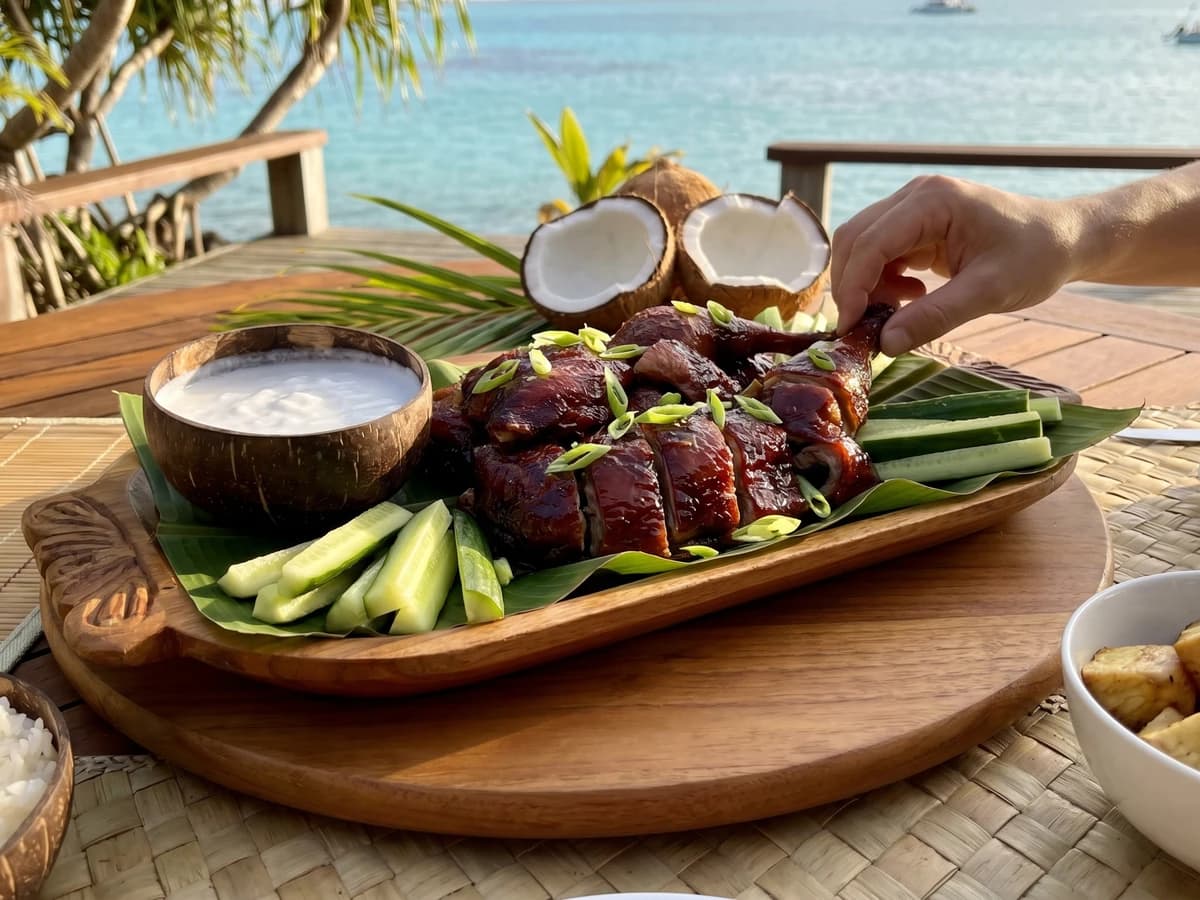
Glossy Chinese-Tahitian roast duck from Papeʻete, lacquered with soy, honey, and five-spice, carved for the lazy Susan, then dipped into thick fresh coconut milk beside rice, ʻuru, and a crowded table.
Chef Makoa
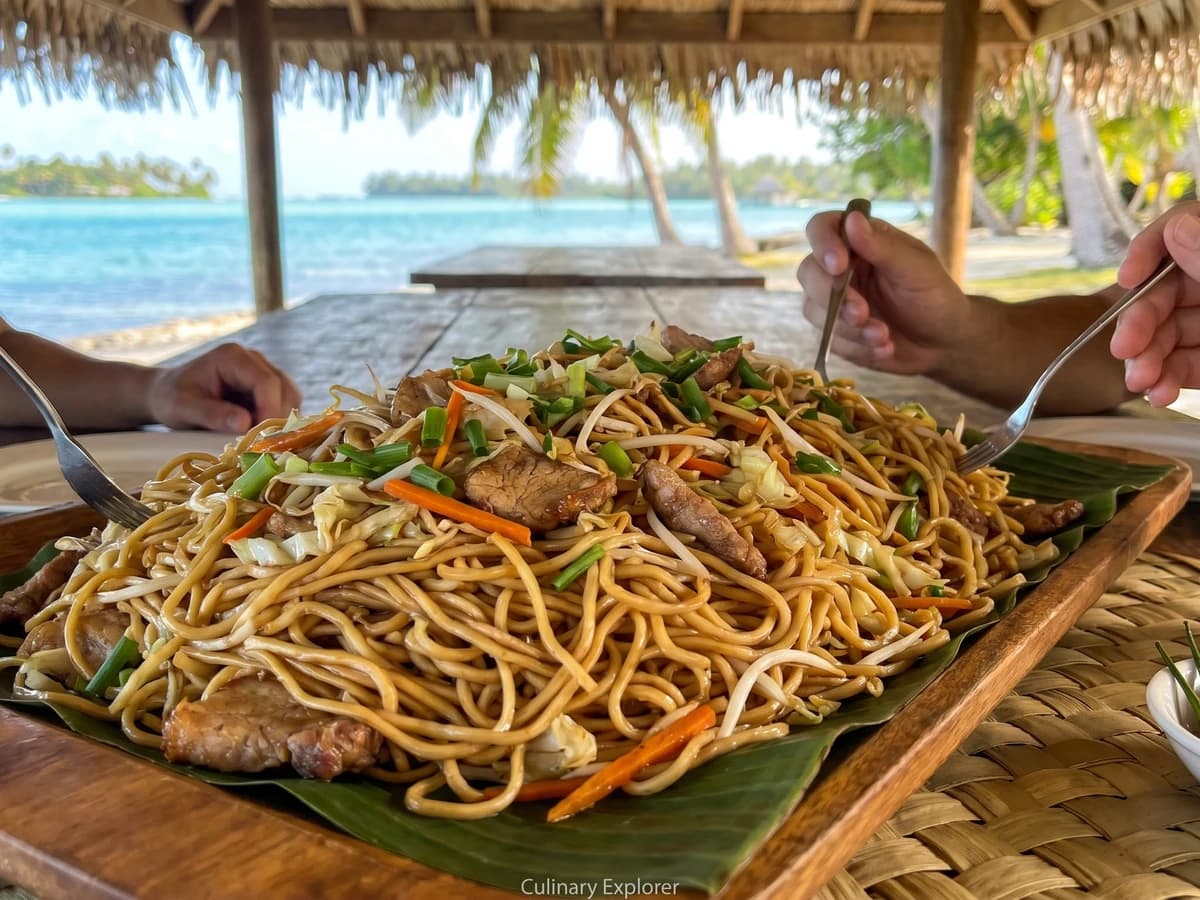
Tahiti's chao men is Hakka chow mein made fully local: glossy egg noodles, pork, cabbage, carrot, and green onion, fast from the wok and generous enough for the table.

Chef Makoa
Tahiti's fāfaru takes raw ʻahi into miti fāfaru, a pungent fermented seawater brine, then brings it back to the table with mitihue, breadfruit, and the lesson that good funk is food kept alive.