
Chef Takumi
Amerikan Doggu (アメリカンドッグ, corn dog)
A sausage on a stick, sweet batter, clean hot oil, and no cornmeal. Amerikan doggu is festival food made plain, with the batter thick enough to cling.
A cooking platform built around craft, culture, and the stories behind what we eat.
Created by
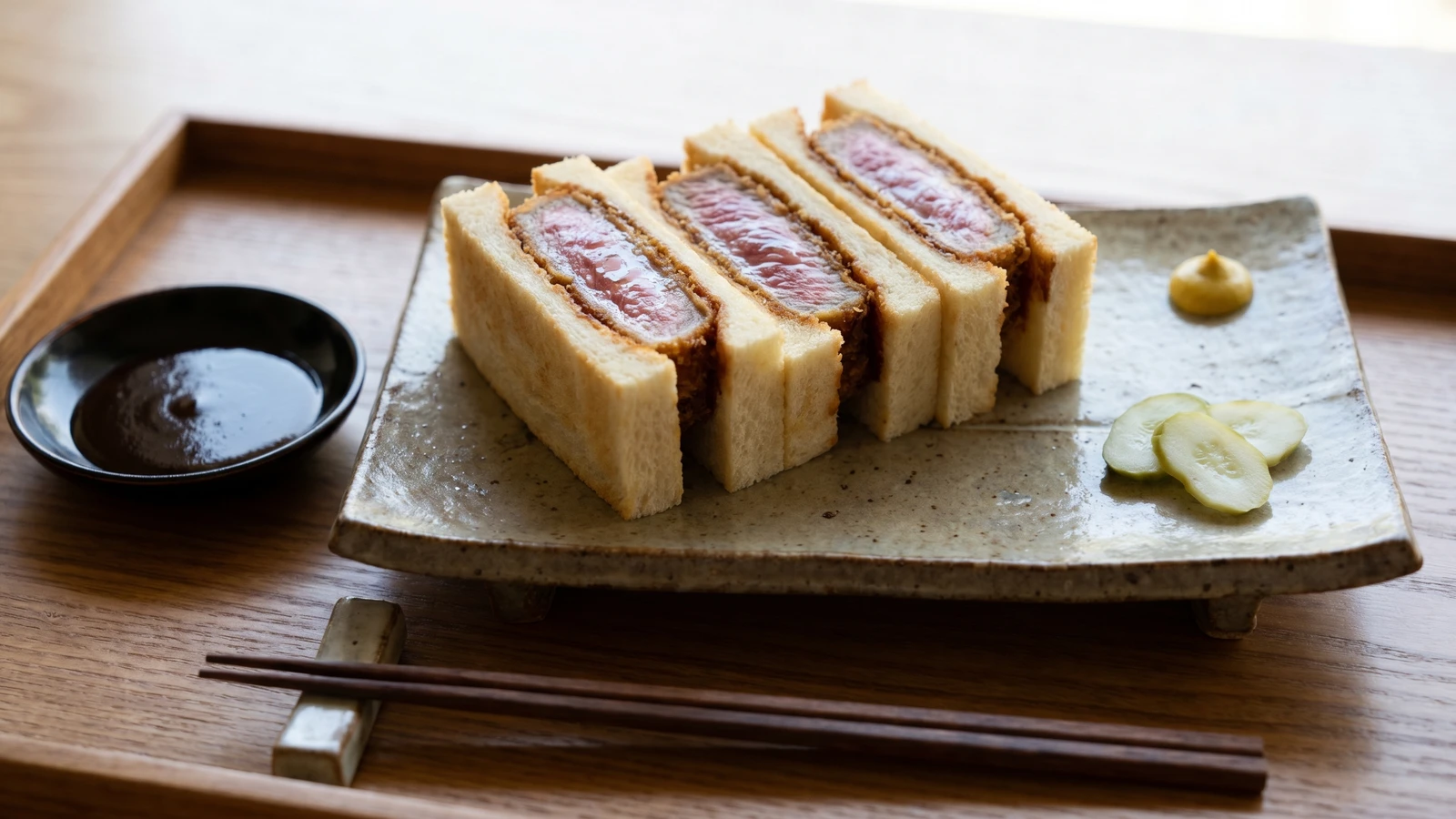
A gyū-katsu sando looks like a luxury trick. It isn't. Good beef, thin shokupan, sharp mustard, and a fast fry give you crisp crust and a pink, honest center.
The fear with gyū-katsu sando is the pink center. People look at the breaded cutlet, the neat square of shokupan, the clean slice showing beef still rosy, and decide this must belong to a specialist shop. It doesn't. The dish asks for one thing before technique: beef good enough to show plainly.
Sourcing comes first. Use a tender whole-muscle cut, not ground beef, and buy it from a butcher you trust. The sauce is not there to hide anything. It should sharpen the beef, not bury it. This is honmono when the crust is crisp, the meat is glistening fresh and gently warm inside, and the bread stays thin and sound around it.
The one detail that decides it is timing. The cutlet must be cold when it goes into hot oil, so the panko browns before the beef cooks through. Rest it before slicing, because the juices need a minute to settle or they will run straight into the bread, and then the sandwich turns soft where it should be clean. Butter protects the shokupan, mustard wakes the fat, and a measured line of sauce gives shape to the sweetness.
Serve it as we do with rich things: small, exact, and with room left around it. A gyū-katsu sando is not a pile of sandwiches. It is a few cut faces, arranged so the beef can be seen, the crust can be heard under the teeth, and the table stays calm.
Katsu sando grew from yōshoku, Japan's Western-style cooking, after katsuretsu, from the English word cutlet, entered restaurant cooking in the Meiji period. Pork tonkatsu became the common sandwich filling in the twentieth century, while beef cutlet sandwiches took on a more expensive character, especially in Kansai, where beef-centered food culture was strong. The gyū-katsu sando keeps that yōshoku lineage: Western bread and cutlet technique made into a distinctly Japanese portable dish.
Quantity
450g
2 to 2.5cm thick, trimmed
Quantity
1 teaspoon
Quantity
1/4 teaspoon
Quantity
1/2 cup
Quantity
1
beaten
Quantity
1 cup
Quantity
about 3 cups
for frying
Quantity
8 slices
crusts removed
Quantity
3 tablespoons
softened
Quantity
2 tablespoons
Quantity
1/4 cup
Quantity
1 teaspoon
Quantity
1 teaspoon
| Ingredient | Quantity |
|---|---|
| beef tenderloin, strip loin, or sirloin steak2 to 2.5cm thick, trimmed | 450g |
| sea salt | 1 teaspoon |
| freshly ground black pepper | 1/4 teaspoon |
| all-purpose flour | 1/2 cup |
| large eggbeaten | 1 |
| fresh panko | 1 cup |
| neutral oilfor frying | about 3 cups |
| thin shokupancrusts removed | 8 slices |
| unsalted buttersoftened | 3 tablespoons |
| Japanese hot mustard (karashi) | 2 tablespoons |
| tonkatsu sauce | 1/4 cup |
| Worcestershire sauce | 1 teaspoon |
| soy sauce | 1 teaspoon |
Use a tender whole-muscle steak, 2 to 2.5cm thick, with good marbling but not so much fat that it melts out and loosens the crust. Pat it dry, then season with salt and pepper. Dry beef browns cleanly and holds the coating; wet beef steams the flour into paste before the oil can do its work.
Set the seasoned beef in the refrigerator for 10 minutes while you prepare the flour, beaten egg, and panko in three shallow trays. A cold center buys you time: the crust can turn crisp and golden while the inside stays pink.
Dust the beef lightly with flour, shake off the excess, dip it in egg, then press it into panko on all sides. Keep the coating even, not thick. Too much panko makes a handsome crust that slides away from the meat, which is vanity with crumbs attached.
Stir the tonkatsu sauce, Worcestershire sauce, and soy sauce together. Taste it. It should be sweet, sharp, and salty enough to season the bread and crust, but not so strong that it covers the beef.
Heat 3cm of neutral oil to 180C. Lower in the breaded beef and fry about 60 to 75 seconds per side, turning once, until the panko is golden and crisp. For a rare to medium-rare center, aim for 50 to 54C inside after resting. If you prefer fully cooked beef, fry longer and accept that this becomes a different sandwich, still good, but not the same thing.
Lift the cutlet to a rack and rest it for 5 minutes. Do not put it on paper towels unless you must; a rack keeps the underside crisp. Resting lets the juices settle, so the first cut shows a clean pink face instead of soaking the bread.
Spread the shokupan lightly with softened butter from edge to edge, then spread karashi on half the slices. Butter is not decoration. It forms a thin barrier against the meat juices and sauce, keeping the bread tender rather than soggy.
Brush both sides of the rested cutlet with the sauce, then set it between the buttered and mustard-spread shokupan. Press gently with a flat board for 1 minute, just enough to marry bread, crust, and beef. Press too hard and you squeeze out the juices you waited so politely to keep.
Use a sharp knife and cut each sandwich into two or three fingers, wiping the blade between cuts. A clean cut shows the beef, crust, and bread in one face. Arrange the pieces cut-side forward and serve at once, while the crust still has its bite.
1 serving (about 225g)
Culinary guides, cultural storytelling, and the editorial depth that makes cooking meaningful.
Discover Culinary ExplorerChef Takumi
A sausage on a stick, sweet batter, clean hot oil, and no cornmeal. Amerikan doggu is festival food made plain, with the batter thick enough to cling.

Chef Takumi
Atsuyaki tamago sando looks like a trick of the kissaten counter, but it is only soft bread, clear dashi, patient eggs, and one brave warm cut.
Chef Takumi
A good chicken katsu sando is decided before assembly: pound the cutlet thin, fry it crisp, then sandwich it while the crumb still has its bite.

Chef Takumi
A Sapporo bakery roll with a plain secret: good chikuwa, tuna mayo that isn't wet, and soft bread wrapped loosely enough to rise around it.