
Chef Takumi
Aji Fry (アジフライ, panko-fried horse mackerel)
Aji fry is weeknight fish with no mystery: fresh horse mackerel opened cleanly, breaded lightly, and fried until the panko crackles while the flesh stays sweet.
A cooking platform built around craft, culture, and the stories behind what we eat.

Created by
Gunkan-maki is the sushi cook's sensible answer to a soft topping: shape the rice, wrap it with crisp nori, and let ikura, uni, or negitoro sit proudly on top.
Some sushi won't balance neatly on a pillow of rice. Ikura rolls away, uni slumps, minced tuna has no intention of behaving. Gunkan-maki solves this without drama: a small oval of vinegared rice, a band of nori around it, and the soft good thing held in place like cargo in a little ship.
You may think sushi is the difficult one. It isn't, at least not here. The first secret is proportion. Make the rice too large and the topping becomes decoration. Wrap the nori too loose and the filling sinks into a tired little moat. Shape a modest bite, fasten the seaweed snugly, and fill it just above the rim.
Sourcing comes first, always. Ikura should be glossy and whole, uni should smell clean and sweet, and tuna for negitoro must be bought from someone you trust for raw eating. Nothing is hidden in gunkan-maki. Soy and wasabi are there at the edge, not as a blanket.
At the table, gunkan-maki belongs among nigiri as the clever vessel for what the hand alone cannot carry. It is method, not menu. Once you understand the wrapper, the dish opens: autumn salmon roe, good sea urchin at its prime, or freshly minced tuna with scallion. Leave each piece room, and it will look calmer than the cook who made it.
Gunkan-maki was created in 1941 at Ginza Kyubey in Tokyo, where the sushi chef Hisaji Imada is credited with using a strip of nori to hold loose toppings on vinegared rice. The name means 'battleship roll,' a reference to the oval rice hull and the dark nori wall around it. It became especially important for toppings such as ikura and uni, which had been awkward to serve as hand-formed nigiri.
Quantity
2 rice-cooker cups (about 300g)
Quantity
360ml, or to rice cooker sushi rice line
Quantity
1 piece (about 5cm square)
Quantity
4 tablespoons
Quantity
2 tablespoons
Quantity
1 1/2 teaspoons
Quantity
5 sheets
Quantity
120g
Quantity
80g
Quantity
120g
finely minced
Quantity
1 tablespoon
finely sliced
Quantity
1 teaspoon, plus more for serving
Quantity
for serving
Quantity
1/2 cup water plus 1 tablespoon rice vinegar
for wetting hands
| Ingredient | Quantity |
|---|---|
| Japanese short-grain rice | 2 rice-cooker cups (about 300g) |
| water | 360ml, or to rice cooker sushi rice line |
| konbu (dried kelp) (optional) | 1 piece (about 5cm square) |
| rice vinegar | 4 tablespoons |
| sugar | 2 tablespoons |
| fine sea salt | 1 1/2 teaspoons |
| toasted nori | 5 sheets |
| ikura (salmon roe) | 120g |
| fresh uni (sea urchin) | 80g |
| sashimi-quality tuna belly or tuna trimfinely minced | 120g |
| scallionfinely sliced | 1 tablespoon |
| soy sauce | 1 teaspoon, plus more for serving |
| grated wasabi (optional) | for serving |
| water mixed with rice vinegarfor wetting hands | 1/2 cup water plus 1 tablespoon rice vinegar |
Put the rice in a bowl, cover it with cool water, and stir with your fingers. Pour off the cloudy water, then repeat until the water is nearly clear. You're washing off loose starch so the cooked grains shine and separate instead of turning pasty. Drain well for 20 minutes.
Cook the drained rice with the measured water and the konbu, if using. Remove the konbu as soon as the rice is cooked. Let the rice rest, covered, for 10 minutes so the moisture settles evenly through the grains.
Warm the rice vinegar, sugar, and salt just until dissolved, then let it cool. Turn the hot rice into a hangiri, the wooden sushi tub, or a wide shallow bowl. Sprinkle the seasoning over the rice and fold with a shamoji, cutting through the grains rather than mashing them. Fan as you fold. The cooling gives the rice its gloss and keeps the grains distinct.
Keep the ikura and uni chilled until the last moment. For negitoro, mince the tuna with a sharp knife until soft but still textured, then fold in the scallion and 1 teaspoon soy sauce. Don't pound it into paste. The knife should loosen the tuna, not erase it.
Cut the nori into strips about 3cm wide and 15cm long. Keep them dry under a clean towel while you work. Nori is crisp for only a short time once it meets rice, so this is a dish to assemble close to serving.
Wet your fingertips lightly with the vinegar water, then take about 18g of sushi rice and shape it into a small oval. Press gently. You want the grains to hold together, not become a brick. A good gunkan-maki is one bite, with room for the topping to matter.
Wrap one nori strip around the rice, shiny side out, with the lower edge level with the bottom of the rice and the upper edge rising above it. Seal the end with one or two grains of rice. The snug wall is the whole point: it holds the soft topping without squeezing the rice.
Spoon ikura, uni, or negitoro into the nori cup, filling just above the rim. Serve at once with grated wasabi and a small dish of soy sauce. Dip from the topping side only if the piece can bear it, or brush on a little soy with a clean fingertip. Drowning it in soy is a small tragedy, and a preventable one.
1 serving (about 38g)
Culinary guides, cultural storytelling, and the editorial depth that makes cooking meaningful.
Discover Culinary ExplorerChef Takumi
Aji fry is weeknight fish with no mystery: fresh horse mackerel opened cleanly, breaded lightly, and fried until the panko crackles while the flesh stays sweet.
Chef Takumi
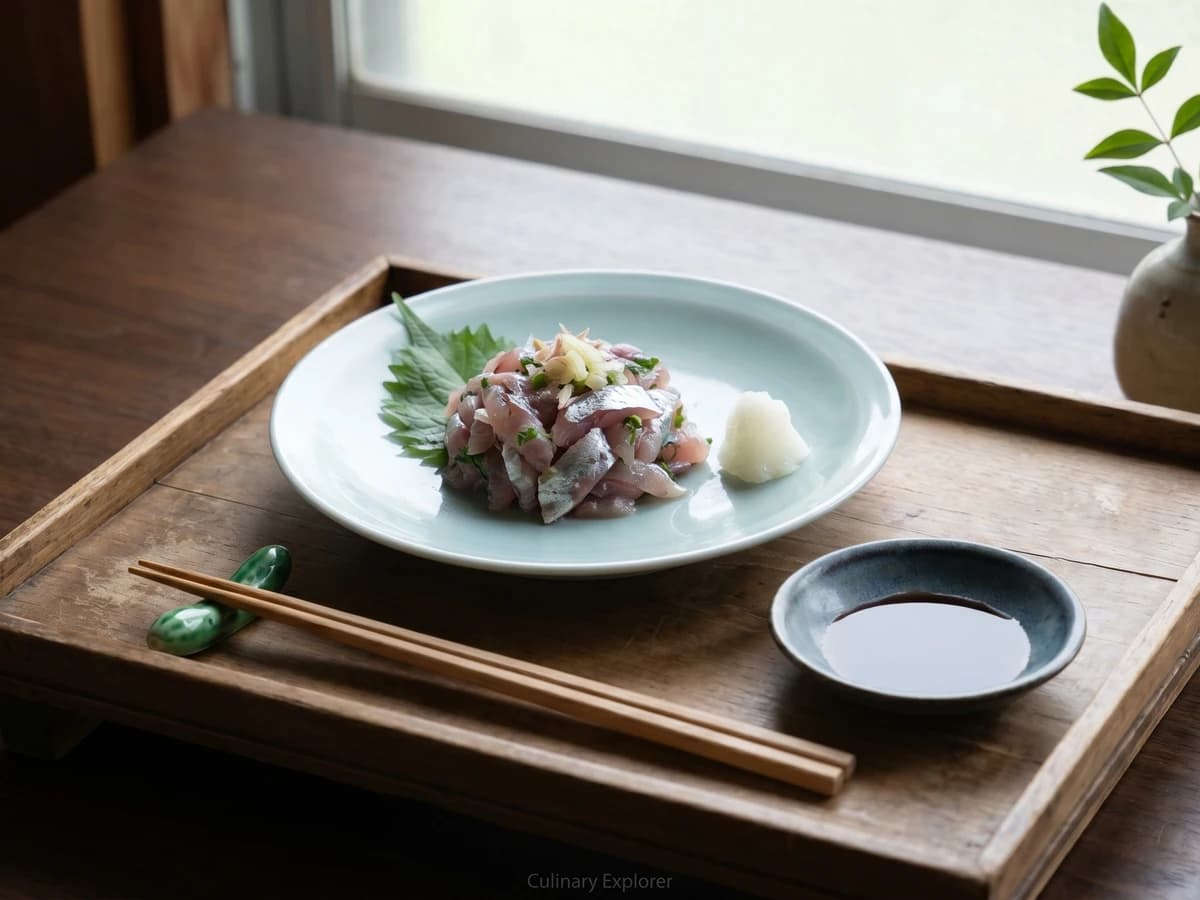
Summer horse mackerel, chopped just enough to catch ginger and scallion, becomes a cool, clean main dish with rice. The secret is fresh fish and a knife that does not bruise it.
Chef Takumi
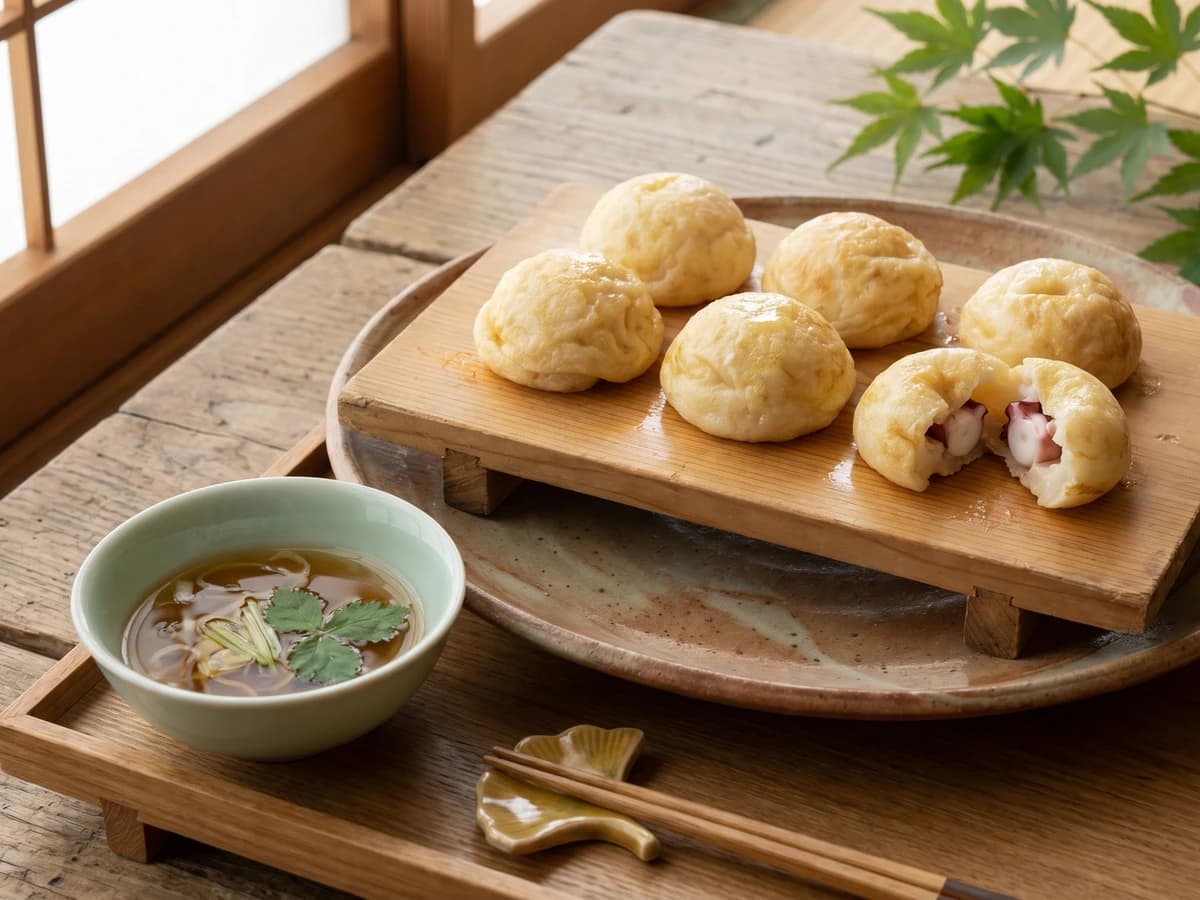
Akashi-yaki is not sauced takoyaki. It is egg-rich batter, tender octopus, and clear dashi, cooked pale and soft so each ball can be dipped like a small custard dumpling.

Chef Takumi
A whole anago looks like a test of nerve. It is mostly good sourcing, a dry skin, cold batter, and oil hot enough to leave the eel sweet under its lace.