
Chef Jeong-sun
Agwi-jjim (Braised Monkfish with Bean Sprouts)
Firm monkfish buried under crisp soybean sprouts, minari, and a red gochugaru sauce thickened at the end; Masan's market dish asks for heat, timing, and a steady hand.
A cooking platform built around craft, culture, and the stories behind what we eat.
Created by
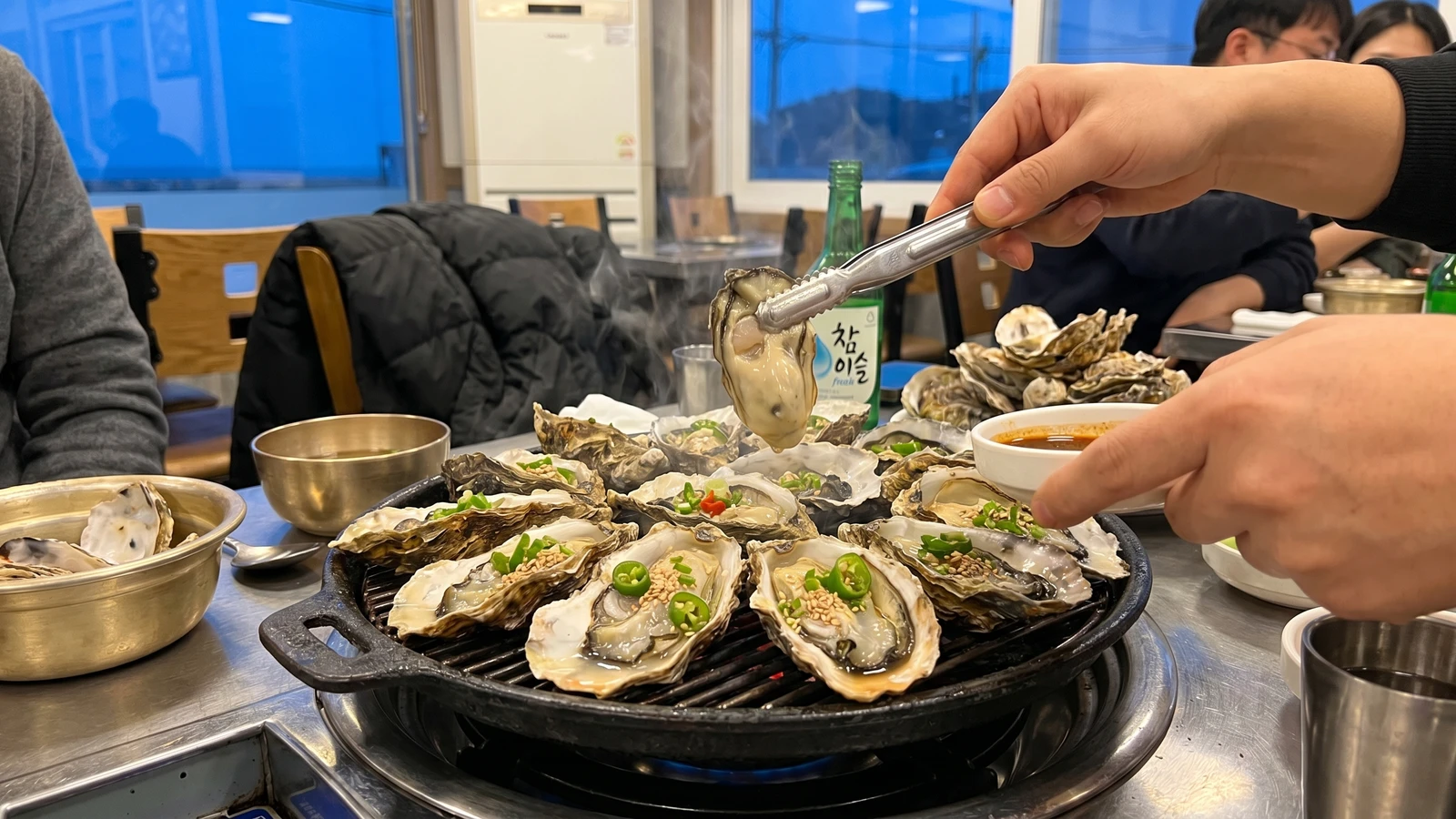
Whole winter oysters grilled in their shells until they open, briny and barely touched, served Jangheung-style with a sharp soy-vinegar dip and eaten straight from the fire.
Cook the month you're standing in. Gul-gui belongs to winter, when oysters are full, cold-water sweet, and worth making a meal around. In Jangheung, the table is not shy: a grill in the middle, a mound of scrubbed shells, a bowl for empty halves, and people leaning in with their own tongs. That is a feast, even without ceremony.
The dish lives or dies by restraint. You are not making sauce for weak oysters. You are buying good oysters, cleaning them well, and giving them enough heat to open and firm without drying into a little gray button. When the shell lifts, wait 30 to 60 seconds more so the oyster liquor bubbles at the edge and the flesh turns plump and opaque. Then take it off. That timing is the whole notebook.
My teacher would have counted the shells before she counted the guests, because a dinner party becomes quiet if there are too few oysters. Plan 10 to 12 large oysters per person as a main dish, more if the table drinks. Set out cho-ganjang (vinegared soy sauce), lemon wedges if your table wants them, and rice or kalguksu noodles to finish in the pot of leftover oyster liquor if you are cooking on a pan. 음식을 나누면서 정도 나눕니다. When we share food, we share affection, and this one makes people share with both hands.
Gul-gui is closely tied to Korea's southern and western coastal oyster regions, especially winter oyster towns in Jeollanam-do such as Jangheung, where grilled oysters became a seasonal restaurant and market-table feast. Korean oysters have long been eaten raw, salted as jeotgal, added to kimchi, and cooked into gukbap or jeon, but whole-shell grilling grew with coastal tourism and local winter food festivals rather than palace cooking. The method is plain because the point is the shellfish itself: cold-season oysters cooked just until the shell opens and the liquor is still alive in the cup.
Quantity
48 large, about 4 to 5 kg total
Quantity
2 tablespoons
for scrubbing water
Quantity
1 cup
for pan-grilling indoors
Quantity
4 tablespoons
Quantity
2 tablespoons
Quantity
1 tablespoon
for cho-ganjang
Quantity
1 teaspoon
or 1/2 teaspoon sugar
Quantity
1 small
finely sliced
Quantity
1
thinly sliced
Quantity
1 teaspoon
Quantity
1/2 teaspoon
Quantity
1
cut into wedges
| Ingredient | Quantity |
|---|---|
| live oysters in the shell | 48 large, about 4 to 5 kg total |
| coarse saltfor scrubbing water | 2 tablespoons |
| waterfor pan-grilling indoors | 1 cup |
| soy sauce | 4 tablespoons |
| rice vinegar | 2 tablespoons |
| waterfor cho-ganjang | 1 tablespoon |
| maesil-cheong (Korean green plum syrup)or 1/2 teaspoon sugar | 1 teaspoon |
| scallionfinely sliced | 1 small |
| Korean green chili or cheongyang chili (optional)thinly sliced | 1 |
| toasted sesame seeds | 1 teaspoon |
| gochugaru (Korean chili flakes) (optional) | 1/2 teaspoon |
| lemon (optional)cut into wedges | 1 |
Buy oysters from a fishmonger you trust, packed cold and smelling clean like the sea, not sour. Keep them cold, cup side down, under a damp towel in the refrigerator until cooking. Discard any oyster with a cracked shell, any that smells off, and any open oyster that does not close when tapped. This is not fussiness; shellfish asks for respect before it asks for fire.
Put the oysters in a sink or large basin with cold water and the coarse salt. Scrub each shell hard with a stiff brush, especially around the hinge and ridges where mud hides. Rinse under cold running water and drain cup side down. Clean shells matter because the liquor inside is part of what you eat.
Stir together the soy sauce, rice vinegar, 1 tablespoon water, maesil-cheong, scallion, chili if using, sesame seeds, and gochugaru if using. Taste it before the oysters are cooked. It should be sharp and salty enough that one or two drops wake up the oyster, not so strong that you spoon it over everything and lose the oyster beneath it.
For charcoal or gas, heat the grill to medium-high, about 220 to 250 degrees C, and set the grate 10 to 15 cm above the heat. For indoor cooking, heat a wide heavy pan with a tight lid over medium-high heat, add 1 cup water, and work in batches. The vessel can change. The timing cannot.
Arrange the oysters cup side down in one layer so their liquor stays in the deep half of the shell. Cover the grill or pan. Cook 5 to 8 minutes for medium oysters and 8 to 10 minutes for large ones, until the top shells lift or the hinge loosens. Do not keep moving them. They need steady heat more than attention.
When an oyster opens, give it 30 to 60 seconds more. The flesh should be plump, opaque at the edges, and still sitting in its own clear liquor. Transfer opened oysters to a tray with tongs. Any oyster that stays tightly closed after 10 to 12 minutes should be discarded. A stubborn shell is not a prize.
Set the oysters on the table with the cho-ganjang and lemon wedges if using. Open the top shell carefully, keeping the cup level so the liquor does not spill, loosen the oyster with a small knife, and add only a drop or two of sauce. Eat while hot. Let it taste like itself.
1 serving (about 170g)
Culinary guides, cultural storytelling, and the editorial depth that makes cooking meaningful.
Discover Culinary ExplorerChef Jeong-sun
Firm monkfish buried under crisp soybean sprouts, minari, and a red gochugaru sauce thickened at the end; Masan's market dish asks for heat, timing, and a steady hand.

Chef Jeong-sun
A quick Korean rice bowl built on contrast: warm rice, cold popping flying-fish roe, chopped vegetables, gim, sesame oil, and the crisp rice bottom a hot stone bowl gives you.
Chef Jeong-sun
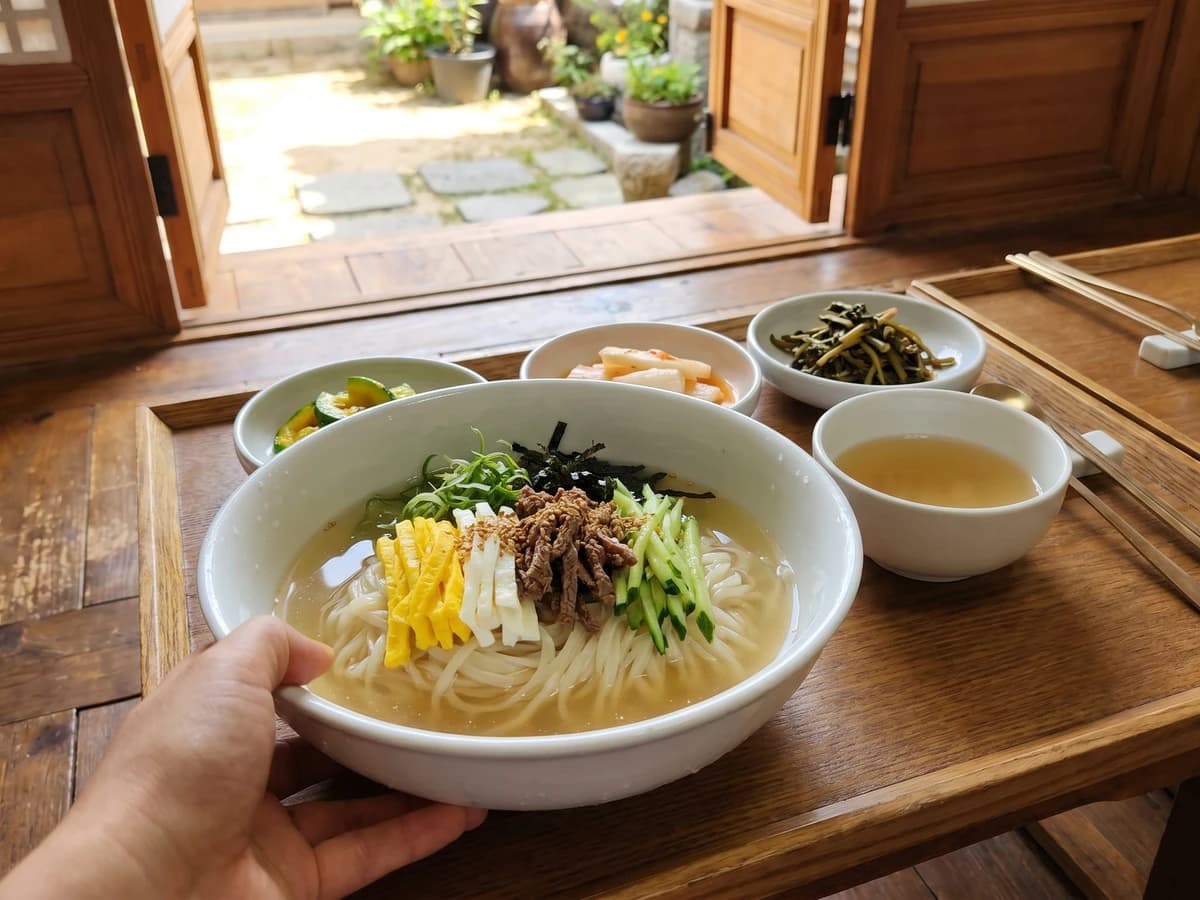
Andong's guest noodles, wheat and roasted soybean flour rolled thin, boiled and rinsed cold, then set in a clear chilled anchovy broth with careful strips of beef, egg, and cucumber.

Chef Jeong-sun
Andong's ritual-table rice served on an ordinary day: separate soy-sesame namul, warm rice, and clear radish soup, mixed without gochujang so every vegetable keeps its own voice.