
Chef Lupita
Agua de Alfalfa
Ciudad de México's highland market agua fresca, fresh alfalfa blended with pineapple and lime until bright green, strained clean, and poured cold from the vitrolero.
A cooking platform built around craft, culture, and the stories behind what we eat.
Created by
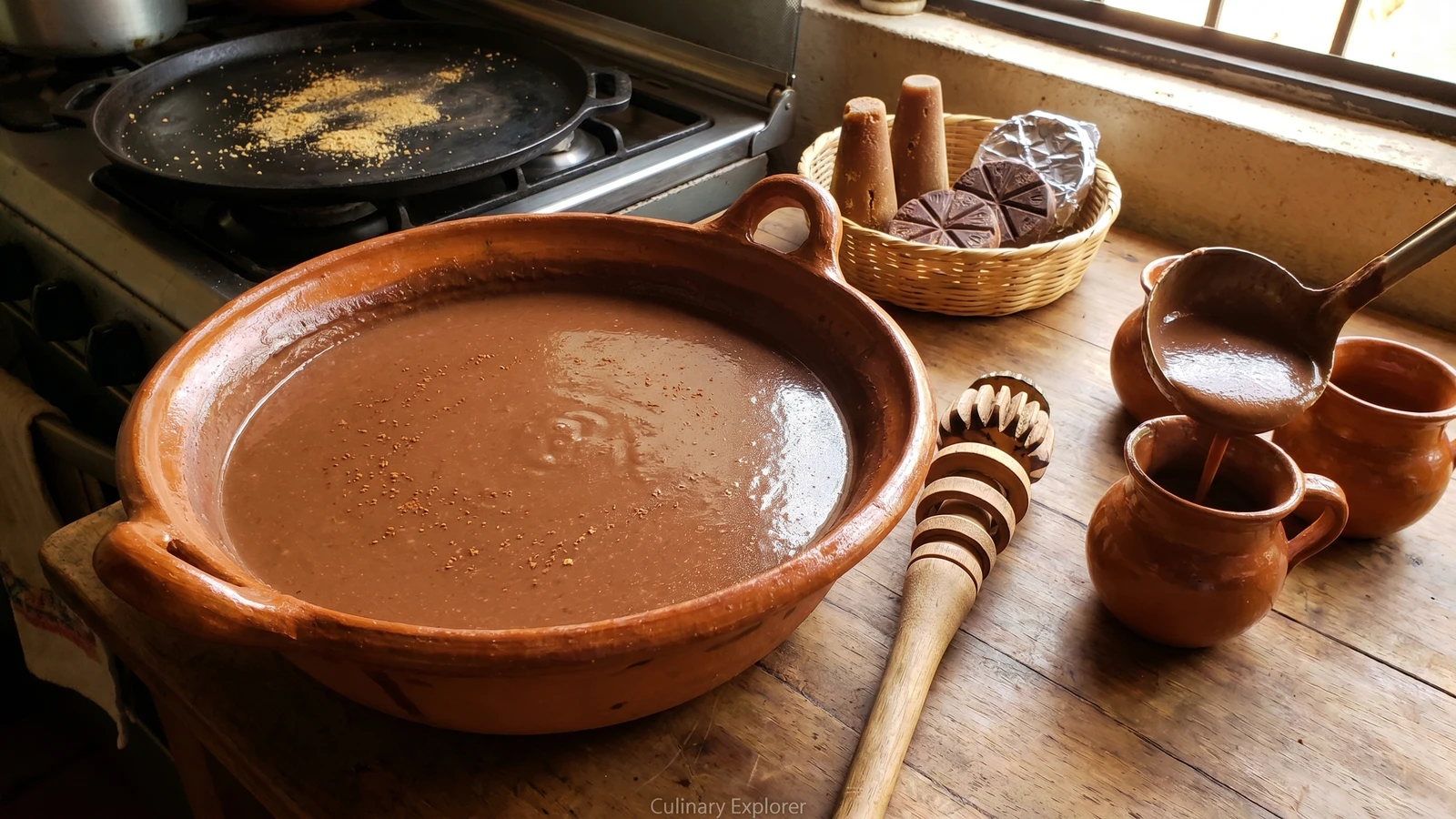
Guerrero's chocolate atole starts with corn masa toasted golden on the comal, then simmered with Mexican chocolate, piloncillo, and canela until thick enough to coat the spoon.
Guerrero, especially the kitchens that run from Chilpancingo down toward the Costa Chica, knows atole as food, not just a drink. This chocolate atole, what many people call champurrado, belongs to the morning table, to Christmas posadas, to the pot kept warm when family is coming through the door.
The Guerrero move here is the toasted masa. Fresh nixtamal masa goes onto the comal first, broken into rough crumbs and stirred until it smells nutty and turns pale gold. That step gives the atole a deeper corn flavor than raw masa alone. I learned this from a señora near Tixtla who told me, without smiling, that raw masa makes a lazy atole. She was right.
The chocolate should be Mexican table chocolate, the kind with sugar, cacao, and canela already ground into a rough disk. Piloncillo gives the sweetness a dark edge. You whisk with a molinillo if you have one, with a wooden spoon if you don't. No me vengas con atajos that remove the corn. The masa is the body, the flavor, the reason this is Guerrero's pot and not a cup of hot cocoa.
Serve it in jarros de barro rojo, with pan dulce or tamales if the table is serious. Cada estado, su propia cocina.
Atole comes from the Nahuatl word 'atolli,' a corn-based drink prepared in Mesoamerica long before the Spanish arrived. Chocolate was also consumed in pre-Columbian Mexico, but the sweetened, hot, thick chocolate atoles now associated with winter holidays developed after Spanish sugarcane and cinnamon entered Mexican kitchens in the colonial period. In Guerrero, the use of toasted masa reflects a regional preference for deeper corn flavor in everyday drinks and porridges, especially in inland towns where maize remains the base of household economy.
Quantity
1 cup
crumbled
Quantity
6 cups
divided
Quantity
2 cups
Quantity
1 cone, about 4 ounces
chopped
Quantity
1 stick
Quantity
1/4 teaspoon
Quantity
2 tablets, about 6 ounces total
roughly chopped
| Ingredient | Quantity |
|---|---|
| fresh nixtamal corn masa for tortillascrumbled | 1 cup |
| waterdivided | 6 cups |
| whole milk | 2 cups |
| piloncillochopped | 1 cone, about 4 ounces |
| Mexican canela | 1 stick |
| kosher salt | 1/4 teaspoon |
| Mexican table chocolateroughly chopped | 2 tablets, about 6 ounces total |
Heat a dry comal or heavy skillet over medium. Scatter the crumbled fresh masa across the surface and stir with a wooden spoon, breaking up any large pieces. Toast for 8 to 10 minutes, until the masa smells like warm tortillas and turns pale gold in spots. Do not brown it hard. You want nuttiness, not bitterness.
Transfer the toasted masa to a blender with 2 cups of the water. Blend until completely smooth. If your blender leaves grit, blend longer. Guerrero atole should be thick and velvety, not sandy. Strain through a fine-mesh sieve into a bowl, pressing with a spoon to catch any stubborn bits of corn skin.
In a heavy pot, combine the remaining 4 cups water, the milk, chopped piloncillo, canela, and salt. Warm over medium heat, stirring until the piloncillo dissolves. Keep the pot below a hard boil. Milk scorches, and scorched milk will make the whole atole taste tired.
Add the chopped Mexican chocolate and stir until it melts into the liquid. The color should deepen to a warm brown, with small flecks of cacao and canela visible from the table chocolate. That rough texture is correct. Mexican chocolate is not supposed to behave like a European candy bar.
Whisk the strained masa mixture into the pot in a slow stream. Stir constantly with a wooden spoon or molinillo so the masa does not settle and stick. Cook over medium-low heat for 10 to 12 minutes, until the atole thickens enough to coat the spoon and leaves a clean line when you run your finger across the back. The corn needs time to cook. Rush it and the flavor stays raw.
Remove the canela stick. Lower the heat and whisk hard with a molinillo for 2 minutes, rolling it between your palms to pull air into the drink. The surface should look glossy and lightly foamy, not thin. Taste for sweetness and salt. A pinch more salt can wake up the chocolate better than more sugar.
Ladle the atole into warm barro rojo jarros. Serve immediately, while it is thick, smooth, and fragrant with corn, cacao, piloncillo, and canela. If it sits, it will thicken. Loosen it with a splash of hot water or milk and whisk again. Así se hace y punto.
1 serving (about 390g)
Culinary guides, cultural storytelling, and the editorial depth that makes cooking meaningful.
Discover Culinary ExplorerChef Lupita
Ciudad de México's highland market agua fresca, fresh alfalfa blended with pineapple and lime until bright green, strained clean, and poured cold from the vitrolero.

Chef Lupita
Aguascalientes' Lenten agua fresca, jewel-red from cooked beet and full of apple, banana, orange, lettuce, and ground peanuts, served cold when Holy Week meets the Feria de San Marcos.

Chef Lupita
Sonora and Sinaloa's creamy malted barley water, built on toasted cebada perla, Mexican canela, vanilla from Papantla, and evaporated milk. Pink-beige, rich, and served cold over heavy ice in a heavy glass tumbler. Liquid cookie comfort the northwest way.

Chef Lupita
Yucatán's everyday tonic of boiled chaya leaves blended with lima agria, sugar, and ice. The bright green jarra that sits on every Peninsula table from Mérida to Valladolid.