
Chef Lupita
Agua de Alfalfa
Ciudad de México's highland market agua fresca, fresh alfalfa blended with pineapple and lime until bright green, strained clean, and poured cold from the vitrolero.
A cooking platform built around craft, culture, and the stories behind what we eat.
Created by
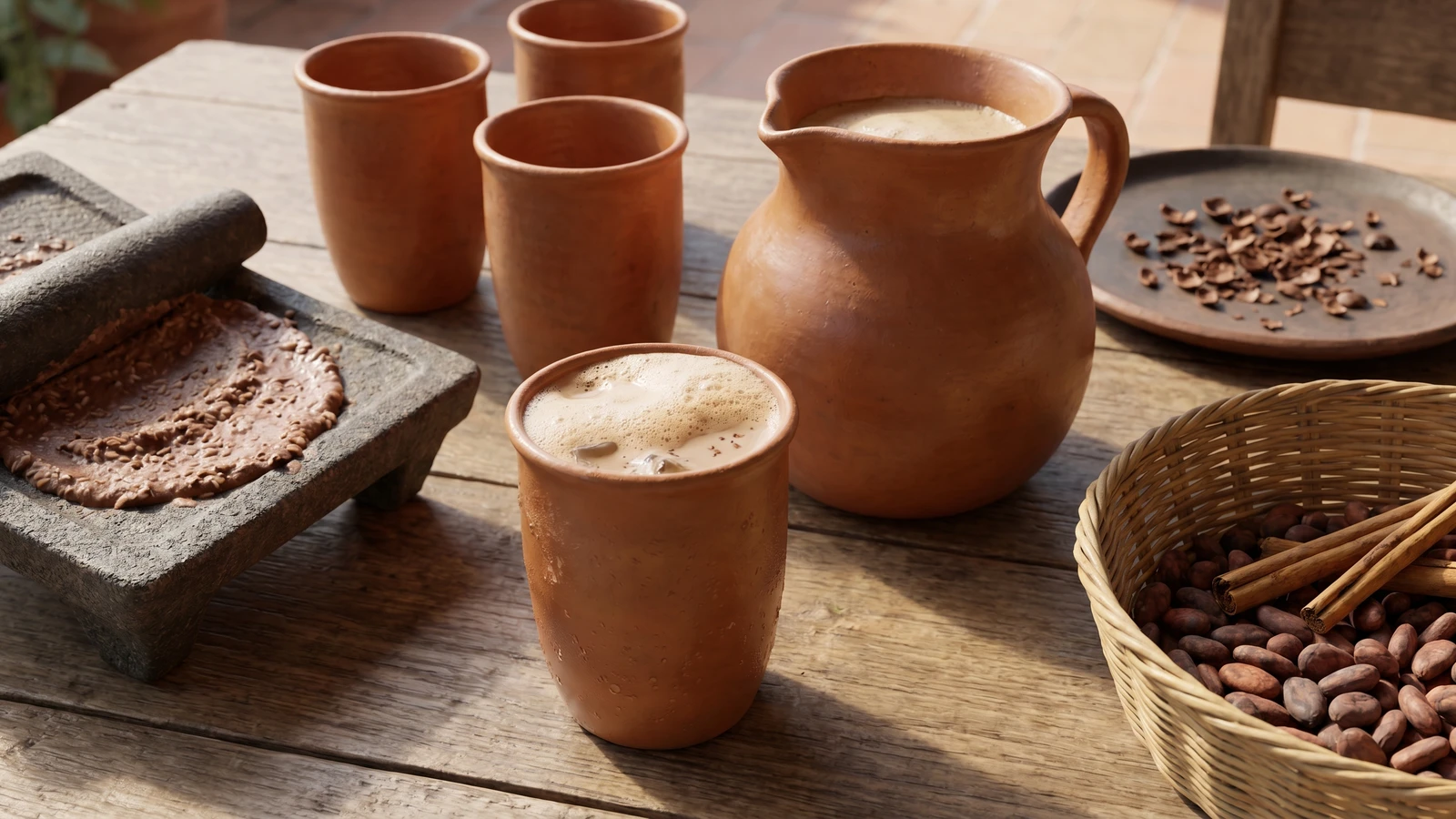
Guerrero's Costa Chica cacao drink, built from toasted cacao, rice, cinnamon, and patient grinding, then poured high until the foam rises in the jicara.
Guerrero, the Costa Chica, is where this drink lives. From San Marcos down toward Ometepec, in Afro-Mexican towns where the heat sits heavy and the market women know exactly how much cacao a day can sell, chilate is poured cold, foamy, and direct. This isn't hot chocolate. It isn't atole. It is chilate guerrerense, and it belongs to that coast.
The drink is built from cacao, rice, canela, sugar, water, and ice. No chile. Do not let the name confuse you. The work is in the toasting and grinding, traditionally on the metate, until the cacao and rice become a paste that can be thinned, strained, chilled, and poured from high enough to make foam. That foam matters. A flat chilate looks tired before it reaches the table.
I learned this version from a chilatera near the market in Ayutla de los Libres, a woman who measured by the handful and corrected my pour before she corrected my recipe. She told me, "Mas alto, si no, no respira." Higher, or it doesn't breathe. She was right. Cada estado, su propia cocina, and Guerrero's cacao has its own voice.
Chilate belongs to Guerrero's Costa Chica, a region shaped by Indigenous Mixtec, Amuzgo, and Nahua foodways and by Afro-Mexican communities established along the Pacific coast during the colonial period. Cacao drinks predate the Spanish conquest, but the Costa Chica version using rice and cinnamon reflects colonial-era ingredient exchange, when Asian rice and imported canela entered local kitchens and were folded into older cacao traditions. Unlike champurrado or atole, chilate is served cold and foamy, a practical adaptation to Guerrero's coastal heat and a marker of the region's market culture.
Quantity
1 cup
rinsed
Quantity
2 cups
for soaking the rice
Quantity
1 cup
Quantity
1
broken into pieces
Quantity
3/4 cup, plus more to taste
Quantity
1/4 teaspoon
Quantity
6 cups
divided
Quantity
4 cups
for serving
| Ingredient | Quantity |
|---|---|
| raw white ricerinsed | 1 cup |
| waterfor soaking the rice | 2 cups |
| whole cacao beans | 1 cup |
| Mexican cinnamon stick (canela)broken into pieces | 1 |
| granulated sugar | 3/4 cup, plus more to taste |
| fine sea salt | 1/4 teaspoon |
| cold waterdivided | 6 cups |
| icefor serving | 4 cups |
Put the rinsed rice in a bowl with 2 cups water. Let it soak at least 4 hours, or overnight if your kitchen is moving on mercado time. The grains should swell and break easily between your fingers. Do not skip this. Hard rice makes a gritty chilate, and the señoras selling it in Guerrero would send it back.
Heat a dry comal over medium. Add the cacao beans and toast them, turning often, until the shells darken, crack in places, and the kitchen smells deep and nutty, about 8 to 10 minutes. They should not burn. Burned cacao tastes harsh and no amount of sugar fixes it.
Transfer the warm cacao beans to a cloth and rub them firmly to loosen the shells. Pick out the peeled nibs. This is work, yes. La cocina no es decoración, es trabajo. The shell gives roughness and dust, and chilate should be earthy but clean.
Put the broken Mexican cinnamon on the same comal for 30 to 45 seconds, just until fragrant. Mexican canela is soft and floral, not hard like cassia. If your stick smells flat, your drink will taste flat. Start at the market, not at the blender.
Drain the soaked rice. On a metate, grind the rice, cacao nibs, and canela into a damp paste, adding spoonfuls of cold water only as needed to move the masa. If you use a blender, add 2 cups cold water and blend longer than you think, stopping to scrape the sides. You want the finest texture your equipment can give you. A blender is acceptable. Laziness is not.
Pour the blended mixture through a fine-mesh strainer into a large pitcher, pressing hard on the solids. Add 2 more cups cold water to the solids, stir, and strain again. Repeat with the remaining 2 cups cold water. Guerrero chilate has body, but it should not leave a mouthful of rice grit behind.
Stir in the sugar and salt until dissolved. Taste it cold, not warm from the blender. Cold dulls sweetness, so the pitcher should taste a little stronger than you think. Refrigerate until fully chilled, at least 30 minutes, or set the pitcher over ice if people are already waiting.
Fill clay cups, glass tumblers, or jicaras with ice. Pour the chilate from one pitcher into another from a height, then into the cups from high above the rim so the foam rises. That foam is not decoration. It is the sign that the drink was worked properly. Serve immediately, cold and generous.
1 serving (about 310g)
Culinary guides, cultural storytelling, and the editorial depth that makes cooking meaningful.
Discover Culinary ExplorerChef Lupita
Ciudad de México's highland market agua fresca, fresh alfalfa blended with pineapple and lime until bright green, strained clean, and poured cold from the vitrolero.

Chef Lupita
Aguascalientes' Lenten agua fresca, jewel-red from cooked beet and full of apple, banana, orange, lettuce, and ground peanuts, served cold when Holy Week meets the Feria de San Marcos.

Chef Lupita
Sonora and Sinaloa's creamy malted barley water, built on toasted cebada perla, Mexican canela, vanilla from Papantla, and evaporated milk. Pink-beige, rich, and served cold over heavy ice in a heavy glass tumbler. Liquid cookie comfort the northwest way.

Chef Lupita
Yucatán's everyday tonic of boiled chaya leaves blended with lima agria, sugar, and ice. The bright green jarra that sits on every Peninsula table from Mérida to Valladolid.