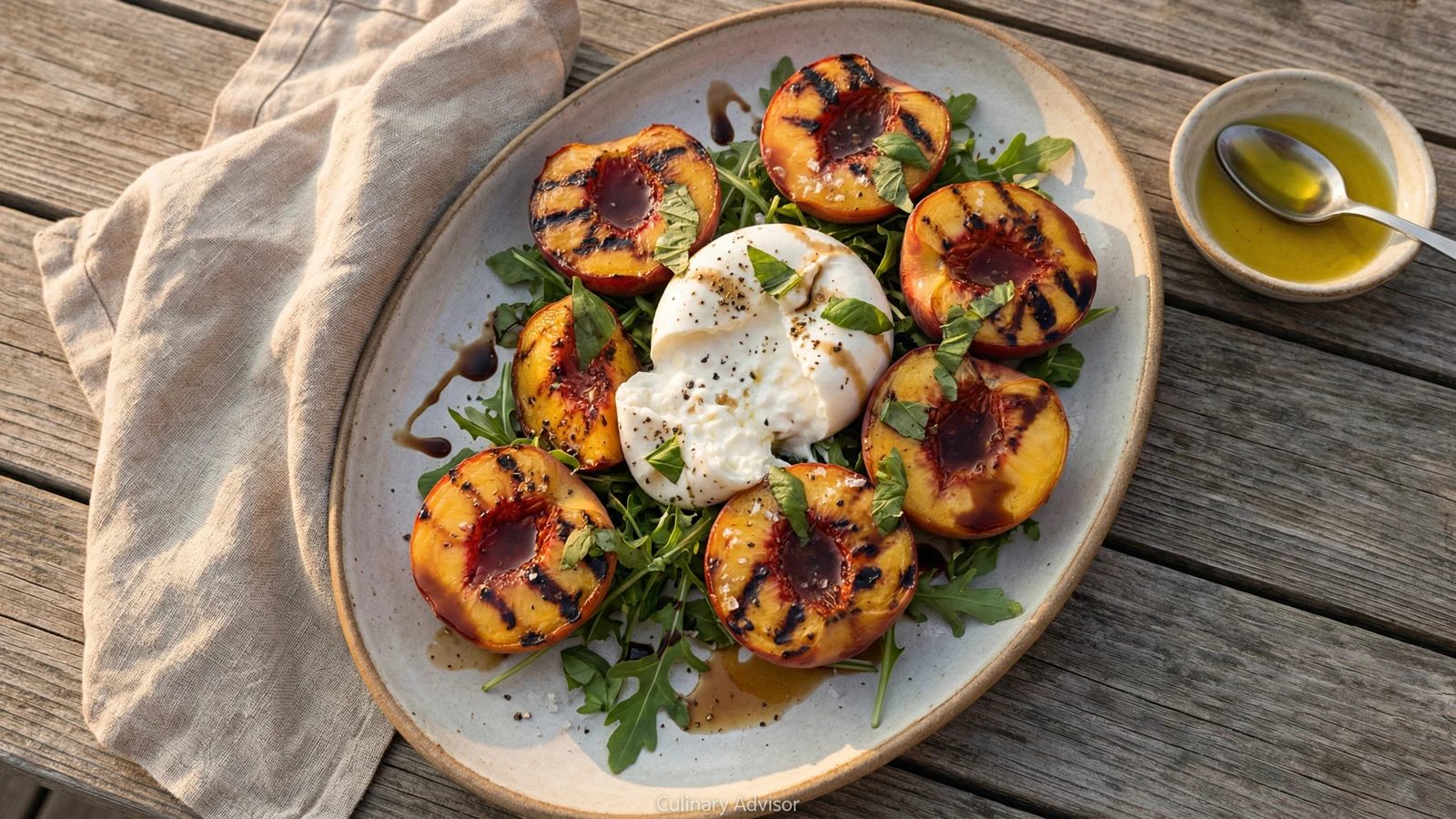
Char-kissed stone fruit pooling its warm juices over cool, creamy burrata, finished with torn basil and a drizzle of aged balsamic. This dish exists for three weeks in August. Do not miss it.
Salads
California
Dinner Party
Outdoor Dining
15 min
Active Time
6 min cook•21 min total
Yield4 servings
Start at the market. Find the farmer who grows stone fruit and ask what is ready today. Not what looks good. What is ready. The peach or nectarine you want should smell like itself from two feet away. It should give slightly when you press near the stem. It should feel heavy for its size, full of juice waiting to be released.
This is a dish you cannot make with supermarket fruit shipped hard and ripened in a warehouse. The flavor is not there. The texture is not there. Wait until the real thing arrives, then make this once a week until the season ends.
The burrata must be fresh, made within the last day or two. When you cut it open, the creamy stracciatella inside should spill across the plate like a gift. Paired with warm grilled fruit, aged balsamic, and torn basil, you have a composed salad that needs nothing more. Your choices shape the food system. Buy from the farmers who grow this fruit with intention, and the dish becomes an act of connection as much as nourishment.
The technique, the tradition, and the story behind every dish.
Run your thumb along each peach or nectarine. The flesh should yield gently, and the fragrance should rise to meet you. Slice each fruit in half through the stem end. Twist gently and pull apart. If the pit clings, the fruit may not be ripe enough. A ready peach releases its pit willingly.
White-fleshed varieties tend to be sweeter and more delicate. Yellow-fleshed have more acid, which balances the rich burrata beautifully. Either works. Let the market decide.
2
Heat the grill
Heat a grill or grill pan over high heat until a drop of water sizzles and vanishes instantly. The goal is quick, decisive char without cooking the fruit through. You want warmth and caramelization, not softness. Brush the cut sides of the fruit lightly with olive oil.
3
Grill the stone fruit
Place the peach halves cut-side down on the hot grill. Do not move them. Let the heat do its work for two to three minutes until you see grill marks forming at the edges and smell caramelizing sugars. The fruit should lift cleanly when ready. If it sticks, give it another thirty seconds.
Resist the urge to press down or flip early. The sugars need uninterrupted contact with the heat to caramelize properly.
4
Arrange the plate
Scatter arugula across a large platter or divide among four plates. The peppery greens provide a bed and a counterpoint to the sweetness. Remove the burrata from its liquid and place it in the center of the greens. It should sit at room temperature while you grill, losing its chill so the texture opens up.
5
Compose and dress
Arrange the warm grilled peaches around and over the burrata, cut-side up so the grill marks show and the cavities can collect the dressing. Tear the burrata open gently with your hands or a spoon so the creamy center spills out. Drizzle generously with olive oil. Add the aged balsamic in a thin stream. The sweetness of old balsamic meets the warm fruit and cool cheese.
Aged balsamic is thick and syrupy, not watery. If yours pours like regular vinegar, it is not aged enough for this dish. The good stuff costs more but you use less.
6
Finish and serve
Scatter torn basil over everything. The leaves should be torn, not cut. Cutting bruises the basil and releases bitter compounds. Add flaky sea salt and cracked black pepper. Serve immediately. This salad does not wait. The warmth of the fruit begins melting the cheese the moment they meet. That is the point.
Chef Tips
•Buy stone fruit two to three days before you need it and let it ripen on your counter. Never refrigerate until fully ripe. Cold stops the ripening process and destroys texture.
•If your market has no ripe stone fruit, do not make this dish. Make something else. Seasonal eating means waiting for the right moment.
•Ask your cheesemonger when the burrata was made. Burrata more than three days old loses that luscious spill. The inside should flow, not sit.
•A simple green salad can stand beside this, dressed with the same olive oil and a squeeze of lemon. Keep it light. The fruit and cheese are the center.
•In early fall when stone fruit season ends, ripe figs with the same preparation are equally beautiful. The season changes; the principle stays.
Advance Preparation
•Remove burrata from refrigerator thirty minutes before serving. It should be cool, not cold.
•Arugula can be washed and dried a day ahead, stored wrapped in a kitchen towel in the refrigerator.
•This salad cannot be made ahead. The moment of assembly is the moment of serving.
Frequently Asked Questions
Nutrition Information
1 serving (about 310g)
Calories
540 calories
Total Fat
44 g
Saturated Fat
20 g
Trans Fat
0 g
Unsaturated Fat
24 g
Cholesterol
65 mg
Sodium
570 mg
Total Carbohydrates
19 g
Dietary Fiber
3 g
Sugars
14 g
Protein
22 g
Where cooking meets culture.
Culinary guides, cultural storytelling, and the editorial depth that makes cooking meaningful.