
Chef Juliette
Ordinary Brioche Paste
Pâte à brioche ordinaire teaches enriched dough properly: wake the leaven, build strength before the last egg, then work in pliable butter by stages and let one long fermentation do its quiet work.
A cooking platform built around craft, culture, and the stories behind what we eat.
Created by
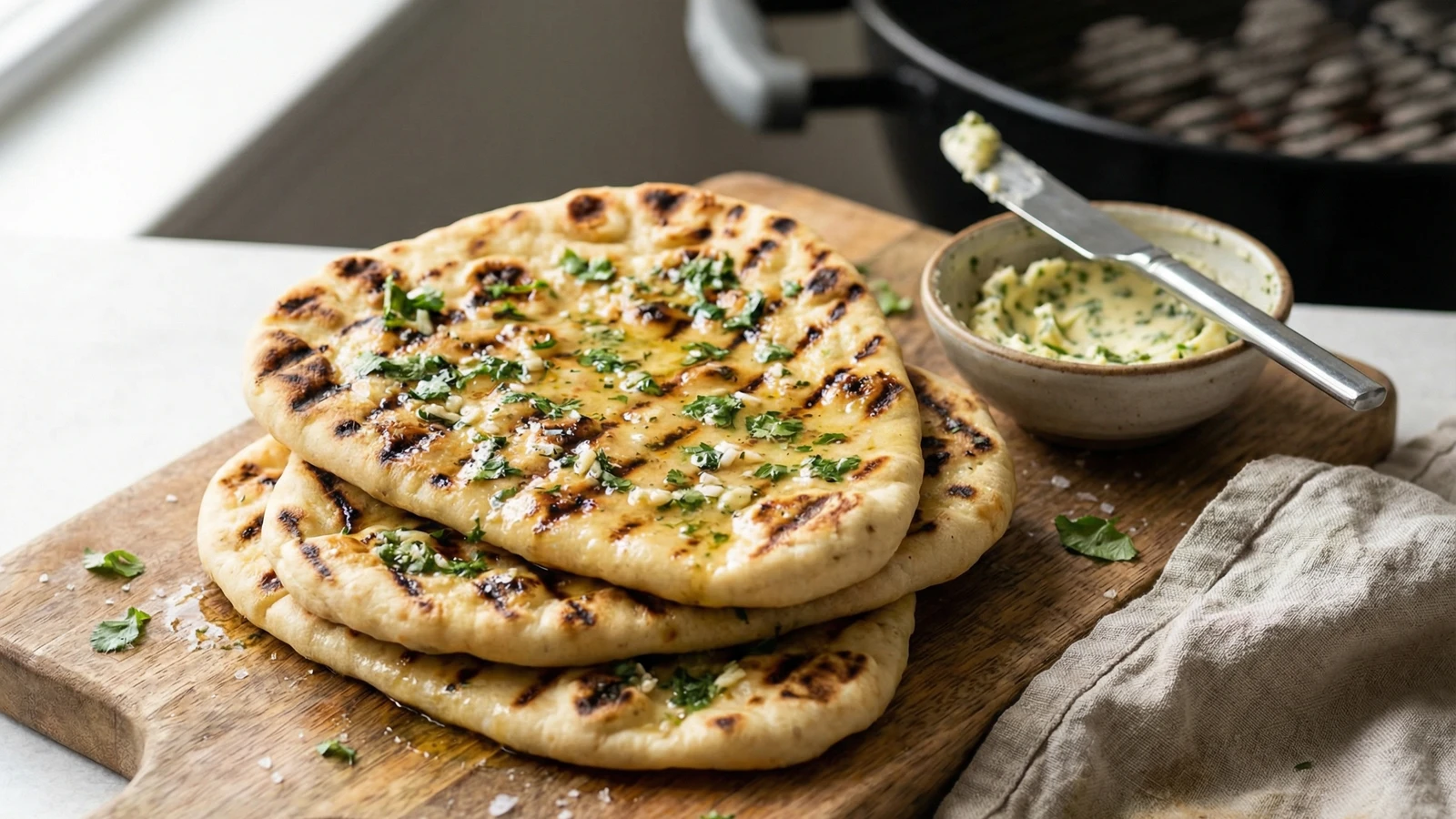
Pillowy yogurt flatbreads charred over live fire until blistered and puffed, then slathered with garlic-flecked herb butter that pools in every dimple and crater. This is the bread that makes summer gatherings memorable.
Every great American summer gathering needs bread that does work. Not the sliced stuff in plastic bags, not the rolls that sit forgotten in a basket. I mean bread with presence. Bread that tears into shreds for scooping, that soaks up the juices from grilled lamb, that carries hummus or tzatziki from bowl to mouth without apology.
Naan belongs at your backyard table as surely as it belongs in Delhi. The technique traveled here decades ago and found a natural home over American charcoal. Our grills run hotter than most tandoor ovens anyway. That fierce heat creates the leopard-spotted char, the steam pockets that puff the dough into pillows, the slight chew that tells you this bread was made by someone who cared.
The yogurt in this dough does three things worth understanding. It tenderizes through acidity, keeping the crumb soft even after the exterior chars. It adds a subtle tang that cuts through rich foods. And it creates moisture that generates steam when the dough hits hot grates. Science dressed up as tradition.
I've watched guests hover around the grill when these come off, reaching for the bread before it even hits the platter. The herb butter melts on contact, running into every crevice. Make more than you think you need. You'll need more.
Quantity
3 cups, plus more for dusting
Quantity
1 teaspoon
Quantity
1 teaspoon
Quantity
1 teaspoon
Quantity
3/4 cup
room temperature
Quantity
1/2 cup (110°F)
Quantity
2 tablespoons
Quantity
8 tablespoons (1 stick)
Quantity
4 cloves
minced
Quantity
1/4 cup
finely chopped
Quantity
2 tablespoons
finely chopped
Quantity
1 tablespoon
minced
Quantity
1/2 teaspoon
| Ingredient | Quantity |
|---|---|
| all-purpose flour | 3 cups, plus more for dusting |
| instant yeast | 1 teaspoon |
| fine sea salt | 1 teaspoon |
| granulated sugar | 1 teaspoon |
| plain whole-milk yogurtroom temperature | 3/4 cup |
| warm water | 1/2 cup (110°F) |
| olive oil | 2 tablespoons |
| unsalted butter | 8 tablespoons (1 stick) |
| garlicminced | 4 cloves |
| fresh cilantrofinely chopped | 1/4 cup |
| fresh parsleyfinely chopped | 2 tablespoons |
| fresh chivesminced | 1 tablespoon |
| flaky sea salt | 1/2 teaspoon |
Whisk the flour, yeast, salt, and sugar together in a large bowl. Make a well in the center and add the yogurt, warm water, and olive oil. Stir with a wooden spoon until a shaggy dough forms, then turn it onto a lightly floured surface. The dough will look rough and unpromising. This is correct.
Knead the dough for 8 to 10 minutes, pushing with the heel of your hand, folding, and rotating. You're developing gluten, the protein network that gives bread its structure. The dough transforms from sticky and ragged to smooth and slightly tacky. It should spring back slowly when you poke it with a finger. If it sticks to your hands persistently, add flour a tablespoon at a time.
Shape the dough into a ball and place it in a lightly oiled bowl, turning once to coat. Cover tightly with plastic wrap and let rise in a warm spot until doubled in size, about 1 to 1 1/2 hours. The top of your refrigerator works. So does an oven with just the light on. Find a draft-free spot where the dough can do its slow work undisturbed.
While the dough rises, melt the butter in a small saucepan over medium-low heat. Add the minced garlic and cook gently until fragrant and just beginning to turn golden, about 2 minutes. Watch carefully. Garlic goes from golden to burnt in seconds. Remove from heat and stir in the cilantro, parsley, and chives. The residual heat will bloom the herbs. Set aside.
Punch down the risen dough to deflate it. Turn onto a lightly floured surface and divide into 8 equal pieces. A kitchen scale helps here if you want uniformity. Roll each piece into a ball, then cover loosely with a clean kitchen towel and let rest for 10 minutes. This rest relaxes the gluten, making the dough easier to roll thin.
Working with one ball at a time, roll into an oval or teardrop shape about 8 inches long and 1/4 inch thick. Traditional naan isn't perfectly round. Embrace the irregular edges and uneven thickness. Those variations create different textures when grilled: some spots charred and crisp, others soft and pillowy. Stack the rolled naan between sheets of parchment to prevent sticking.
Heat your grill to high, around 500°F to 550°F. If using charcoal, wait until the coals are covered with white ash and glowing orange. Clean the grates thoroughly with a wire brush, then oil them by dipping a folded paper towel in vegetable oil and rubbing it across the grates with long tongs. The oil prevents sticking and promotes those coveted grill marks.
Lay 2 or 3 naan directly on the hot grates. Close the lid. Within 1 to 2 minutes, the bottom will char and the top will begin bubbling dramatically, puffing up with steam pockets. When the underside shows dark grill marks and releases easily, flip with tongs. Grill the second side for another 1 to 2 minutes until charred in spots. The bread should be pliable, not crisp.
Transfer each naan immediately to a waiting platter. Brush generously with the herb butter while still hot, letting it pool in the bubbled craters and char marks. Sprinkle with flaky sea salt. The butter will sizzle slightly on contact. Stack the finished naan and cover loosely with a towel to keep warm while you grill the remaining pieces. Serve within 20 minutes for the best texture.
1 naan (about 95g)
Culinary guides, cultural storytelling, and the editorial depth that makes cooking meaningful.
Discover Culinary ExplorerChef Juliette
Pâte à brioche ordinaire teaches enriched dough properly: wake the leaven, build strength before the last egg, then work in pliable butter by stages and let one long fermentation do its quiet work.

Chef Juliette
Ordinary brioche takes one exact measure of butter and a patient rise in the mould, becoming so light and silken that it can cradle fruit without losing its tender crumb.

Chef Juliette
Pâte à brioche ordinaire, butter-rich yet firm, teaches the useful side of brioche: slow fermentation, disciplined mixing, and a dough that rolls cleanly for lining, wrapping, and every sturdy pastry job.

Chef Thomas
A proper British bloomer, slashed deep and baked until the cuts open wide and the crust turns deep, glossy gold. The kind of loaf that makes the rest of the day feel deliberate.